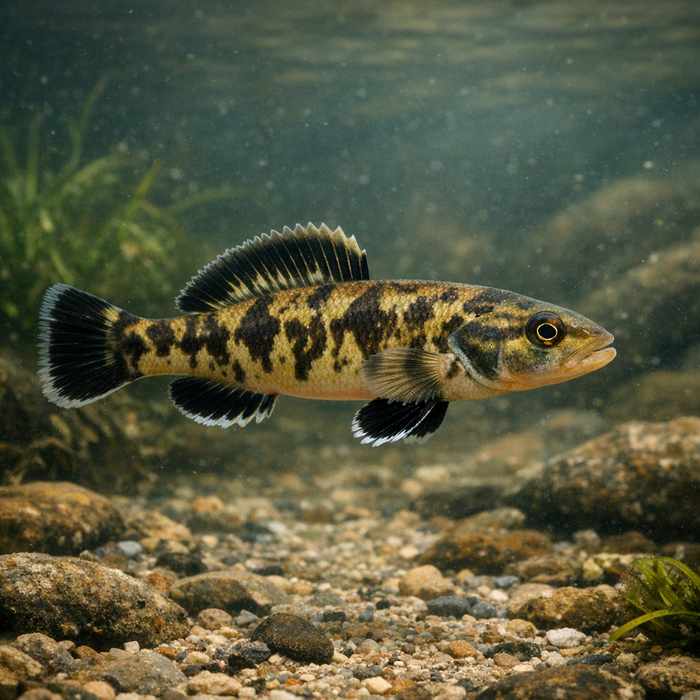
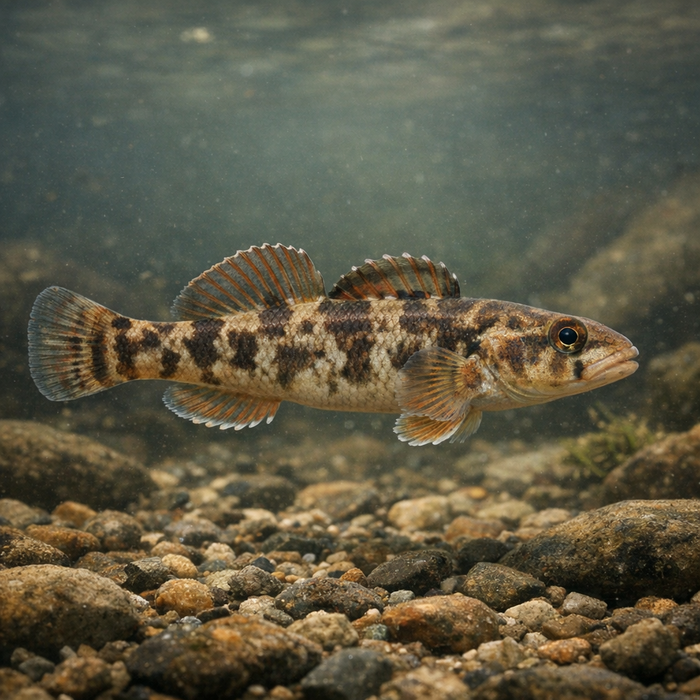
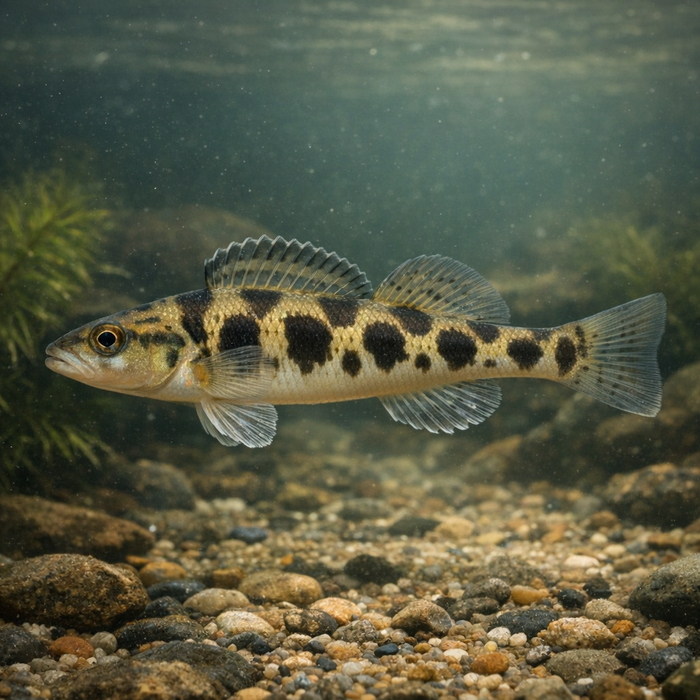
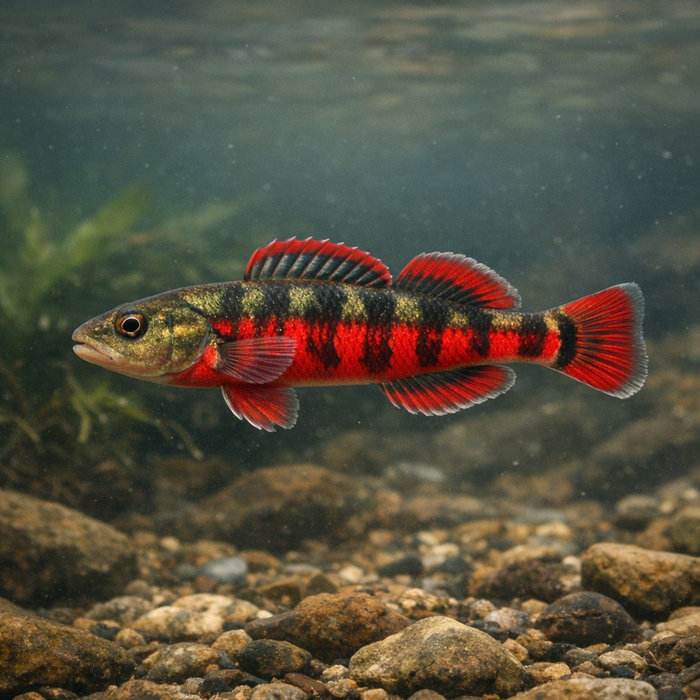
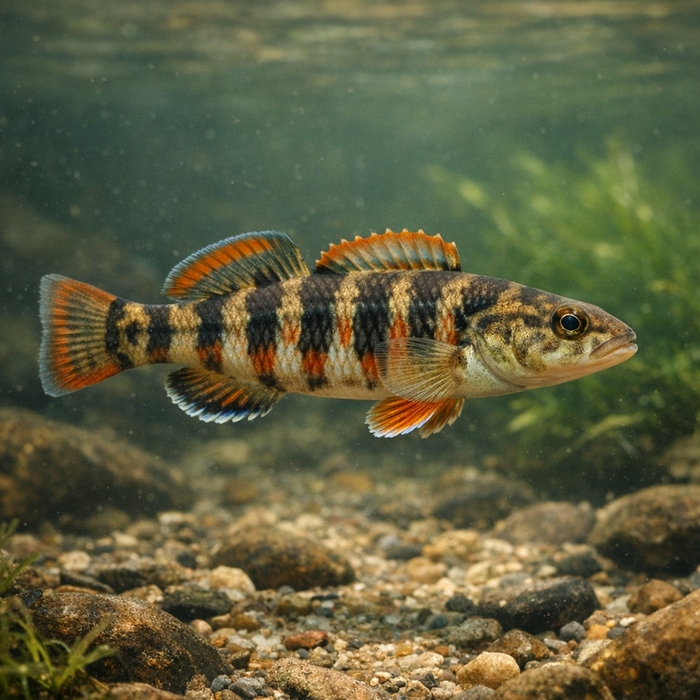
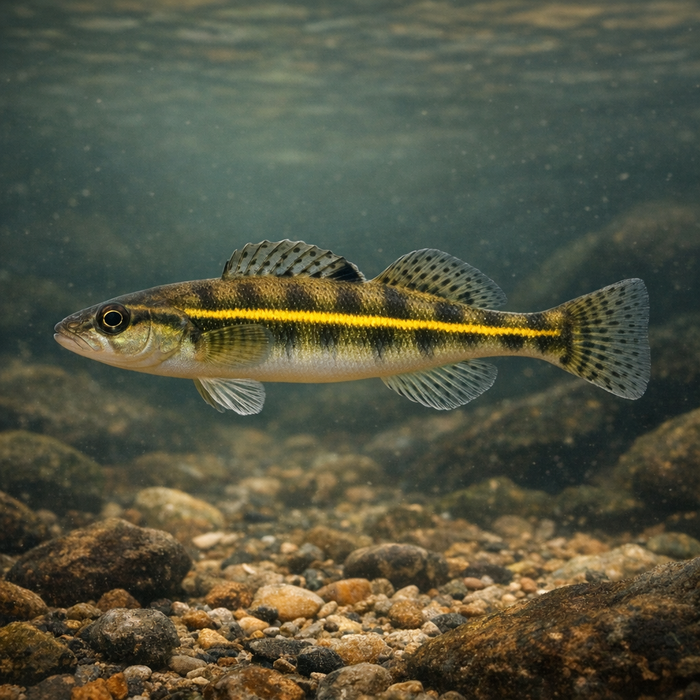
Caney Fork Darter (Nothonotus starnesi): A riffle rocket with paint-job swagger and zero patience for sloppy presentations.IntroductionThe Caney Fork darter is proof that big personality comes in small packages. This tiny Percidae bruiser lives where the current hisses, the rocks chatter, and mistakes drift away fast. You won't horse it on heavy tackle or drag it from deep water; you'll meet it eye-level in shin-deep riffles, creeping like a heron. If you want Caney fork darter facts without the nap, here's the straight dope: beautiful, picky, and built for speed over stones.What Makes the Caney fork darter Unique?First, the look. Breeding males wear outrageously bright oranges and electric blues, like someone dared a coral reef fish to move to the mountains. Second, the build. With a reduced swim bladder and broad pectorals, the Caney Fork darter pins itself to the bottom and explodes forward in short bursts, more lizard than fish in attitude. Third, the lifestyle. It's a specialist, obsessed with clean gravel, tight current, and the kind of micro-structure most anglers step over on their way to the next pool.Habitat & Global RangeIf you're hunting Caney fork darter habitat, think clear Southeastern streams with brisk flow, oxygen-rich riffles, and cobble or gravel that stays clean between floods. These fishes demand water that breathes and bottoms that aren't smothered by silt. They tuck in behind stones, in pocket water, at the heads and tails of riffles, and in runs where pea gravel rumbles like a drum. Seasonal flows, storm pulses, and sediment loads can shuffle their living room overnight, so they key into fine-grained neighborhood details most anglers overlook.Behavior & TemperamentThe Caney Fork darter is suspicious but not timid. It'll hold its ground, flaring fins and scooting a few inches rather than bolting a mile. Courtship is a flash dance: males quiver, posture, and patrol a neat patch of gravel, then glue eggs to the underside of a rock. Dad sticks around to fan them, oxygenating the clutch and staring down would-be thieves. Feeding is surgical. They pick drifting or crawling invertebrates with tiny, fast strikes, usually tight to the bottom. The strike window is short and the angle matters; sloppy drifts are ignored without apology.Ecological ImportanceThis darter reads the river like a canary reads a coal mine. Because the Caney Fork darter needs clear, moving water and stable gravels, it flags stream health better than most charts. When sediment loads spike, algae mats creep, or flows get choked, these fish vanish first. In healthy riffles, they recycle energy by turning aquatic insects into darter biomass, then pass that energy up the food chain to larger predators. Keep riffles happy and everything from mayflies to smallmouth benefits.Conservation & Environmental PressuresClean gravel is life, which means sediment is the villain. Poor land use, unbuffered roads, and careless construction blast fine silt into riffles, smothering eggs and crushing recruitment. Low flows and warm water don't help. Because the Caney Fork darter is a small, localized specialist, a single bad storm season or chronic erosion can hammer entire cohorts. While formal conservation status may read data deficient in some listings, anglers should treat this species like a delicate heirloom: hands wet, handling minimal, and photos quick.The FishyAF TakeTiny fish. Huge respect. The Caney Fork darter asks you to slow down, kneel in the current, and fish with surgeon-level precision. It is not a grip-and-grin hero; it's a master class in observation. If you crave fireworks, catch a male in full breeding dress and tell us you didn't stare. If you want a challenge, try threading a size 24 midge through broken current and land a clean drift under a hand-sized rock. The Caney Fork darter rewards patience, humility, and a sharp eye. That's the point, and honestly, that's the fun.