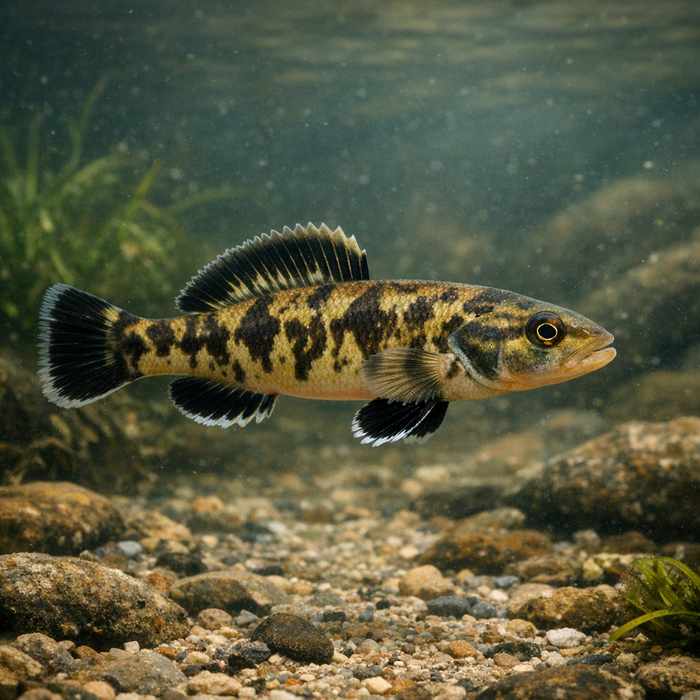
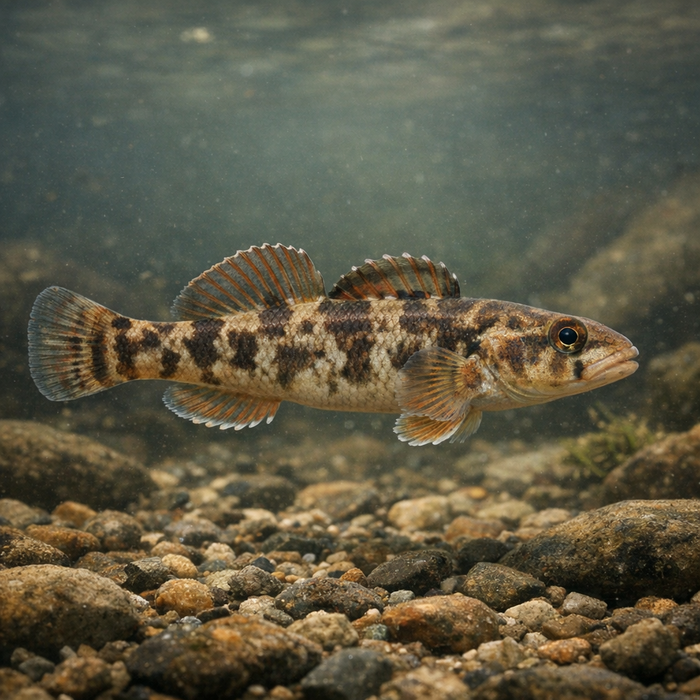
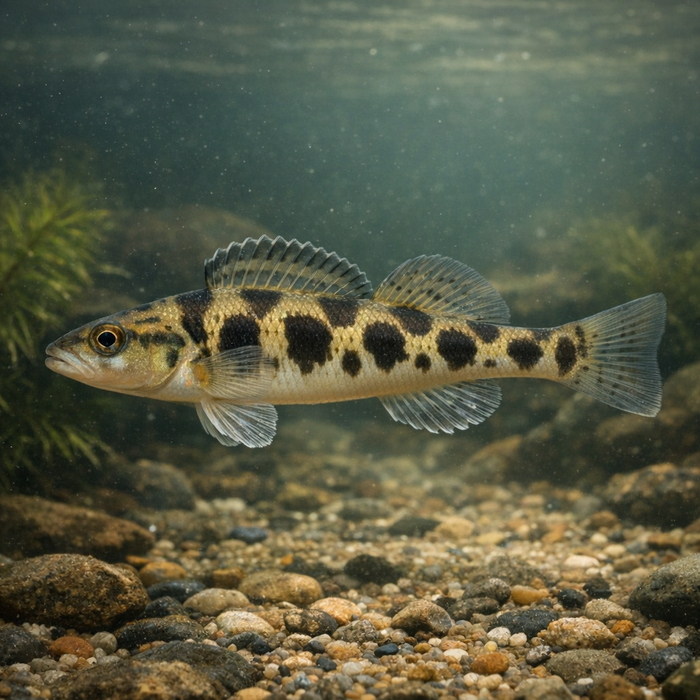
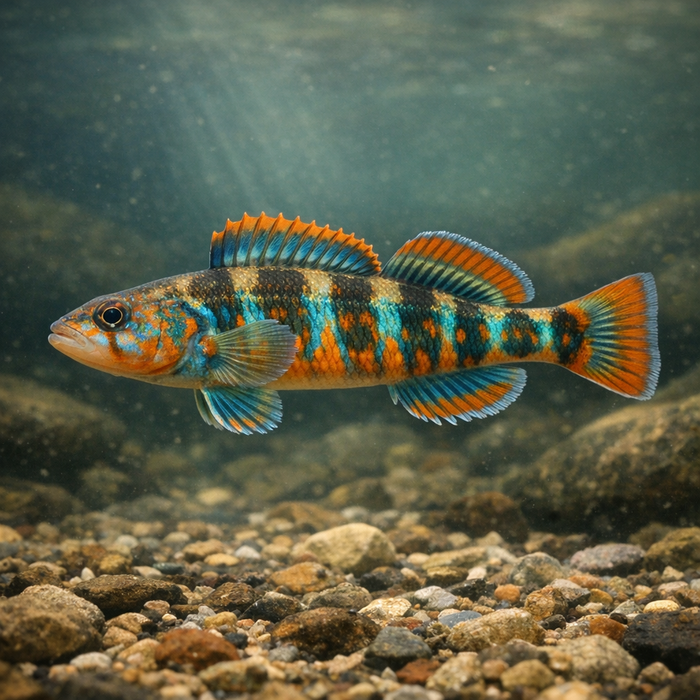
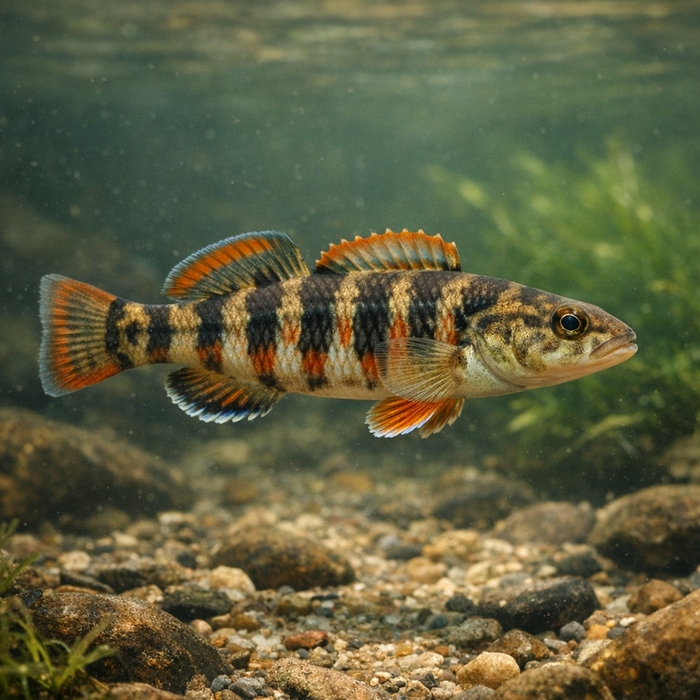
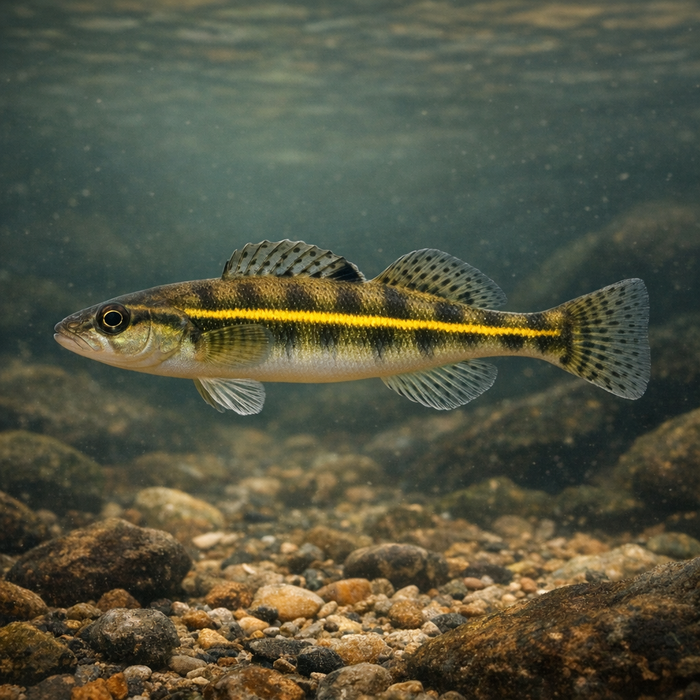
Cherry Darter (Etheostoma etnieri): A riffle-colored spark plug with a cherry-flash paint job and attitude to matchIntroductionThe Cherry darter is proof that big personalities come in tiny packages. This little bottom rocket lives where the current hums, flashing scarlet in the right season and vanishing like smoke when you blink. It's not a classic sportfish, but it's catnip for micro-anglers, photographers, and anyone hooked on biodiversity. If you want Cherry darter facts without the textbook nap, you're in the right riffle.What Makes the Cherry darter Unique?Two things: color and swagger. Breeding males light up with cherry-red bars along their sides, giving the species its name and making it one of the most striking darters in the stream. Pair that with their bulldog temperament over a rock the size of a pancake, and you've got a fish that stands out even among the flashy Etheostoma crowd. They're built for the bottom, with oversized pectoral fins that act like anchors on fast gravel, and a reduced swim bladder that keeps them glued to the substrate rather than drifting like a leaf.Habitat & Global RangeIf you're hunting "Cherry darter habitat," think shallow, fast, and clean. These fish favor clear creeks with riffles and runs, usually over gravel and small cobble, with steady oxygen-rich flow. They hunker low among stones, using micro-eddies you barely notice. While their broader clan spans much of eastern North America, the Cherry darter occupies a much tighter footprint in upland tributaries of the southeastern U.S. That narrow range and need for clean, stable flow make them picky tenants and excellent sentinels of stream health. For anglers, the practical read is simple: forget ponds or slack eddies; go where your boots chatter on gravel and your hat brim sprays mist.Behavior & TemperamentCherry darters are ambush peckers, not cruisers. They rocket a few body lengths to nab drifting invertebrates, then clamp back down to the bottom like little tripods. Courtship is all swagger: males square up, quiver, and chase, painting the riffle with quick flashes of red and dark bars. Spawning runs on spring's clock. Eggs get tucked under or against the undersides of flat stones, and males stand guard, fanning them clean. They rarely school tight, instead spacing out across prime micro-structure like coins on a washboard. Hook one and you'll get a sharp jolt, two tail kicks, and that's it. These are not drag-burners; they're visual trophies.Ecological ImportanceDarters are stream gears that keep things meshing. The Cherry darter hoovers up small benthic invertebrates and, in turn, feeds larger fish and stream predators. Because it insists on clear, moving water and stable gravel, it's a real-time indicator of habitat quality. Lose your riffles to silt, low oxygen, or sloppy land use, and Cherry darters are among the first to ghost. Keep the gravel clean and the flow honest, and they'll keep the invertebrate community trimmed and the food web humming.Conservation & Environmental PressuresThe Cherry darter is not a headline endangered species, but it has zero patience for dirty water. Sedimentation from development and poorly managed road crossings buries gravel. Low flows and warm pulses from withdrawals and deforestation stress oxygen. Even minor pollution events can sucker-punch small, isolated headwater populations. Because their home waters tend to be short, steep, and localized, a single bad upstream decision can whack an entire stretch. Habitat protection, riparian buffers, and sane water management do more for Cherry darters than any hatchery truck ever will.The FishyAF TakeThe Cherry darter won't spool you, but it will school you. It rewards sharp eyes, light hands, and an appreciation for the small stuff. Call it a specialist badge for anglers who notice current seams the width of a bootlace and who get fired up by wild color over wild water. If you're collecting Cherry darter facts for a life list, bring patience, a gentle touch, and a camera. The hero shot here is a two-inch fish lit up like a neon sign, not a cooler full of fillets. Respect the riffle, keep it quick, and let the cherries keep popping for the next curious angler.