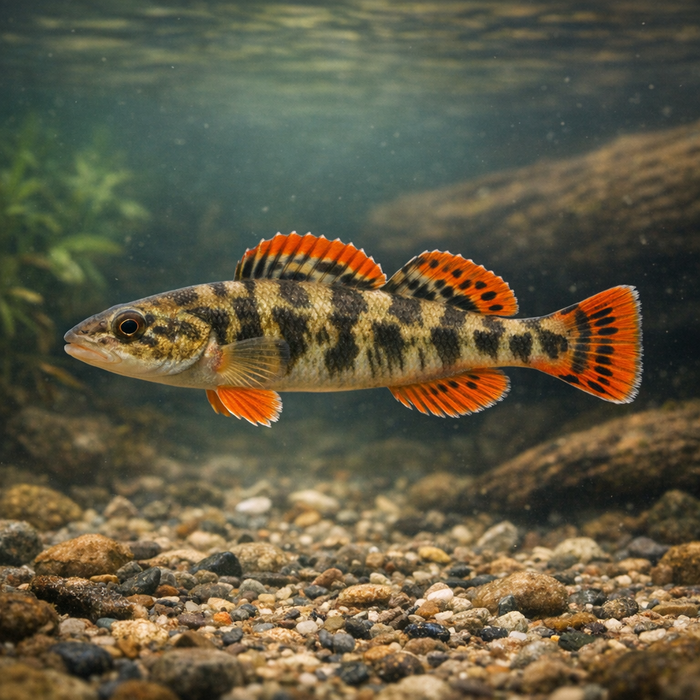
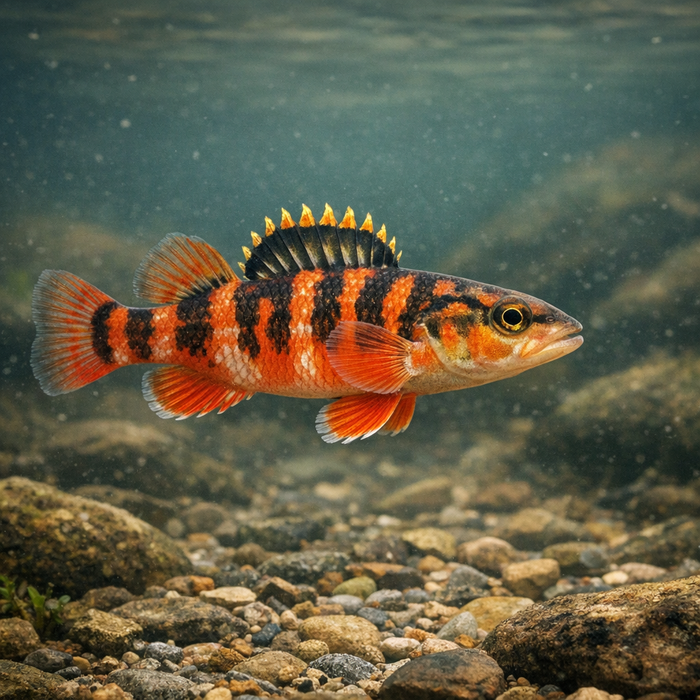
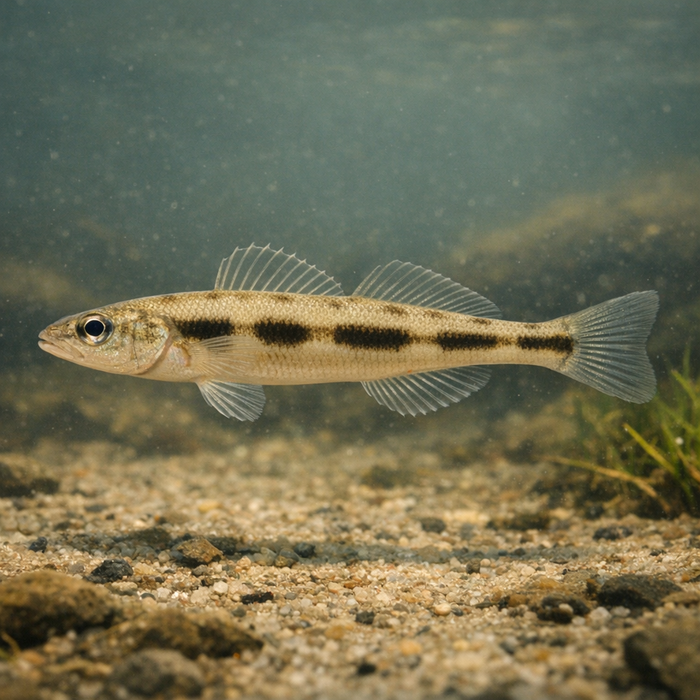
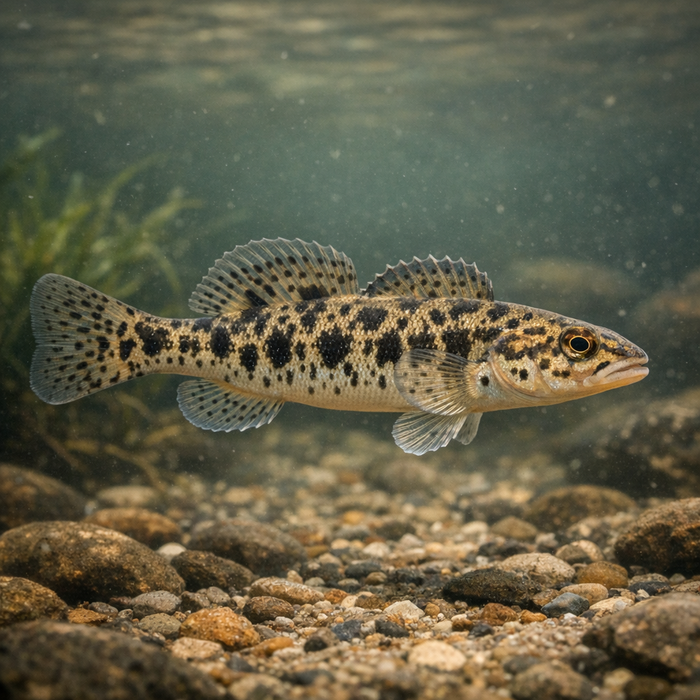
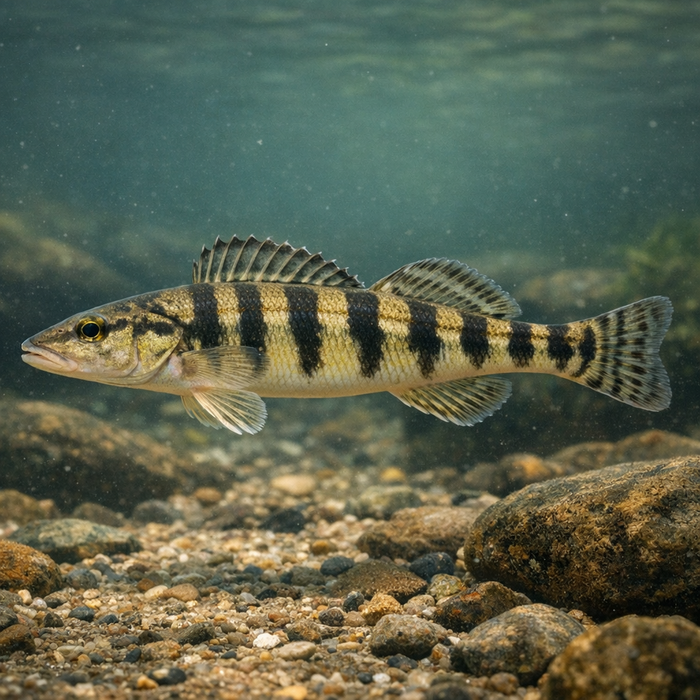
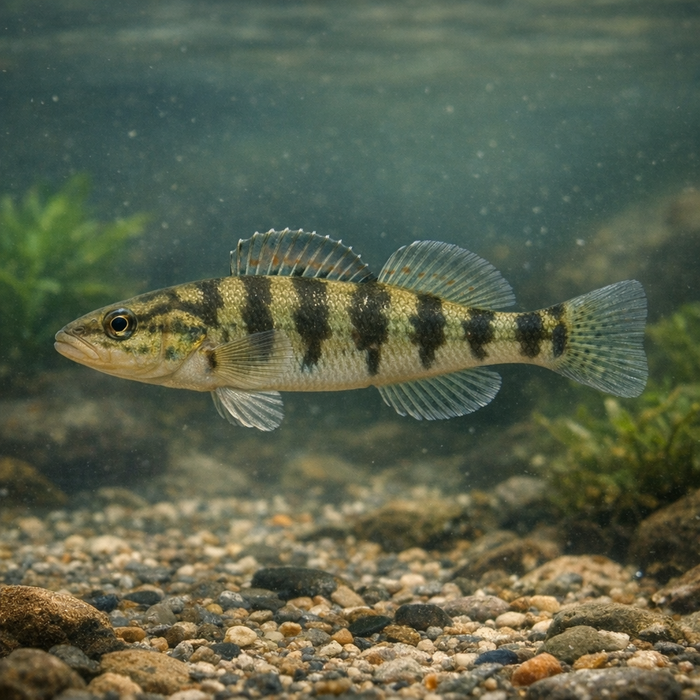
Bayou Darter (Etheostoma rubrum): A Bold, Memorable Hook LineIntroductionThe Bayou darter is a tiny, bottom-hugging specialist that proves great fish stories don't need great big fish. Endemic to a single Mississippi watershed, this micro predator lives where the water hurries, the gravel is clean, and stealth wins. If you're into riffles, rocks, and rare fish with serious attitude per ounce, the Bayou darter has your number.What Makes the Bayou darter Unique?Start with exclusivity. The Bayou darter occurs only in the Bayou Pierre drainage, making every encounter a small miracle. Then there's the engineering: a reduced swim bladder and oversized pectorals let it stick the landing on cobble like Velcro, darting in short bursts to ambush invertebrates. During spring, breeding males ignite with brick-red bars that inspired the species name rubrum. For anglers chasing Bayou darter facts, its combo of extreme range restriction and hardwired riffle adaptations stands out.Habitat & Global RangeThere is no global range. Bayou darter habitat is the Bayou Pierre system in southwestern Mississippi, full stop. Think clear, cool, moderate-to-strong current sweeping across pea gravel, cobble, and the occasional flat slab rock. These fish avoid silt like the plague and vanish when the bottom turns muddy. Depth is measured in inches to knee-deep runs. The cleanest, most oxygenated riffles and nearby runs are the heart of its territory. Undercut banks and shaded bends add cover when flow drops.Behavior & TemperamentThis fish lives fast and close to the bottom. Expect quick lateral darts, short ambushes, and a tight relationship with substrate. Schooling is loose to nonexistent; individuals or small clusters hold micro-territories, especially during spawn. It's not aggressive in the smash-and-grab sense, but it's alert and wary. Any shadow or clumsy step sends it rock-hopping to safety. Feeding centers on benthic invertebrates, nymphs, and tiny crustaceans, with activity pulsing around stable current and good visibility.Ecological ImportanceThe Bayou darter is a riffle report card. Where you have clear water, steady flow, and clean gravel, you have darters. Where you have silt, nutrient spikes, and hammered banks, you don't. As a micro-predator, it pressures aquatic insect communities and recycles energy from the streambed up the food chain. It's also prey for larger fishes and wading birds. In short, protecting the Bayou darter protects an entire suite of riffle life and the water quality people care about.Conservation & Environmental PressuresWith a postage-stamp range, small hits land like haymakers. Siltation from poorly managed roads, channelization, gravel mining, and hard rain events that dump mud into riffles can crush reproduction for a season or more. Low flows concentrate fish, high flows rearrange the furniture, and both stress a species with little room to run. Habitat protection is everything: intact riparian buffers, smart watershed management, and zero tolerance for chronic sediment inputs. Regulations may restrict take or collection, and ethical micro-anglers practice quick photos and release.The FishyAF TakeThe Bayou darter is proof that rarity can be humble and loud at the same time. Loud because those spring colors pop like a neon sign on clean gravel. Humble because it measures success in inches, not pounds. If your fishing itch includes discovery, stealth, and habitats that whistle with current, this little riffle ninja delivers. Approach like a heron, appreciate the water that makes it possible, and brag about your photo, not your scale reading. That's the Bayou darter way.