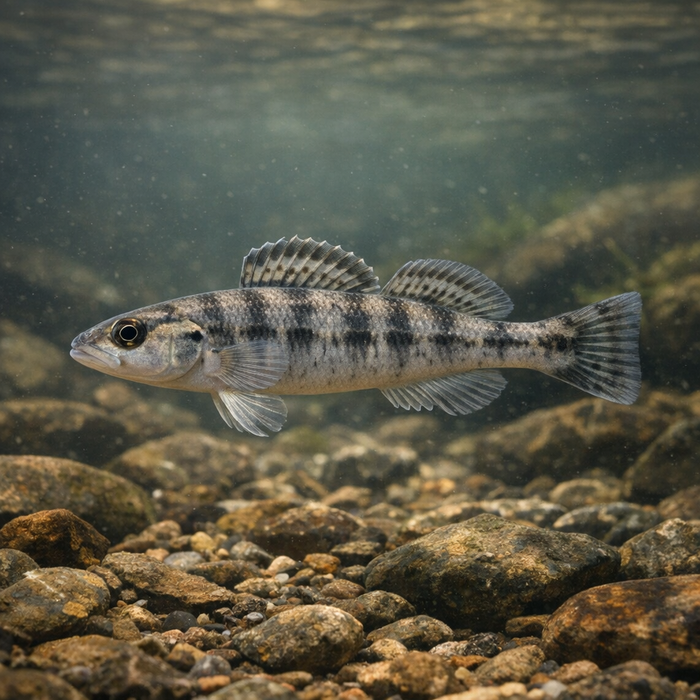
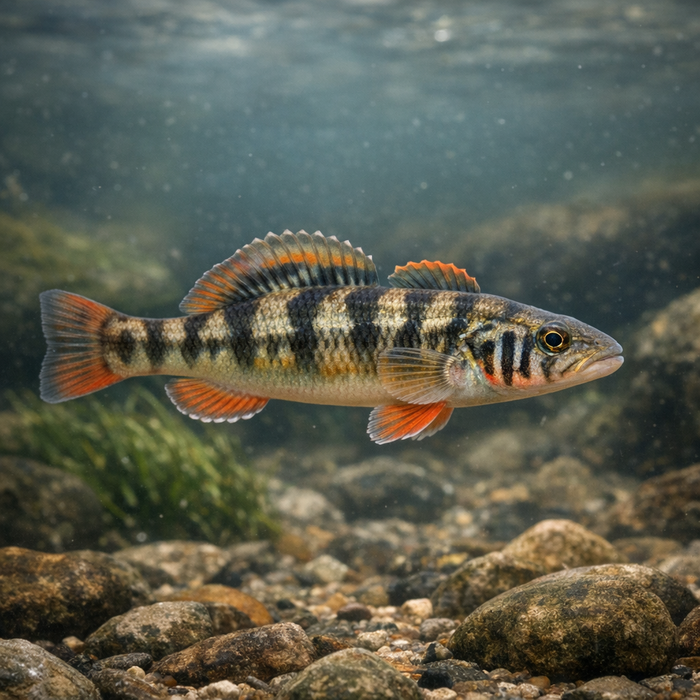
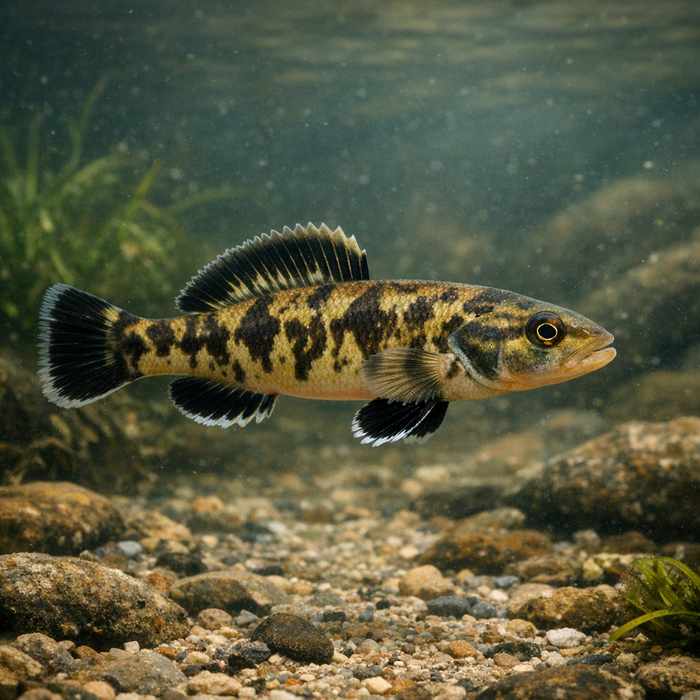
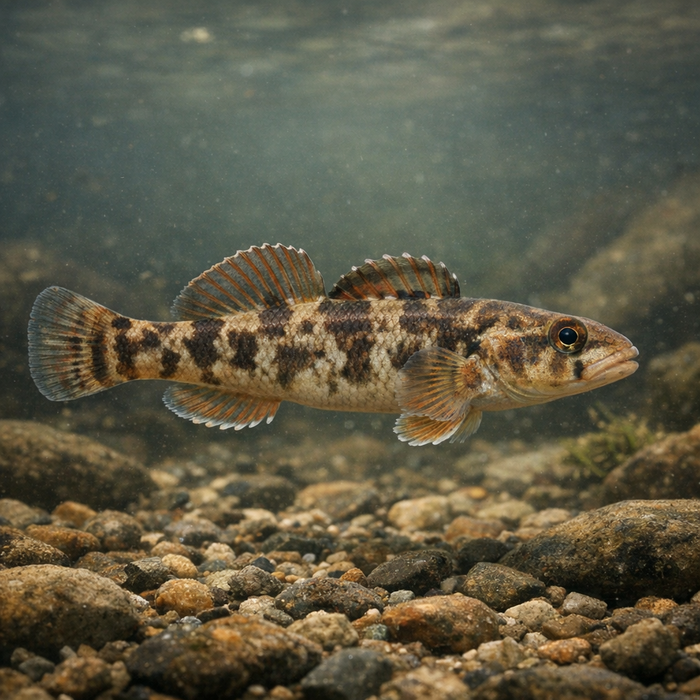
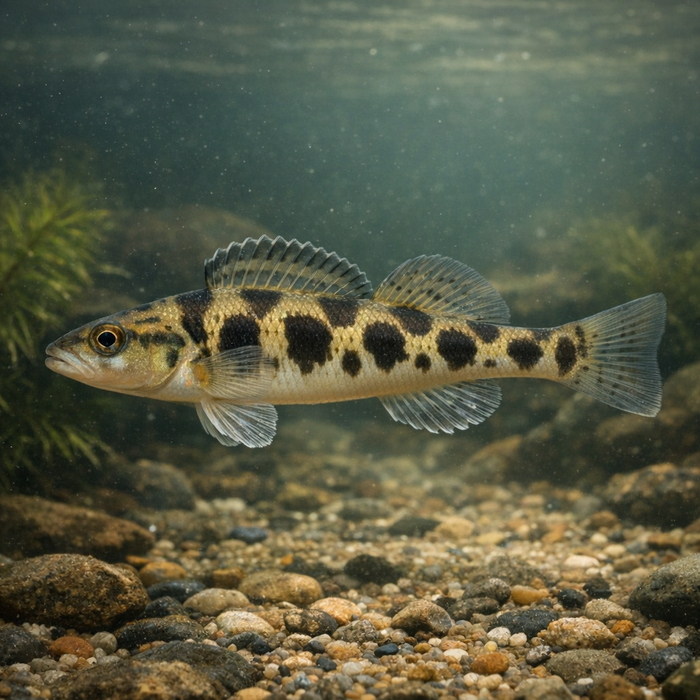
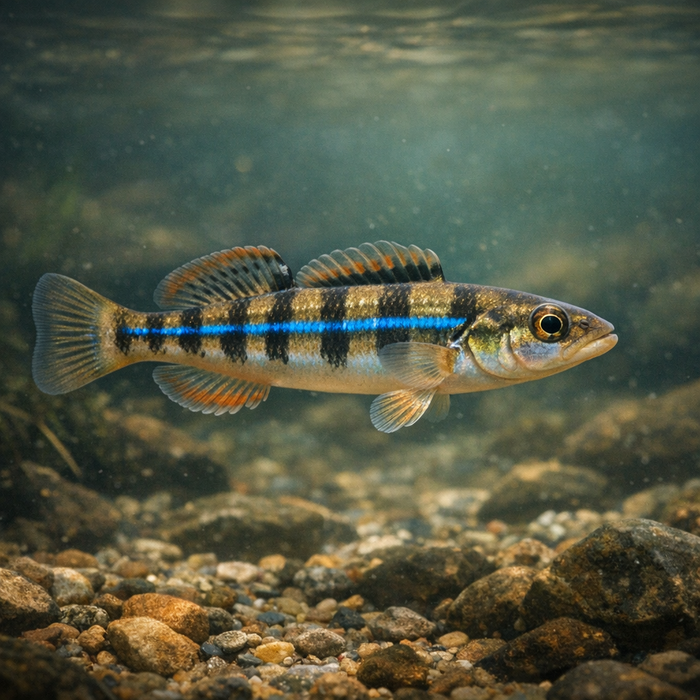
Dusky Darter (Percina sciera): The tiny river sprinter built for fast riffles and sneak attacksIntroductionThe Dusky darter is proof that small fish can bring big attitude. It rockets between cobbles, hugs current like it's glued to the riverbed, and will humble sloppy presentations in water barely deep enough to cover your boots. If you're chasing microfishing challenges or just want a front-row seat to stream ecology, add the Dusky darter to your hit list.What Makes the Dusky darter Unique?Speed and stickiness. The Dusky darter's reduced swim bladder and broad pectoral fins let it lock onto substrate where other fish get pinned in place or swept downstream. Its dusky mottling actually works like stealth camo against mixed gravel and dark cobble. Up close, you'll spot a suborbital "teardrop" bar, crisp body bars that soften with age, and a lean, elongated frame built for short, violent bursts of movement. As darters go, Percina sciera sits in that sweet spot: common enough to find with a plan, uncommon enough to feel earned.Habitat & Global RangeWhen anglers search for Dusky darter habitat, they should think fast, clear, and rocky. The species thrives in cool-to-warm streams and small rivers with clean gravel or small cobble, especially in riffles and runs where oxygen and insect drift stay high. You're working edges: current seams below riffle lips, tailouts behind midstream boulders, and knee-deep glides with pea-to-golf-ball gravel. Geographically, it occupies portions of the Midwest and Southeast, including Mississippi and Ohio River tributaries and select Gulf Slope drainages. Local abundance swings with substrate quality; silted riffles usually equal ghost-town numbers.Behavior & TemperamentThe Dusky darter doesn't cruise; it teleports. Expect short sprints between stones followed by locked-in ambush holds. It feeds close to bottom on drifting macroinvertebrates, rising just inches when the buffet floats past. Schooling isn't really its thing. You'll pick singles and small clusters in prime seams rather than clouds of fish. Spawning fires up in spring with males darkening and showing subtle tuberculation. Like most darters, it's skittish in clear water and punishes heavy footsteps or sloppy shadows.Ecological ImportanceStrip the silt from riffles and darters repopulate fast, telling you the system still has a pulse. The Dusky darter is a high-clarity, high-oxygen indicator; where it's common, you'll usually find caddis, mayflies, and stoneflies running strong. That means river food webs are firing on all cylinders, from bugs to small predators to larger sportfish upstream and down. Call it the riffle's quality-control inspector.Conservation & Environmental PressuresBiggest threat? Dirty gravel. Excessive sediment from poor road crossings, eroding banks, and unfiltered runoff fills the gaps between stones where eggs and invertebrates live. Add low summer baseflows and the runway shrinks. The Dusky darter is generally listed as Least Concern, but that label depends on local watershed care. Keep the water clean, keep the riffles breathing, and darters handle the rest.The FishyAF TakeIf you want a fish that measures your stealth and presentation more than your biceps, the Dusky darter is your coach. It's micro-sized but macro-picky. Nail the current line, shorten the drift, and use tiny hardware, and you'll stack memorable Dusky darter facts in a hurry. Blow a step, and you'll only see a smoke trail. It's the perfect reminder that fishing skill scales down beautifully. Master this little shadow, and your big-water game gets sharper too.