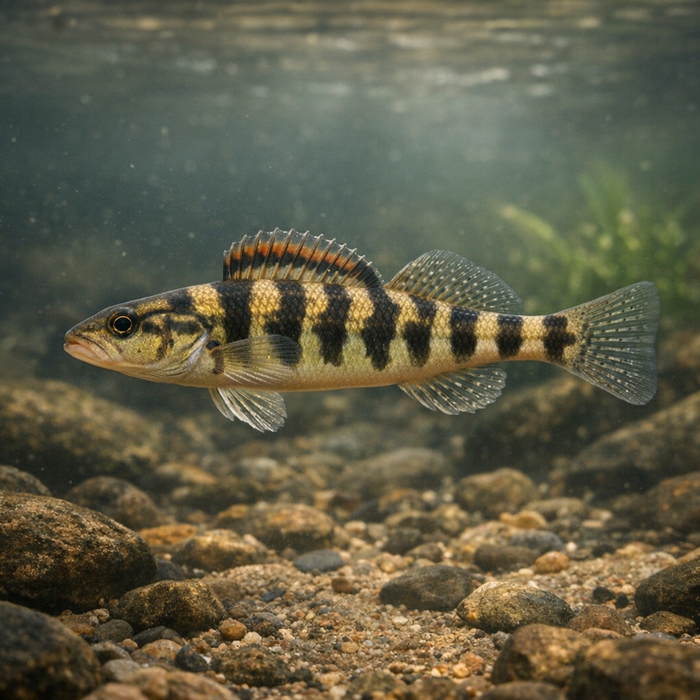
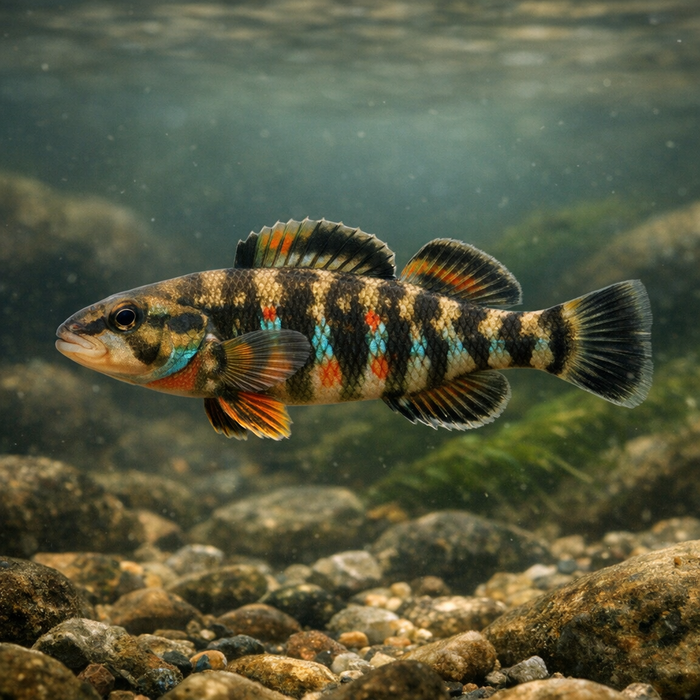
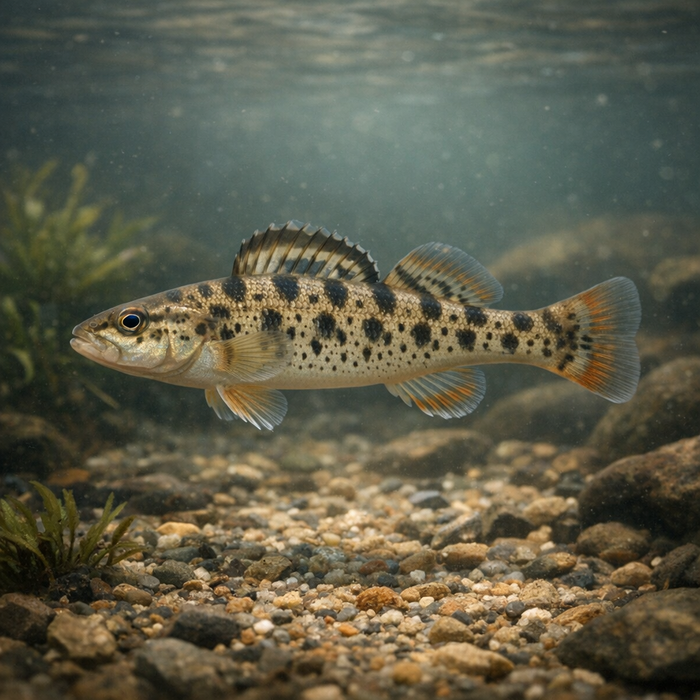
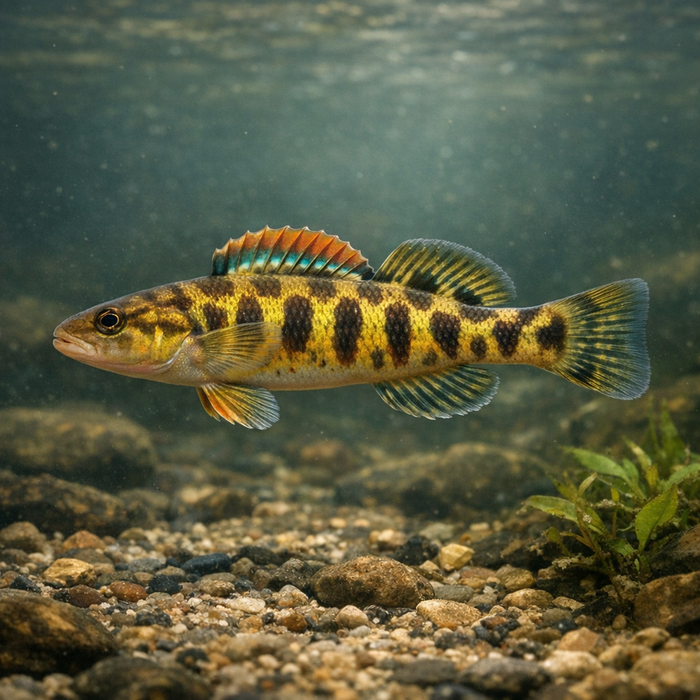
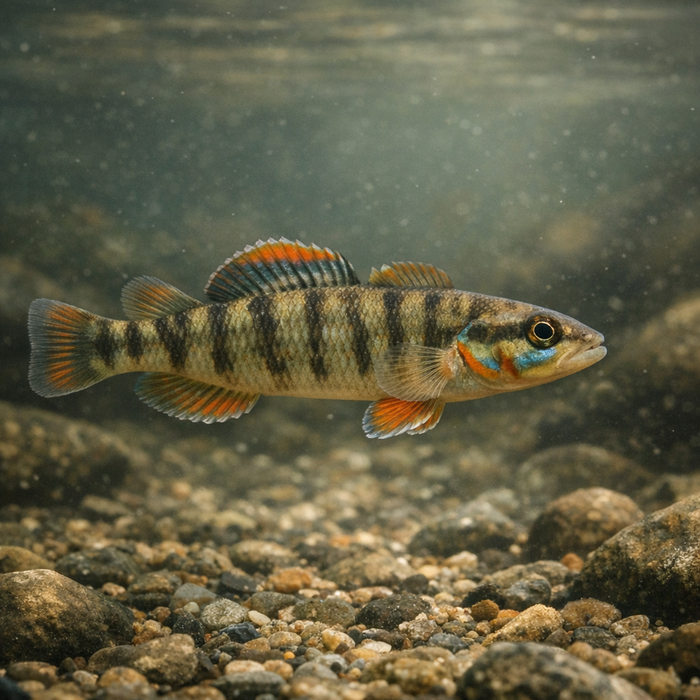
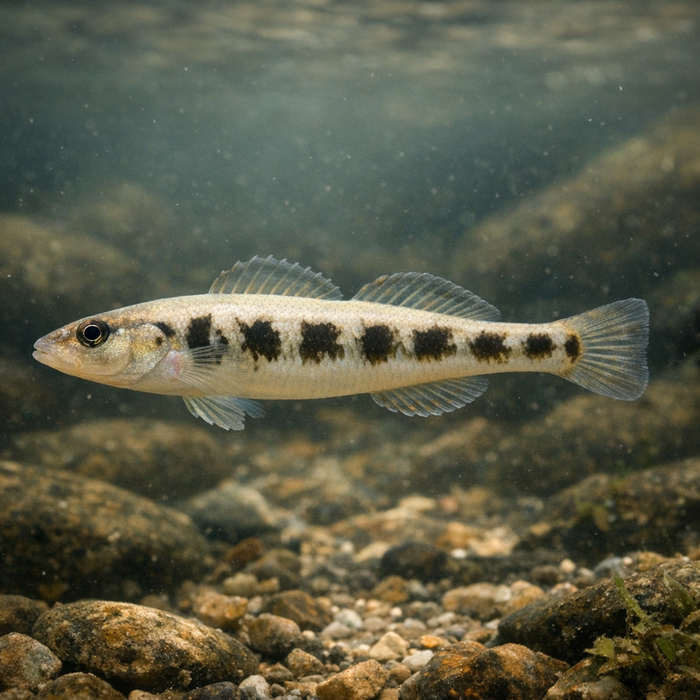
Arrow darter (Etheostoma sagitta): A pocket-rocket riffle sniper that proves small fish can have big attitude.IntroductionThe Arrow darter is the riverbed's tiny assassin, a fish that hugs rock and blasts off only when opportunity drifts by. Blink and you'll miss it; watch closely and you'll learn more about currents and seams than any casting clinic could teach. For anglers curious about micro fishing or anyone who loves wild headwater streams, the Arrow darter delivers sneaky charisma in a package smaller than your finger. If you're hunting Arrow darter facts or just trying to understand what makes these little oddballs tick, you're in the right riffle.What Makes the Arrow darter Unique?Start with design. Arrow darters lack a swim bladder, which is perfect for living in fast current because it keeps them glued to the bottom instead of bobbing like a cork. Those wide pelvic fins act like a tripod on slick cobble, and the arrowed head helps them slip into micro-eddies behind gravel. When something edible drifts by, they don't cruise after it. They explode, cover surprising distance in a blink, and snap right back into the seam. In spring, males light up with flashy blue-green bars and orange trims that look more tropical than Appalachian. And here's a quirky twist: taxonomists recently split the complex, leaving Etheostoma sagitta in the Cumberland system and parking the Kentucky Arrow Darter under E. spilotum. Small fish, big drama.Habitat & Global RangeArrow darter habitat is basically the definition of clear, cool, moving water. Think headwater tributaries, spring-fed branches, and mid-sized creeks with clean gravel and cobble riffles. Substrate matters; bury those rocks in silt and the party is over. Range-wise, the Arrow darter is a regional specialist, tied to the Cumberland River system in Kentucky and Tennessee. They prefer shallow runs and riffles inches to a couple feet deep, then slide to slower pools or margins when flows drop or winter chills push them off the fast lane. If your boots crunch clean gravel and your shins feel pushy current, you're in the neighborhood.Behavior & TemperamentThe Arrow darter is a bottom-perching ambush hunter, more hawk-on-a-branch than patrolling minnow. It watches, bursts, and resets. Males get territorial around prime spawning stones in spring, posturing with color instead of brute force. The fish are cryptic, keyed to the rhythm of the current, and spook easily from overhead shadows or clumsy wading. Short feeding windows track with flow and light; cloudy days and steady current usually beat blazing sun and bathtub trickles. In winter, they tuck into gentler water and conserve energy, but even then they'll punch a quick ticket when a nymph drifts right.Ecological ImportanceArrow darters are serious insect managers, picking off mayfly, stonefly, and caddis nymphs that otherwise blanket the rocks. They in turn feed larger stream predators, stitching the food web from riffle bugs to bass and sunfish downstream. Their pickiness makes them excellent bioindicators: when conductivity spikes, when silt smothers gravel, when the chemistry gets weird, Arrow darters vanish early. Lose the darter, and you've likely lost a lot of the hidden stream machinery too.Conservation & Environmental PressuresSmall range, specific habitat, and riffle dependence mean the Arrow darter doesn't have much wiggle room. Sedimentation from road building, poorly managed logging, or mining chokes the interstitial spaces they need to hunt and spawn. Conductivity and other water-quality shifts can erase them from a creek before most people even notice. Add climate whiplash and summer low-flows and you've got a fish that's fine in intact watersheds and gone where corners get cut. Taxonomic splits add to the confusion, but the takeaway is simple: clean water and stable flows keep Arrow darters common where they still thrive.The FishyAF TakeIf you want to master current reading, watch an Arrow darter. You don't fight them for minutes or tape out some hero length; you learn to present perfectly in six inches of water. It's precision over power, stealth over swagger. For anglers who think small streams and small fish can't be challenging, the Arrow darter begs to differ. When you finally connect, it's a tiny high-five from a creek that still works the way it should.