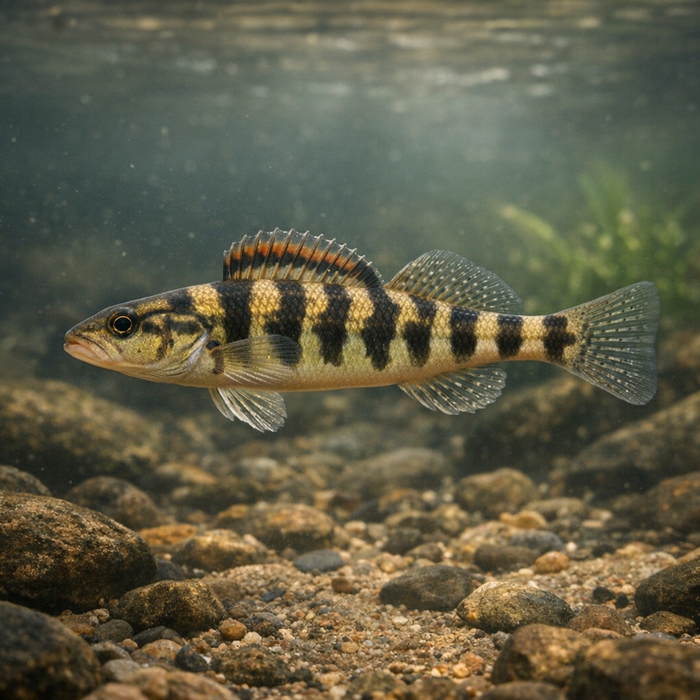
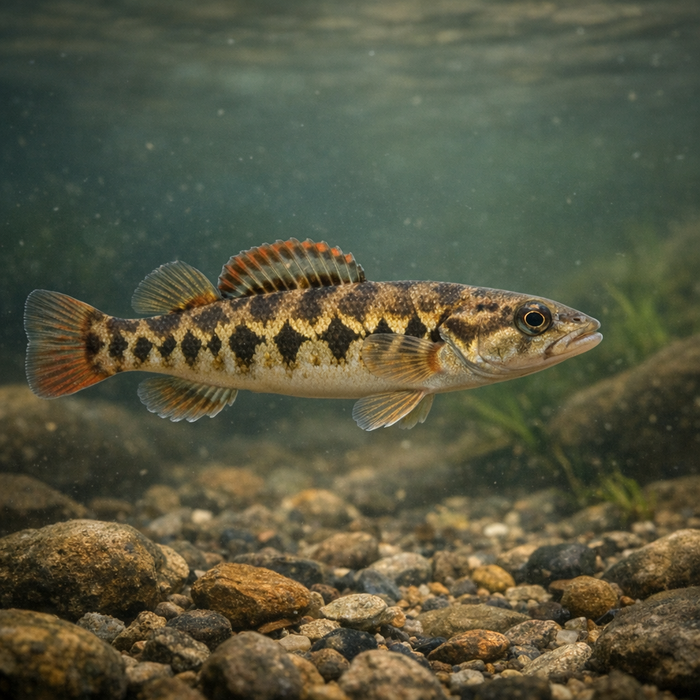
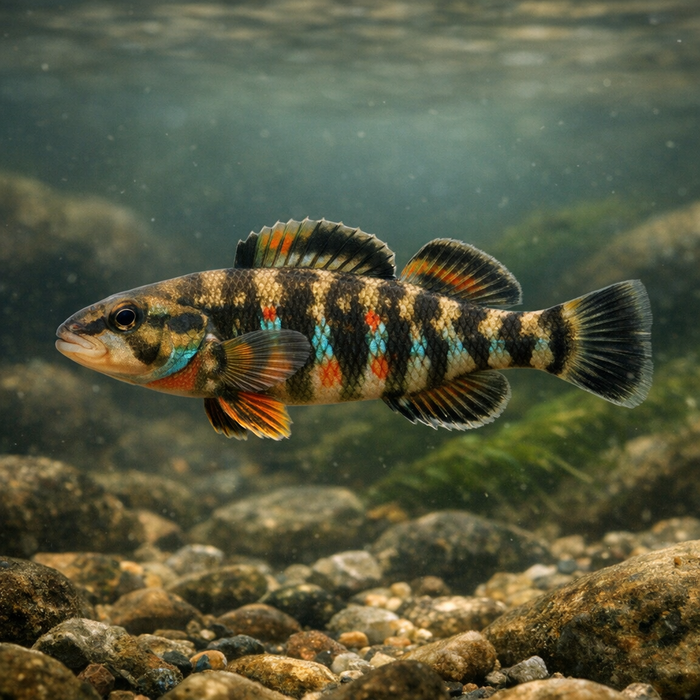
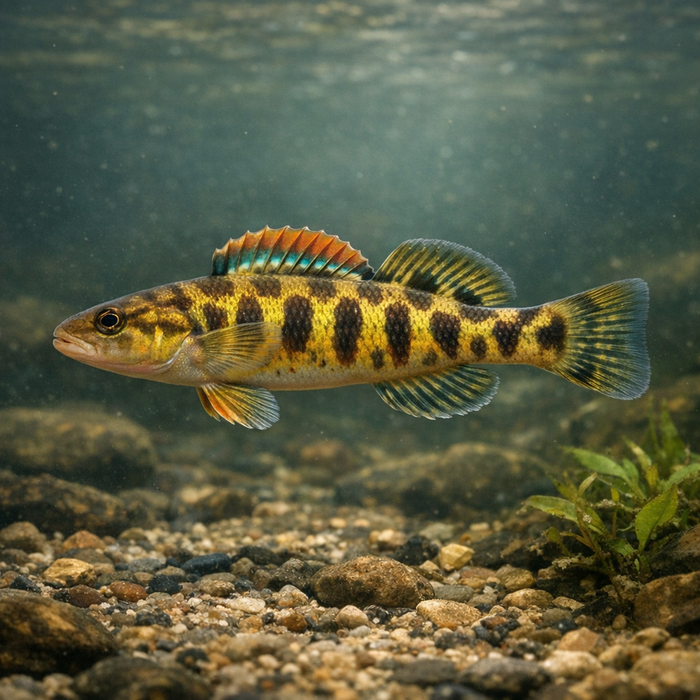
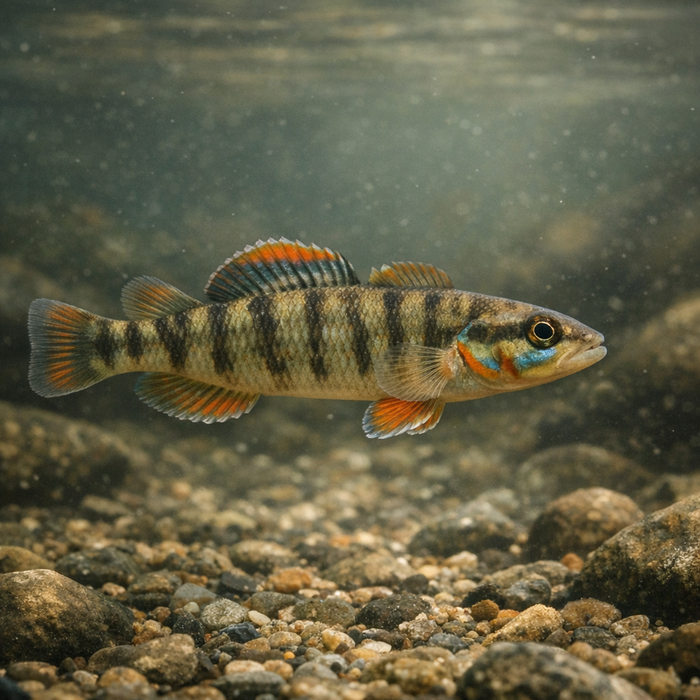
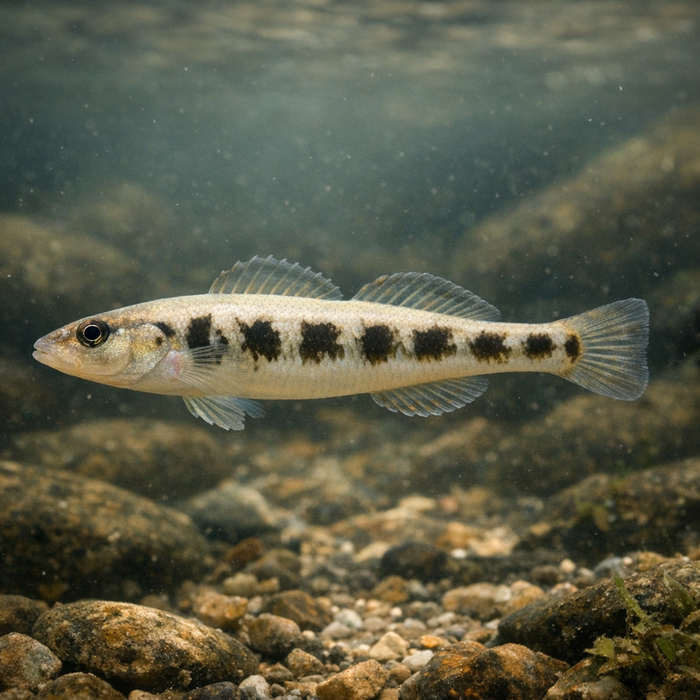
Frecklebelly Darter (Percina stictogaster): Small Fish, Big Personality In Fast WaterIntroductionThe Frecklebelly darter punches way above its weight class. It's tiny, tricky, and laser-tuned to rushing riffles where your footing isn't as sure as its grip on the gravel. For anglers who chase nuance over brute force, this fish is a graduate course in reading current and placing micro-sized offerings with surgical precision. If you want Frecklebelly darter facts without the yawn, start here: it's a little river rocket built for life in the fast lane.What Makes the Frecklebelly darter Unique?First, the name isn't hype. The Frecklebelly darter carries peppery spots on its belly, a field mark that inspired both its common name and the species epithet stictogaster. Second, like many darters, it basically ditched the swim bladder. That means it doesn't hover; it sticks to the bottom and darts in short, decisive bursts. Third, breeding males sharpen up with orange-edged fins and crisp body patterns in spring, giving even a few inches of fish undeniable stage presence.Habitat & Global RangeThe Frecklebelly darter habitat story is all about clean, cool rivers with moving water. Think knee-deep riffles, cobble and gravel runs, and steady current with plenty of oxygen. You won't find this fish loafing in silt or sluggish backwaters; it thrives where the water carries a low rumble and the substrate is honest rock, not muck. It occupies select drainages in the eastern U.S., with a patchy, stream-specific distribution that keeps it off most casual anglers' radar. If you want to meet one, bring wading boots, not a boat.Behavior & TemperamentThe Frecklebelly darter is not a cruiser. It's a waiter and a pouncer. It tucks into micro eddies behind stones, then zips forward to intercept drifting morsels with sniper timing. Aggression is low, precision is high. They won't chase long, but they will punish a perfect drift for a heartbeat. Flighty by nature, they spook easily in clear water and flatten against the bottom when threatened. It's a stealth game where the fish always sees you first unless you think like current and move like a heron.Ecological ImportanceDon't let the size fool you. The Frecklebelly darter is part of the quality-control crew in healthy streams. It converts invertebrates into fish biomass, feeds larger predators, and telegraphs habitat quality. When riffles are clean, oxygen is high, and flow is stable, darters flourish. When silt buries gravel, they vanish. If you're looking for a litmus test, darter diversity is it, and the frecklebelly is one of those indicator species telling you the river is getting it right.Conservation & Environmental PressuresThis fish's superpower is also its Achilles' heel. Extreme habitat specificity means the Frecklebelly darter is sensitive to anything that chokes, dams, or muddies a stream. Sedimentation from poor land use, low dissolved oxygen from warm, stagnant water, and channel alterations all hit hard. Populations can be hyper-local; lose one riffle complex and you might gut a stronghold. The good news: protect the watershed, keep the gravel clean, and the frecklebelly responds fast. It doesn't need luxury, just authentic river.The FishyAF TakeThe Frecklebelly darter is a stunt double for stealth and precision. You don't muscle this fish; you earn it with sight lines, gentle wading, and baits measured in millimeters. It's the perfect target when big-fish ego gets stale. If you want bragging rights, land a clean photo of a frecklebelly in blazing spring colors and call it a day. For micro anglers, it's bucket-list material. For everyone else, it's a reminder that the best stories sometimes weigh less than an ounce and live where the water talks. Consider this your invitation to learn the riffle language and add real Frecklebelly darter habitat savvy to your playbook.