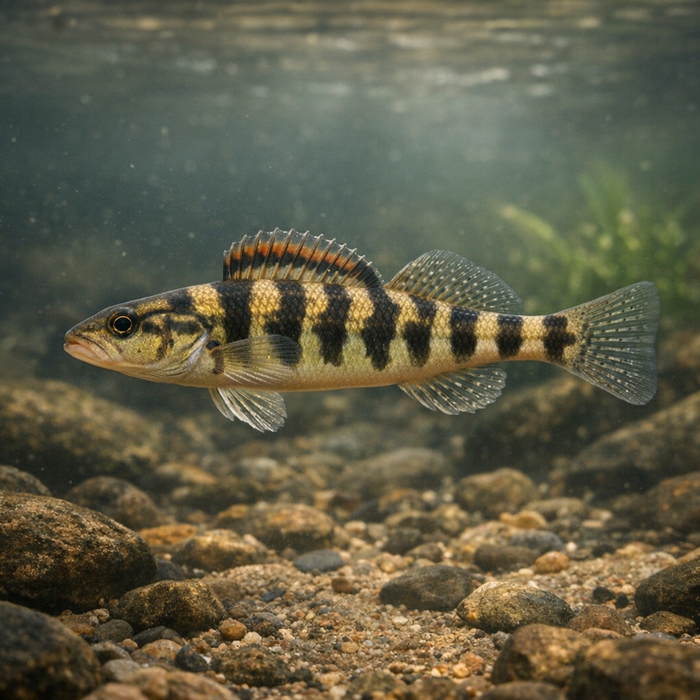
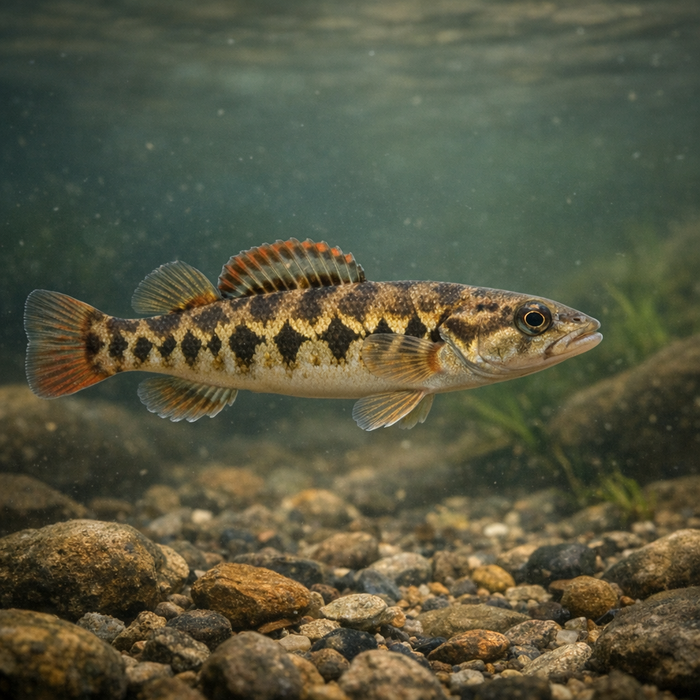
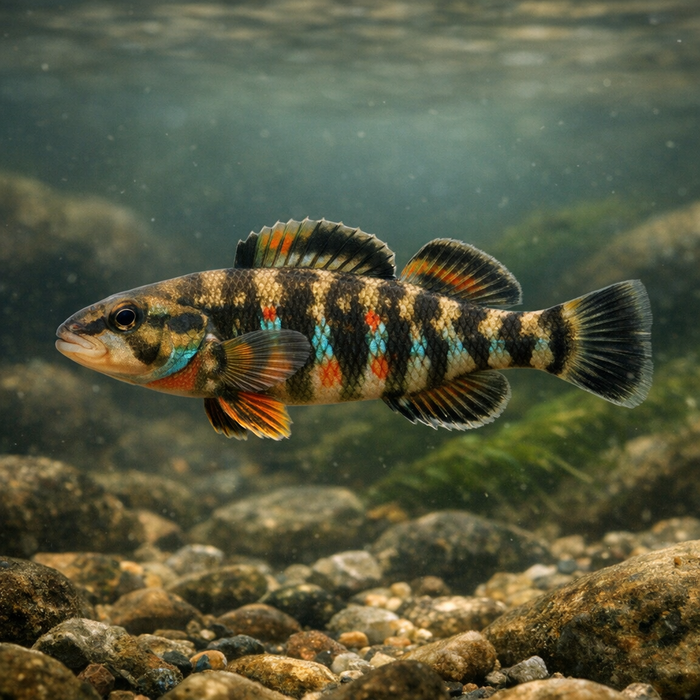
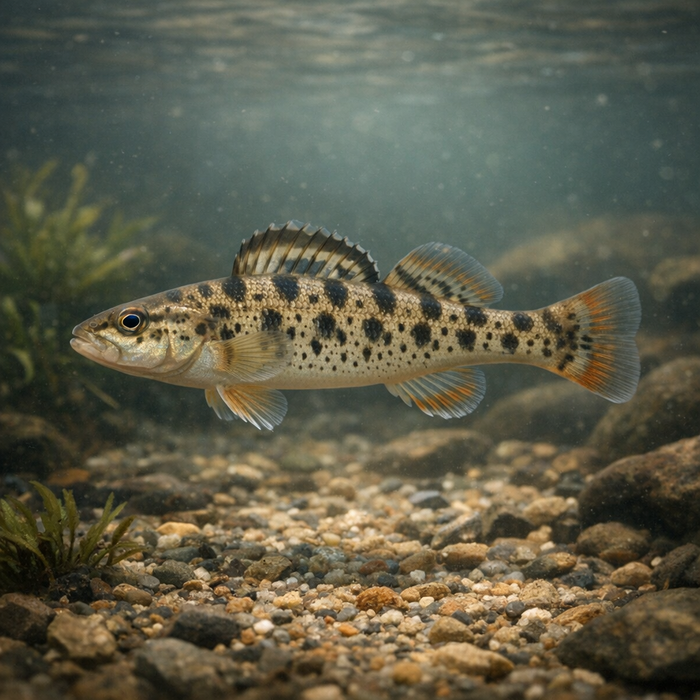
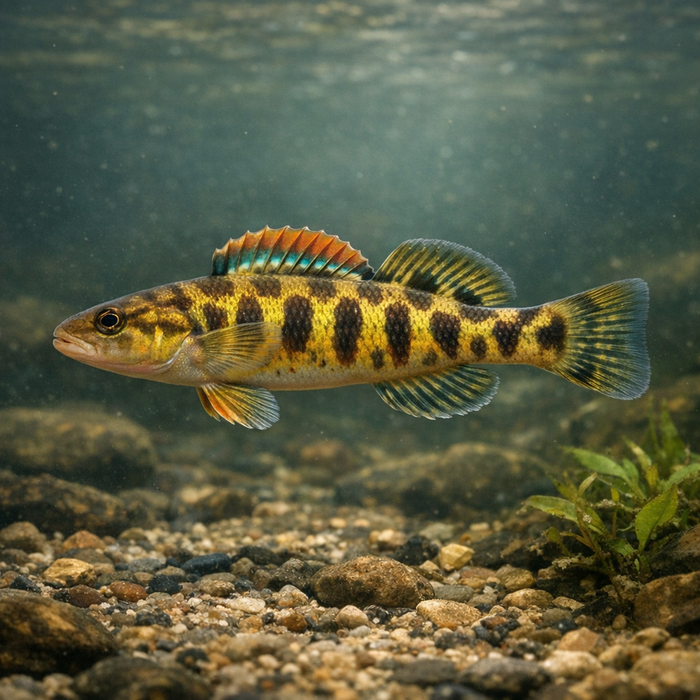
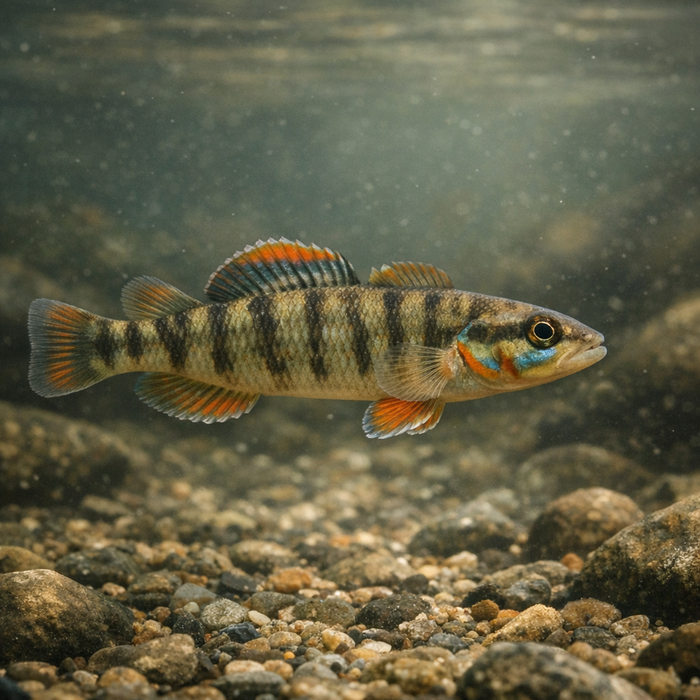
Paleback Darter (Etheostoma pallididorsum): A Bold, Memorable Hook LineIntroductionThe paleback darter is a master of ankle-deep chaos, built for life where water sprints over stone. Tiny, quick, and unapologetically local, it's the kind of fish you only notice once you slow down, crouch low, and let your eyes adjust to the flicker-and-vanish game happening across the riffle. If you're hunting Paleback darter facts or trying to decode Paleback darter habitat, you've come to the right gravel bar.What Makes the Paleback darter Unique?First, that name fits like a custom jersey. Pallididorsum means pale back, and this darter sports a ghosty dorsal stripe that melts into sunlit current, a smart camouflage trick for the brightest water. Second, it's a bottom athlete. With a reduced swim bladder and oversized pectoral fins, the paleback darter grips flow and darts between cobbles instead of wasting energy midwater. Third, subtlety. While some darters glow like parade floats in breeding colors, this one keeps it minimalist: dusky saddles, faint greenish highlights, and a back that looks airbrushed by the river itself.Habitat & Global RangeThe paleback darter is a riffle specialist from the Ozark-styled playbook: clear, cool to warm streams with clean gravel and cobble, honest current, and high oxygen. You'll meet it where a knee-high flow slaloms around stones and sunlight shoots straight to the bottom. It prefers microterrain: small rock ledges, pebble patches, and the little dips behind a fist-sized stone. Think creek moments rather than giant river scenes. While not a globe-trotter, what it lacks in range it makes up for in being perfectly matched to its lane. When anglers talk Paleback darter habitat, they're really talking about textbook riffles and runs that look too shallow to hold anything.Behavior & TemperamentThe paleback darter doesn't swim much in the classic sense; it launches. Short, efficient hops plant it in new positions before your eyes recalibrate. It's wary, especially under bluebird skies, and spooks hard from overhead shadows. Feeding is all about timing and micro-positioning around the stones, with quick ambushes in the seams and softer pockets. Even in a trickle you'll find distinct "routes" it runs, pausing just long enough to stalk the next bite before rocketing again. There's no real brawler's fight here, just a jittery sprint that ends quickly once hooked on responsible micro gear.Ecological ImportanceThis little fish is a riffle barometer. Clean gravel, steady current, and oxygen-rich water aren't preferences; they're requirements. When sediments clog the gaps or algae slicks the stones, paleback darters check out. In turn they fuel the food web, converting invertebrate life into something larger predators can use. Their short lifespan and rapid turnover make them sensitive to year-to-year flow swings, floods, and droughts, which turns populations into honest reporters on river health.Conservation & Environmental PressuresSiltation is the villain here. One storm through a badly managed watershed and those elegant spaces between stones vanish under muck. Add in low summer flows, poorly timed withdrawals, or sloppy construction near a creek and you have a darter's worst week. While not every list gives the paleback darter a formal threat label, the species plays on a very small stage and hates surprises. Protecting gravel, shade, and consistent baseflow isn't just eco talk; it's how you keep these fish in the program.The FishyAF TakeIf small fish bore you, you've never actually watched a paleback darter work a riffle. It's precision on fast-forward: part hummingbird, part parkour athlete, all bottom grit. The pale back isn't a cute quirk; it's a tactical eraser that deletes outlines in glary water. For anglers, the move is respect and restraint. Sight, stalk, kneel, and use micro gear if you absolutely must interact. Better yet, take a beat and let it teach you how current carves opportunities. The paleback darter turns a forgettable two-inch stream slice into a living masterclass on flow, camouflage, and the art of being built exactly right for one job.