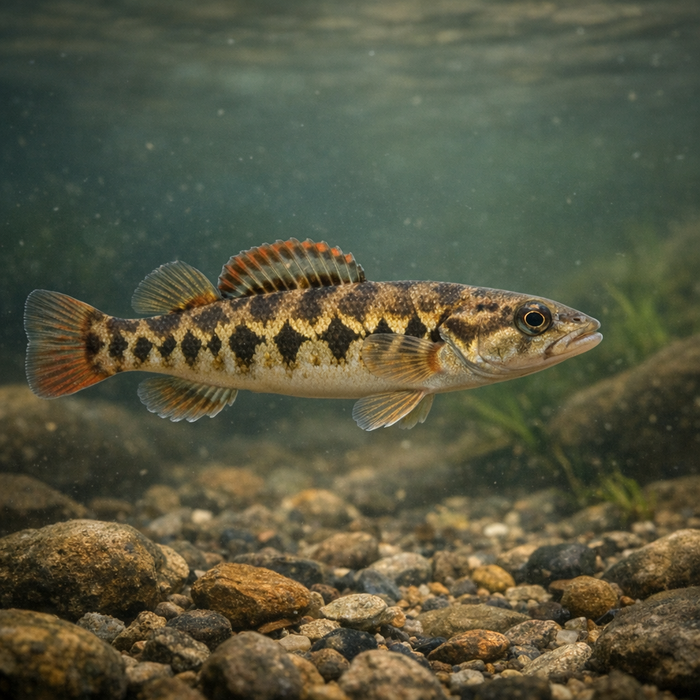
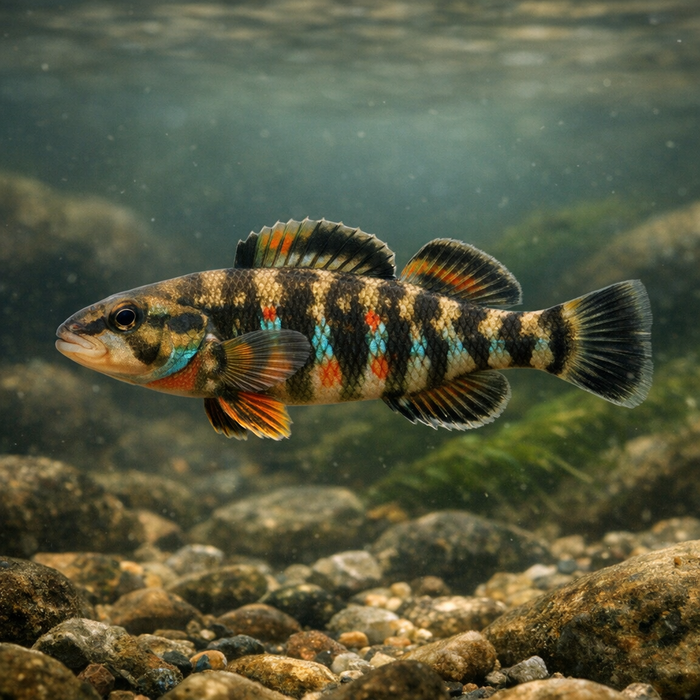
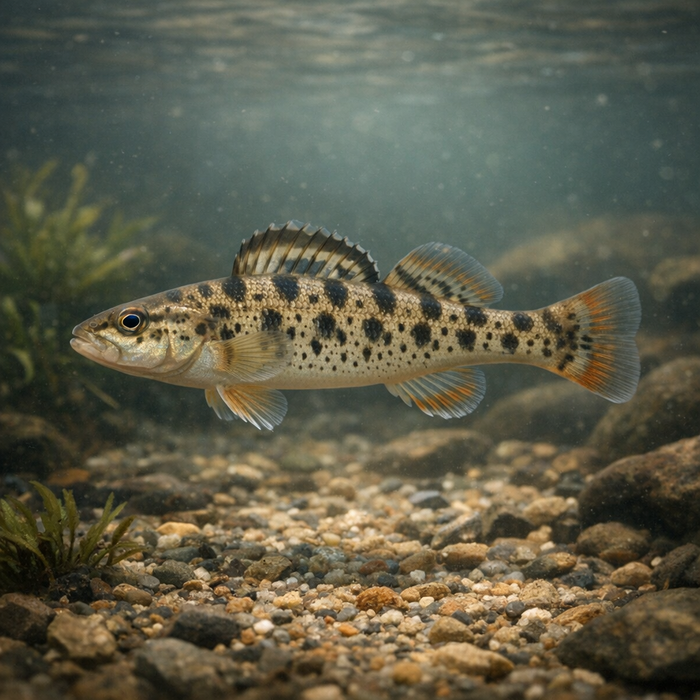
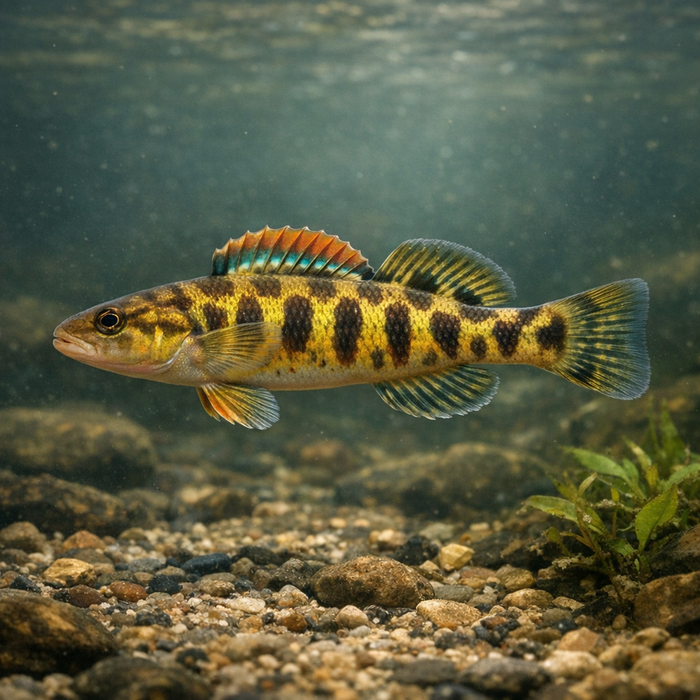
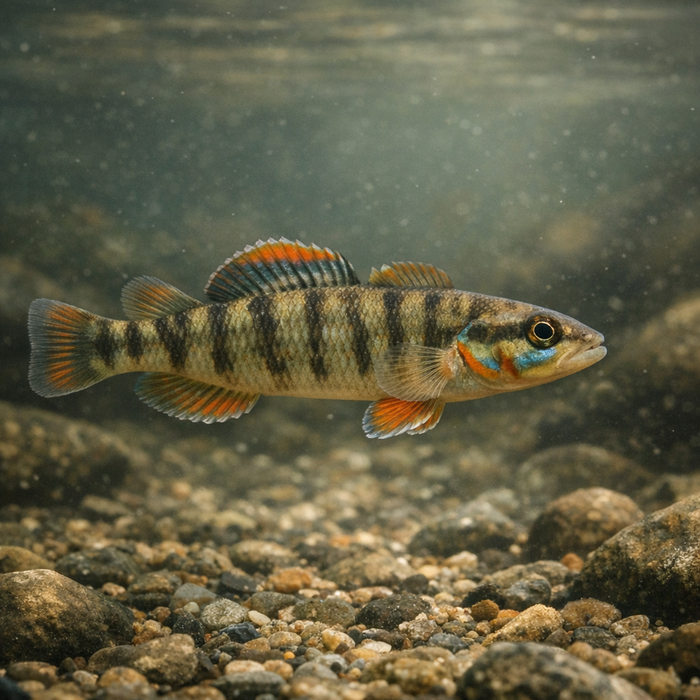
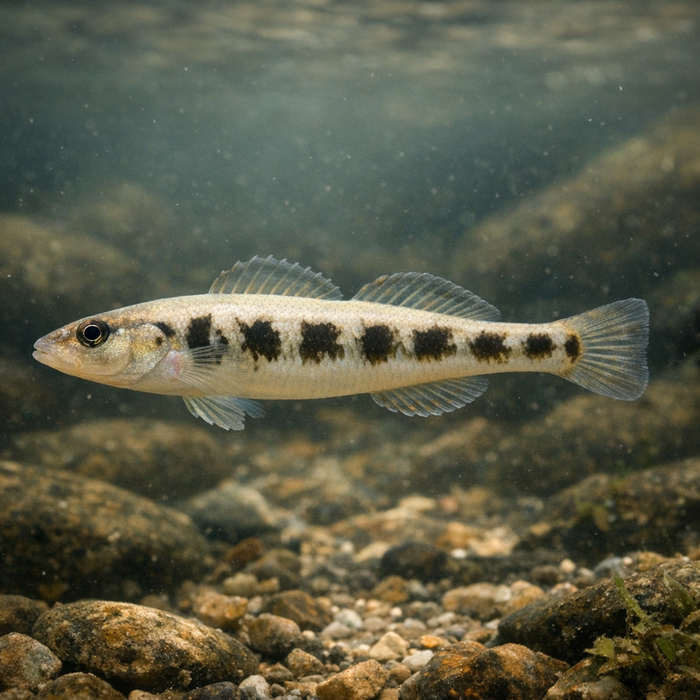
Appalachia Darter (Percina gymnocephala): A Bold, Memorable Hook LineIntroductionThe Appalachia darter is the kind of fish you only notice after you slow down. It hugs rock, vanishes against gravel, and then rockets a body length to crush a drifting midge. For anglers who enjoy technical puzzles and tiny targets, this little riffle sprite delivers more challenge per ounce than most big-water bruisers. Consider this your quick guide to Appalachia darter facts, behavior, and why its subtlety is exactly the point.What Makes the Appalachia darter Unique?First, the head. Percina gymnocephala literally means naked head, a nod to its sparse head scalation. It gives the fish a sleek, matte look that fits its low-profile lifestyle. Second, it is a precision engineer of fast water. The Appalachia darter wears outstretched pectoral fins like suctionless anchors, bracing into current while waiting for drifting insects. Third, during spring, males light up with sharp fin accents that look like someone pinstriped a race car. This is not just another tiny brown fish. Up close, it is pure riffle art.Habitat & Global RangeIf you want Appalachia darter habitat in one phrase, think clear, cool streams with cobble and gravel riffles. It sticks close to the bottom and uses micro-relief around stones to conserve energy. The species is an Appalachian specialist, occupying select waters where silt stays low and current stays honest. These are the creeks with a heartbeat, not the lazy backwaters. Seasonal flows shift fish slightly among riffles, runs, and nearby pockets, but they rarely abandon their high-oxygen neighborhood.Behavior & TemperamentThe Appalachia darter lives small and fast. It holds tight to a dinner-plate patch of current and ambushes passing invertebrates with short, explosive dashes. It is wary in bright, gin-clear conditions, yet still highly catchable when your drift is flawless. Spawning tends to track spring flows and rising temperatures, with females inserting eggs into clean gravel and moving on. No nest castles or epic guarding bouts here. Just a focused, efficient life in the fast lane.Ecological ImportanceAs a benthic insect hunter and bite-sized snack for larger fish, the Appalachia darter is a tidy link in stream food webs. Its pickiness about clean, stable riffles turns it into a living water-quality meter. Where the Appalachia darter stays abundant, odds are the stream is doing many things right. Lose the gravel or cloud the water with silt, and you lose more than a small fish. You lose the riffle machine that converts current and insects into energy for the whole creek.Conservation & Environmental PressuresThe biggest enemy is fine sediment that fills interstitial spaces in gravel. Pave a watershed poorly, timber it badly, or channelize a stream, and the micro-architecture this fish needs disappears. Low summer flows and warm spikes do not help either. While the Appalachia darter may be locally common in suitable reaches, its fussy requirements make it vulnerable to cumulative insults. Protecting riparian buffers, keeping stormwater in check, and preserving natural flow patterns are not just good ideas; they are nonnegotiable for keeping these riffles alive.The FishyAF TakeThe Appalachia darter is a litmus test wrapped in fins. If you can see it where you fish, your creek still breathes. If you can catch it, you are paying attention. For anglers, this species turns microfishing into a craft: stealthy approach, perfect drifts, tiny hooks, and honest current. You are not muscling a trophy. You are threading a needle in moving water and earning a handshake from a wild, miniature athlete. When you learn the Appalachia darter, you learn the stream. And that intel scales up to everything else you chase.