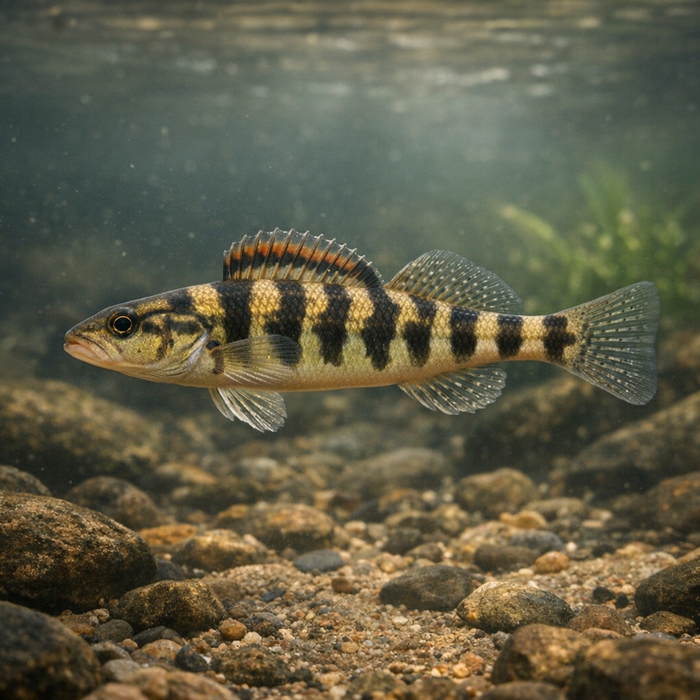
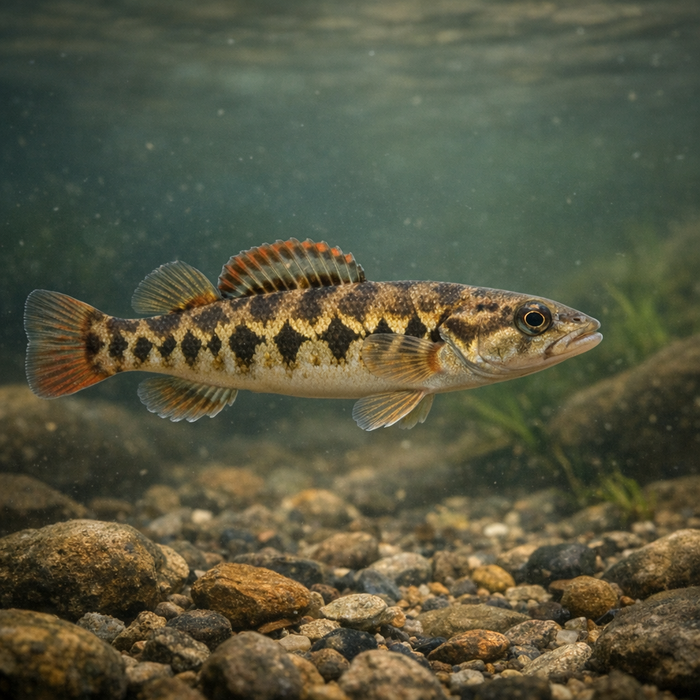
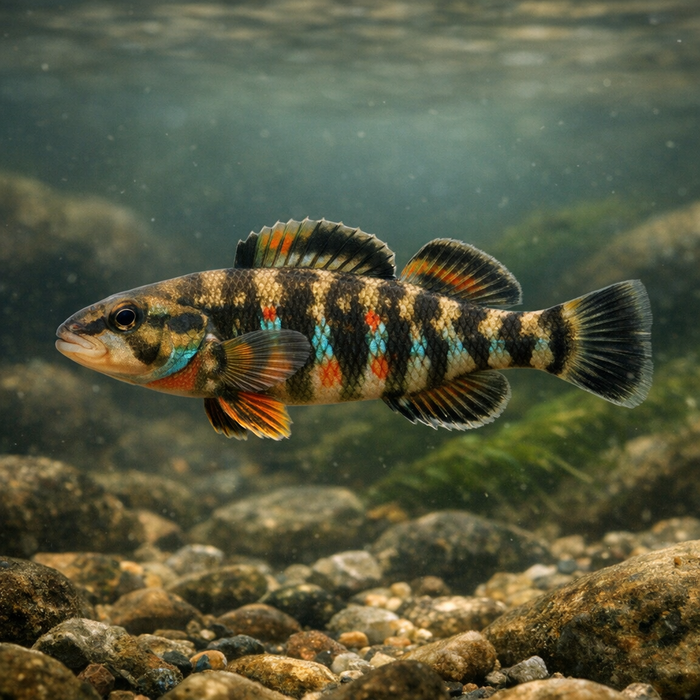
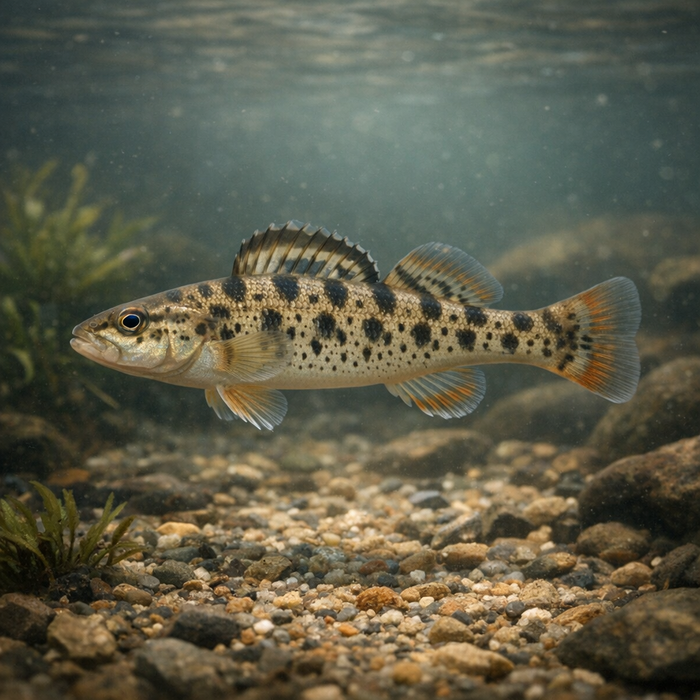
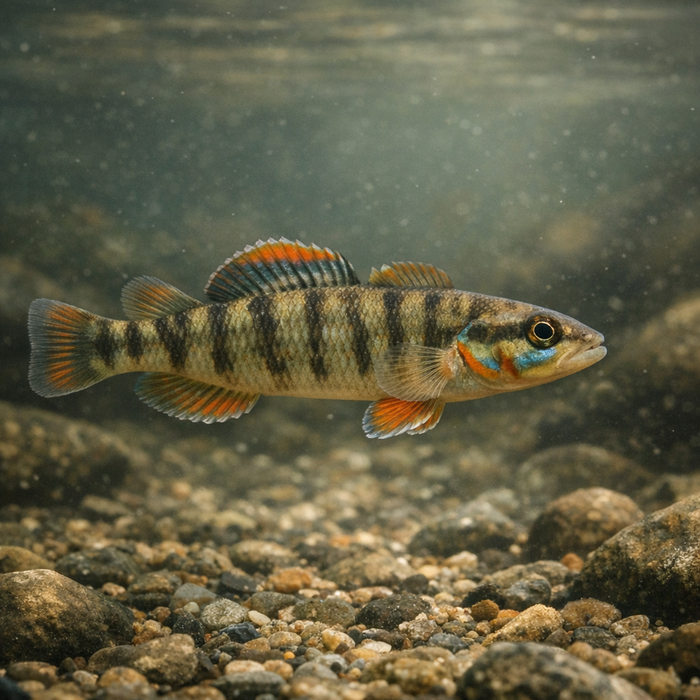
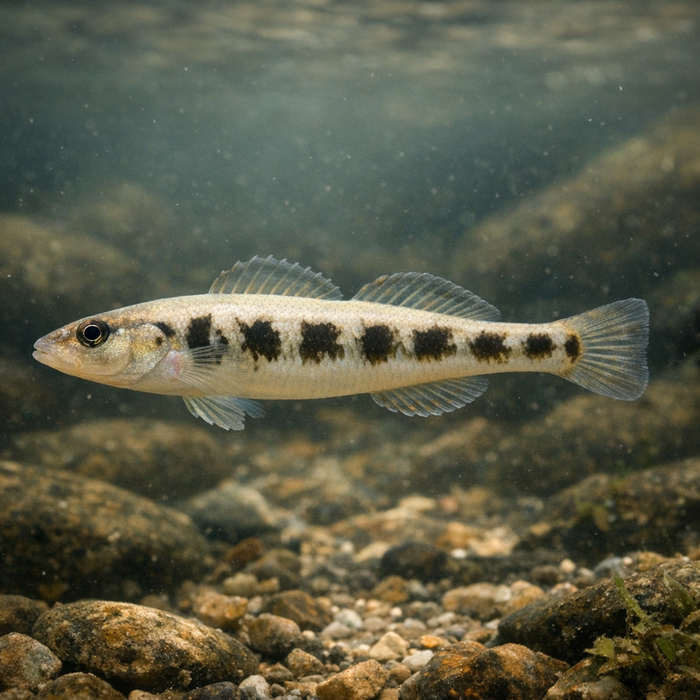
Highland Rim Darter (Etheostoma kantuckeense): A Bold, Memorable Hook LineIntroductionThe Highland Rim Darter is the little fish with big main-character energy. It's tiny, hyper-local, and specialized to a fault, which makes it a cult favorite for micro anglers and fish nerds who like a challenge. You won't win any weight-in tournaments with it, but as far as precision fishing goes, few species demand more finesse than the Highland Rim Darter.What Makes the Highland Rim Darter Unique?Start with the build: a streamlined, bottom-hugging body made for clinging to current like Velcro. The Highland Rim Darter, Etheostoma kantuckeense, has a greatly reduced swim bladder, so it scoots and hops more than it "swims." In spring, males flip the switch and show sharp contrast bars and colorful fin edges that punch hard for such a small canvas. It was described as a distinct species only recently, after years of getting mistaken for close relatives, which adds a little mystery to any Highland Rim Darter facts list.Habitat & Global RangeThe Highland Rim Darter is a homebody, tied to the Highland Rim physiographic province across parts of Tennessee and Kentucky. Think cool, exceptionally clear creeks and small rivers where riffles chatter over gravel and small cobble. These fish tuck tight to the bottom, favoring knee-shallow flows broken by pebbly patches, rock seams, and micro-eddies. Big water isn't the play; small, swift, and stony is the Highland Rim Darter habitat sweet spot. Seasonal movements are short, usually just shifting to prime riffles and spawning pockets when spring flows stabilize and temperatures climb.Behavior & TemperamentThis fish lives its name: it darts. Watch one long enough and you'll see a crisp dart-pause rhythm as it hunts tiny invertebrates between stones. They are alert and skittish, quick to bolt when a shadow crosses the riffle. Despite the small size, they defend prime patches aggressively in breeding season. You won't find them cruising midwater or sipping at the surface. Bottom is life. Current is the highway. Structure is home. Presentations that land and hold in a little pocket are far more convincing than anything drifting past like a parade float.Ecological ImportanceThe Highland Rim Darter is a riffle quality-control inspector. Because it needs clean, well-oxygenated water and stable gravel beds, populations are sensitive to siltation and runoff. When they're thriving, it's a solid sign that the stream's insect engine is firing and the benthic community is in balance. They, in turn, feed larger fish and aquatic predators. That makes the Highland Rim Darter a small but essential thread in the food-web braid holding these creeks together.Conservation & Environmental PressuresWhile not widely listed by big global agencies, the Highland Rim Darter's vulnerability comes from its small world. A few bad culverts, poorly timed gravel extraction, or muddy stormwater outfalls can smack an entire watershed's riffle network. Low flows that bake shallow runs, or invasive plants altering current and substrate, squeeze them further. The good news is that simple, local fixes work wonders: riparian buffers, silt control at construction sites, and best-practice agriculture keep gravel beds clean and oxygenated. Anglers can help by treading lightly in riffles, avoiding needless rock-flipping during the spawn, and practicing quick, careful catch-photo-release.The FishyAF TakeCatching a Highland Rim Darter is a flex of patience and precision. It's a fish that rewards the angler who reads current seams the way bass pros read electronics. Go small, go subtle, and think like a stone. This species isn't about glory shots or grip-and-grins; it's about mastering water no deeper than your boot and pulling a tiny jewel from the white noise. If microfishing has a gateway drug, the Highland Rim Darter is it: localized, technical, and weirdly addictive. Nail one, and you'll start noticing details in riffles you never saw before. That, right there, is the fun.