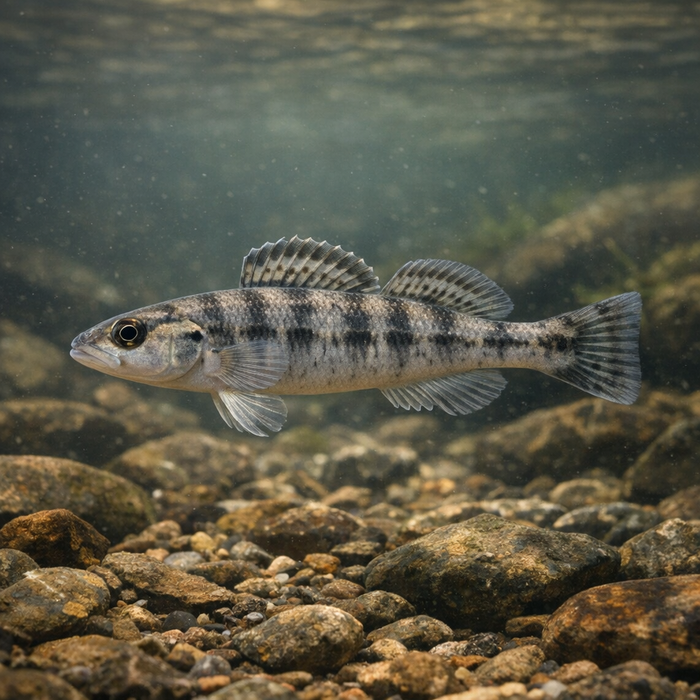
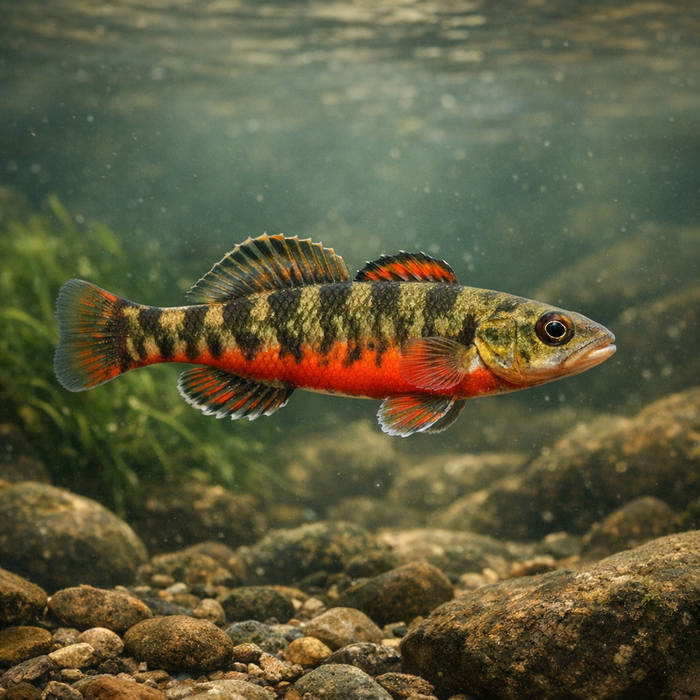
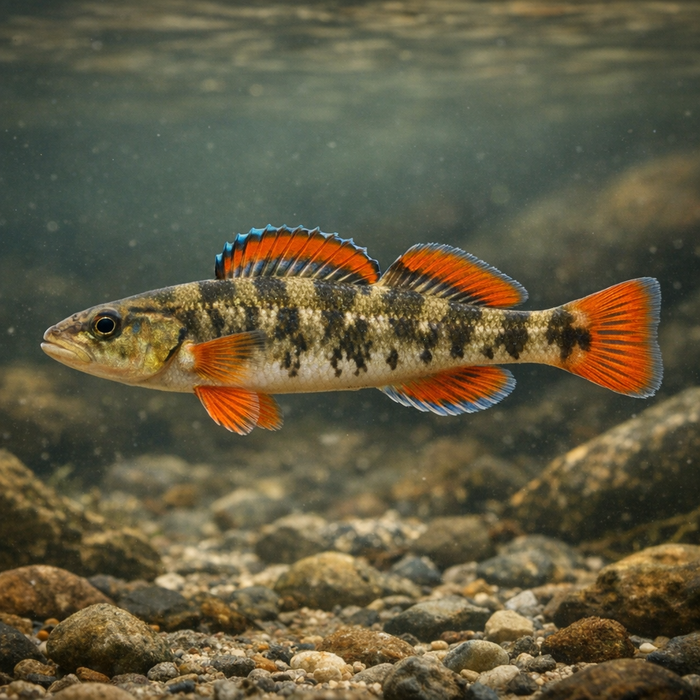
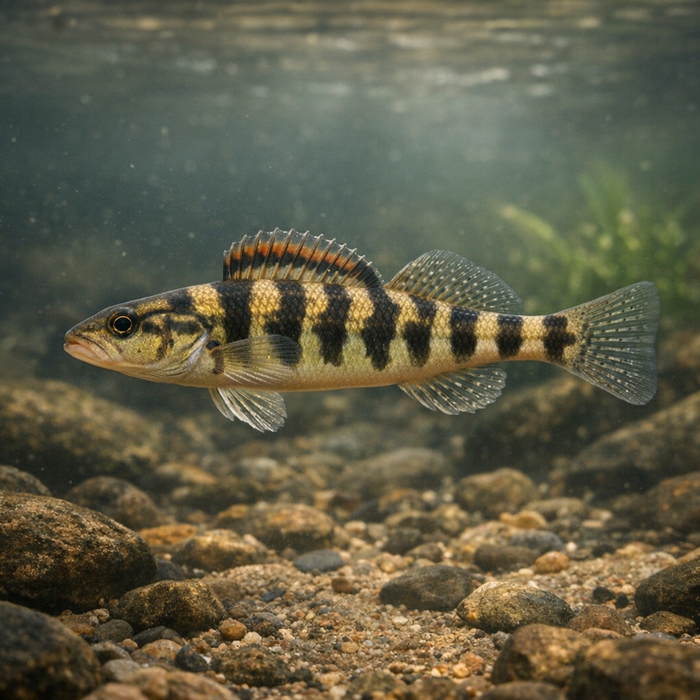
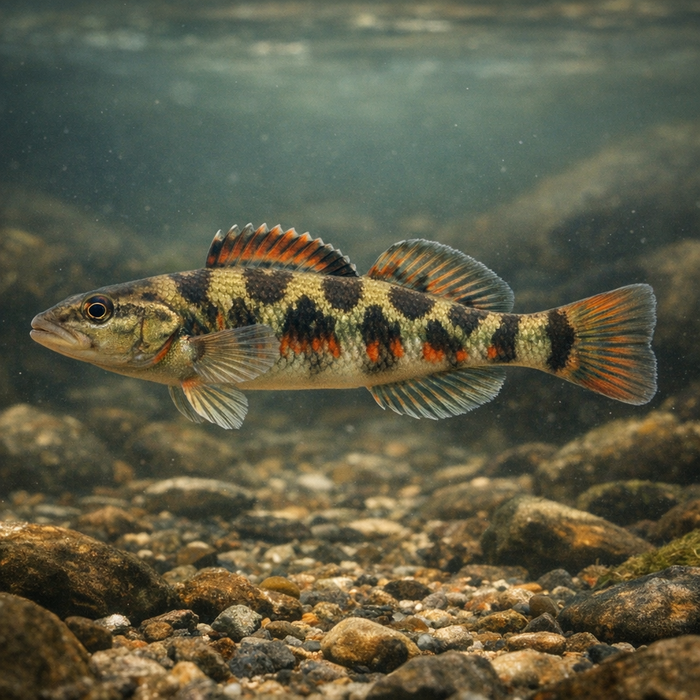
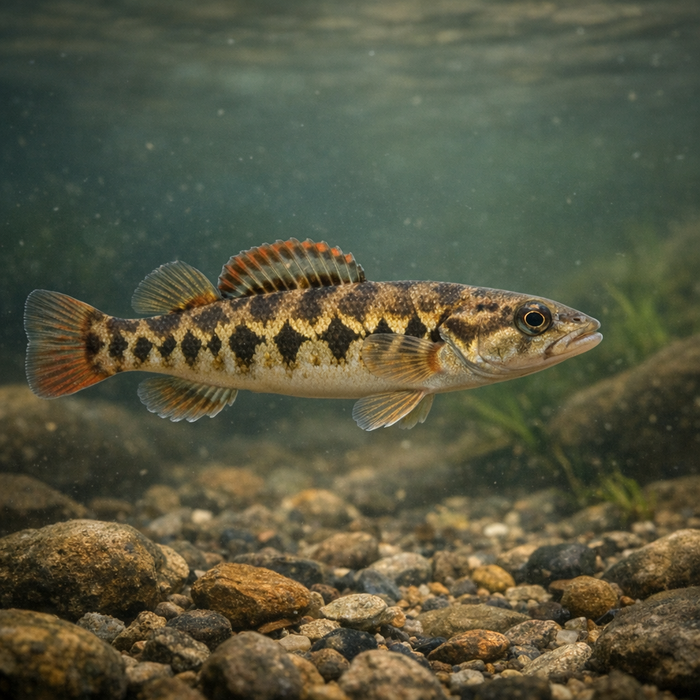
Barcheek Darter (Etheostoma obeyense): Riffle candy with race-car stripes and zero patience for sloppy presentationsIntroductionThe barcheek darter is proof that tiny fish can have giant attitude. You won't troll for it, and it won't melt a drag, but when you kneel on a cobble bar and outsmart one in knee-deep current, you'll feel like a stealth sniper. This fish lives where your boots crunch gravel and bubbles hiss-places that demand precise casts and zen-level stealth.What Makes the Barcheek darter Unique?First, the look. Those namesake cheek bars carve dark stripes across the face, and breeding males throw neon accents that pop in the riffle glare. Second, the lifestyle. The barcheek darter rockets between stones like a wind-up toy, using pectorals to grip the current while ambushing tiny invertebrates. Third, the scale. It's microfishing gold-small enough to be tricky, bold enough to show itself, and pretty enough to make your phone photos sing. If you're hunting real Barcheek darter facts, start with this: precision beats power every time.Habitat & Global RangeTalk barcheek darter habitat and you're talking clear, cool streams in the upper Cumberland River system of Tennessee and Kentucky. Picture shallow riffles, knee-or-less water, pea gravel to hand-sized cobble, and steady, oxygen-rich flow. They tuck into the rugs of broken current behind rocks, slide along the margins of pools, and ping between patches of clean substrate. Excess silt is a killer; clean gravel is life. If you can feel the current pressing your shins and see sunlight flicker off stones, you're in the neighborhood.Behavior & TemperamentThis species lives on the bottom and lives fast. They surge short distances, settle, and watch the buffet of drifting insects and micro-crustaceans. In spring, males light up, posturing over prime stones. They are not cruisers; think territory pins and short dashes rather than roaming schools. Presentations that hover an inch off the rocks get attention; anything sloppy or loud sends them ghosting under cover. For anglers, expecting aggression is a mistake; expect selective nips when you get it right.Ecological ImportanceBarcheek darters are riffle accountants. They convert swarms of invertebrates into fish flesh, then pass that energy upstream to larger predators. Their presence signals a stream with decent oxygen, clean stone, and honest flow. Lose that clarity or pack the gaps with silt and the darters fade, taking a chunk of the food web and a quick health check of the stream with them.Conservation & Environmental PressuresMost populations are doing fine where habitat quality holds. The pressure points are no mystery: sediment from poorly managed construction, flashy stormwater surges, low-flow summers, and riparian abuse that strips shade and warms the water. Because they're localized to a specific drainage, piecemeal damage can bite hard even if the species is not listed as threatened. Protect the riffles and the barcheek darter will keep punching above its weight.The FishyAF TakeIf your fishing life needs a recalibration, the barcheek darter delivers. This is a fish that punishes heavy boots, celebrates quiet hands, and makes you aim small. Stack a micro hook with a single midge larva, kneel in the shallows, and thread the current seam like you mean it. Land one and you'll learn a truth: big-grin fishing doesn't require big fish. The barcheek darter is small-stream charisma with racing stripes, and it absolutely counts.