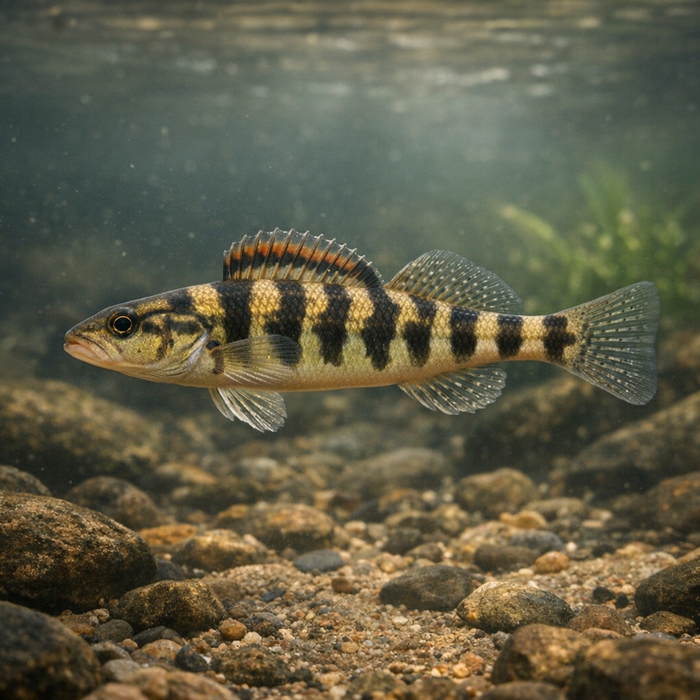
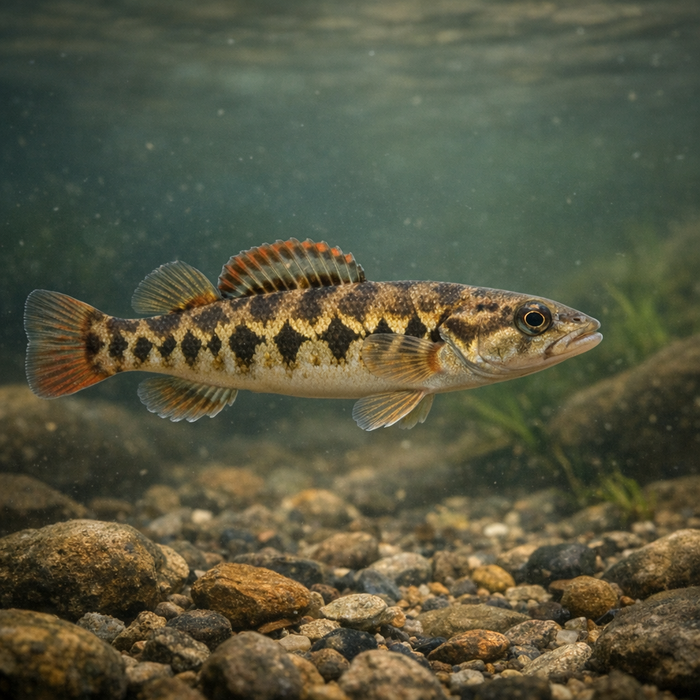
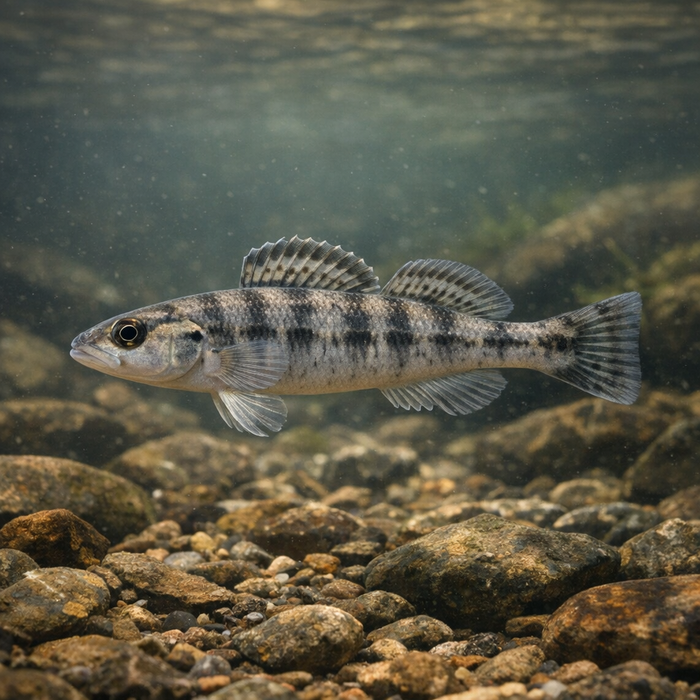
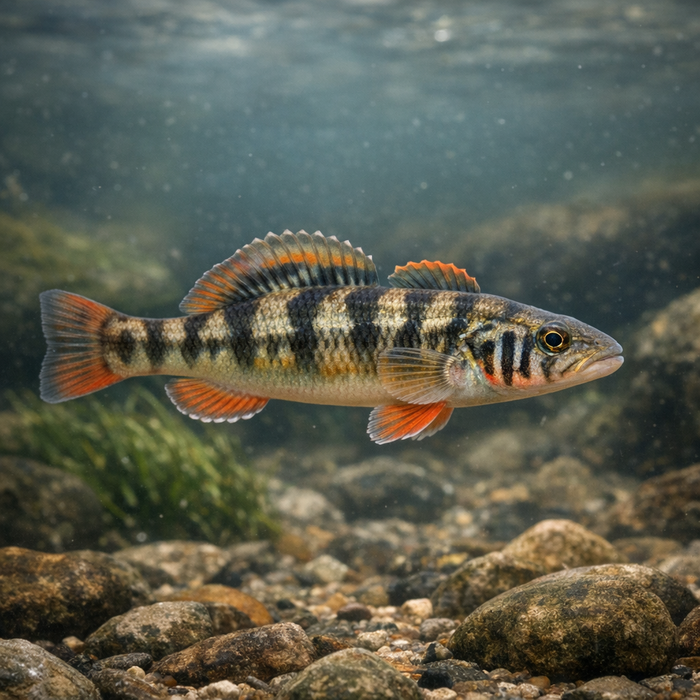
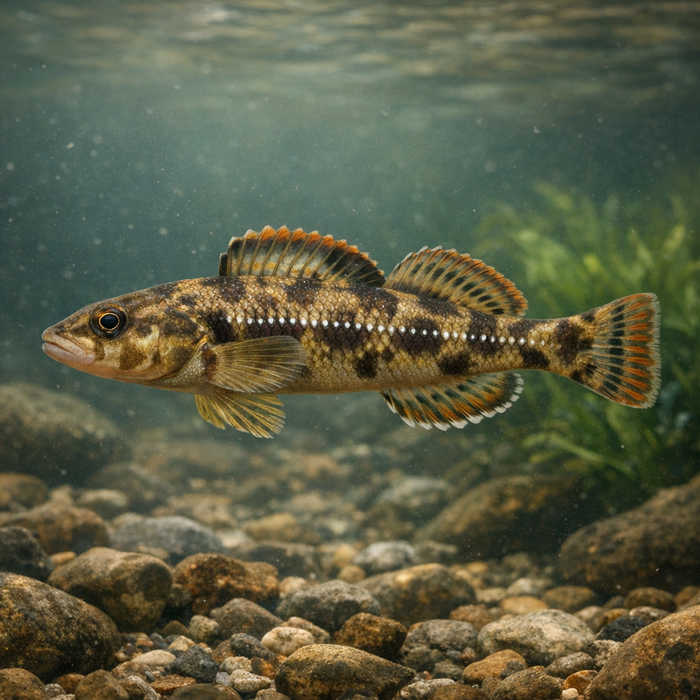
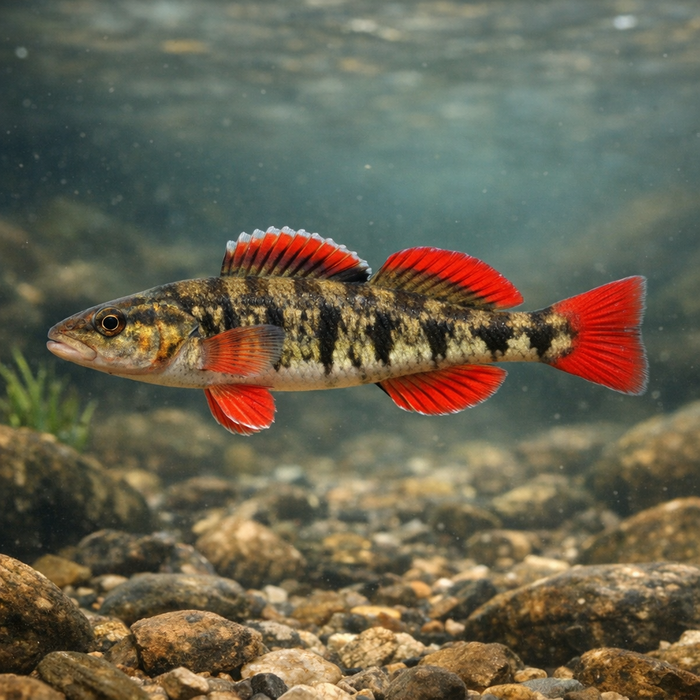
Arkansas Saddled Darter (Etheostoma euzonum): A riffle rocket with racing stripesIntroductionThe Arkansas saddled darter is the fish equivalent of a rally car: tiny, tuned for speed, and glued to gravel. You are not chasing it with big plugs and beefy hooks. This fish is all about micro-precision in swift, ankle-deep current, where one sloppy step sends it ghosting under a rock. If you are into microfishing or just want to know what makes certain riffles tick, the Arkansas saddled darter belongs on your short list of must-see stream creatures.What Makes the Arkansas saddled darter Unique?First, the look. Those dark "saddles" draped across its back are not decoration; they are its calling card and the reason for the name. Add in the spring show, when breeding males light orange along the dorsal fin margins, and you have a fish that punches above its weight in style points. Second, the build. Like many darters, it has a reduced swim bladder and low, wide pectorals that act like spoilers, helping it plant to cobble while water races past. Finally, the attitude. The Arkansas saddled darter is a sit-and-snipe predator, blitzing a few inches to crush insect larvae with ridiculous timing. It is not shy about current and treats turbulent water like home turf.Habitat & Global RangeIf you have searched for Arkansas saddled darter habitat, you already know the word "riffle" comes up a lot. This species is an Ozark specialist associated primarily with the White River drainage in Arkansas and Missouri. Picture clear, cool streams with gravel to cobble bottoms, interspersed with chunk rock and pocket-water seams. Depth is often knee to boot-top. In higher flows, it tucks tight to stones or slips behind micro-eddies; when water drops and clears, it spreads into riffle tongues and shallow runs. Seasonal shifts are subtle, with fish edging into calmer margins in winter and returning to prime, oxygen-rich riffles as spring kicks off.Behavior & TemperamentThe Arkansas saddled darter is built for ambush at small scale. It hunkers low, watches the drift, and then triggers a lightning hop to intercept prey. Individuals hold tiny territories, but you can sometimes find loose clusters in prime riffle lanes. It is mostly diurnal, and in bright, clear water you can actually sight-fish them if you move like a heron. During the spawn, males ramp up color and guard eggs glued beneath flat stones, getting feisty with neighbors despite their miniature size. Fight-wise, this is not a drag-screamer; the challenge is in the eat and the hookset, not the tug.Ecological ImportanceThis little predator turns stream energy into fish flesh, converting insect production into something larger fish, birds, and snakes can use. Because it is picky about current, substrate, and clarity, the Arkansas saddled darter doubles as a quality-control inspector for Ozark streams. When silt chokes riffles or nutrient spikes fuzz the rocks with algae, darters blink out fast. Healthy populations are a loud signal that the stream's engine room-its riffles-still hums.Conservation & Environmental PressuresThe Arkansas saddled darter is not trending headline-level endangered, but it is absolutely allergic to silt, turbidity, and flow alterations. Gravel mining, poorly managed road crossings, and heavy runoff can wreck the very micro-habitats it needs. Cold releases from dams shift temperature regimes, and prolonged droughts strand riffle habitat. The fish's security comes from keeping watersheds tight: bank vegetation, smart stormwater, and sane gravel work. Localized declines can happen fast when riffles get smothered.The FishyAF TakeHere are the Arkansas saddled darter facts that matter to anglers: it is small, shockingly pretty up close, and harder to fool than you think. This is a finesse species, a test of drift control and stealth, with bragging rights measured in millimeters. If you want to level up your stream-reading skills, spend an hour watching these darts in a riffle tongue. Learn how bubbles track micro-eddies, then thread a speck of bait through the seam and hold your breath. We love it for that reason-it makes you sharper everywhere else. Master a darter, and trout nymphing suddenly feels like slow motion.