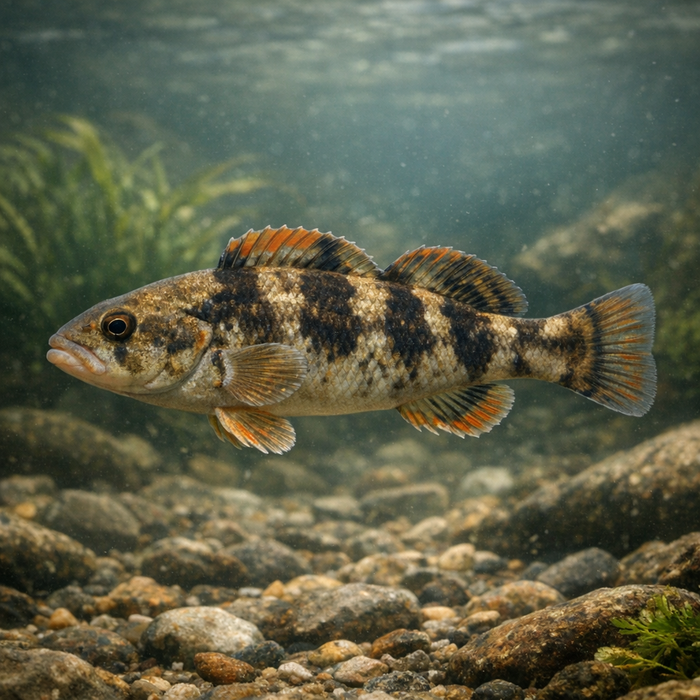
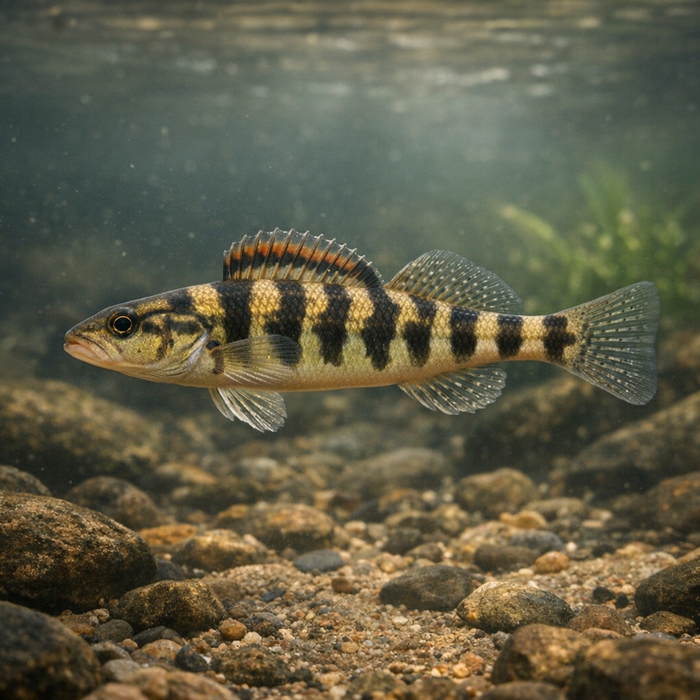
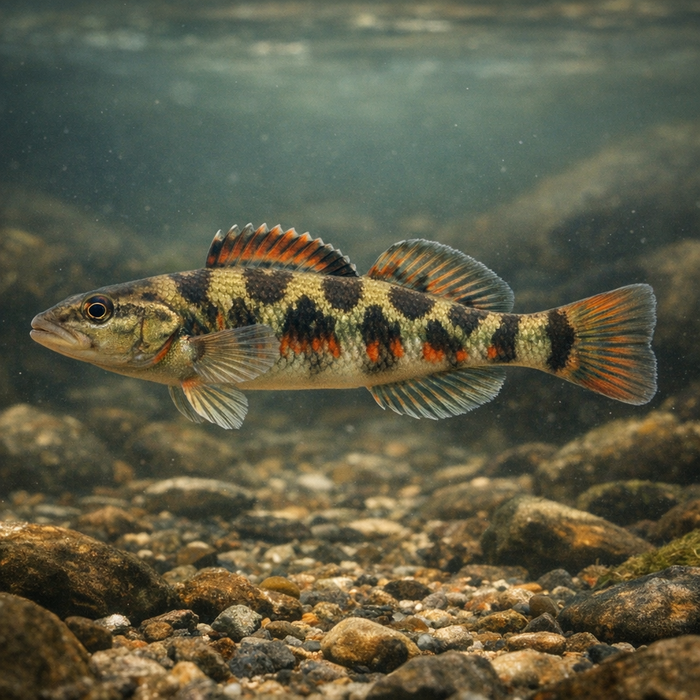
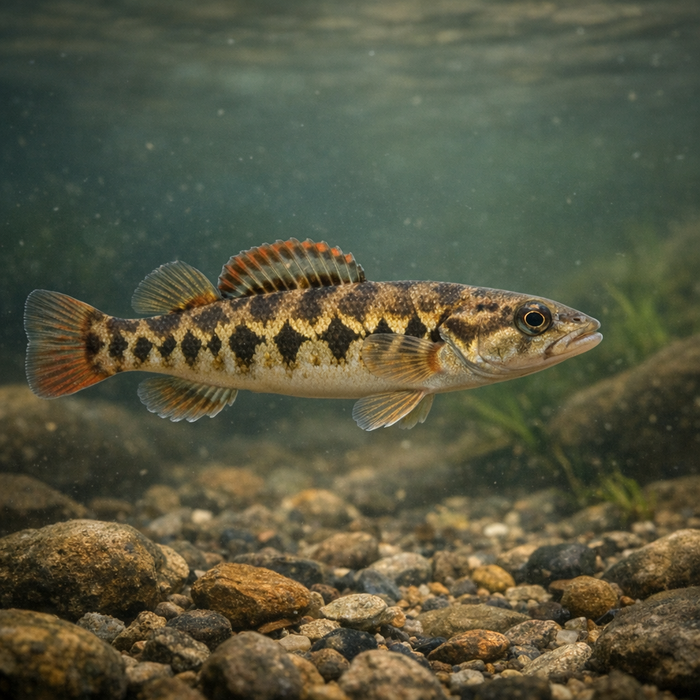
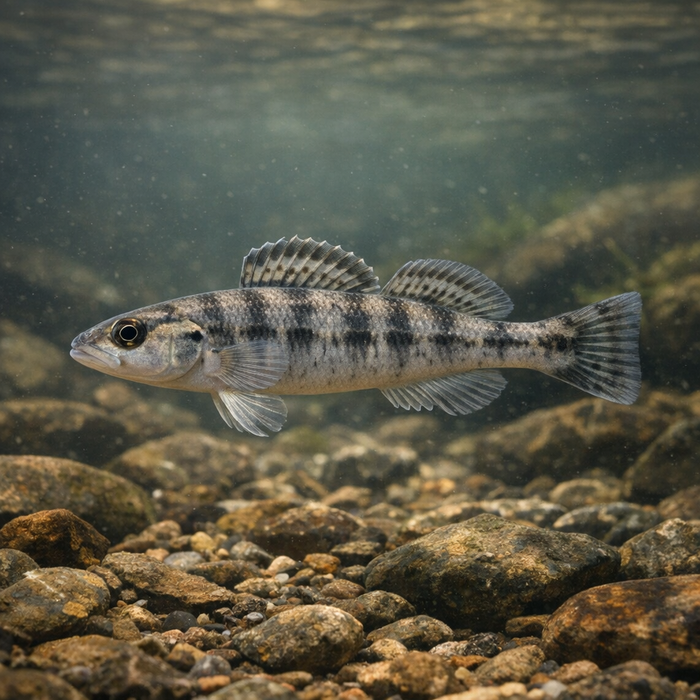
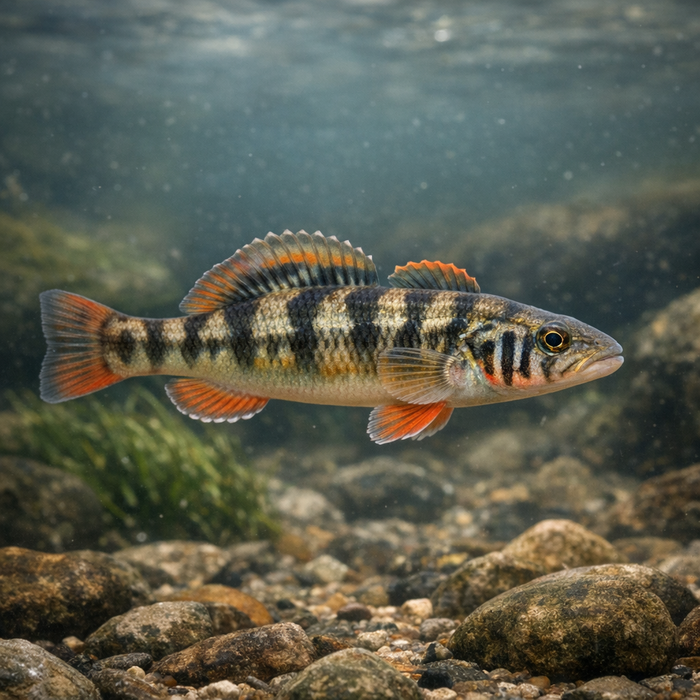
Bloodfin Darter (Nothonotus sanguifluus): Flashy riffle rocket with red fins and attitude to matchIntroductionIf you want proof that small fish can bring big swagger, meet the bloodfin darter. This pocket-sized showpiece lights up spring creeks with red-finned drama, hugging the cobble while flipping the current the bird. It's not a typical target for bass heads, but micro anglers know the deal: stalk carefully, tie tiny, and enjoy one of the most vibrant fish in freshwater. Welcome to bite-sized glory and a crash course in Bloodfin darter facts.What Makes the Bloodfin darter Unique?The bloodfin darter is pure spectacle when males are dressed to impress. Come spring, those namesake fins blaze scarlet and the flanks glow with emerald and charcoal barring. It's color you'd expect on a reef, not a riffle. Beyond the paint job, this species is built for whitewater. A reduced swim bladder and big pectorals keep it stapled to the bottom, absorbing turbulence while it darts between cobbles. Add in parental care-males guard eggs glued under flat rocks-and you've got a small fish with big-life behaviors.Habitat & Global RangeLet's cut straight to the Bloodfin darter habitat: this fish is a riffle specialist. It thrives in clear, cool to moderate temperatures and firm gravel-to-cobble substrate. Think knee-deep water, a fast belt of current, and plenty of clean rock undersides. Geographically, the species centers on the Cumberland drainage and nearby systems in the southeastern U.S. Because it leans on clean substrates and steady current, it's a solid barometer for stream health. Lose the clarity or silt the stones and the bloodfin darter fades fast.Behavior & TemperamentThe bloodfin darter is a bottom sprinter, shifting less than you'd expect for a fish in such sporty water. Rather than roaming, it works a tight patch, picking invertebrates from the flow and rock surfaces. Spawning ignites the theatrics: males set up under or beside flattish stones, posture like tiny linebackers, and guard adhesive eggs with surprising intensity. They won't yank your rod down, but they'll outmaneuver you in three inches of water, slipping under pebbles the instant you tip your hand.Ecological ImportanceThis darter is a current-driven quality-control inspector. By keying on fast, oxygenated water and clean stones, it helps translate stream conditions into something you can see: bright colors and balanced numbers in healthy creeks, muted tones and vanishing counts when things slide. As an insectivore, it's a vital gear in the invertebrate-to-fish-to-angler food chain, moving bug biomass up the ladder and keeping energy cycling through riffle habitats.Conservation & Environmental PressuresThe bloodfin darter's superpower-thriving in clear, fast water-can become a liability the minute sediment, nutrients, or temperature creep upward. Runoff that silts cobble, altered flows, low summer dissolved oxygen, or even chronic turbidity can knock populations down. The species is not the poster child for doom, but it's no fan of sloppy watershed management either. Protect riparian buffers, manage stormwater, and keep gravel beds clean, and the bloodfin darter pays you back in full spring color.The FishyAF TakeThe bloodfin darter won't test your drag; it tests your patience and finesse. For anglers willing to crouch, wade softly, and tie on something that looks comically small, it's a legit prize. Getting one to eat is a micro victory; seeing a male blazing in peak color is a memory that sticks. If you're building a species list and want something that screams creek cred, bloodfin darter is your stamp. It's also a sly teacher-study this fish and you'll understand current, substrate, and stealth better than most weekend warriors. Call it small-game hunting with a fly box, and enjoy the ride.