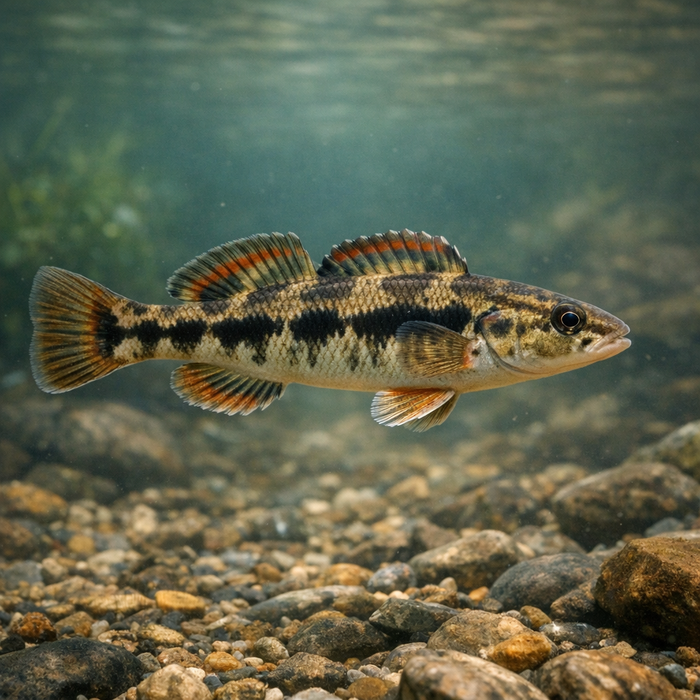
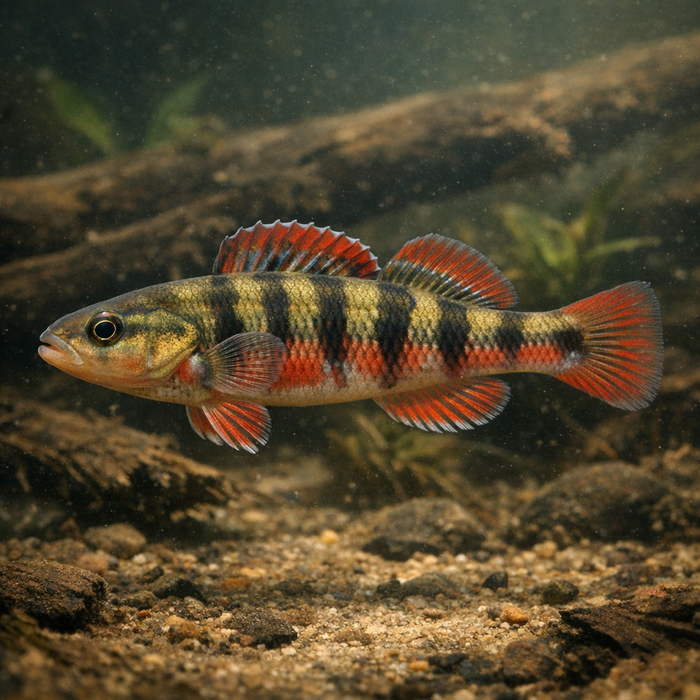
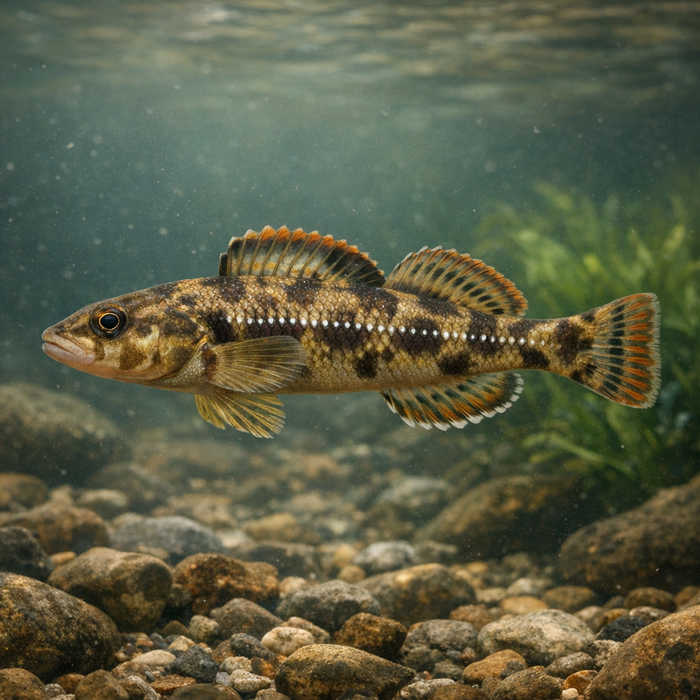
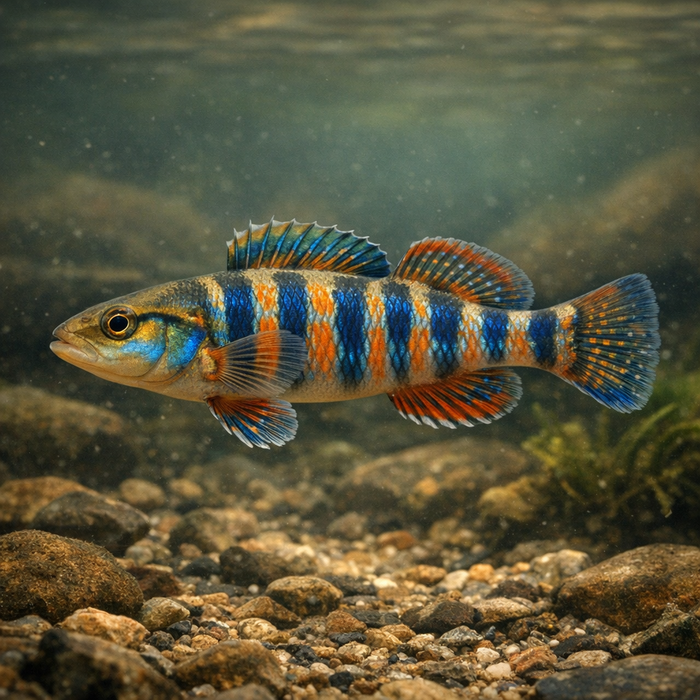
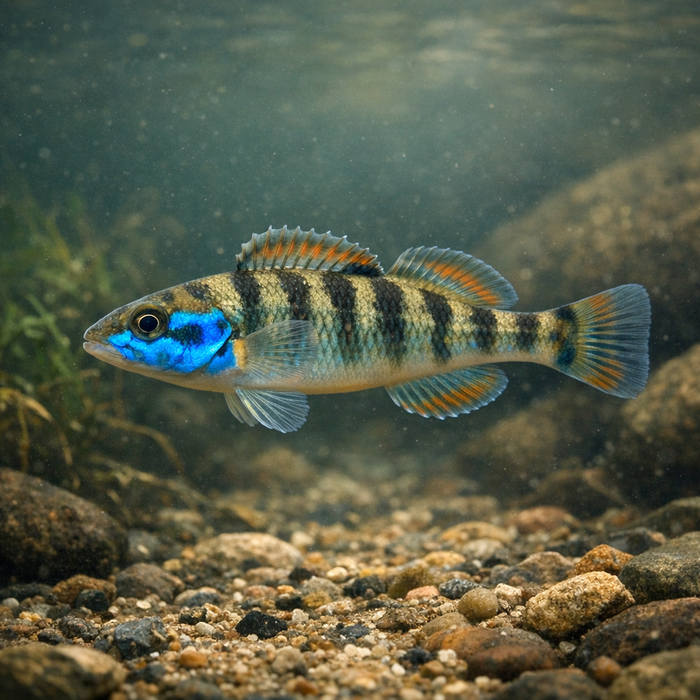
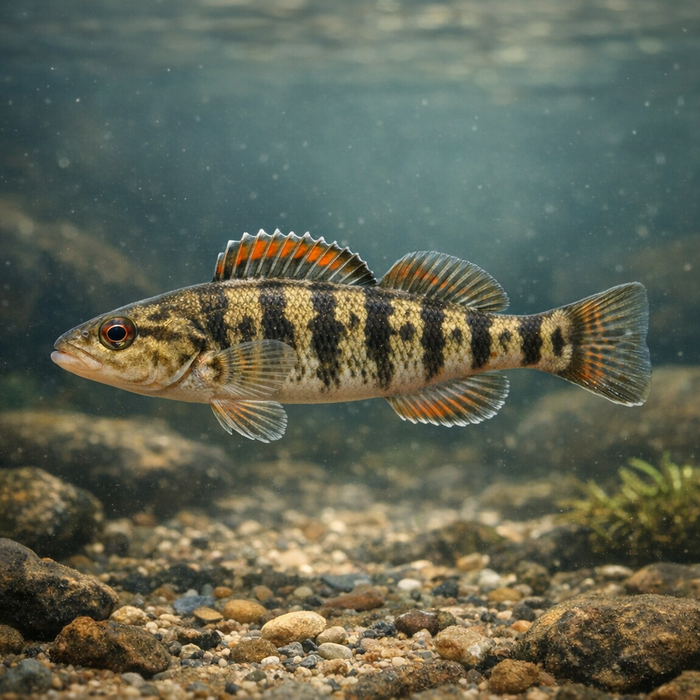
Florida Sand Darter (Ammocrypta bifascia): The stealth bomber of Panhandle sand barsIntroductionIf you think a fish has to be big to be cool, the Florida sand darter is ready to prove you wrong. This translucent slip of a Percidae rocket spends most of its life exactly where you'd least expect it: buried in sugar-white sand with just the eyes and snout peeking out. Blink and it's gone. For anglers who enjoy puzzles, microfishing, and the weird corners of freshwater, the Florida sand darter brings sneaky charm, delicate beauty, and a surprisingly technical challenge.What Makes the Florida sand darter Unique?First, camouflage. The Florida sand darter doesn't just match its background; it becomes the background by shimmying under clean sand in seconds. Second, shape and mechanics. With a reduced swim bladder and spread pectorals, it hugs bottom and darts in short, surgical bursts. Third, the namesake look: two dusky lateral bands that sharpen in breeding season. Put it all together and you get a fish purpose-built for fast sandy runs where most anglers never think to cast. If you wanted Florida sand darter facts that sound made up, here's one: sometimes the only giveaway is the blink of an eye under the sand.Habitat & Global RangeThe Florida sand darter is a Gulf-slope specialist of the Southeast, thriving in clear, moderate-current streams with clean, shifting sand. Think Panhandle rivers and their tributaries, lightly tea-stained at times but not choked with silt. The fish keys in on sandy riffles and runs, slipstreaming behind micro-dunes and burying instantly when spooked. These are intimate waters: shin-deep lanes, little side channels, and the seams below riffle crests. Florida sand darter habitat hinges on one thing above all: clean, mobile sand. Add too much silt or algae, and the magic trick falls apart.Behavior & TemperamentThis species is the definition of bottom-oriented. It holds close to the substrate, then launches a few inches to pounce on tiny invertebrates before vanishing again. Schooling is loose at best; more often you'll see scattered individuals spaced along a stretch like checkpoints. They're quick to spook in bright light and settle deeper into the sand when shadows loom overhead. Low-light windows are best for spotting movement, but even then, stealth rules. The Florida sand darter isn't a brawler; it's a ghost that nips and dips.Ecological ImportanceSmall doesn't mean small-time. As a micro-predator, the Florida sand darter trims populations of midges, mayflies, and other benthic invertebrates, keeping the buffet in balance for everything upstream and down. In turn it feeds larger fish, wading birds, and the occasional opportunistic reptile. It's also a living water-quality meter. Clean, oxygenated sand lanes support darters; muddy, clogged riffles do not. When Florida sand darters are present, the stream is usually doing something right.Conservation & Environmental PressuresThis fish's superpower is also its Achilles' heel. Because it relies on clean, shifting sand, anything that silts up or compacts substrate hits hard. Upland erosion, poorly timed dredging, and chronic turbidity erase the micro-dunes it uses for ambush and cover. Groundwater withdrawals that flatten seasonal flows can simplify habitat and strand populations. While not widely targeted by anglers, Florida sand darters can be sensitive to handling and habitat trampling. Keep wading light-footed and watch where you post up.The FishyAF TakeThe Florida sand darter is the freshwater equivalent of a magician in plain sight. Sure, it's tiny, but the technical play is huge: long leader, micro terminal tackle, polarized glasses, and patience by the tablespoon. If you're collecting species, it's a rite-of-passage fish that teaches stealth and substrate reading better than a dozen casting clinics. Learn the sand lanes, slow your shadow, and you'll open a new chapter of weird and wonderful river fishing. Florida sand darter habitat isn't glamorous, but it's pure craft for anglers who live for the details.