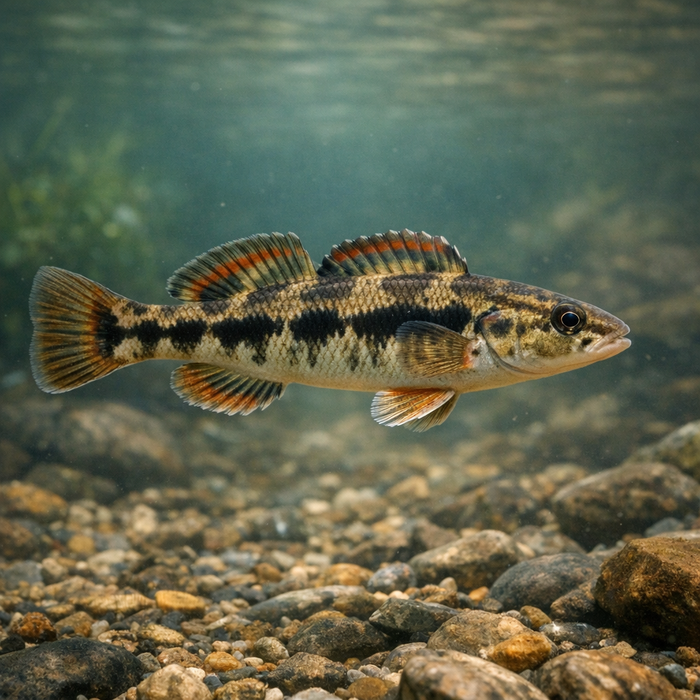
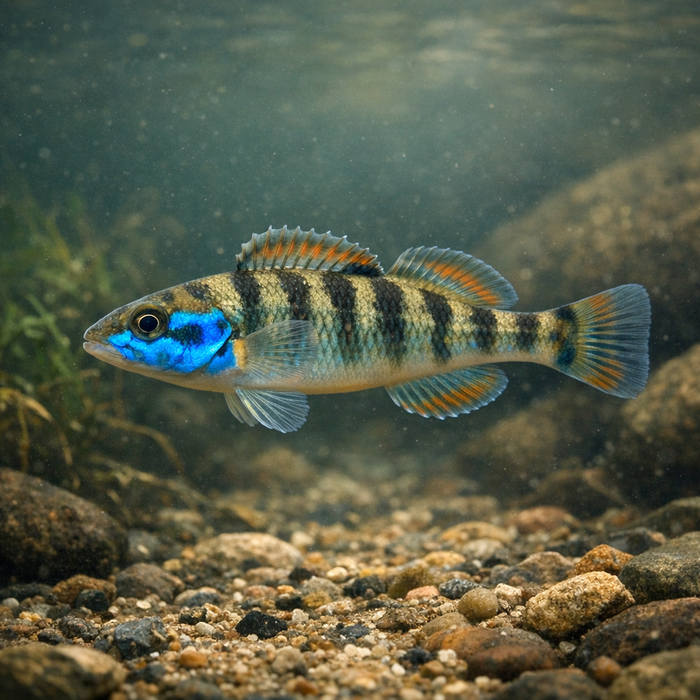
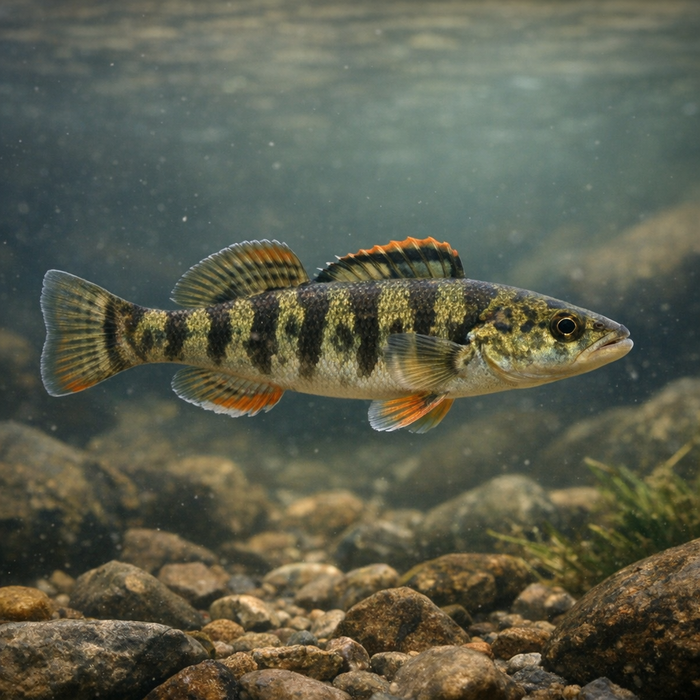
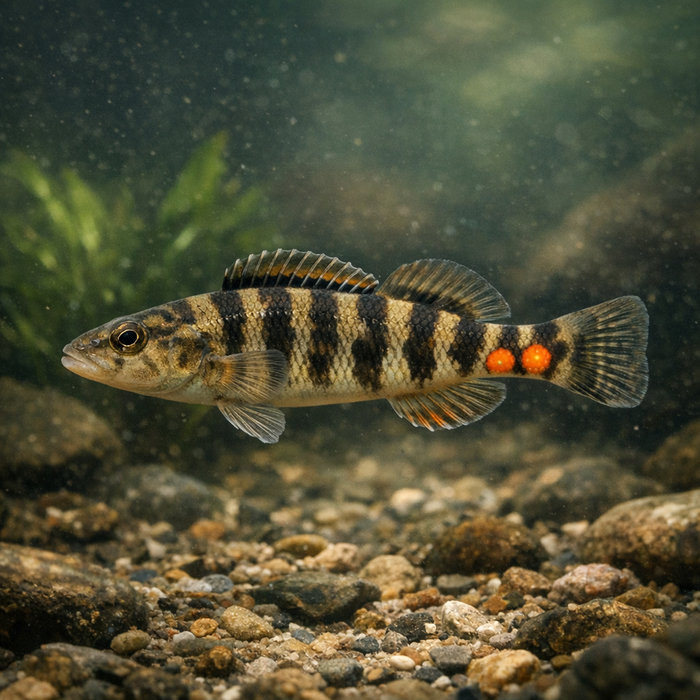
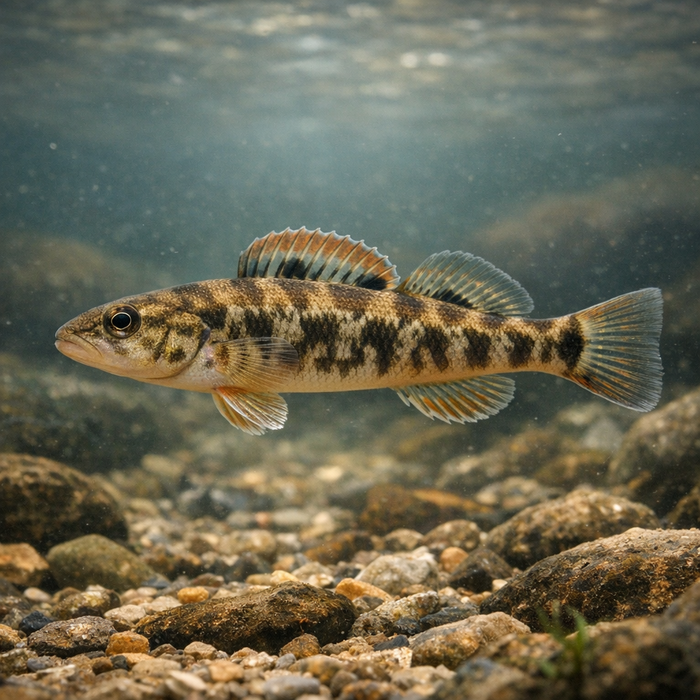
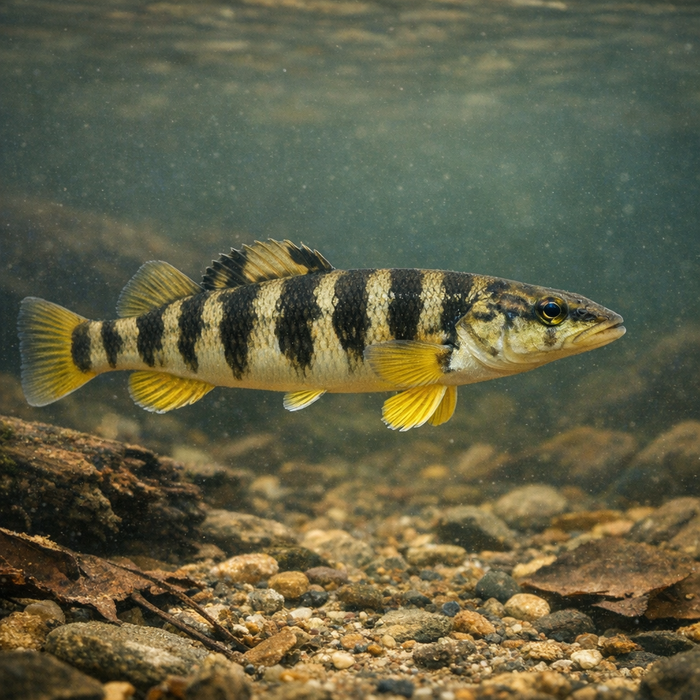
Chickasaw darter (etheostoma cervus): A Bold, Memorable Hook LineIntroductionThe Chickasaw darter is the creek equivalent of a pocket rocket: tiny, twitchy, and ridiculously dialed into clean gravel and moving water. You won't boat-flip this one or fill a cooler. You will, however, learn patience, precision, and the joy of spotting a fish that could sit comfortably on a nickel. For anglers who chase details, the Chickasaw darter is an addictive little puzzle.What Makes the Chickasaw darter Unique?Start with size and attitude. The Chickasaw darter is small even by darter standards, yet it punches above its weight with quick burst moves and brazen territory defense in spring. Males glow up in breeding season with rusty-orange bars and crisp-edged fins, then post up under a flat rock like tiny bouncers. They have a reduced swim bladder, so instead of cruising midwater, they perch on pectorals and scoot in short lunges. Add an incomplete lateral line geared for close-quarters sensing and you get a fish purpose-built for riffles and seams. It's a niche specialist that rewards sharp eyes and gentle presentations, which makes it a cult favorite for micro anglers hunting real-deal Chickasaw darter facts.Habitat & Global RangeHere's the short version of Chickasaw darter habitat: clean flow, firm bottom, and just enough current to keep silt from choking the party. Think shallow runs and low riffles with sand and gravel, plus nearby cover like cobble, woody debris, or flat slabs. In that setting, the fish can feed without swimming hard and can tuck instantly when a shadow crosses. Its range is naturally small, tied to select creeks and small rivers in the lower Mississippi interior. In short, this is a local specialist, not a road-trip headliner. If the water clouds up or the bottom silts over, the Chickasaw darter bails to the next cleaner micro-spot.Behavior & TemperamentDespite its size, the Chickasaw darter is no pushover. In spring, males carve out palm-sized territories and display with fin flares and chases more than bites. Spawning happens on the undersides of rocks or slabs; eggs stick, and the male fans them obsessively until they hatch. Typical clutches run dozens to a hundred-plus eggs, with hatch timing tied to temperature and flow stability. Day to day, it feeds in quick pecks and snaps, using a tiny tubular mouth to vacuum small invertebrates before you can blink. Movement is bursty: a couple inches forward, hold, re-aim, strike, vanish. Try to spot one and you'll understand how its speckled camo plus freeze-and-dart routine makes it seem to disappear between pebbles.Ecological ImportanceThe Chickasaw darter helps translate flowing water into higher food-web value. It converts mayflies, midges, and other small inverts into protein packages for larger fish and stream predators. Because it's picky about substrate and silt, its presence is a quiet endorsement of stream health. Lose clean gravel and stable riffles and you usually lose the Chickasaw darter. Keep those, and you keep a whole suite of riffle bugs and the fish that rely on them.Conservation & Environmental PressuresSmall range and specialized habitat are a risky combo. Fine sediment from poorly managed roads, bank erosion, or upstream development can bury the exact spaces this fish uses for spawning and feeding. Low summer flows amplify the problem by concentrating silt and heating water. Even if it isn't listed under a formal status in every jurisdiction, it rides the same vulnerabilities as many riffle specialists: siltation, dewatering, and habitat fragmentation from culverts or small dams. The good news is that fixes are straightforward: stabilize banks, protect riparian buffers, maintain flow, and keep gravel clean. Do that and the Chickasaw darter generally handles the rest.The FishyAF TakeIf you're expecting a fight, move along. If you're after finesse and fieldcraft, the Chickasaw darter is your huckleberry. It forces you to slow down, kneel, and actually read the water: where the current lifts just enough to clear sand, where a flat rock creates a slipstream, where a shadow makes the fish tighten up. Nail that, and you'll spot them. Present a micro offering without drag, and you might even fool one. It's not a hero shot fish, but it is a masterclass in streamcraft. That's the kind of challenge we'll take any day.