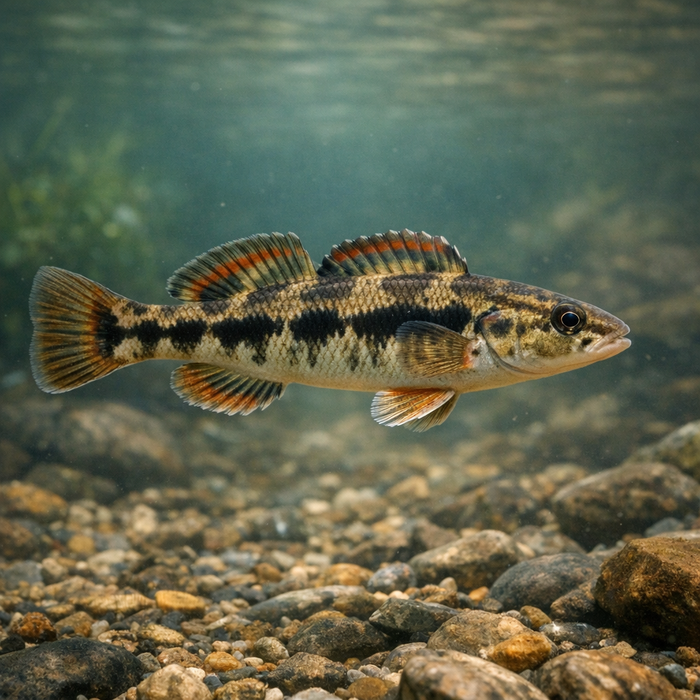
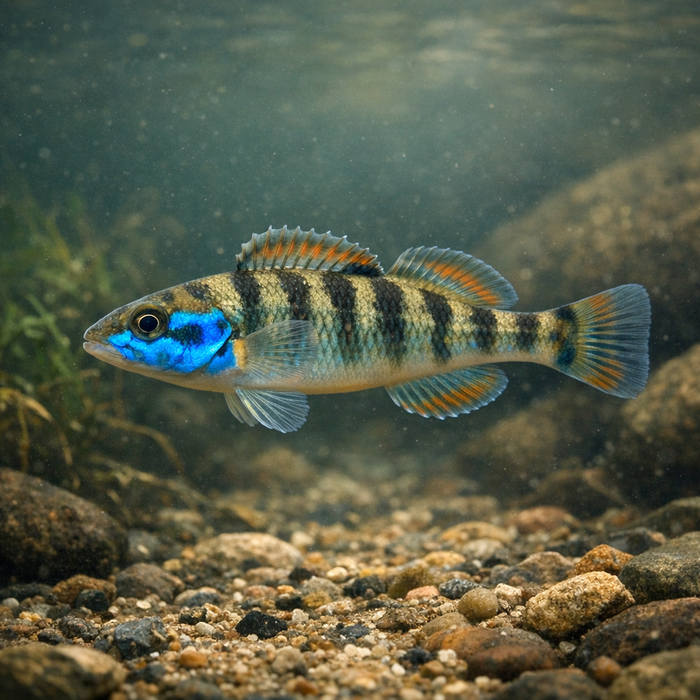
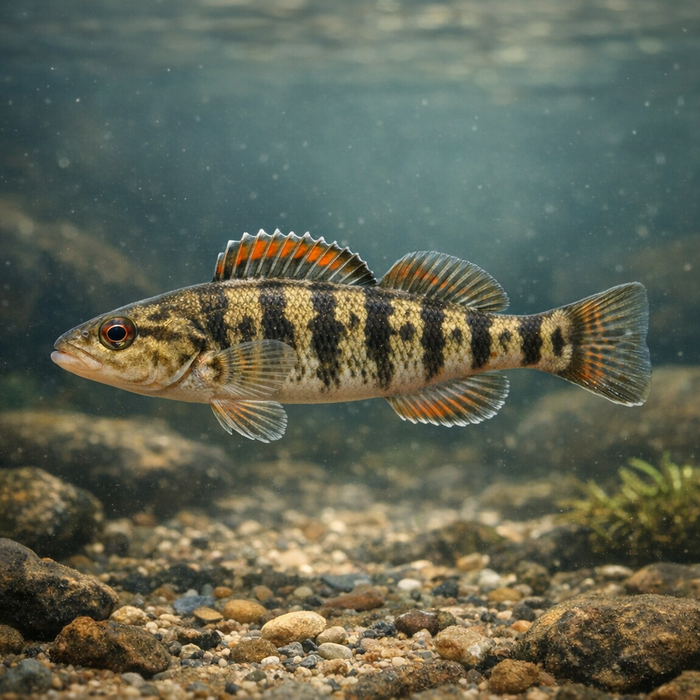
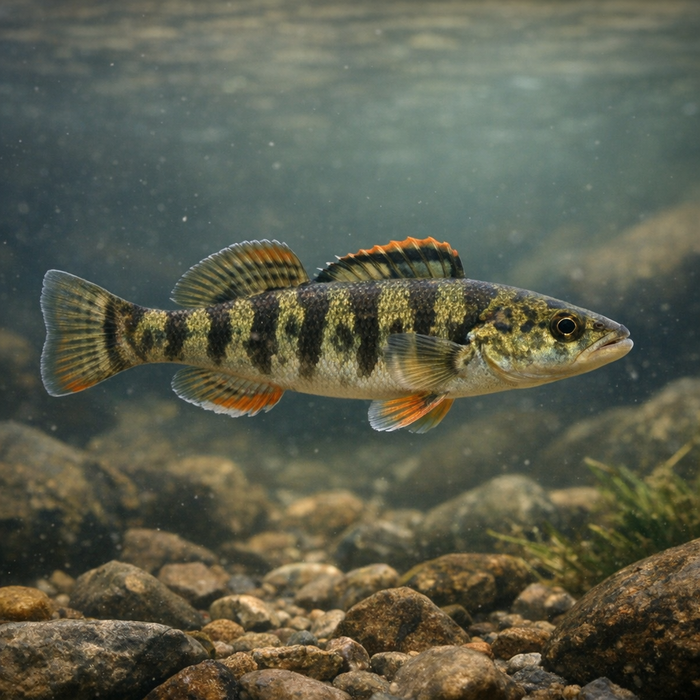
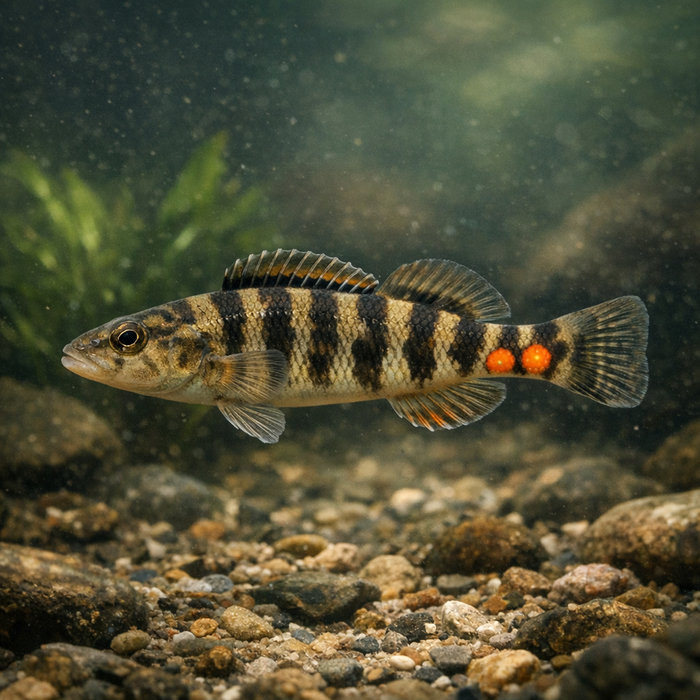
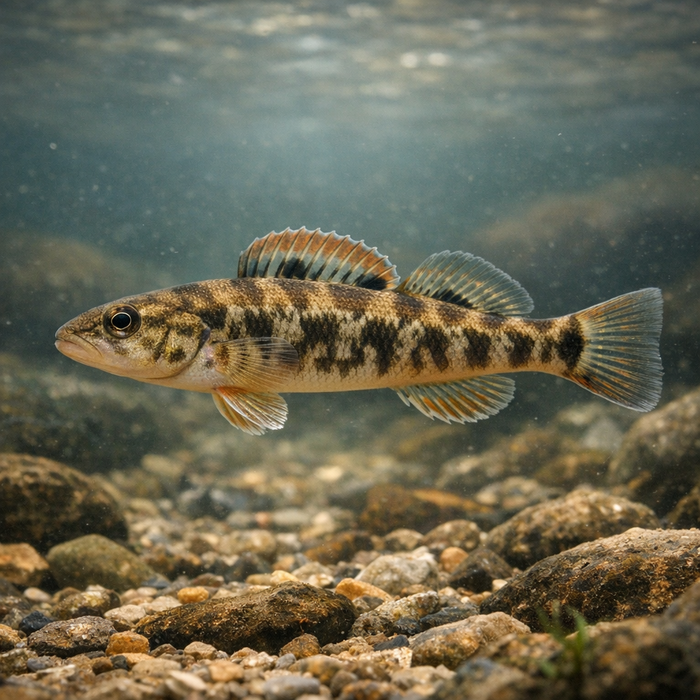
Roanoke logperch (Percina rex): The riffle king that flips rocks like a pro and vanishes like a ghost.IntroductionMeet the Roanoke logperch, the stealth operator of clear-water riffles. It's not a bruiser, not a bucket-list brawler, but it's got moves. This darter uses a chisel snout to flip pebbles, ambushing the wriggly snacks underneath, all while wearing sharp tiger bars and a high-viz attitude. If you appreciate precision over power, the Roanoke logperch delivers in style.What Makes the Roanoke logperch Unique?Two things. First, that stone-flipping trick. Percina rex is built like a tiny crowbar: rigid snout, strong neck, and just enough oomph to pry gravel without spooking everything in the run. Second, scale. Among darters, it's a heavyweight, with big individuals reaching around seven inches. Add in those bold, vertical bars and you've got a fish that looks like a stream-born barcode. These Roanoke logperch facts make it a poster child for clean, cobbly streambeds.Habitat & Global RangeLet's keep it simple: Roanoke logperch habitat means silt-free riffles and runs in cool to moderate water. Think knee-deep current, pea gravel to small cobble, and visibility that rewards patience. The range is tight, mostly in Virginia and North Carolina headwaters and tributaries of the Roanoke system, with restoration and reintroduction work bolstering certain reaches. You won't find this fish in every creek. It picks neighborhoods with purpose: stable flow, low silt, and honest rock.Behavior & TemperamentThis fish is all business. It creeps along the bottom, eyes sharp and posture low, flipping just enough stones to stay fed without flagging predators. It isn't a cruiser. Individuals hold small home ranges, revisiting the same productive patches like a tiny trapper checking sets. Feed windows hinge on light, flow, and cover; too bright and they hunker, too turbid and feeding gets inefficient. It's not a squad-type fish either. You might spot two or three sharing a riffle, but schooling isn't really the vibe.Ecological ImportanceThe Roanoke logperch does more than snack. By flipping stones, it stirs microhabitats and helps expose invertebrates, nudging nutrient cycles at the pebble scale. Its presence is also a neon sign for water quality. When you've got Roanoke logperch in residence, you usually have oxygen-rich water, living gravel, and a benthic community that isn't suffocating in silt. Lose the logperch, and it's often a symptom of larger watershed problems.Conservation & Environmental PressuresHere's the rub: sediment is the enemy. Construction runoff, failing banks, and sloppy crossings blanket gravel with fine muck, sealing the cracks where invertebrates and eggs need to breathe. Dams and poorly timed releases can scramble flows, and isolated populations in fragmented headwaters don't get rescue recruits when trouble hits. The species is federally endangered, so it has legal protection and active recovery plans. Habitat restoration works, though. Clean gravel staging, riparian buffers, and smarter flow management have already carved out some wins.The FishyAF TakeThe Roanoke logperch isn't a grip-and-grin trophy. It's a litmus test. Spot one flipping stones and you're looking at a stream that still remembers how to be a stream. For anglers, it's a master class in restraint. You scout carefully, move like a heron, and keep your gear ridiculously light. Or better yet, you nod, smile, and leave it be. The real flex is helping protect those riffles so the next set of eyes can catch that split-second pebble flip. If you wanted Roanoke logperch habitat distilled into a fish, this is it: clean, fast, and honest. Respect the king.