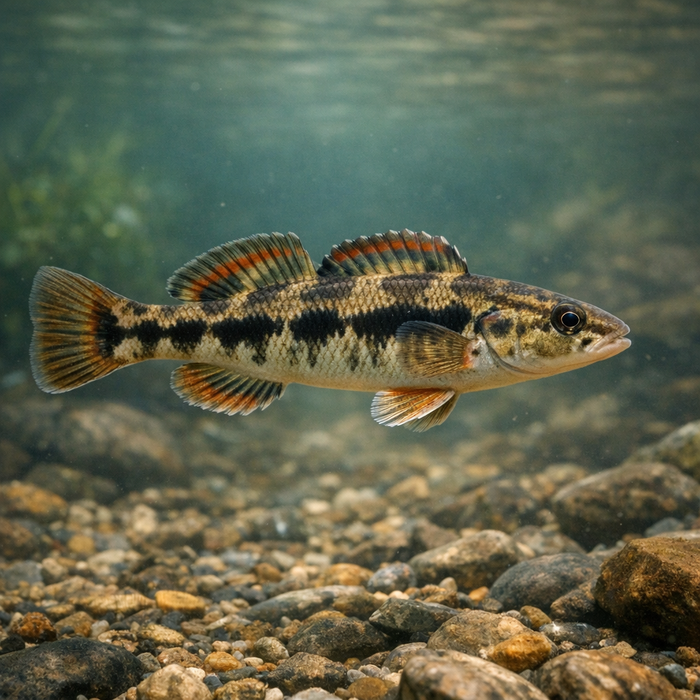
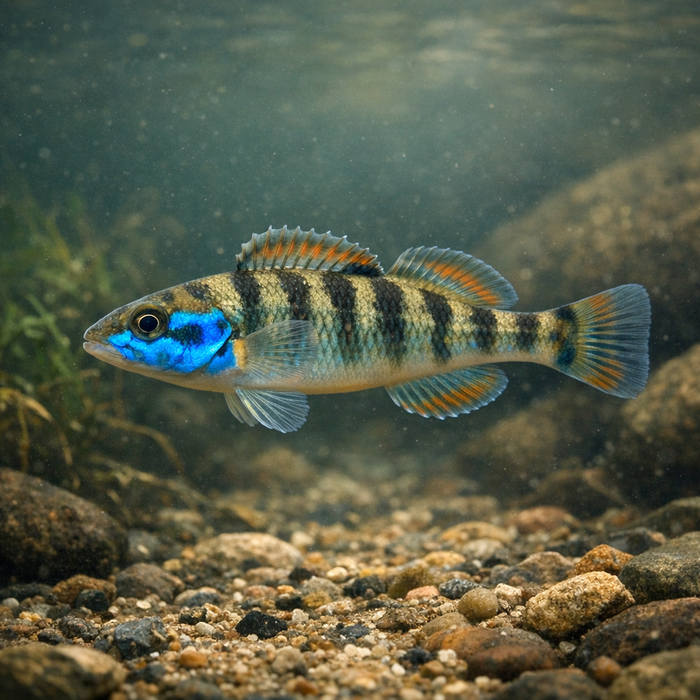
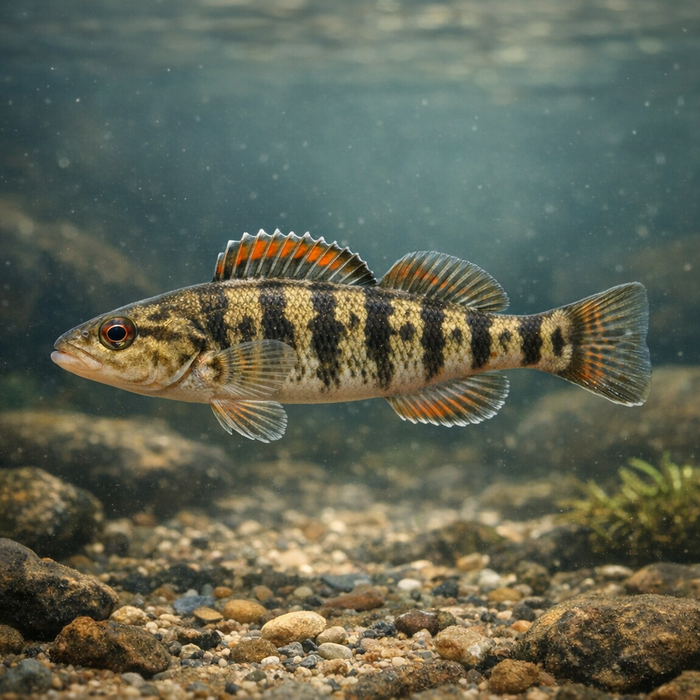
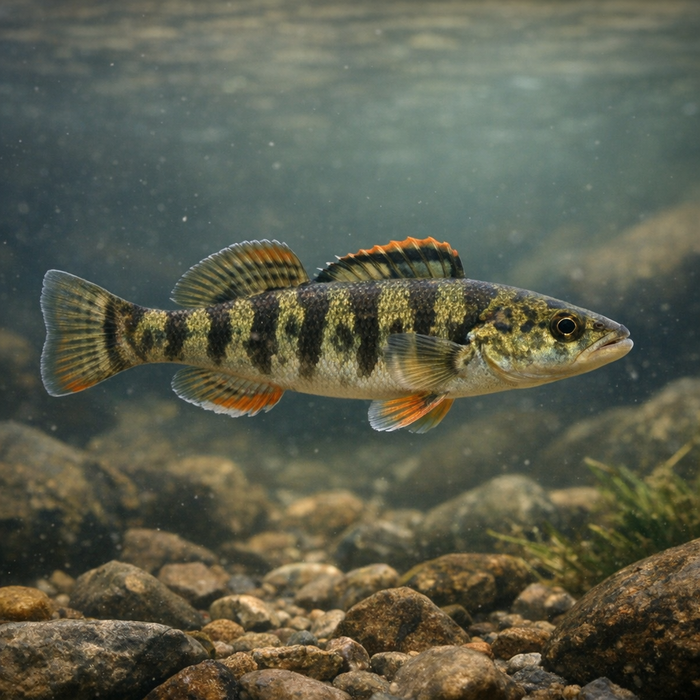
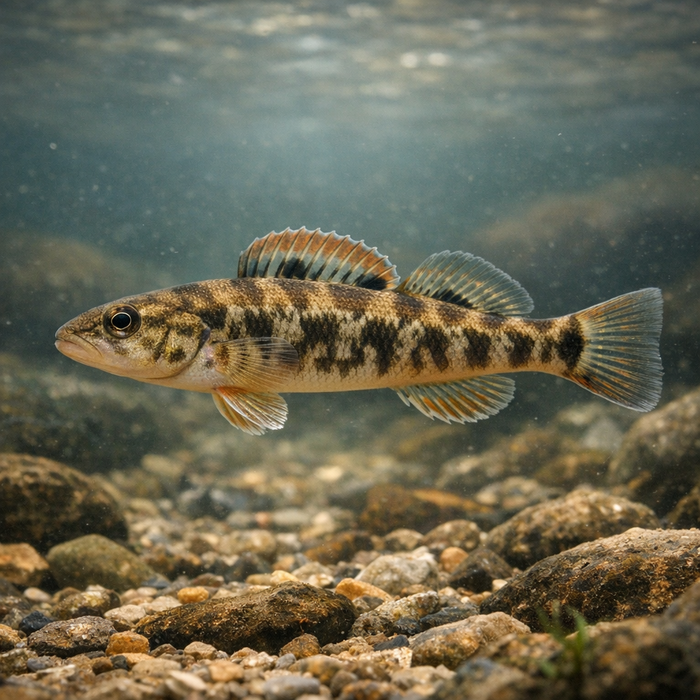
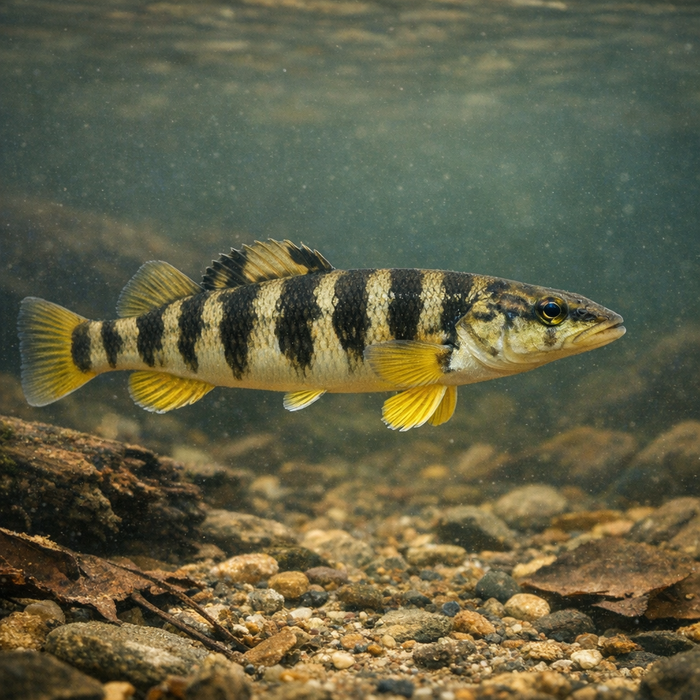
Egg-mimic Darter (Etheostoma pseudovulatum): A Bold, Memorable Hook LineIntroductionMeet the river's tiniest catfish bully impersonator. The egg-mimic darter is a pocket-sized Percidae hustler that convinces rivals and mates with a flashy magic trick. It won't spool your drag or break your wrist, but it will make you rethink what counts as "technical fishing." If microfishing is your jam, the egg-mimic darter offers a masterclass in stealth, precision, and freshwater weirdness. Consider this your crash course in Egg-mimic darter facts and the kind of micro drama that plays out at bootlace depth.What Makes the Egg-mimic darter Unique?Start with the headline: males sport creamy, egg-like spots on the first dorsal fin. Those "eggs" are a decoy, coaxing females to lay the real thing nearby while throwing off would-be egg eaters and rivals. It's visual sleight of hand, scaled to river pebbles. The second twist is lifestyle. Like most darters, this species has a reduced swim bladder and lives almost glued to the substrate. That lets the egg-mimic darter hold position in swift seams with sculpin-like swagger while wasting almost no energy midwater. Finally, it's micro-sized. Adults are often under two and a half inches, which makes presentation accuracy everything.Habitat & Global RangeHere's the catch: the egg-mimic darter is a homebody. It sticks to clear, fast riffles and runs over clean gravel and small cobble in the Duck River system of Tennessee. You're fishing inches, not feet. Depth is typically ankle-deep, with current that lifts your pant cuffs. Substrate matters more than almost anything else. Clean rocks, low silt, steady flow. If you're trying to learn Egg-mimic darter habitat, think "meticulous freshwater housekeeping." Once those conditions go south, so do the fish.Behavior & TemperamentThis darter is more streetwise than spooky. It compresses against the bottom, slips between pebbles, and relies on bars and mottling to fade from view. During the spawn, males get territorial over palm-sized patches and face off like tiny linebackers. They will dash a few inches to kill a nymph or midge larva but rarely rise into the water column. Feeding windows expand with stable flows and good light angles; they shrink when silt or shadows cruise through. Hooking one requires pinpoint drops, patience, and no sudden movements.Ecological ImportanceThe egg-mimic darter is a current-quality meter. It thrives where the water is clean and the bottom is tidy. Lose that, lose the fish. By vacuuming up benthic invertebrates and converting them into baby darters, it fuels bigger fish, herps, and birds. Eggs glued to rock undersides get fanned and guarded, which boosts survival and tightens the link between flow, oxygen, and recruitment. When these populations wobble, it's because the river's life support is slipping.Conservation & Environmental PressuresRestricted range equals fragile outlook. Siltation from careless land use, low summer flows, and chemical knocks from spills stack the deck against this species. Because it sits on a short life cycle and small home range, a single bad season can leave a mark. Some reaches are protected, and regulations can prohibit take or handling. Respect closures. If you're microfishing nearby, treat every benthic blur like it's the last one you'll see today.The FishyAF TakeIs the egg-mimic darter a "sportfish"? Not in the poster-on-a-tackle-shop-window sense. But if you define sport as skill, delicacy, and reading a river like a locksmith, it qualifies with honors. The move is stealth wading, a crumb of bait, and a drift measured in pebbles. Land one, grin, and let it go. The point isn't meat or measurements. It's proof that even ankle water holds a masterclass if you slow down and look.