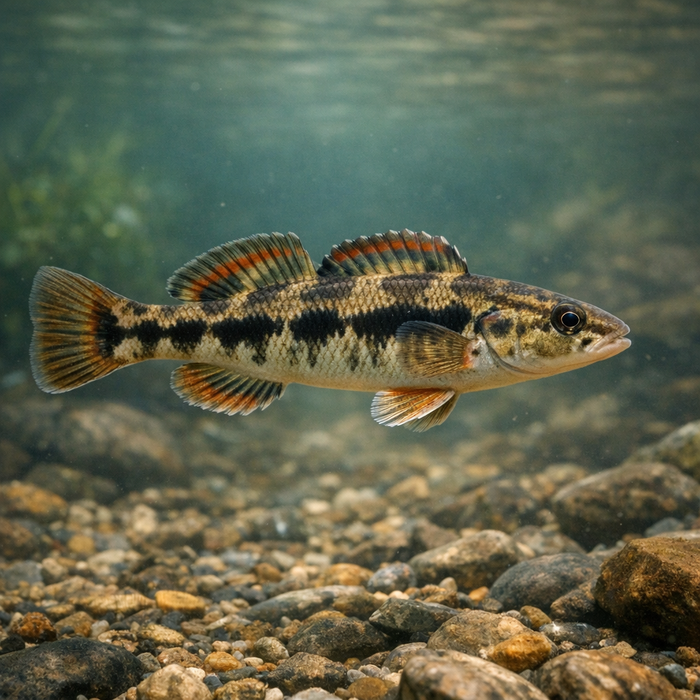
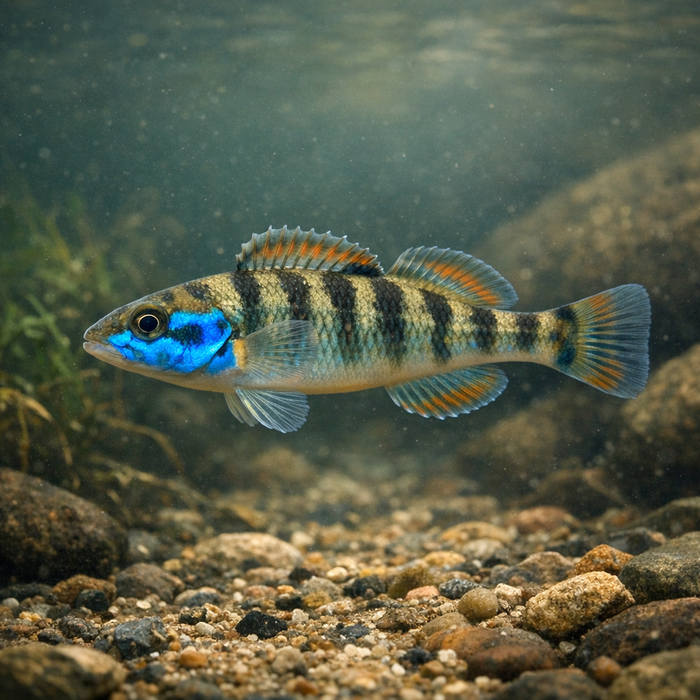
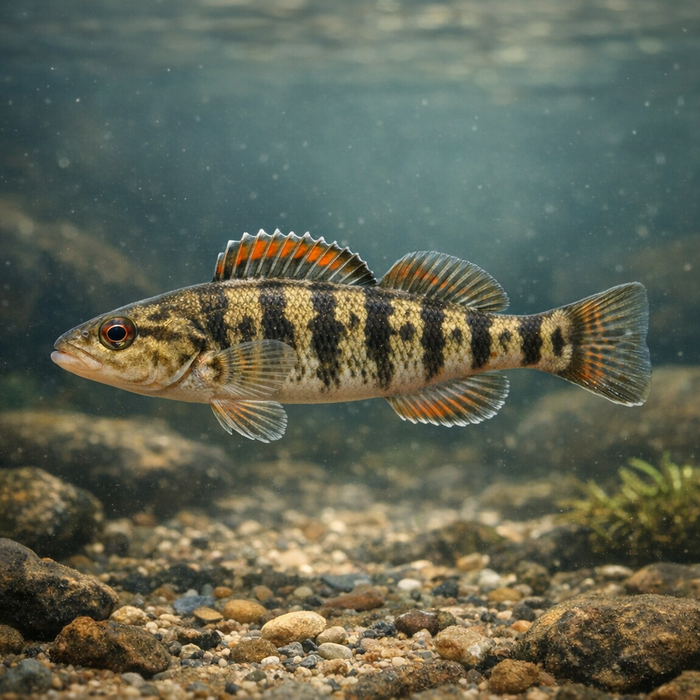
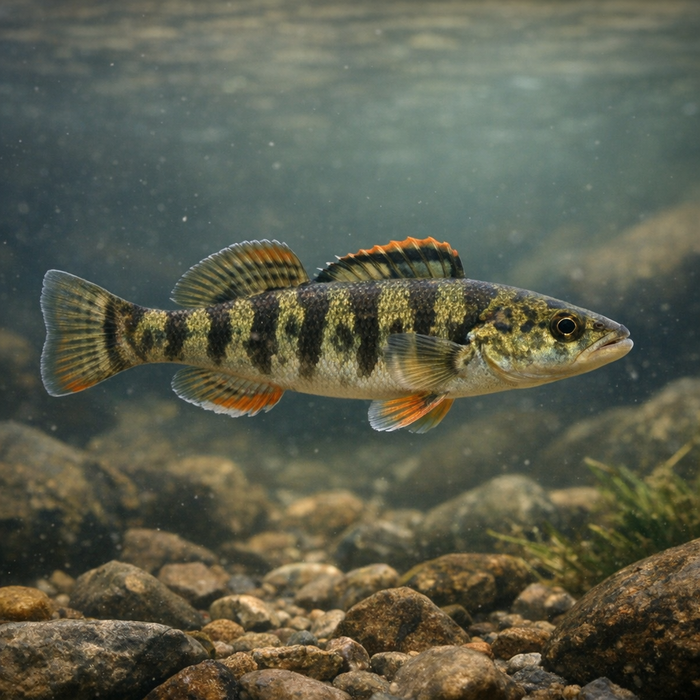
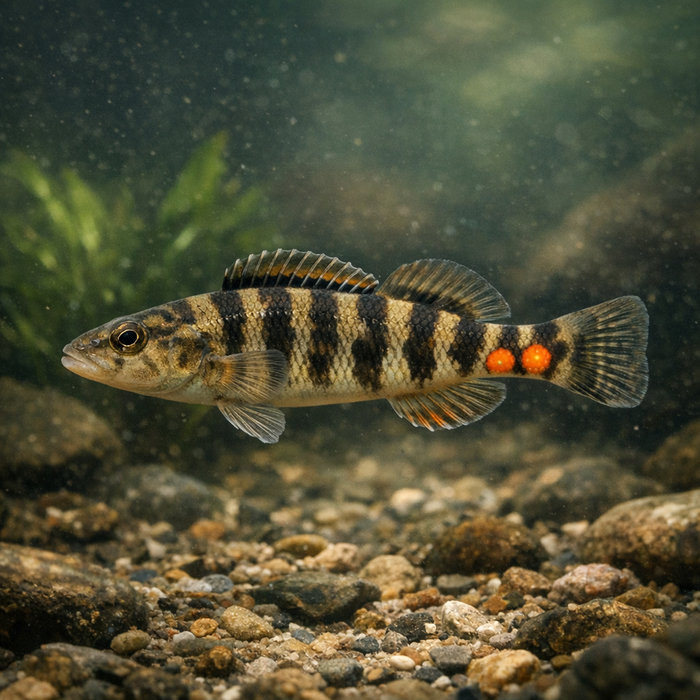
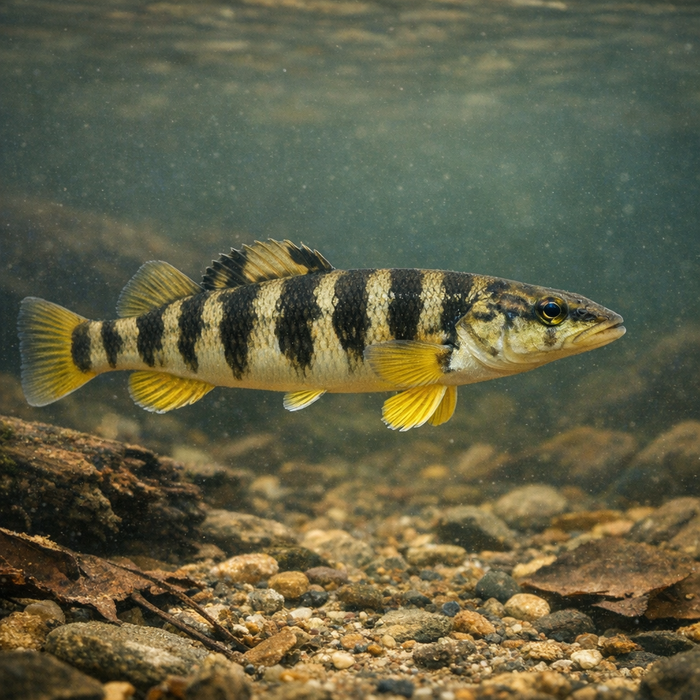
Locust Fork Darter (Etheostoma kimberlae): Micro-rocket built for riffles and ridiculous current.IntroductionThe locust fork darter is proof that big personality can come in a two-inch package. Tailored for swift, ankle-deep current, this fish hugs the bottom, vanishes against cobble, and then blasts forward in a blur to inhale whatever the flow delivers. If you're a micro angler or just a creek nerd, the locust fork darter is the kind of species that turns a knee-high riffle into prime water.What Makes the Locust fork darter Unique?First, stream armor. The locust fork darter ditches the swim bladder, trading buoyancy for full-time bottom grip. Paired with oversize pectoral fins that work like wings, it can park on a rock in water that would send other fish tumbling. Second, flash. During spawning, males intensify their bars and edging, broadcasting with bold contrast in the whitewater. Finally, specialization. The locust fork darter is built for small, clean, rocky streams with airflow-fast current. If your boots chatter on cobble, you're in its wheelhouse.Habitat & Global RangeWhen anglers ask about locust fork darter habitat, the answer is short and specific: shallow, rocky riffles and runs with clean gravel or cobble. Think knee-deep or less, strong laminar flow, and abundant micro-eddies behind stones. These fish tuck into seams, pocket water, and the thin cushions of slack just upstream of rocks. Silt is the enemy; clarity and oxygen are life. Their geographic footprint is narrow, so treat any clean, bouldery tributary in the right basin like a potential goldmine of tiny rockets.Behavior & TemperamentThe locust fork darter lives on the clock of current. It perches, watches, and makes lightning raids, then freezes to vanish into the substrate. It doesn't school tight like shiners; at best you'll see a loose cluster spaced across a riffle. Aggression is situational. During the spawn, males defend stations and show off; at other times, they're patient ambushers. Fighting power is, let's be honest, minimal. But for micro gear, the first burst surprises, and the fish's knack for pinballing under pebbles makes landing them trickier than you'd think.Ecological ImportanceThis darter is an early-warning siren for stream health. Because it demands clean, well-oxygenated water and stable gravels, the locust fork darter flags problems fast. Too much runoff, sediment load, or nutrient gunk and the riffle cafeteria shuts down. Where you find a thriving population, you usually find a whole guild of riffle invertebrates and other picky fishes. In short, if the locust fork darter is doing fine, the stream is wearing a green checkmark.Conservation & Environmental PressuresThe biggest threats are not monsters with teeth but bulldozers and bad drainage. Siltation from development, poorly managed road crossings, and bank trampling can smother eggs glued under flat stones. Low flows in drought, plus nutrient surges after storms, kick this species in the shins. While formal listings can change, smart anglers treat these fish like they're fragile: wet hands, quick photos, and back to the riffle. Protect the gravel, protect the fish.The FishyAF TakeThe locust fork darter won't spool you or smoke a drag, and that's the point. This is creek fishing distilled: stealth, knees in the water, and ridiculous attention to inches. It's a masterclass in reading micro-current. Want to feel dialed as an angler? Fool a fish that weighs less than a paperclip in a current that would shove you downstream. If you came here hunting locust fork darter facts or trying to decode locust fork darter habitat, here's the cheat code: treat riffles like living conveyor belts, and respect the tiny predators riding them. They're small, but the game is real.