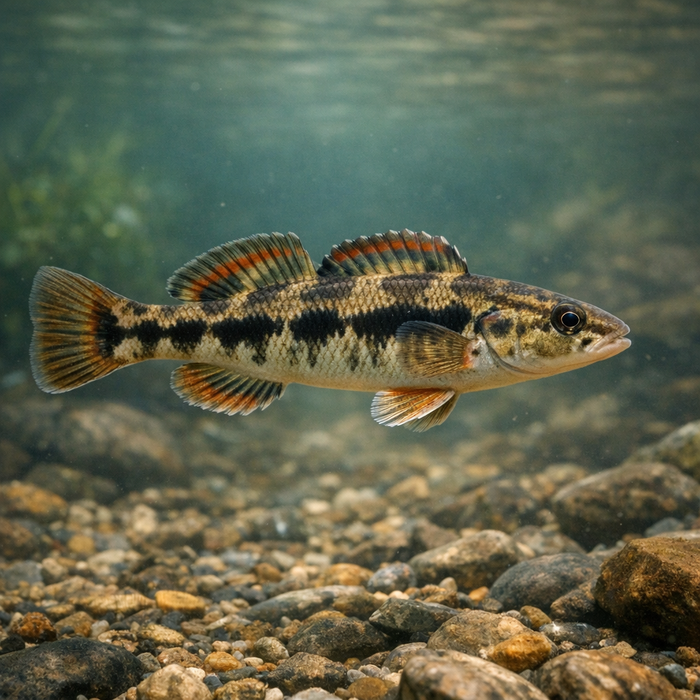
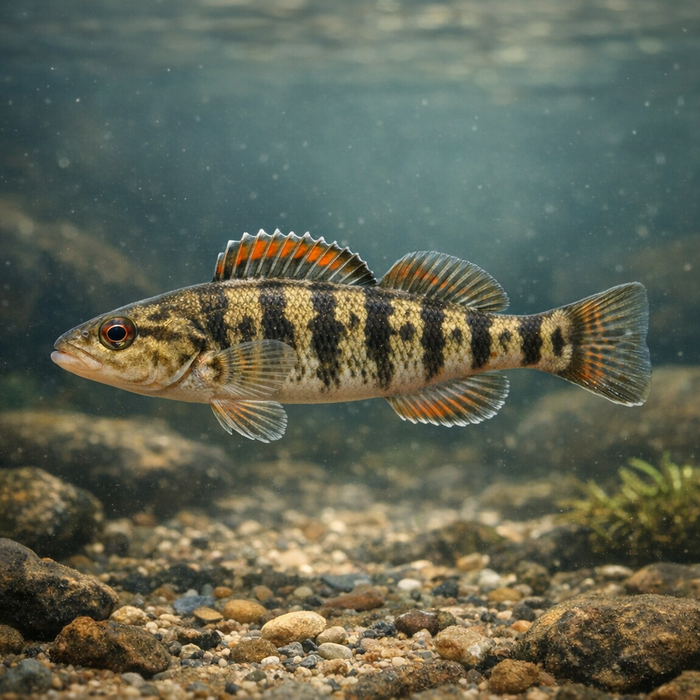
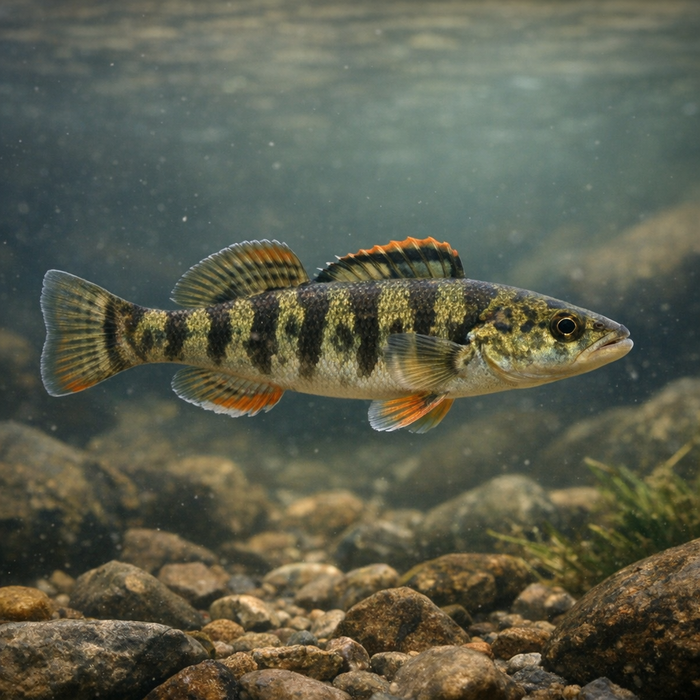
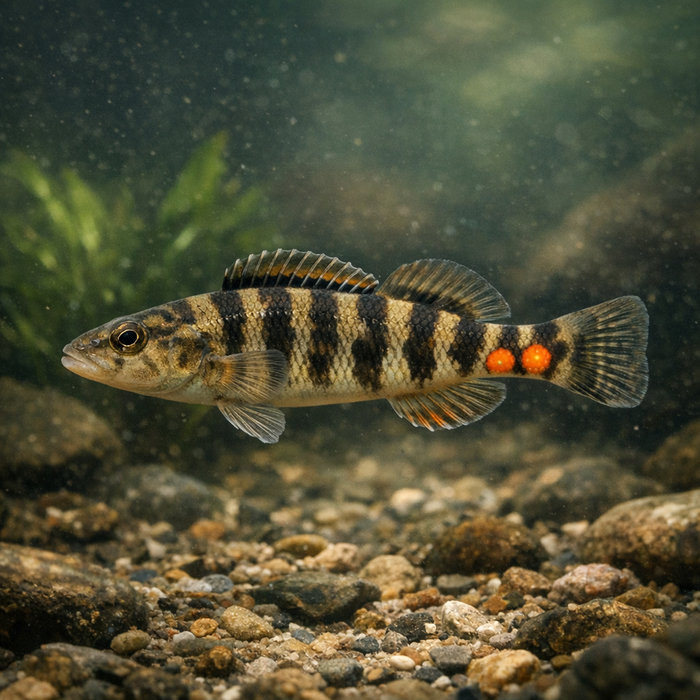
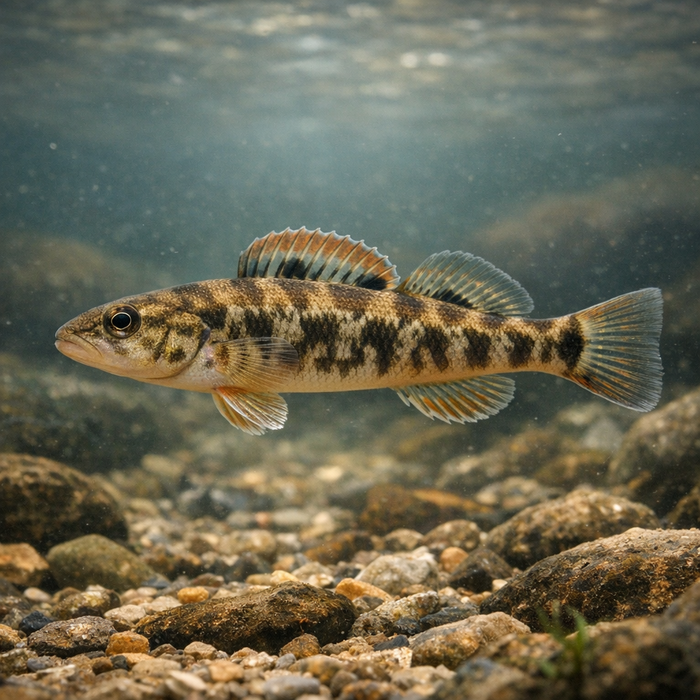
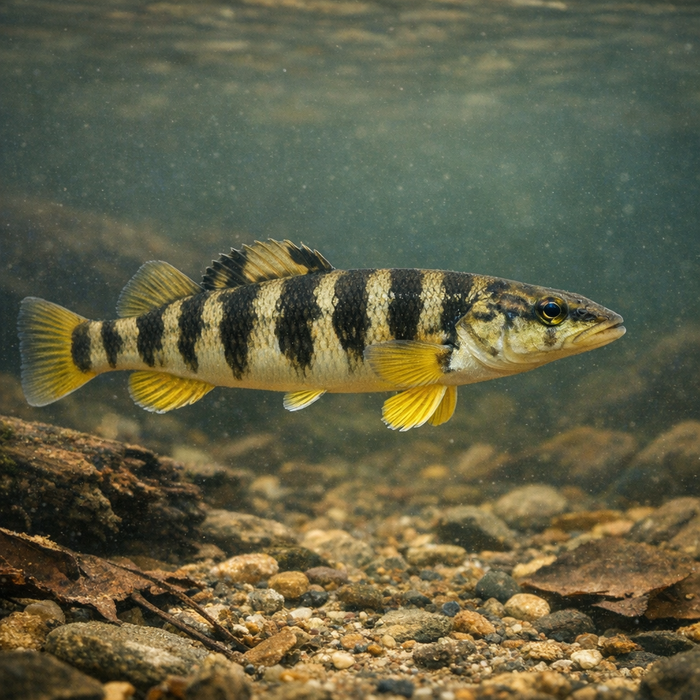
Bluemask Darter (Etheostoma akatulo): Pocket-sized color riot built for rifflesIntroductionThe Bluemask darter is a two-inch attitude problem with a neon paint job. If you like fish that demand stealth, patience, and a sense of humor, this tiny Percidae celebrity checks every box. It's a riffle specialist that turns shallow, pushy current into a stage show of quick snaps, color flashes, and vanishing acts. You won't muscle one in like a bass. You'll out-sneak it, inch by inch.What Makes the Bluemask darter Unique?Two things jump out. First, breeding males wear the namesake electric-blue facial blaze that looks like someone hit them with a tiny airbrush. Second, everything they do is tuned for fast water. The flattened profile, wide pectoral fins, and low-slung stance let them glue themselves to gravel in current that would sweep most minnows away. The Bluemask darter is not a "little perch" with training wheels. It's a purpose-built current athlete that takes micro-precision to even approach.Habitat & Global RangeAsk any angler about Bluemask darter habitat and you'll hear one word: riffles. Clean, shallow, cobble-and-gravel runs with knee-to-ankle depth and real flow are home base. These fish slice life into inches. A hand-sized flat stone can mark the border between rivals. They work the seams tight to the bottom, slipping between cobbles and holding where the current nips. Range-wise, this species has a narrow footprint tied to specific Southeastern drainages. We're talking localized water, not statewide abundance. For anglers, that means map work, careful access choices, and an appreciation for small water that most folks drive past without a glance. If you're collecting Bluemask darter facts, start with current, substrate, and clarity; muddy, silted riffles shut the show down fast.Behavior & TemperamentThe Bluemask darter is a sprinter, not a cruiser. It holds tight, launches a shock-fast lunge for drifting invertebrates, then settles back like it never moved. Aggression spikes during spawning when that blue mask intensifies and males defend pebble-scale territories. Schooling isn't the move here. Think more checkerboard of individuals than a roaming pack. They're also spooky. One clumsy footstep or shadow, and you'll only see dust trails of silt and a memory of color.Ecological ImportanceThis tiny predator punches above its weight. By keying in on aquatic insects that graze algae and leaf litter, the Bluemask darter helps transfer energy up the food web while serving as a snack for larger fish and wading birds. More importantly, it's a living water-quality meter. Where Bluemask darters thrive, you usually find clean gravel, stable flows, and intact riparian buffers. Lose those, and you lose the darter. That makes them a small but mighty ambassador for stream health.Conservation & Environmental PressuresNarrow range plus specialized habitat equals vulnerability. Siltation from careless land use, poorly timed gravel work, and bank trampling can paste over their spawning cobbles in one storm. Low flows, warm pulses, and nutrient surges also beat up riffle communities. The Bluemask darter doesn't have a massive safety net of alternate habitats. Protecting riffles, keeping sediment out, and respecting seasonal spawning windows go a long way toward keeping that blue face lighting up your favorite reach.The FishyAF TakeThe Bluemask darter is proof that big-time angling doesn't require big fish. This species turns a hundred feet of shallow current into a tactical puzzle. You read seams, crawl on your knees, and present a speck of bait on a hook you can barely see. Then a flash of blue, a headshake the size of a shrug, and you've connected with a fish that tells you more about the stream than any gauge reading. If you want substance over size and crave water that rewards finesse, the Bluemask darter is your graduate course. Consider this your intro to Bluemask darter habitat and behavior, with enough Bluemask darter facts to start planning a stealth mission of your own.