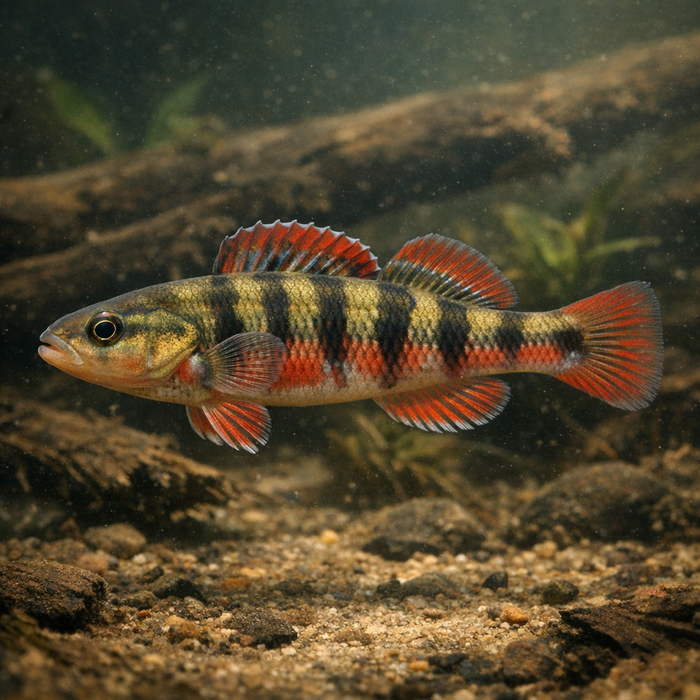
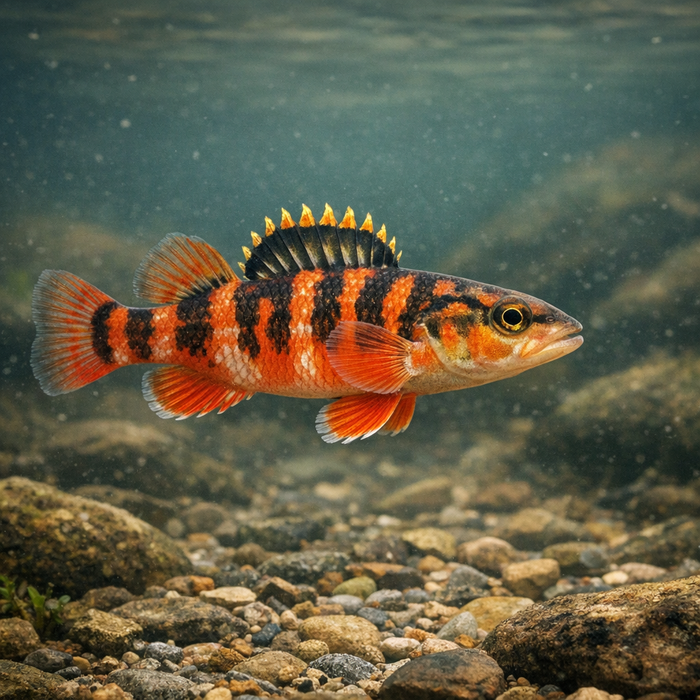
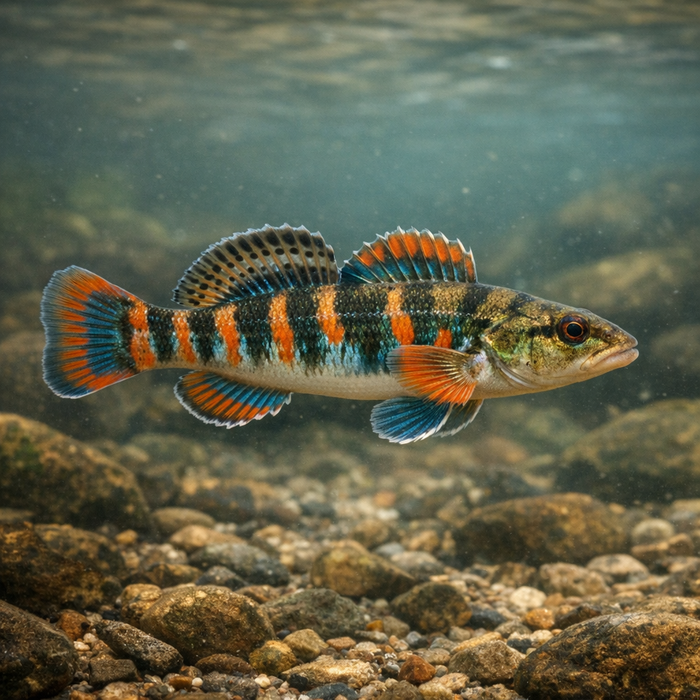
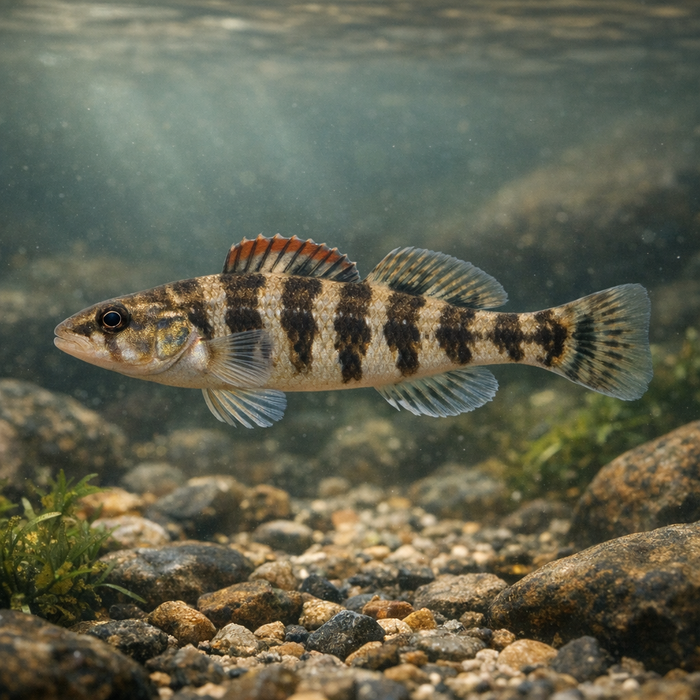
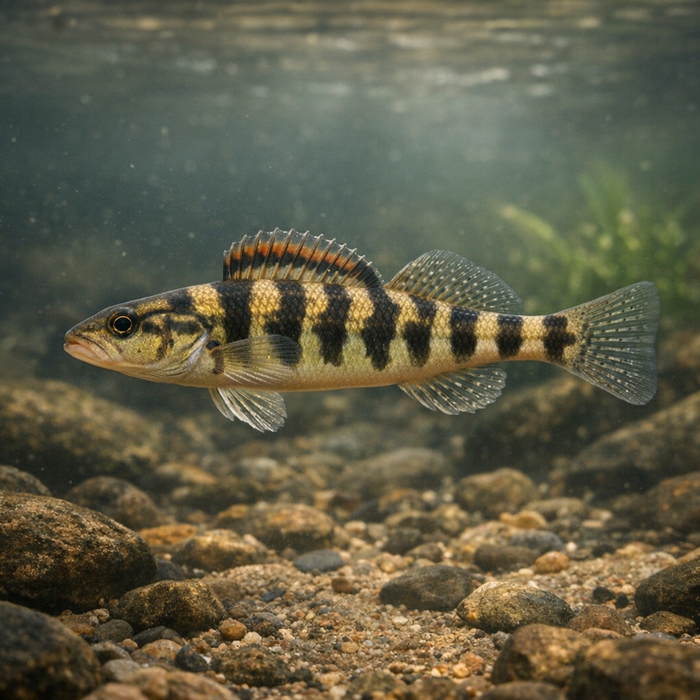
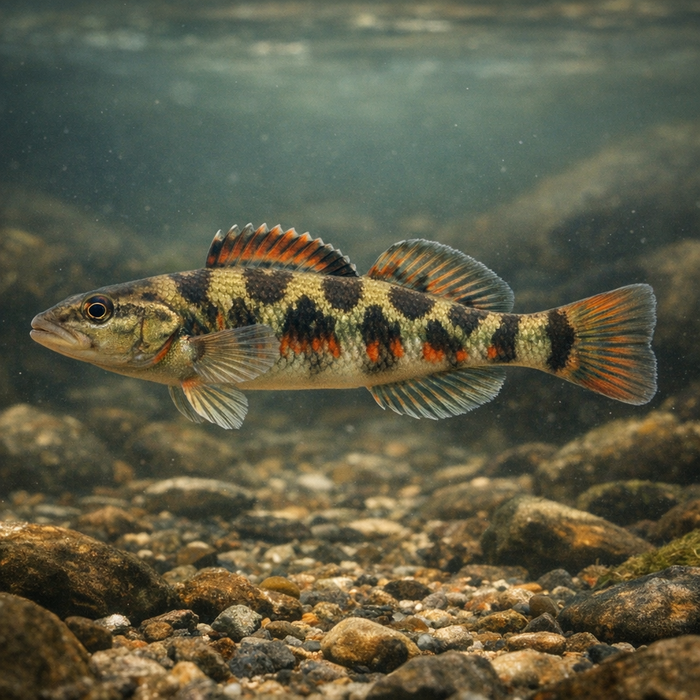
Gulf Logperch (Percina suttkusi): A Bold, Memorable Hook LineIntroductionThe Gulf logperch is the riffle ninja of the Southeast. It is small, fast, and built like a tiny crowbar with fins. If you have ever watched a darter turn stones with a flick of its snout, you have seen the logperch move that made this fish famous. For anglers who enjoy micro missions, the Gulf logperch brings sneaky fun, crystal-clear water, and a serious lesson in presentation.What Makes the Gulf Logperch Unique?Two things. First, that specialized snout. The Gulf logperch pries and flips pebbles to expose insect larvae, crustaceans, and other bite-sized critters. Second, its contrasting vertical bars and quick color shifts. Those bars can darken in seconds when fish are excited or guarding territory. Compared to many darters, it carries a longer, sharper rostrum dialed in for the rock-flipping job. This combo makes the Gulf logperch a standout among riffle specialists.Habitat & Global RangeThe Gulf logperch hugs Gulf-slope drainages of the Southeast, especially the Florida Panhandle to Alabama and Mississippi systems. Think clear, moderate-current rivers and streams with gravel and cobble, punctuated by riffles and fast runs. Shallow is the deal, often shin- to knee-deep. It is a bottom sitter, perching on splayed pectoral fins, sliding from stone to stone. If you are scouting Gulf logperch habitat, look for oxygen, clean substrate, and honest flow rather than silent, silty pools. Consider this your quick handle on Gulf logperch habitat.Behavior & TemperamentCautious but curious. The Gulf logperch reacts to overhead shadows and sudden movement, yet it is surprisingly tolerant of a wading angler who stays low and quiet. It feeds in short windows, dashing forward to pop prey flushed by its own pebble-flipping. During spring, bars intensify, and males posture over prime gravel. It does not make long migrations, but it certainly shifts between adjacent riffles, runs, and pockets depending on flow and clarity. Hooking one is more about precision than power.Ecological ImportanceIf the riffle is a factory line, the Gulf logperch is quality control. By flipping stones, it disturbs and recycles microhabitats, affecting how invertebrates settle and how fine sediments move. Its presence is a living readout of water quality. Silted, algae-slimed rocks mean trouble for this fish; clean, rumbling gravel means business as usual. Predators treat it as protein on the move, and spawning in cleaned gravel pockets adds another layer of habitat turnover.Conservation & Environmental PressuresThe Gulf logperch is sensitive to what we dump or bulldoze into streams. Excess silt from poor land practices cloaks the gravel it needs. Low, warm flow from withdrawals or deforestation hammers oxygen and current. Dams and culverts fragment riffles into isolated patches. While many populations look stable, local hits can be severe. If you want enduring Gulf logperch facts, here is one: water clarity and substrate quality make or break this fish.The FishyAF TakeThe Gulf logperch is proof that small fish deliver big lessons. You cannot brute-force this species. You scale down, read current like a hawk, and place a micro bait with surgical calm. When a Gulf logperch leans in, flips a pebble, and nails your offering, you feel clever, not lucky. It teaches streamcraft better than a dozen casts to a lazy pool. Chase one, and your big-fish game gets sharper too. That is a trade we will make any day.