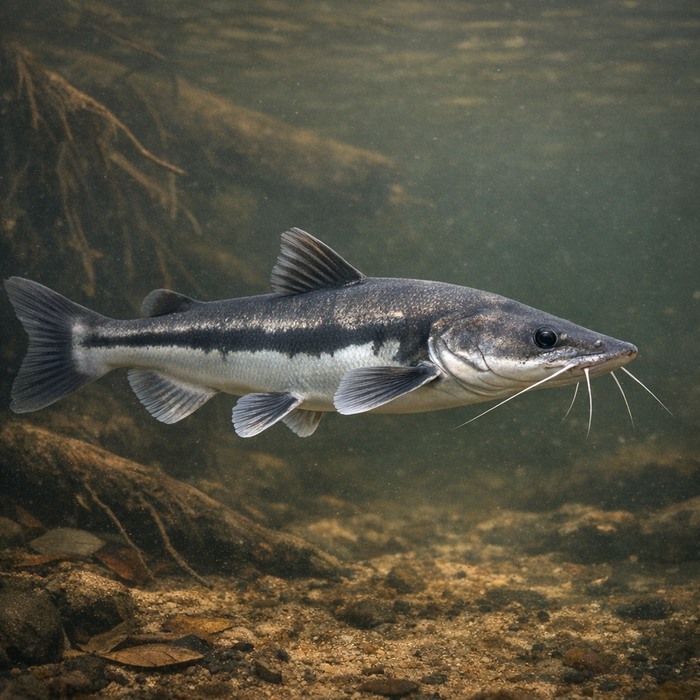
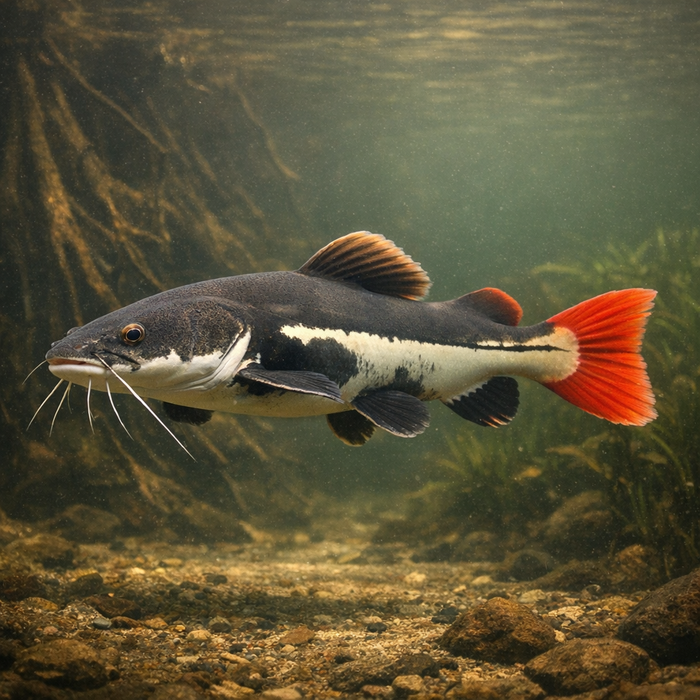
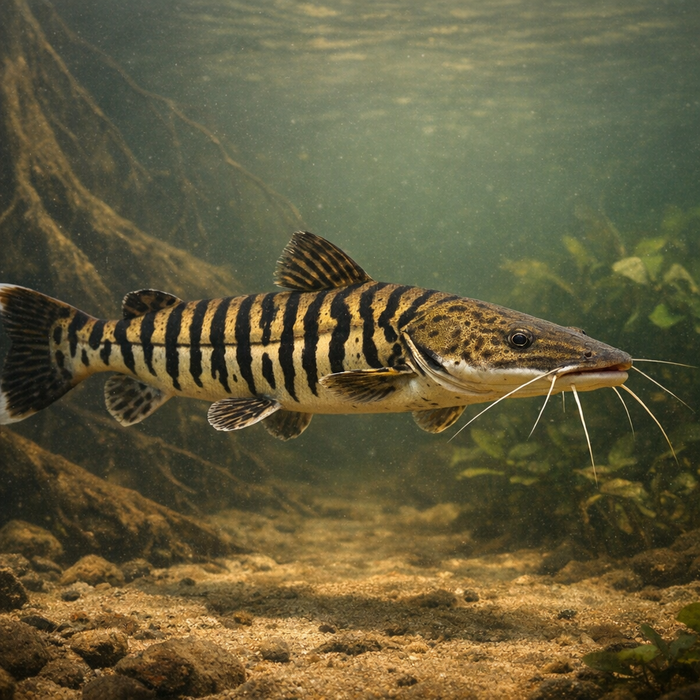
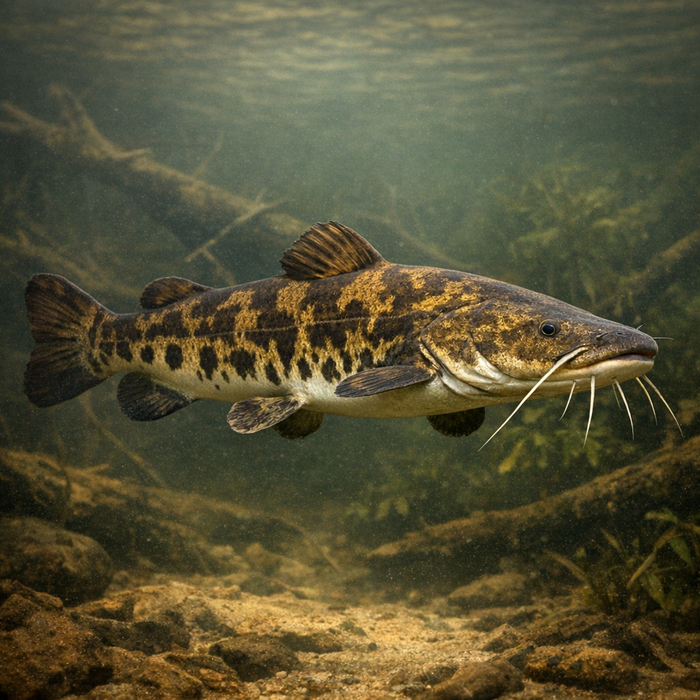
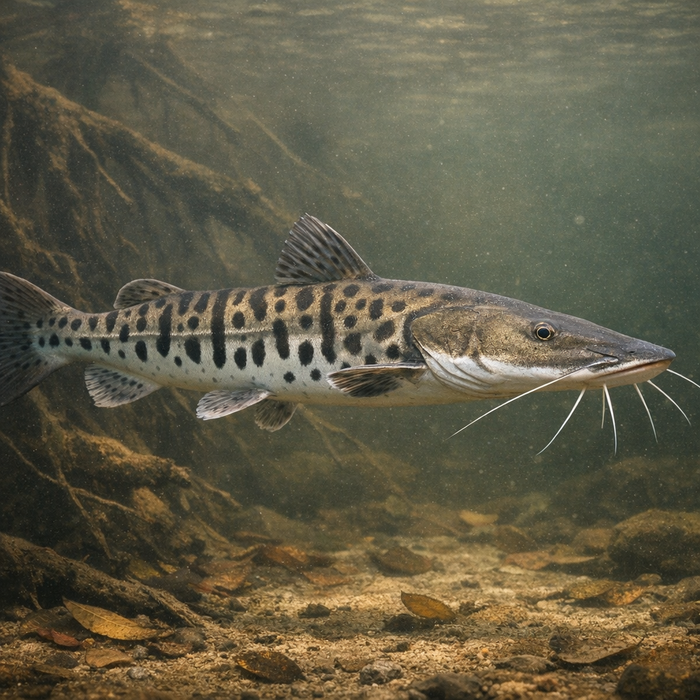
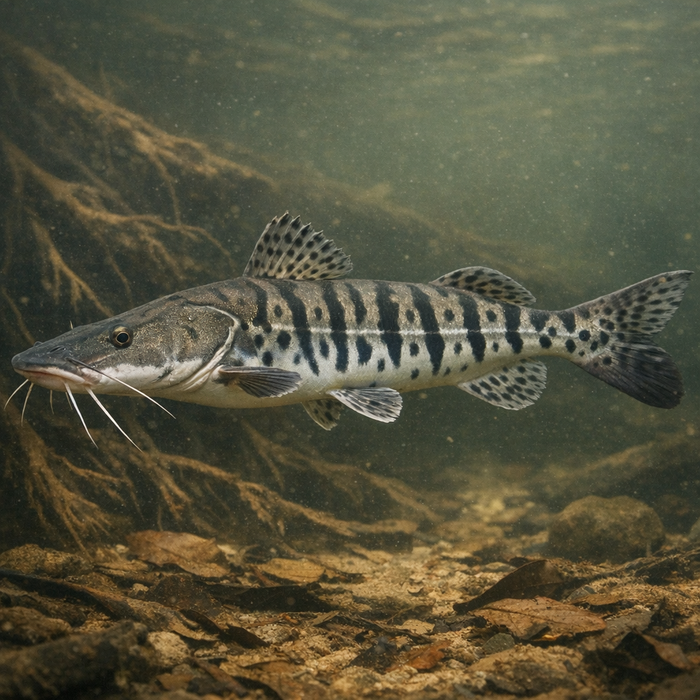
Flatwhiskered Catfish (Pinirampus pirinampu): The floodpulse bruiser that turns river current into chaos.IntroductionThe flatwhiskered catfish is the South American river version of a battering ram with barbels. It's built for current, wired for migration, and entirely too eager to maul a baitfish drifting along a sandy run. If you like big rivers, big channels, and big surprises, this long-whiskered predator supplies them in uncivilized doses.What Makes the Flatwhiskered catfish Unique?First, those barbels. They're flattened, ribbon-like feelers that sweep the bottom like sensory antennae, letting the fish hunt by vibration in coffee-colored water. Second, it's a potamodromous traveler. The flatwhiskered catfish doesn't sit tight; it rides the seasonal flood pulse, moving long distances upriver to spawn, then spreading across floodplain habitats to feed. Third, it punches well above its weight. Hook one and you'll meet a fish that digs in with stubborn, downstream torque, then doggedly grinds in the current until your forearms hum.Habitat & Global RangeThink mega-basins and sprawling floodplains. The flatwhiskered catfish roams the Amazon and its big tributaries, the Orinoco system, and the Paraná-Paraguay rivers. It favors big channels, confluences, and sweeping outside bends where sand merges with firmer bottom. During high water it forages across seasonally flooded lakes and lagoons, then slides back toward main channels as the water falls. If you're scanning "Flatwhiskered catfish habitat" on a map, look for deep runs near structure-light sandbars, river mouths, and mid-channel seams where bait concentrates.Behavior & TemperamentThis isn't a sulker. The flatwhiskered catfish prowls. Dawn, dusk, and night produce some of the best action, but it will chew in daylight when current and forage line up. It often travels in loose groups of similar-sized fish, especially during migration pulses, lighting up a spot-and-move bite pattern that can feel like you stumbled into an underwater freeway. Bites range from sneaky vacuum-sips to freight-train yanks, and once hooked, it grinds deep with headshakes rather than acrobatics. Bring leverage, patience, and a net that won't embarrass you.Ecological ImportanceAs a mid-to-top predator, the flatwhiskered catfish helps shape floodplain food webs by thinning schools of small characins and other fish that boom with rising water. Its migrations shuttle nutrients between channels and floodplain nurseries. Eggs and larvae drift, feeding back into the system and supporting a rolling banquet for plankton, baitfish, and birds. In many regions it also supports artisanal and commercial fisheries, translating river productivity into protein for people.Conservation & Environmental PressuresThe same traits that make this fish awesome-migration, floodplain dependence, big-river lifestyle-also make it vulnerable. Dams interrupt routes to spawning grounds. Channelization and sand mining simplify bottom contour. Overharvest can thin out larger cohorts. Water quality issues hit floodplains hard. While the flatwhiskered catfish is still widespread, smart management matters: protect migration corridors, keep some big breeders in the system, and mind seasonal closures when they're on the move.The FishyAF TakeIf catfish were trucks, the flatwhiskered catfish would be the long-hauler with knobby tires. It's tough, migratory, and unmistakably purpose-built for big current. Anglers who treat it like a couch potato miss the point; this fish is a traveler and a hunter. Follow the flow, fish the highways-confluences, deep runs, sand edges-and you'll collect your own Flatwhiskered catfish facts one throbbing headshake at a time. When it all lines up, you're not "waiting for a bite." You're intercepting a river commuter that eats with conviction and fights like it's late for work. That's our kind of catfish.