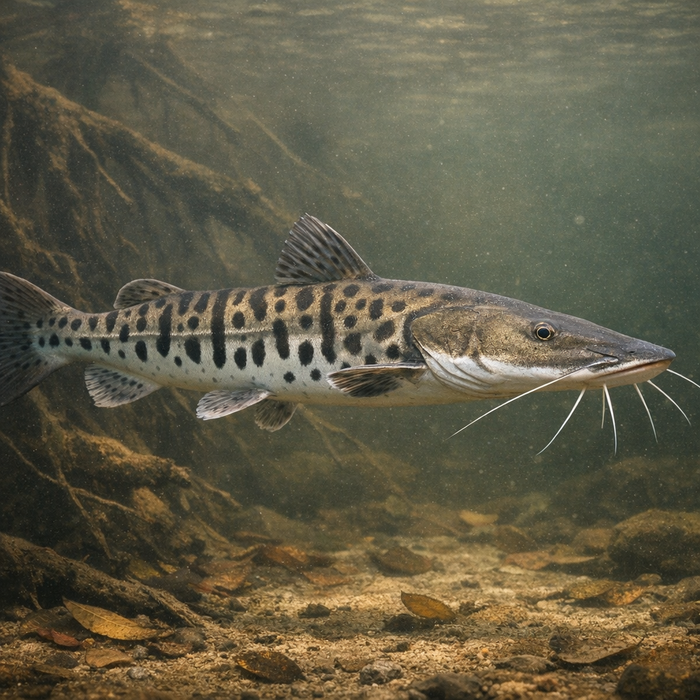
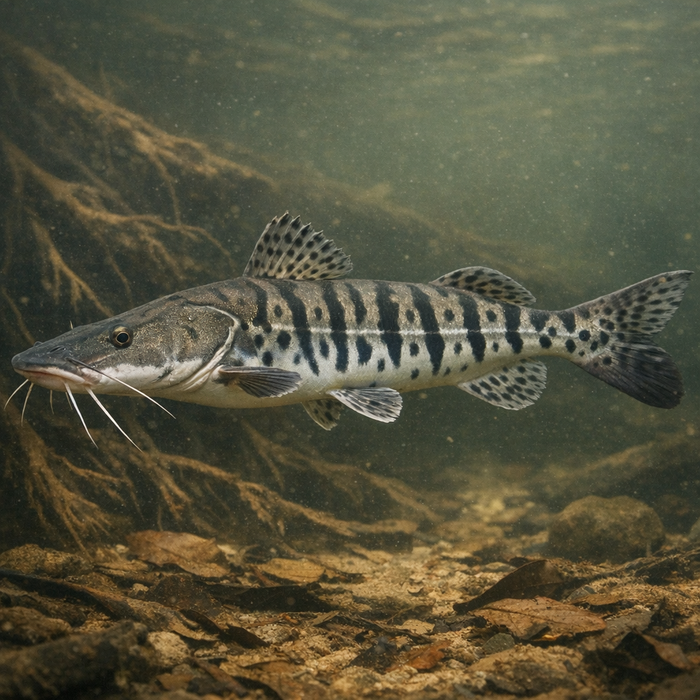
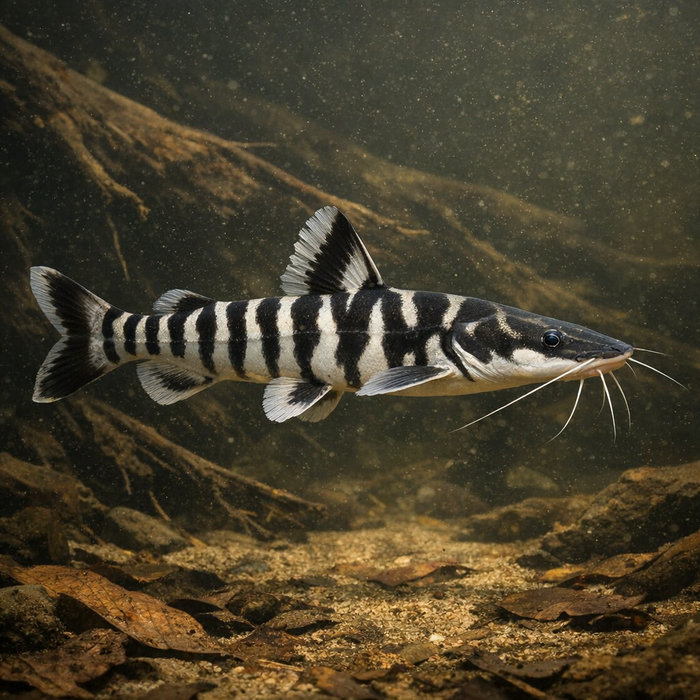
Tiger Sorubim (Pseudoplatystoma tigrinum): Stripes, Whiskers, And Pure River MuscleIntroductionMeet the tiger sorubim, a striped freshwater missile built for big South American rivers. It's sleek, long-whiskered, and unapologetically predatory, threading tea-colored channels like a ghost with a rocket booster. If your idea of fun is drift-baiting structure lines and hanging on through savage, straight-line runs, this catfish is your flavor of chaos. Tiger sorubim facts often start with size and power, but the real story is how perfectly tuned this fish is to the Amazon's flood pulse.What Makes the Tiger sorubim Unique?First, the paint job. Those jagged, barcode-like stripes aren't just pretty; they fracture the fish's outline in stained water and dappled flooded forests. Second, the whisker array. Barbels bristle with taste buds and tactile sensors, letting the tiger sorubim map current seams and hunt in near-darkness. Third, the attitude. When a big one eats, there's no dainty nibble. It surges, pins the bait, and bulldogs for the nearest drop-off. Among South American catfish, it's the elegant brawler: fast off the mark, stubborn on the line, and surprisingly willing to roam.Habitat & Global RangeThe tiger sorubim is a creature of sprawling lowland basins, especially the Amazon system and connected floodplains. Think deep outside bends, confluences, submerged timber lines, and the edges where swift main flow slides past calmer backwaters. During rising water, fish move onto flooded forests and lateral lakes; when levels fall, they funnel back into channels and travel long distances. This constant lateral migration defines tiger sorubim habitat, and it explains why anglers do well near choke points: constricted necks, channel turns, and woody transitions. You won't see it cruising surfacing bait schools like a pelagic; this is a bottom-and-midwater hunter that works contour and current rhythm like a connoisseur.Behavior & TemperamentCrepuscular by preference, tiger sorubim feeds hardest at dusk, night, and dawn, but opportunism rules. It rides current seams, hugging bottom breaks, then rockets forward in short ambush bursts. Solitary as adults, they may stack loosely where food piles up, especially at confluences. The bite can flick from quiet to ridiculous when water stabilizes after a level drop. On the rod, expect direct power more than acrobatics. It dogs low, sulks in heavy current, and makes tough, grinding runs that test knots and patience.Ecological ImportanceIn flood-pulse rivers, predators like the tiger sorubim are quality control for fish nurseries. They focus on injured, disoriented, or surplus baitfish swept from flooded forests back to channels, turning biomass into muscle. Their extensive migrations push nutrients through the system and connect habitats that look separate on a map. Because they rely on clean current seams and seasonal access to forest and lakes, they're a living barometer for river health.Conservation & Environmental PressuresData on Pseudoplatystoma tigrinum isn't perfect, but the trendlines are familiar: dams altering flow timing, deforestation muddying floodplains, and growing fishing pressure near urban centers. The species still anchors regional food fisheries and pops up in aquaculture and markets. None of that is automatically bad, but timing matters. Disrupted flood pulses can kneecap spawning success, and poorly enforced gillnetting at chokepoints can remove too many large breeders. Smart management focuses on migration corridors, seasonal protections, and keeping those forest edges intact.The FishyAF TakeThe tiger sorubim is proof that elegance and brutality can share a dorsal fin. It's not the biggest Amazon catfish, but it might be the most stylish puncher. If you're assembling a bucket-list river trip, add this striped assassin right after arapaima and piraiba. Fish slow and deliberate, read the seams, and respect that flood pulse. You'll earn fewer bites than a bait-and-wait channel cat day back home, but when a tiger sorubim finally plows off with your rig, you'll understand why anglers chase current lines across entire continents. Want more Tiger sorubim facts and Tiger sorubim habitat tips? Simple: follow the water, follow the stripes, and bring heavy braid.