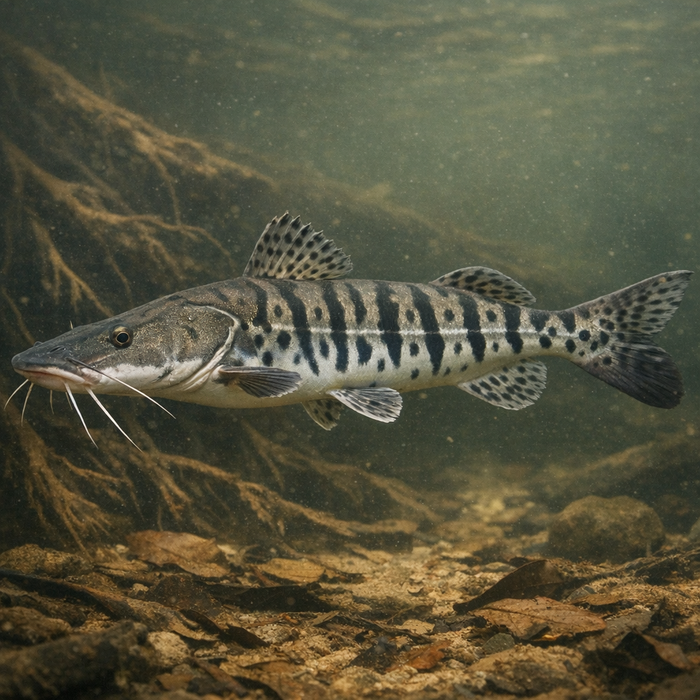
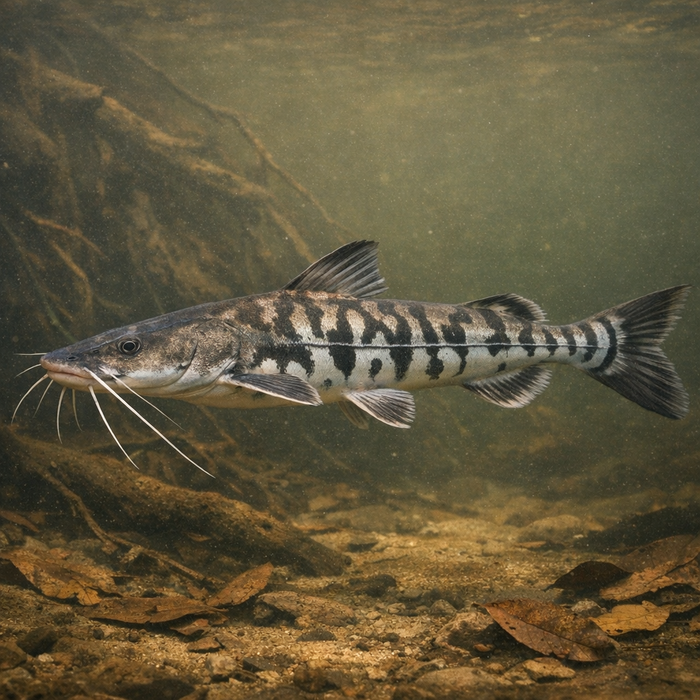
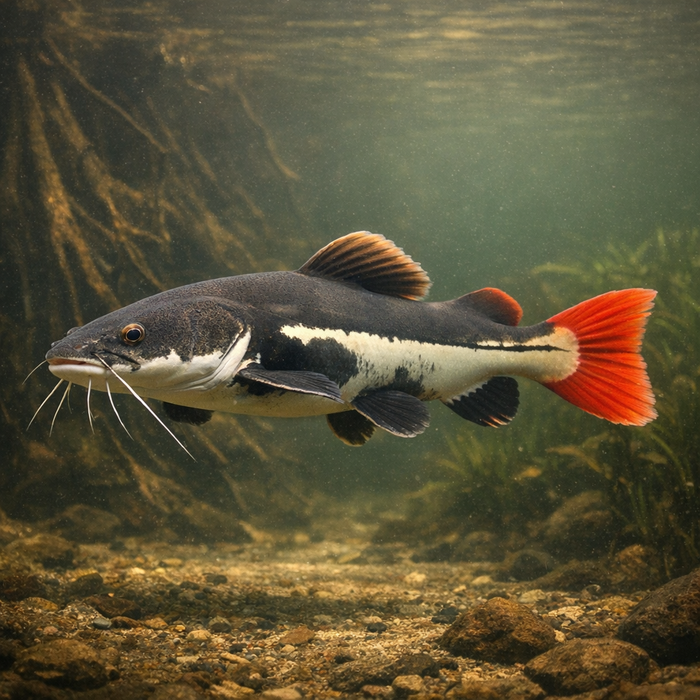
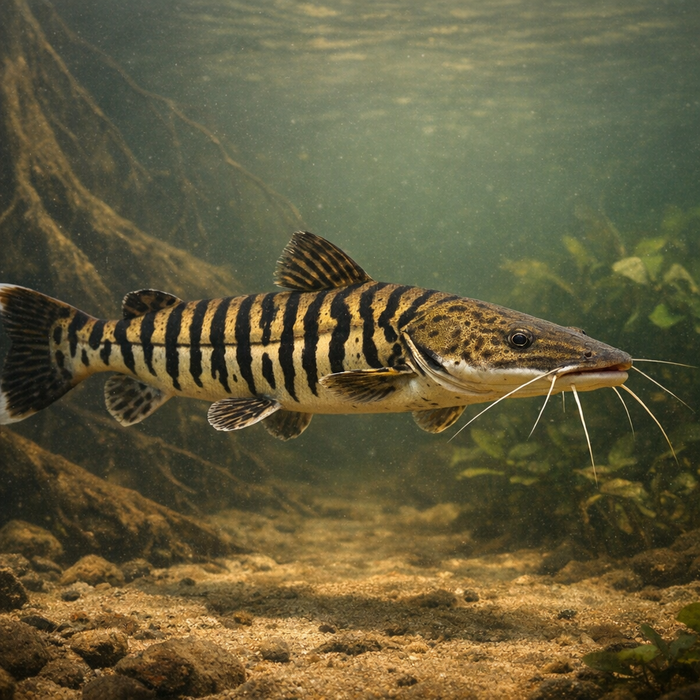
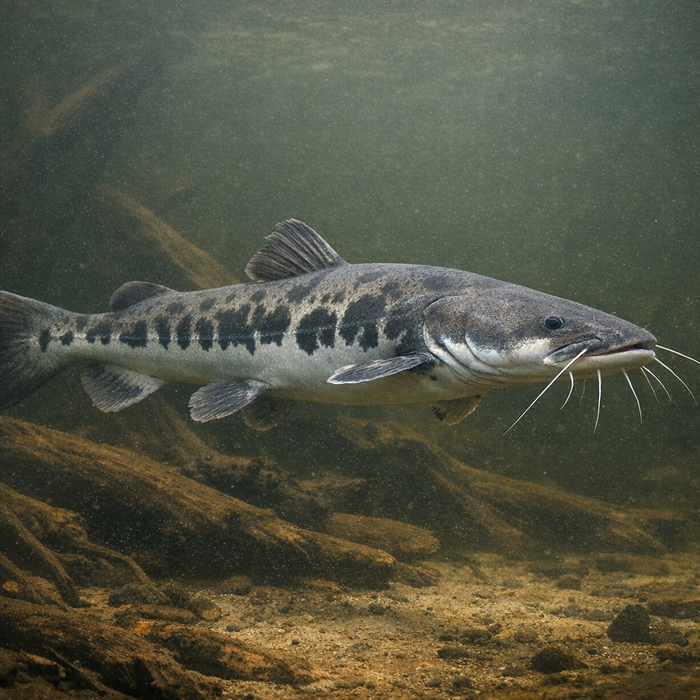
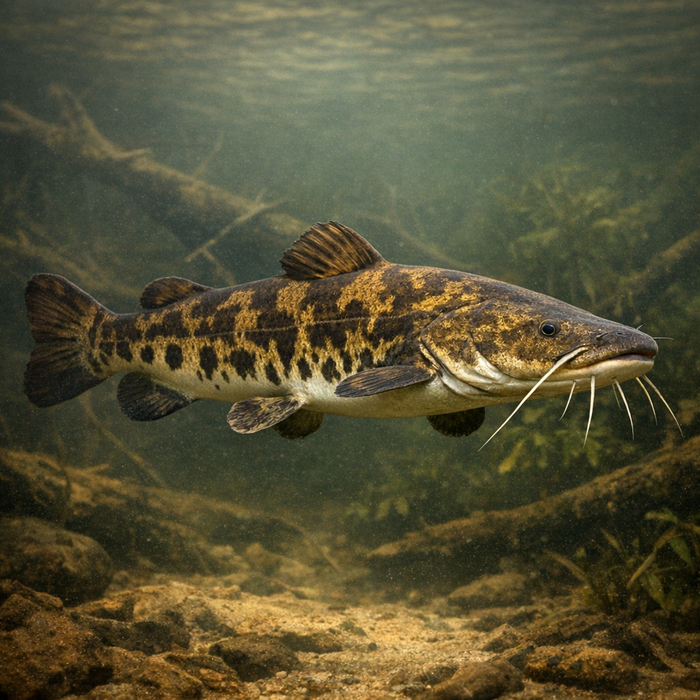
Zebra catfish (Brachyplatystoma juruense): Black-and-white stripes, big-river attitude, and pure current-born muscle.IntroductionIf barcodes swam and pulled drag, they'd look like the zebra catfish. This striking Amazon predator is a living exclamation point: bold vertical bands, sweeping whiskers, and a head shaped to punch through fast flow. It slips through deep, turbid channels where your sonar blots out and the current does pushups. For traveling anglers chasing something different, zebra catfish deliver a delicious mix of exotic looks and gritty, hard-fighting reality.What Makes the Zebra catfish Unique?Two things jump out immediately: the pattern and the posture. Unlike many patterned catfish that fade out as they grow, the zebra catfish keeps those sharp black-and-white bars well into adulthood. It also has a streamlined, slightly flattened head and long barbels that let it lock into heavy current like a flying wing. This is a tactile predator, wired to taste and feel the river. Add in respectable size and a clean, athletic fight, and you've got a fish that's as photogenic as it is punchy. If you came here hunting Zebra catfish facts, start with this: it's built for flow, not still water.Habitat & Global RangeZebra catfish habitat is the big-river heartbeat of northern South America. Think broad Amazonian tributaries with shifting sandbars, deep outside bends, and collision zones where side channels rejoin the main stem. Water color can be tea-clear, chocolate, or anything between depending on the basin, but the pattern is consistent: current, depth, and a steady food conveyer belt of baitfish riding the flow. You'll encounter them from lowland channels to confluences and seasonal floodplain edges when water recedes, usually well below the surface and often pinned tight to bottom. Don't expect roadside access. These are boat-and-camp fisheries, typically organized through reputable jungle lodges.Behavior & TemperamentZebra catfish are cruising ambush experts. They hold where current compresses prey, then surge with short, savage runs. Barbels sweep for clues, the lateral line reads turbulence, and the fish commits with a sudden inhale and turn. Hooked fish drive for bottom, then angle downcurrent, using the river like a conveyor. They're not picky during prime windows, but they're rarely shallow or surface-active. Windows open around dawn, dusk, and during flow changes, especially when water drops and bait funnels off floodplains back to the main channel.Ecological ImportanceThis species slots in as a mid-to-upper predator in Amazon rivers, thinning schooling characins and other small fishes while feeding larger apex brutes in turn. Its current-savvy lifestyle keeps energy moving from floodplains back into river channels. Young fish drift with seasonal pulses, a slick survival trick that spreads them downstream along the basin's watery highways. Healthy zebra catfish signal working river processes: moving water, migrating bait, and intact flood cycles.Conservation & Environmental PressuresThreats in these systems are more about water than nets. Hydropower dams, channelization, and destructive mining practices can chop rivers into stagnant parts, flatten seasonal pulses, and fog water with silt and mercury. Those changes hit tactile specialists like the zebra catfish hard. Add localized subsistence harvest and aquarium trade collection, and pressure exists even if it's not always obvious. Formal assessments are spotty, and regulations vary wildly across countries and reserves. The best safeguard is habitat continuity: free-flowing river segments with room for seasonal rise and fall.The FishyAF TakeIf you're bored with the same old species list, the zebra catfish is your spicy detour. It's beautiful without being dainty, accessible only if you're willing to go where the road ends and the river begins, and honest enough to punish sloppy rigs. You don't finesse this fish; you respect current, plant a fresh bait, and hold on. Photograph the bars, mind the spines, and release it like you actually want more of them around. As far as bucket-list river fish go, this one punches well above its PR.