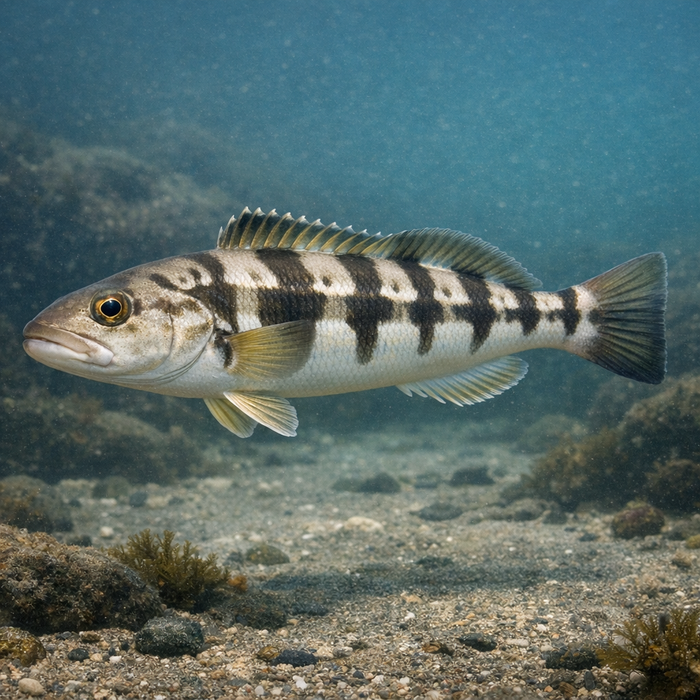
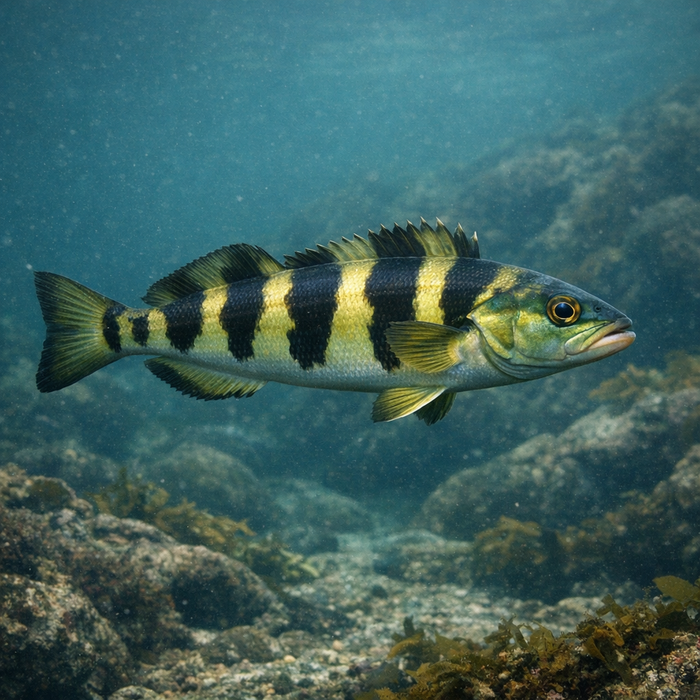
Ghost Pipefish (Solenostomus paradoxus): The Reef’s Best Disguise Has a Mouth
The Ghost Pipefish looks like something the reef forgot to finish assembling. A tubular snout, ragged fins, scattered skin filaments, and wildly variable markings turn a small fish into a convincing piece of underwater scenery. Also called the ornate or harlequin ghostpipefish, Solenostomus paradoxus belongs to Solenostomidae, not the family containing true pipefishes and seahorses. Its camouflage makes it easy to overlook even when it is right in front of you.
For anglers, that creates an unusual challenge: this is a fish worth finding, not hooking. There is no established recreational angling method to recommend. Leave the rod behind for this encounter. The reward is recognizing a living predator inside what initially looks like reef clutter, then watching without rearranging its surroundings.
What Makes the Ghost Pipefish Unique?
The standout feature is reproductive engineering. Female Ghost Pipefish use enlarged pelvic fins to form a brood pouch beneath the body. Developing eggs attach to specialized skin structures inside that pouch. Unlike their familiar seahorse relatives, the females handle the brooding. Those fins are doing considerably more than steering.
Camouflage supplies the second party trick. Deeply cut fin membranes and slender appendages break up the animal’s outline, while coloration can range from nearly black to semi-transparent, with red, yellow, and white markings. There is no single reliable color template for identification. Look for the complete combination of snout, body shape, and elaborate fins rather than expecting every individual to match a photograph.
Then there is its armored construction. The body carries star-shaped bony plates rather than simply looking like a smooth, stretched-out baitfish. Its long snout ends in a small mouth that takes in tiny crustaceans by suction. Among Ghost Pipefish facts, the combination of ornate disguise, body armor, and maternal brooding is hard to beat.
Habitat & Global Range
Ghost Pipefish habitat centers on coastal marine environments, including protected reefs and rocky or coral dropoffs. The broader distribution spans the tropical Indian and western Pacific oceans, with records reaching southern Japan and southeastern Australia. Published depth summaries differ slightly, but approximately 3–35 meters captures the commonly reported range. That puts many encounters within diving depths, not within a conventional fishing program.
Adults occur around reef edges and intricate living structure, including gorgonians and crinoids. Sheltered coastal habitat does not necessarily mean motionless water: current-exposed reef edges are also reported. For observation, inspect the relationship between fish and surrounding structure instead of treating the entire reef as one uniform search area. A tiny animal can disappear visually inside a very small patch of habitat.
Behavior & Temperament
The Ghost Pipefish is not built for a spectacular chase. It is a weak swimmer that uses rapid fin movements for precise positioning, and individuals are usually solitary, although pairs and small groups occur. Describing it as a miniature game fish misses the point. Its strengths are concealment and controlled movement, not raw speed.
Feeding is similarly restrained. As an ambush predator, it takes small crustaceans through its tubular snout rather than pursuing substantial prey across the reef. Females grow larger than males, adding another reason not to assume that two differently sized individuals represent different species. Watch patiently and let the fish reveal itself through movement; do not prod the background to make the identification easier.
Ecological Importance
Its documented feeding role is small-scale predation, particularly on mysids and other tiny shrimps. That establishes its place as a predator, but it does not justify claims that it controls reef health or regulates entire crustacean populations. Small fish deserve attention without being promoted into unsupported ecosystem superheroes.
The species also demonstrates why visual surveys require care. An animal with an outline and coloration that blend into its surroundings can be missed. A useful observation should therefore include clear identification, location, depth, and habitat notes where possible. A photograph taken without contact is more informative than a confident guess based on one red patch.
Conservation & Environmental Pressures
Ghost Pipefish is assessed as Least Concern. That is a global conservation category, not a guarantee that every local population is secure or that collecting is permitted. Its coastal setting makes habitat condition relevant, while government guidance identifies habitat degradation and collection pressures as concerns for ghostpipefishes and related groups. Species-specific population effects should not be invented where evidence is limited.
Practical restraint matters. Avoid touching the fish, moving its shelter, or damaging surrounding habitat for a better view. Check local protections before any activity involving capture or possession. Observation should leave both the animal and its setting intact.
The FishyAF Take
The Ghost Pipefish earns respect by making your eyes work, not your drag. Trying to turn it into a rod-and-reel conquest is the wrong kind of ambition. There is no credible tackle prescription here, no proven bait recommendation, and no reason to manufacture either.
Find it without disturbing it. Recognize the disguise. Appreciate the female carrying her brood in modified fins. Then leave the whole improbable arrangement exactly where you found it. Some fish test your knots. This one tests whether you can stop treating every encounter as something to land.