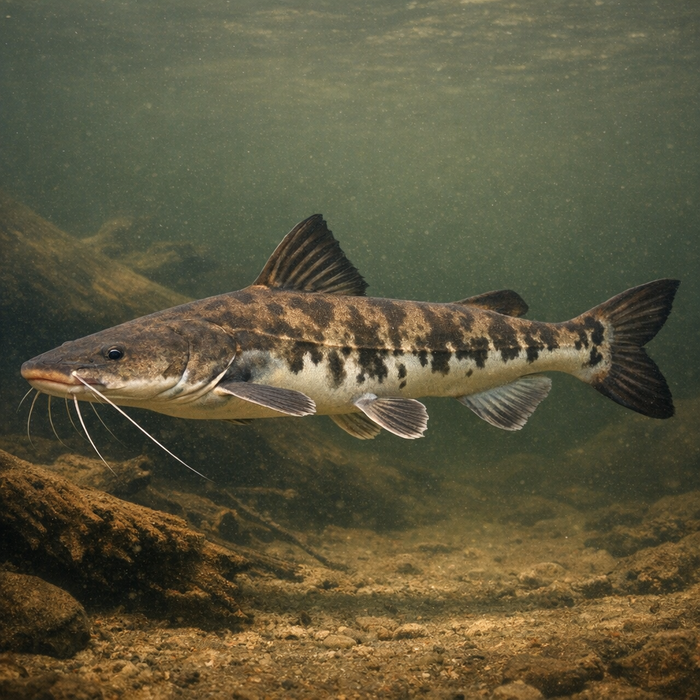
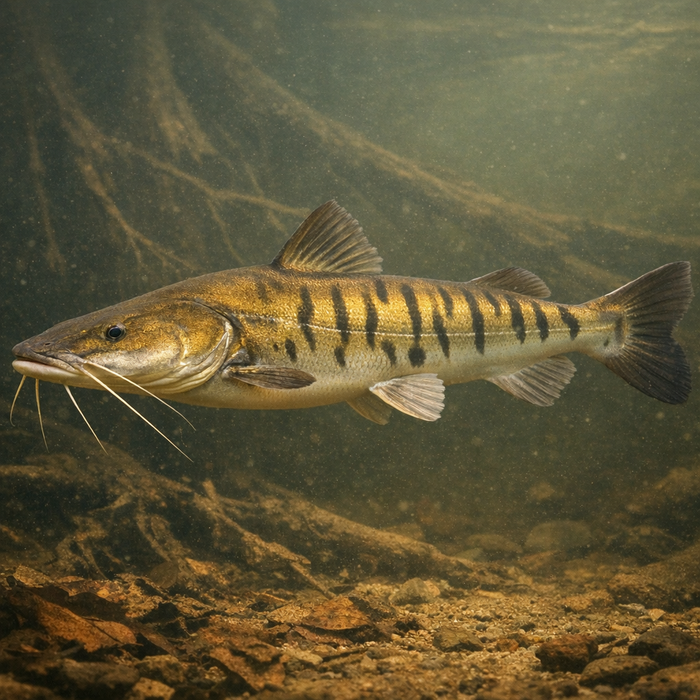
Giant Catfish (Netuma thalassina): A Saltwater Heavyweight With a Built-In Nursery
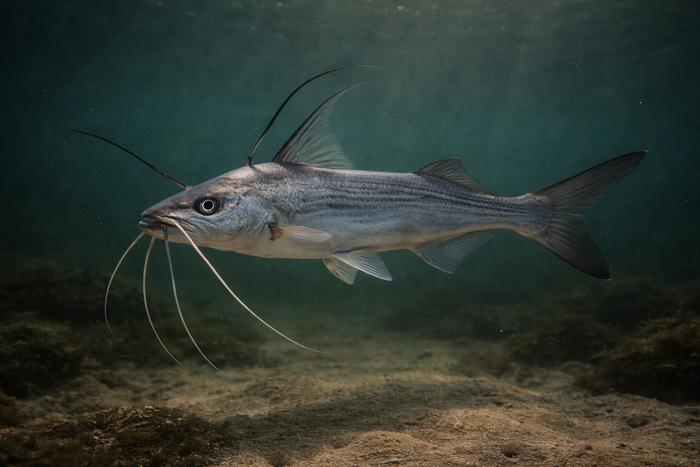
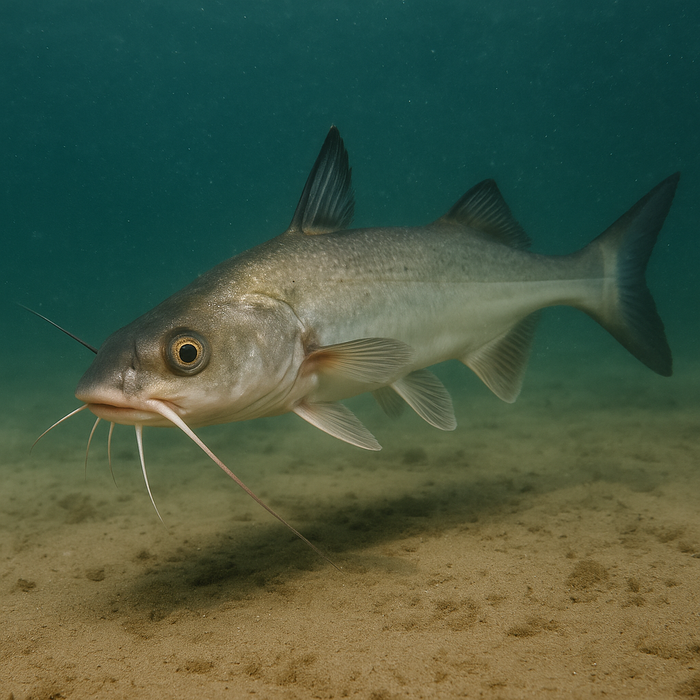
Forget the freshwater monster usually summoned by the words giant catfish. This species belongs to the sea. The Giant Catfish is an ariid, a member of the marine catfish family, with a streamlined body, a deeply forked tail, and a name that needs its scientific surname attached. It is not the Mekong giant catfish, and borrowing that freshwater species’ records would send this guide straight overboard. Its other names include giant sea catfish and giant salmon catfish.
For anglers, the appeal is straightforward: coastal water, bottom-presented bait, and a fish worth identifying properly. The interesting part starts beyond the whiskers. This species combines substantial size, dangerous fin spines, and parental care that turns a male’s mouth into nursery space. There is considerably more going on here than another anonymous bait thief.
What Makes the Giant Catfish Unique?
Start with reproduction. The Giant Catfish incubates eggs in its mouth. Instead of simply leaving fertilized eggs on the seabed, it provides oral protection during development. That is a different reproductive strategy from the broadcast spawning familiar in many marine fishing targets, and a useful reminder that a fish’s mouth is not always devoted to swallowing your bait.
Its internal anatomy has another excellent surprise: a heart-shaped swim bladder with scalloped sides. Outside, identification depends on less romantic details. The pointed snout and separate inner tooth patches on the roof of the mouth help distinguish it from the similar bronze catfish. Teeth are arranged in patches rather than one simple, uniform dental carpet. Those details matter because closely related sea catfish have repeatedly been confused in published records.
Then come the handling hazards. Serrated dorsal and pectoral spines are associated with venom glands. These are not decorative features, and the landing process deserves as much attention as the hookup. Have long pliers ready and keep hands away from the spine tips. A casual grab is a poor finishing move.
Habitat & Global Range
Giant Catfish habitat centers on coastal marine waters and estuaries, particularly sandy or muddy bottom. Its documented distribution covers the Indian Ocean and parts of the western Pacific, including Southeast Asian waters and Australia. Australian collection datasets include substantial northern marine records. Salinity tolerance allows it to use brackish areas, while freshwater entry is reported but uncommon; this remains a saltwater species first.
Do not assume estuary means shallow. Confirmed Singapore captures came from approximately 20–30 meters over muddy seabed near submerged reefs. These observations also underline an identification trap: the similar bronze catfish can occupy neighboring waters. A productive location for one is not automatic proof that the other is present, and a shared common name is not a reliable species identification.
Behavior & Temperament
The Giant Catfish is a bottom-associated predator rather than a fish that needs a frantic surface presentation. Diet research has documented crabs, mantis shrimps, other shrimps, and fish. In one Indonesian sample, crabs and mantis shrimps were especially prominent. That supports natural bait fishing, but it does not establish one universal magic bait. Feeding opportunities change with the local seabed community.
Night fishing is a reasonable option: verified Singapore catches occurred late at night and before sunrise. Those observations demonstrate nighttime availability, not a guaranteed feeding window everywhere. Start with a manageable bottom rig, keep the bait where you intend it to fish, and change one variable at a time. Depth, current, and presentation deserve more attention than dockside certainty.
Ecological Importance
Among useful Giant Catfish facts, its reproductive investment deserves more attention than its name. Mouthbrooding protects developing offspring, while measured egg production varies markedly between studied populations. Indonesian research recorded relatively small egg counts; Kuwaiti research recorded larger counts and notably large ova. One population’s numbers should not become a species-wide rule.
Its predatory feeding connects bottom-dwelling prey with a fish harvested by people. Commercial and food-fish importance makes it more than a recreational curiosity. What anglers release, what fisheries retain, and what habitats remain productive all belong in the same conversation.
Conservation & Environmental Pressures
The Giant Catfish is currently assessed as Least Concern, but that global category is not a promise of unlimited local abundance. Research from Gunungkidul, Indonesia, identified a fully exploited fishery and a substantial proportion of catches below estimated maturity size. Local pressure can therefore matter even when the species is not globally threatened.
For anglers, the response need not become a sermon. Follow current local rules, retain only fish you intend to use, and avoid treating small fish as disposable extras. Mouthbrooding also gives a good reason to minimize unnecessary handling of fish carrying offspring. Conservation starts with decisions made beside the water, not just with the label on a species page.
The FishyAF Take
This fish deserves better than being lumped into the miscellaneous-catfish bucket. Fish the bottom intelligently, identify the catch honestly, and remember that the dangerous part may begin after it reaches the net. The whiskers do not make it harmless.
The best attitude is curiosity with competent gear. You do not need freshwater monster mythology, an invented record, or a supposedly secret bait recipe. A real marine predator with a mouth nursery is already interesting enough. Let the fish supply the weirdness; your job is to avoid supplying the nonsense.