Giant Queenfish (Scomberoides commersonnianus): Silver Muscle With a Serious Airborne Attitude
A surface strike is exciting. A surface strike followed by a silver fish clearing the water is something else entirely. The Giant Queenfish delivers that second version, combining fast runs, aerial fights, and the kind of light-tackle appeal that makes anglers forget they were supposedly fishing for dinner. This tropical member of the jack family, Carangidae, is an established inshore sportfish, not merely a flashy visitor passing through.
Typical fish in this guide run roughly 27.6–37.4 inches and 6–15 pounds, already enough to make a medium spinning outfit earn its keep. The appeal is straightforward: accessible coastal water, visible feeding opportunities, and a predator that can turn a competent cast into a very untidy few minutes.
What Makes the Giant Queenfish Unique?
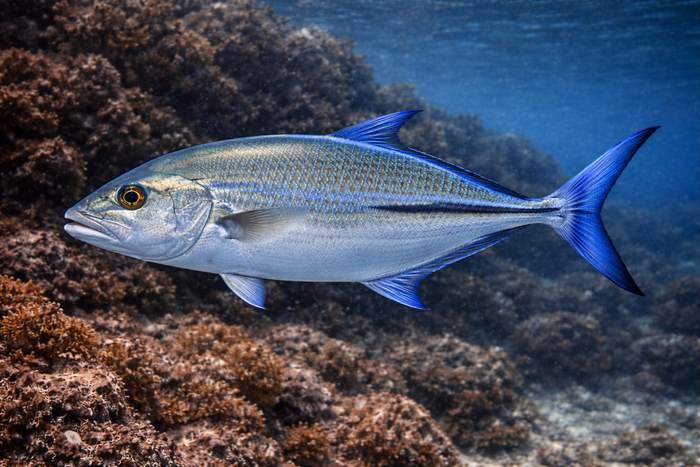
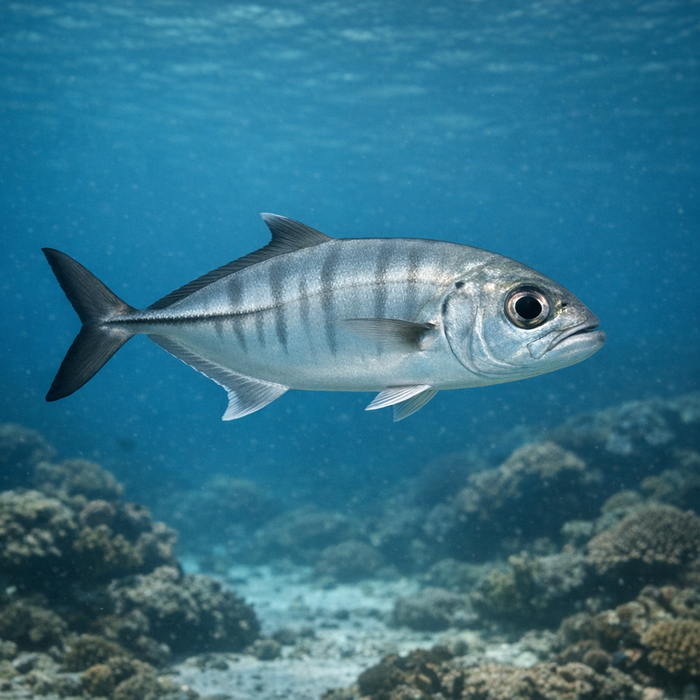
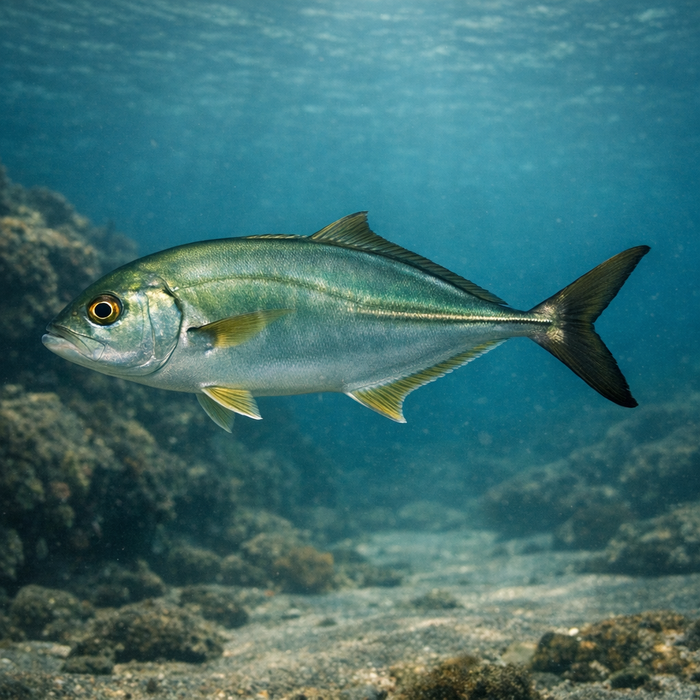
The Giant Queenfish wears its identification marks prominently. Large dark blotches form a single row along its silver flanks, while its oversized mouth extends well beyond the eye. The tall dorsal-fin lobe lacks the sharply contrasting black tip seen in some related queenfish. Together, those features are more useful than simply calling every spotted silver speedster a queenie.
Its younger life stages have an unexpectedly rough edge. Juveniles use specialized teeth to feed on scales and skin tissue from other fishes. Adults become predators of fishes, cephalopods, and small invertebrates. That is a considerably stranger childhood than the usual eat-small-things-and-grow routine.
There is also a handling detail worth remembering before grabbing one enthusiastically: dorsal and anal fin spines can deliver venomous punctures. The fight deserves excitement; the unhooking deserves patience. Silver does not mean harmless.
Habitat & Global Range
Giant Queenfish habitat centers on tropical coastal waters across the Indo-West Pacific. Reefs, offshore islands, coastal shallows, and estuarine waters all feature in its distribution. Around northern Australia, that puts anglers in familiar country: expansive bays, reef-fringed islands, and coastlines where baitfish move between open water and tidal systems.
Exmouth Gulf, the Mackerel Islands, Albatross Bay near Weipa, and Darwin Harbour are important destinations in this guide. They offer different settings, but the useful fishing question stays the same: where is moving water bringing prey within reach? A productive location is a combination of habitat and opportunity, not just a famous name on a map.
Although Giant Queenfish occur in estuaries, they should not be treated as freshwater enthusiasts. Their association with estuarine water comes with a preference for marine conditions; heavily diluted, turbid water is not equivalent to a clear coastal feeding lane. Look toward the saltwater end of the system rather than assuming every muddy upstream bend is equally promising.
Behavior & Temperament
This is an active predator that occurs in small schools. Its daytime feeding and pursuit of mobile prey help explain why live baits, trolled offerings, and actively worked lures belong in the angler’s toolkit. Feeding fish provide opportunities, but their presence should not be confused with guaranteed cooperation.
For Giant Queenfish, light-tackle surface casting is particularly compelling. Small poppers and stickbaits let you watch the approach, the strike, and sometimes the refusal. Start with a fast, erratic retrieve, then change cadence or lure profile if fish follow without committing. A visible fish is information, not a promise.
Once hooked, expect speed and jumping rather than a quiet tow toward the boat. Smooth drag pressure matters more than theatrical rod work. Keep control, avoid unnecessary slack, and leave the victory speech until the hooks are actually out.
Ecological Importance
The Giant Queenfish connects coastal prey populations with a larger mobile predator. Its varied diet includes bony fishes, cephalopods, and crustaceans, while its own abundance and movements make it relevant to both recreational and commercial fisheries. In Indonesia, it is caught with nets and hook-and-line; in Australia, it is an established component of inshore fisheries.
Its reproductive output is substantial: mature females can produce more than 250,000 eggs in a spawning event. That impressive number is reproductive potential, however, not a guarantee that the same number of young fish will survive.
Conservation & Environmental Pressures
The Giant Queenfish is classified as Least Concern. That global assessment should not be mistaken for a statement that every local population is equally healthy or that harvest needs no restraint. A widespread species can still require locally appropriate management.
Northern Australian research has examined its growth, reproduction, and exposure to recreational and commercial fishing. Females take several years to mature, giving anglers a sound reason to think beyond immediate catch numbers. Protecting breeding fish and following local rules are more useful than assuming a fast-moving predator must also replace itself instantly.
The FishyAF Take
The Giant Queenfish makes a convincing argument against judging a fish by its fillet. Its real currency is the strike, the run, and the jump that interrupts whatever confident nonsense you were saying beforehand.
Fish an outfit with enough control to finish the fight properly, favor barbless single hooks, and release unwanted fish in the water whenever practical. Keep your hands clear of those spines. The best souvenir is a clean release and a slightly bruised ego—not a fish baking on the deck while everyone searches for a phone.