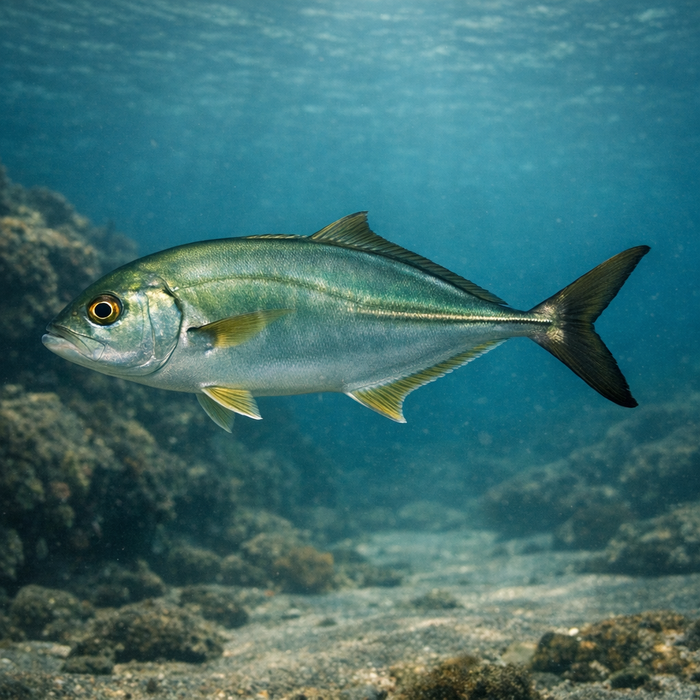
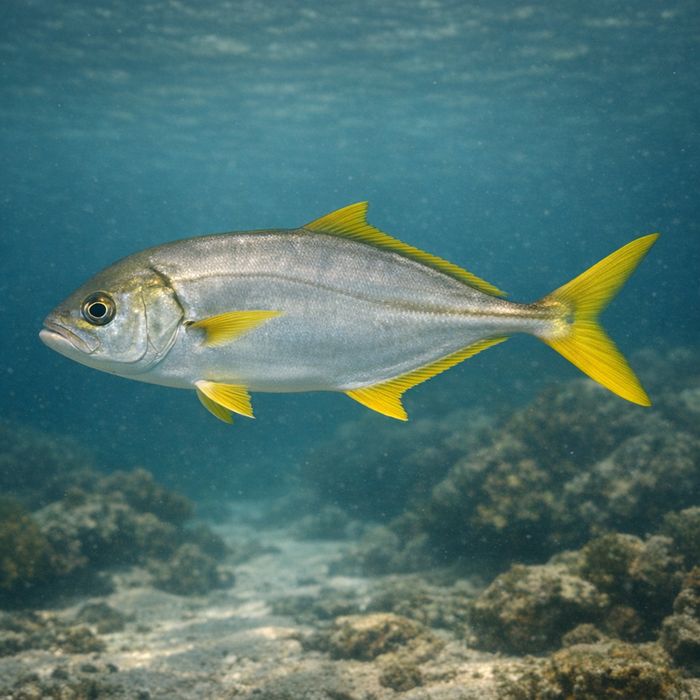
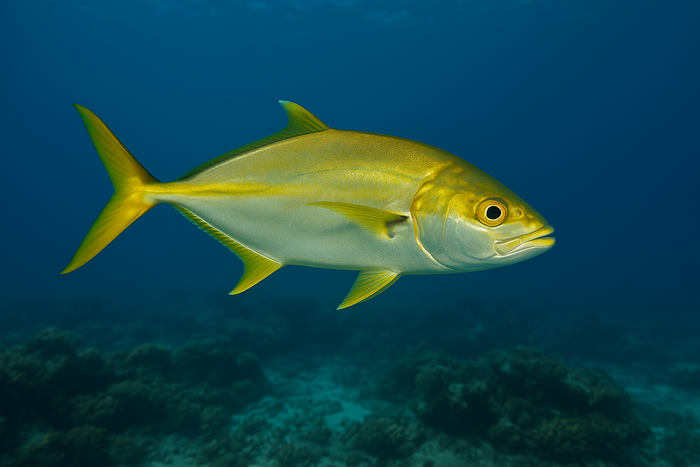
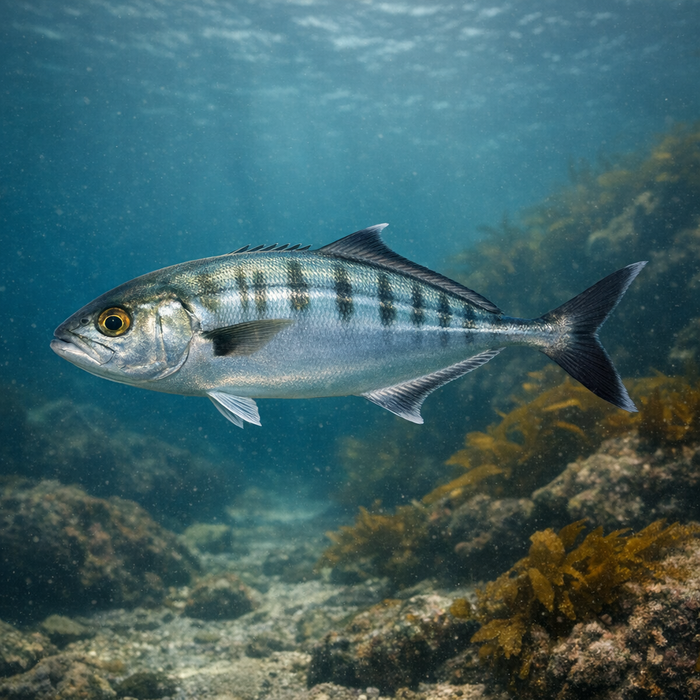
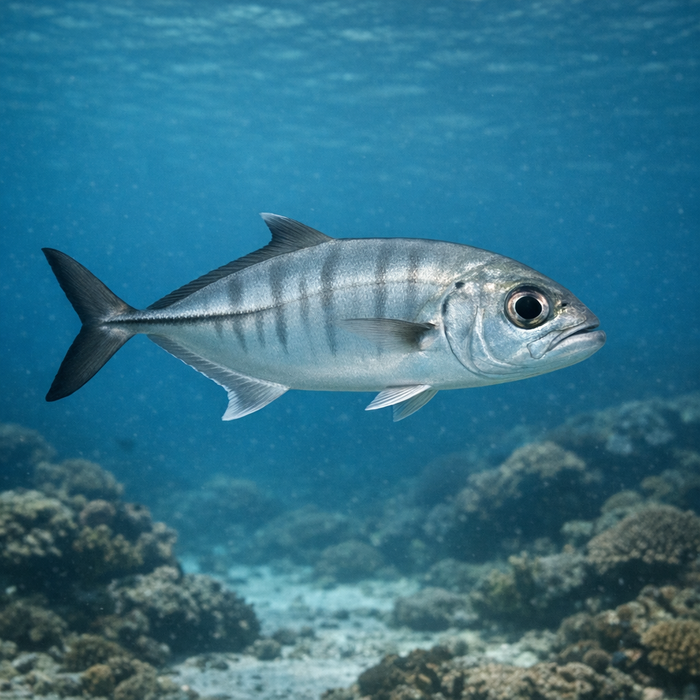
Bluntnose Jack (Hemicaranx amblyrhynchus): A Bold, Memorable Hook LineIntroductionThe bluntnose jack is the reef-edge opportunist that shows up like a silver flash, hits like it means it, and vanishes before you can ask what just happened. It is small by jack standards but big on attitude, a classic nearshore fish that keeps light-tackle anglers honest. If you want nimble fights on braided line without motoring 60 miles offshore, the bluntnose jack is your speed.What Makes the Bluntnose Jack Unique?Start with the face. That rounded, purposeful snout gives the bluntnose jack its name and sets it apart from sharper-nosed cousins. Then look at the eyes. Like many jacks, it carries an adipose eyelid, a clear membrane that streamlines the eye for better hydrodynamics. Couple that with a deeply forked tail and torpedo body and you get a fish engineered for quick bursts, slashing turns, and ruthless efficiency around bait schools. The lateral line finishes in a row of hard scutes near the tail, a little armored belt that feels like coarse sandpaper. Those fishy details are not trivia. They are bluntnose jack facts that matter when you are grabbing one at the rail or deciding how much drag you can get away with on 10-pound braid.Habitat & Global RangeThe bluntnose jack works the Western Atlantic from the Southeast U.S. through the Gulf of Mexico and Caribbean to northern South America. It favors nearshore structure: reef edges, rocky breaks, wrecks, and current-swept dropoffs. Think sand meeting coral, funneling bait into bite-sized chaos. Juveniles push shallower and loiter around floating debris when the currents deliver free shade and snacks. Adults are most at home in 20 to 150 feet, happy to roam the midwater over structure or ride current lines just off the reef. That blend of mobility and structure affinity defines classic Bluntnose jack habitat.Behavior & TemperamentBluntnose jack are schooling sprinters. They cruise in loose packs, tighten up when bait panics, then crash the party. The bite window is often crepuscular. Dawn and dusk see them push higher in the water column, but a ripping tide can flip the switch at any time. They are curious but not dumb. Show them clean leaders, compact presentations, and you may get whacked. Go heavy and clanky and they will slide away to the next rip. Hooked fish fight above their weight class with short, savage runs and stubborn circles just off the rocks. Lose focus for two seconds near a ledge and the reef taxman might collect.Ecological ImportanceAs mid-level predators, bluntnose jack translate tiny bait into bigger meat. They hammer small fishes and crustaceans, then get hammered in turn by larger jacks, mackerels, and reef predators. Their schooling behavior spreads risk and forces bait to ball up, creating mobile feeding events that power coastal food webs. They are also excellent energy couriers, moving nutrients between reefs, sand plains, and bluewater edges. In other words, they are glue in a fishy system that thrives on constant motion.Conservation & Environmental PressuresThe species is currently assessed as Least Concern, buoyed by a broad range and relatively modest targeted pressure. Still, the threats that haunt most nearshore fish apply here: coastal development choking nursery habitat, warming water shifting seasonal patterns, and localized overfishing around heavily trafficked reefs. Add in the ever-present risk of misidentification in mixed jack catches and the data picture gets blurrier than it should. Prudent handling, quick releases for non-keepers, and selective harvest keep this scrappy gamefish abundant.The FishyAF TakeThe bluntnose jack is that underrated friend who shows up early, works hard, and never complains. It is not giant, it is not flashy on social, and it does not need to be. Tie on a small jig or live shrimp, hit a reef edge with moving water, and you will meet a fish that makes light tackle sing. For anglers obsessed with efficiency, this species is a master class in placement, timing, and pressure control. Learn to read current seams and bait behavior, and bluntnose jack will reward you with fast, technical fun. If you want a trophy to mount, look elsewhere. If you want pure, repeatable action backed by real-world skill, you just found it. That is the bluntnose jack in a nutshell, and we are here for it.