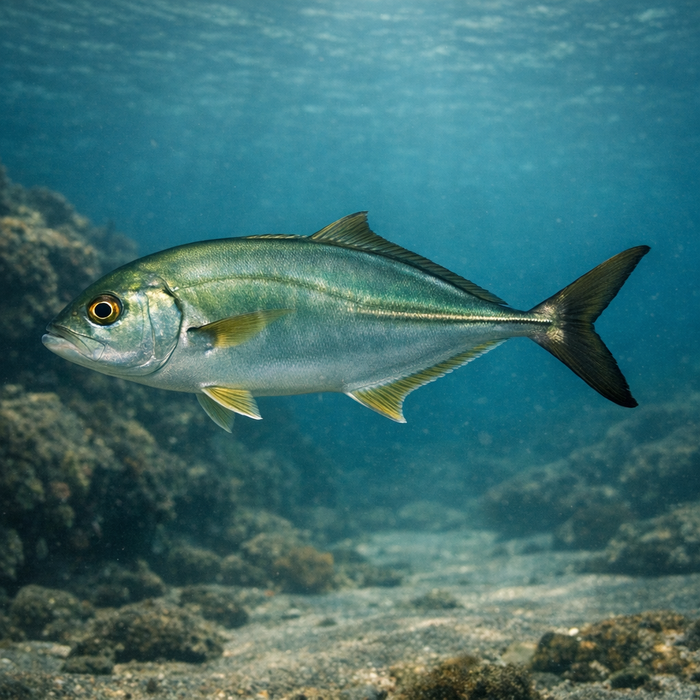
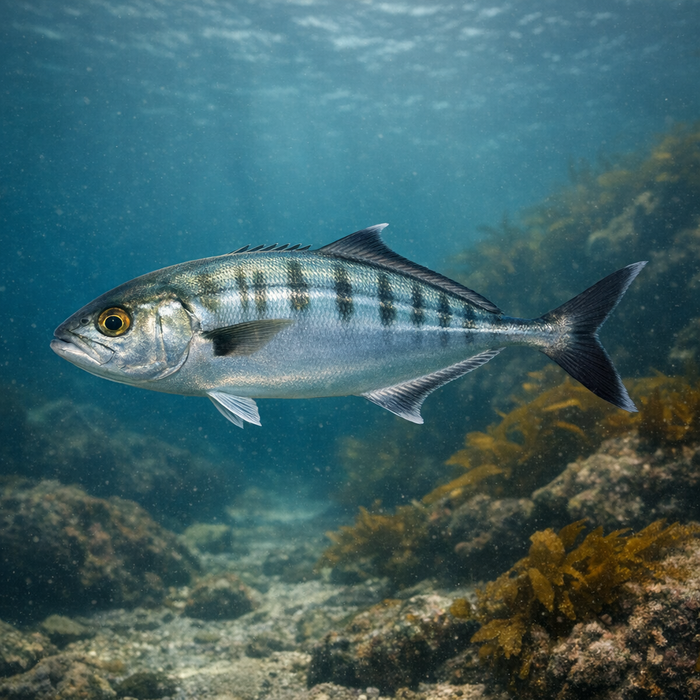
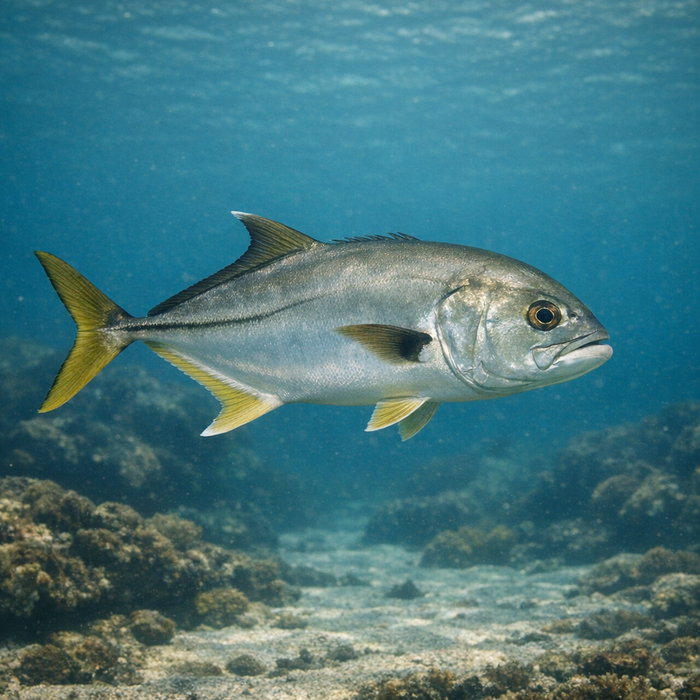
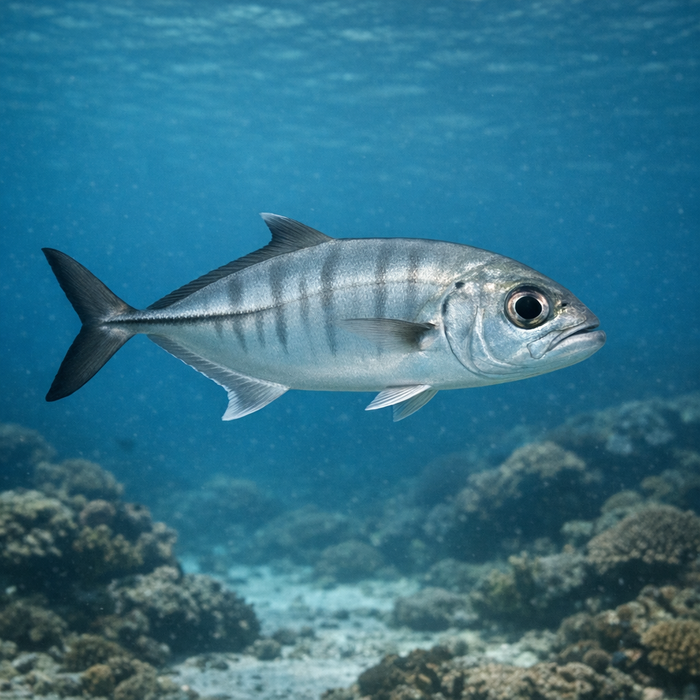
Yellowfin Jack (Hemicaranx leucurus): Chrome Muscle With Lemon TipsIntroductionThe yellowfin jack looks like speed distilled: chrome sides, scythe tail, and lemon-tipped fins flashing like high-vis tape. It's the inshore chaos agent that shows up the second baitfish panic, slashing through the mess before you've even flipped the bail. You'll hear it before you see it: that sharp slap, a swirl, then a silver blur. If you want a fish that rewards fast hands and clean knots, this jack is your kind of trouble.What Makes the Yellowfin jack Unique?Three things. First, acceleration. A narrow caudal peduncle and deeply forked tail turn this fish into a short-burst rocket. Second, color play. When the yellowfin jack fires up, those fins light like markers against burnished silver, and the whole body can darken during feeding blitzes. Third, versatility. It's comfortable strafing bait on open sand, cruising reef edges, or strafing current seams around inlets. That mix makes it a perfect light-tackle target that still demands respect.Habitat & Global RangeThink warm Eastern Pacific edges: points, rocky reefs, current-washed beaches, and estuary mouths. Yellowfin jack habitat overlaps with sardine and anchovy corridors, so anywhere bait pinches against structure or tide you've got a shot. They're equally at home along reefs and sandy drop-offs near surf lines, and they'll slide into bays when forage floods in. If you're assembling Yellowfin jack facts for a trip, picture mosaic habitats: reef spines, bait rips, and wind-driven eddies.Behavior & TemperamentSchooling is fluid. Small packs roam and fuse into wolf pods when bait is thick, then splinter once bellies are full. Jacks don't waste fuel. They slash, pin, and eat, often driving bait tight to the surface before vanishing back to depth. Expect hard, first-run violence when hooked, then stubborn circles and head shakes near the boat. They're aggressive but not reckless; pressured schools wise up fast, sliding deeper or shifting lanes instead of tolerating sloppy presentations.Ecological ImportanceYellowfin jack are mid-level predators that keep fast-growing forage species honest. They shunt energy up the food web, feeding snappers, groupers, bigger jacks, and sharks. Their habit of bundling bait into tight balls also sets the table for a food-frenzy cascade that other predators exploit. When the jacks are working, reefs feel alive. Pull them out of the picture and you get bait spread thin, predators starving for opportunities, and a system that's a little less turbocharged.Conservation & Environmental PressuresOverall, yellowfin jack aren't a marquee commercial species, which helps. But they feel the squeeze from coastal development, water quality dips, and forage swings linked to warming events. Gillnets and incidental bycatch can clip local age structures, and heavy inshore pressure teaches surviving fish to disappear or feed at off times. Sensible bag limits, size-conscious harvest, and selective gear go a long way. Keeping reef edges clean and estuary flows healthy is the real long game.The FishyAF TakeThe yellowfin jack is the payday for anglers who read water like a map and move fast. You won't baby this fish with finesse; you win with crisp casts, fast retrieves, and leaders that don't pop when things get loud. If you dig surf sprays, bait showers, and drags that sing, this chrome-and-lemon torpedo will make your morning. And if you're collecting Yellowfin jack habitat intel, keep it simple: tide, current, bait. Nail those three, and the rest is just grip strength and a good set of split rings.