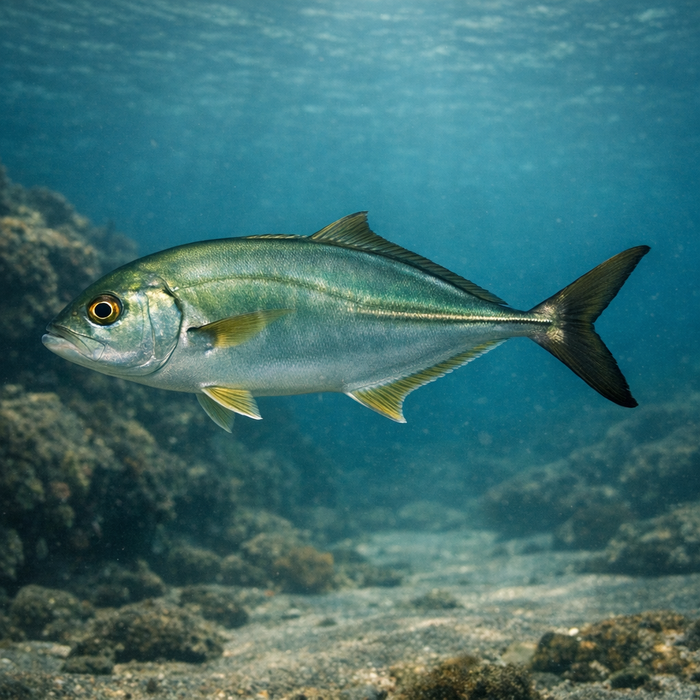
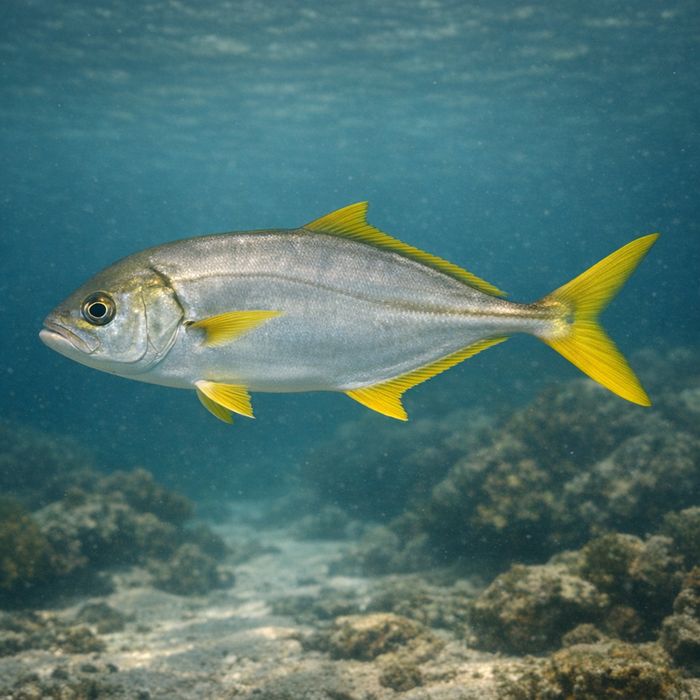
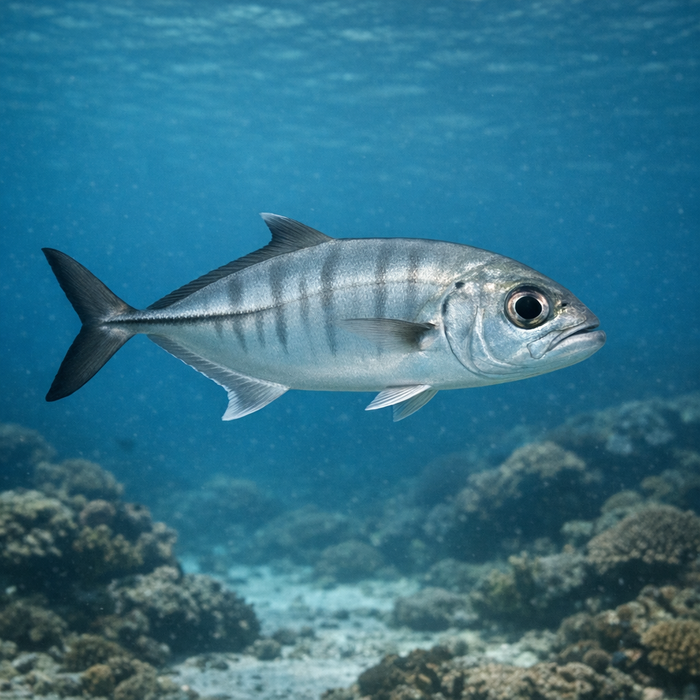
Pacific crevalle jack (Caranx caninus): A Bold, Memorable Hook LineIntroductionThe Pacific crevalle jack is the salty street fighter of the Eastern Pacific-broad-shouldered, loud, and fully capable of breaking your ego and your leader in the same run. If you crave violent surface eats and the kind of torque that makes a reel drag whimper, this fish delivers. Call it toro if you want. It'll still hit like a freight train. Here are the Pacific crevalle jack facts that matter to anglers.What Makes the Pacific crevalle jack Unique?The Pacific crevalle jack is built for speed and spite. That deep, muscular body funnels into a sickle tail built for acceleration, and when a school ignites on bait, they can color-shift from chrome to smoky dark in seconds. They're also unapologetically visual: nothing says chaos like a pack of Pacific crevalle jack detonating on a popper in knee-deep surf. Add in surprising stamina for their size, and you get a species that regularly punches above its weight class.Habitat & Global RangeIf you're hunting Pacific crevalle jack habitat, think high-energy shoreline. They haunt surf breaks, river mouths, rocky points, mangrove edges, and the outer contours of bays. They're common through Mexico's Pacific, the Gulf of California, Central America, Colombia, Ecuador, and out to the Galápagos. Juveniles tolerate brackish water; adults roam from skinny troughs to open coastal rips and nearshore reefs, usually in 5 to 100 feet. When bait stacks on current lines, they rise-often so shallow your ankles get sprayed.Behavior & TemperamentThe Pacific crevalle jack is aggression with fins. Schools cruise fast, pinning bait against structure or up into the foam. Bursts are savage, but they'll double back to finish a missed strike, so keep working the lure. They're opportunists: morning and evening windows shine, but tide and current are the real on-switch. Hook one and prepare for shoulder-thudding power, blistering runs, and stubborn circles under the boat or in the wash. They're not leader-shy, but they're unforgiving of weak tackle.Ecological ImportanceThe Pacific crevalle jack is a mid-tier coastal predator, the kind that forces frantic baitballs and keeps forage moving. They clean up stunned prey behind breaking surf, cull weak or injured fish, and feed bigger predators when they themselves slip up. Pelagic eggs and larvae ride currents, distributing young across productive coastal nurseries. In short, jacks help convert daily chaos into ecosystem balance.Conservation & Environmental PressuresOverall, the species is considered stable, and the Pacific crevalle jack is not a poster child for crisis. Still, coastal development, estuary loss, and polluted runoff can hammer the inshore buffet they rely on. Local netting pressure can clip school sizes, and in some tropical zones there's concern over ciguatera risk in large individuals. Good news: they reproduce effectively, and catch-and-release habits among sport anglers help keep those bruiser schools intact.The FishyAF TakeThe Pacific crevalle jack is a pure addiction fish. You don't baby it, you don't finesse it-you move fast, cast accurately, and hang on. It's the species that makes new surfcasters want heavier drags and better knots. Few fish combine spectacle and stubbornness like a big Pacific crevalle jack exploding on a popper, then bulldogging you sideways down the beach. If you want a fish that dishes out humble pie with a side of adrenaline, this is your huckleberry. Search "Pacific crevalle jack habitat," find the froth and current, and be ready. They don't knock. They kick the door in.