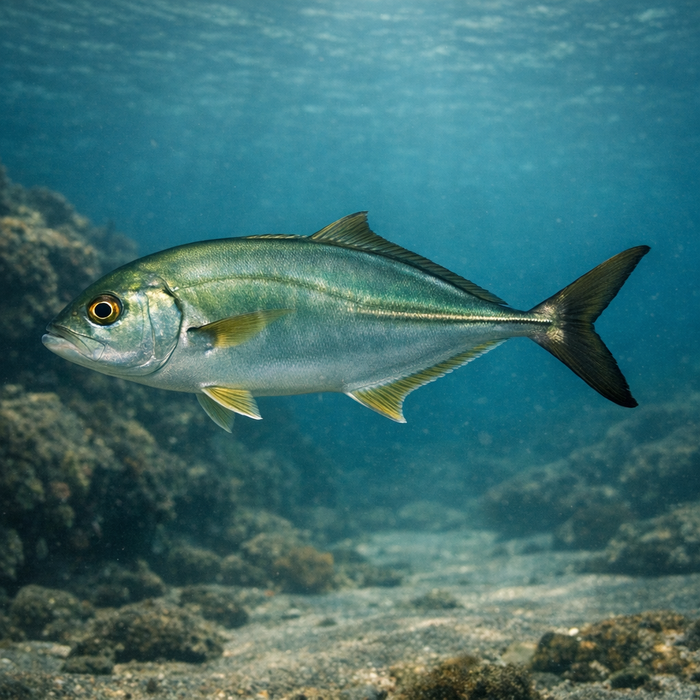
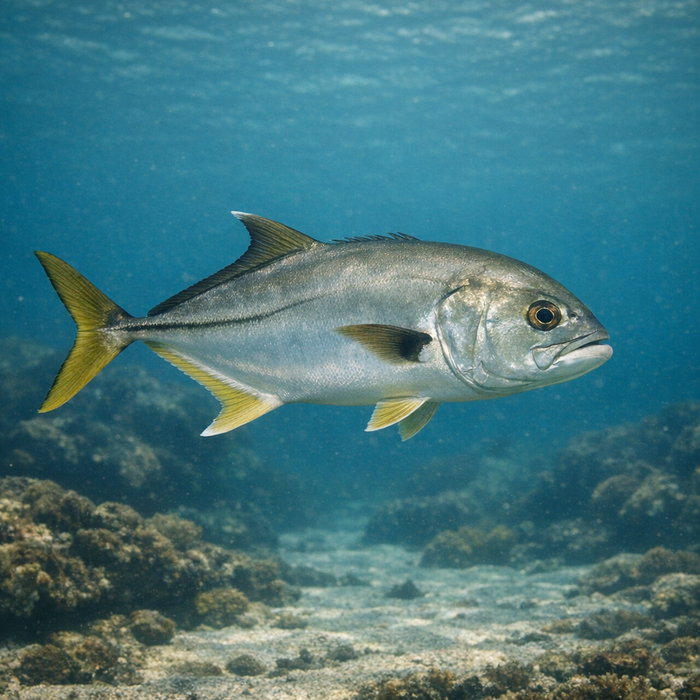
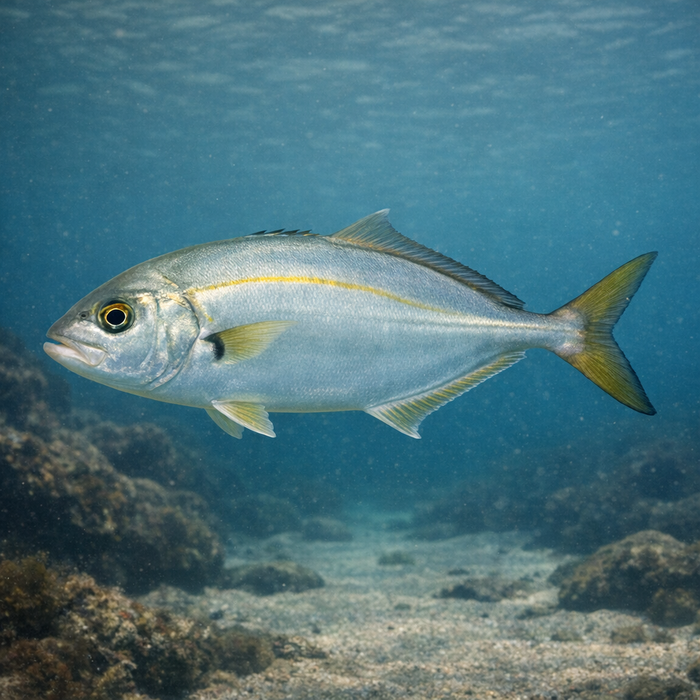
Bigeye Trevally (Caranx sexfasciatus): Night-Vision Jack With Serious Schooling ChaosIntroductionBigeye trevally are the after-hours enforcers of the reef. When the sun slides off the edge, those dinner-plate eyes kick in and the water starts to pulse. Anglers who hang around the passes at dusk know the beat: bait explodes, shadows knit themselves into a silver wall, and something with shoulders starts yanking line. Want real Bigeye trevally facts? Start with this: they're built for darkness, current, and the kind of coordinated mayhem only thousands of fish can pull off.What Makes the Bigeye trevally Unique?First, the eyes. Bigeye trevally are wired with oversized optics and a reflective retinal layer that harvests every bit of low light. It's why they turn on at night and under pier lights. Second, they're shape-shifters. One moment chrome-silver, the next dark and dusky when amped or spawning, sometimes ghosted with the six faint bars that inspired the name sexfasciatus. Third, teamwork. This species schools with serious precision, herding bait in tight balls and pulsing through reef passes like a living conveyor belt.Habitat & Global RangeIf you're hunting bigeye trevally habitat, think tropical and subtropical Indo-Pacific, from the Red Sea to Hawaii and deep into Oceania. They haunt coral reef slopes, channels, and atoll passes where water shoves hard and food funnels reliably. By day, adults often hold deeper or along outside edges; by night, they surge shallower, riding current lines and lights. Juveniles drift in surface weeds and flotsam like freeloaders, riding life's conveyor until they bulk up. They aren't picky about structure type so long as current serves dinner on time.Behavior & TemperamentBigeye trevally are ambush coordinators disguised as cruisers. They'll shadow sharks and rays, capitalize on panic, and snap feed when bait balls compress. They are not as solitary and territorial as some jacks; schooling is their superpower. Expect quick initial runs, dogged circles, and a stubborn refusal to quit near the boat. Presentation timing matters. In slack water they can sulk and play cool; once the tide breathes, the bite flips on. Low-light windows are prime, and the night bite around harbors and channel markers can be absolute fireworks.Ecological ImportanceAs mid-level predators, bigeye trevally translate small forage into bigger energy, connecting anchovies, squid, and reef fish to higher predators. Their schooling pressure shapes bait behavior, redistributes nutrients, and yes, occasionally steals meals from sharks and rays that did the hard herding. They're also a bellwether for reef pass productivity: when current, clarity, and forage line up, the schools thicken. That pulse of silver is the reef's heartbeat made visible.Conservation & Environmental PressuresThe species is generally listed as Least Concern, with healthy populations across much of its range. Still, localized pressure is real. Night netting around harbors can whack schooling fish. Coastal development degrades nursery habitat, and chronic overfishing of forage knocks down growth rates and condition. Ciguatera risk in some tropical zones complicates harvest decisions. As reefs warm and currents shift, predictable feeding windows can wobble. Sensible bag limits, gear restrictions near aggregations, and habitat protection keep this fishery humming.The FishyAF TakeThe bigeye trevally is the friend who texts "let's make bad decisions" at 10 p.m., then shows up with a thousand buddies. It rewards timing, rewards commitment, and humbles anyone who ignores current. If you want easy, fish noon on a neap tide and enjoy the sunburn. If you want violence, meet the pass when the ocean inhales. The bigeye trevally doesn't ask for fancy; it asks for right-place, right-moment. Do that, and your popper will vanish in a hole punched by something with headlights and attitude.