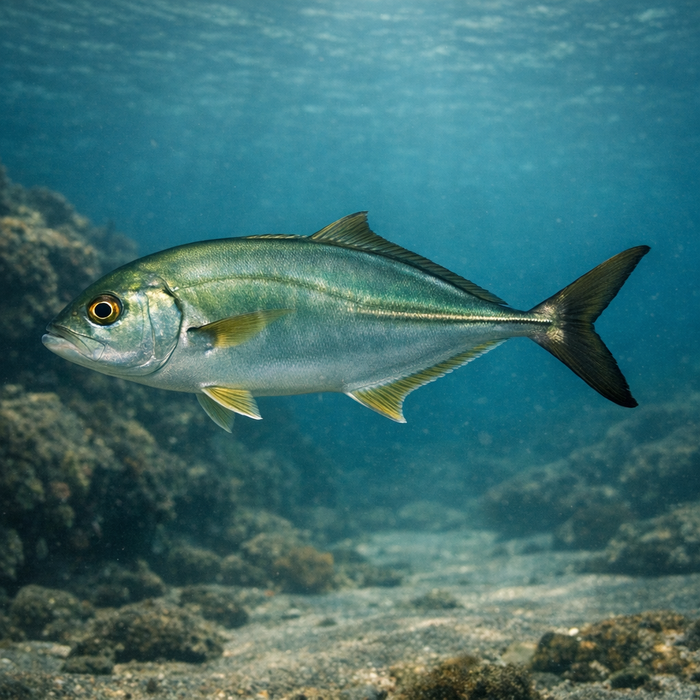
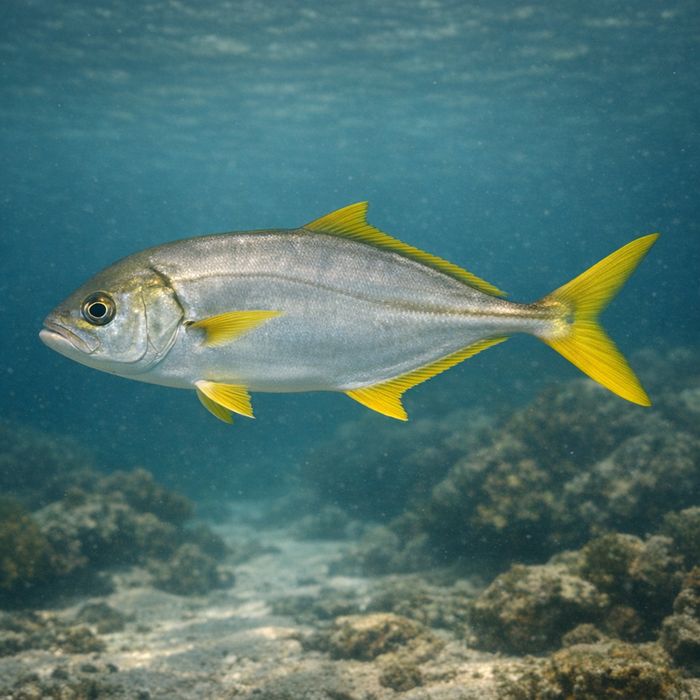
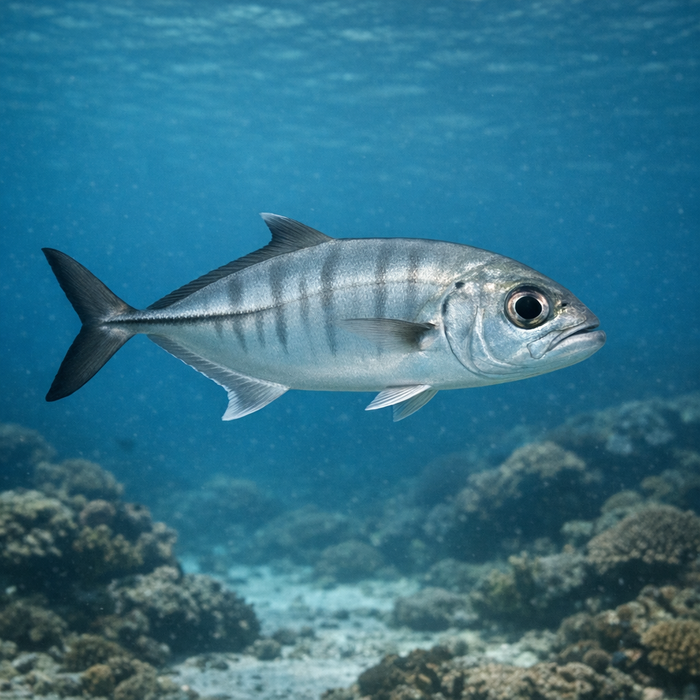
Cocinero (Caranx vinctus): A Bold, Memorable Hook LineIntroductionThe cocinero is the little jack that throws big elbows. It's a compact trevally with a forked tail built for sudden violence, flashing chrome one second and bronze the next as it tears through whitebait. Anglers bump into cocinero while hunting roosters or snappers, then keep targeting them because they simply make light tackle sing. If you want quick-hitting chaos close to shore, the cocinero delivers.What Makes the Cocinero Unique?Two things jump out: scale and sprint. While many Caranx species grow into bruisers, the cocinero remains modest, typically under 20 inches and five pounds, but it accelerates like something twice its size. The narrow caudal peduncle and high tail fork are pure speed hardware. Add in pronounced scutes along the lateral line and a dusky spot on the upper gill cover, and you've got a tidy package that's easy to ID once you've seen a few.Habitat & Global RangeCocinero habitat hugs the Eastern Pacific tropics and subtropics, especially rocky points, reefs, current seams, and beach drop-offs with baitflow. The species shows strong presence from the Gulf of California down past Central America to northern Peru, including oceanic outposts like the Galápagos and occasionally Clipperton. This is classic inshore country: tide-washed rocks, bay mouths, rips off islands, and the edges of mangroves. Cocinero facts worth remembering here: water movement is your friend, and if sardines stack, cocinero aren't far.Behavior & TemperamentThink wolfpack. Cocinero school up, push bait tight to the surface, and ignite fast, messy feeds under birds. They'll blitz, vanish, then reappear 50 yards away. On the hook, they hit like a punchy mackerel and settle into torque-heavy circles. They aren't the pickiest jacks, which is part of their charm. Moving water flips the switch, and low light or overcast builds confidence at the surface.Ecological ImportanceCocinero ride the middle of the food pyramid. They pressure small pelagic baitfish and in turn feed bigger hitters: roosters, cubera, larger jacks, coastal tunas, and seabirds cash in on their carnage. Their schooling raids redistribute energy inshore, yanking bait off structure and into open rips where anyone with speed can capitalize. When sardines, anchovies, and silversides boom, cocinero numbers often look instantly better.Conservation & Environmental PressuresListed as Least Concern, the cocinero isn't screaming for help, but coastal life is never simple. Local gillnetting pressure, reef degradation, sediment runoff after storms, and periodic warm-water events like El Niño can shuffle their deck. Lose the bait or the current and the bite cools. Maintaining water quality, managing small-bait harvests, and protecting nursery edges like mangroves all buffer the fishery that makes cocinero possible.The FishyAF TakeThe cocinero is the gateway drug to tropical inshore speed. It's accessible, visual, and rowdy on light tackle. You don't need fancy rigs or perfect casts; you need to find moving water and match the hatch. If you're building a quick hit list for a Pacific beach morning, put cocinero near the top. They're not centerfold giants, but they bring a tight, high-rep workout with legit payoff. For anglers chasing practical fun over hero shots, the cocinero is exactly the right kind of trouble. Consider this your pocket guide to Cocinero habitat and behavior. File under: fast, shiny, and habit-forming.