Giant Gourami (Osphronemus goramy): The Air-Breathing Heavyweight That Takes a Banana Seriously
A banana beside a weedbed might look like somebody dropped their lunch. For a Giant Gourami angler, it can be a perfectly serious presentation. This deep-bodied Southeast Asian freshwater fish combines substantial size, an appetite that includes plant material, and an unusual ability to breathe atmospheric air. It belongs to the family Osphronemidae, but forget the assumption that every gourami is a little aquarium ornament. This one deserves proper tackle and a landing net.
The attraction is not simply weight. It is the contrast: a substantial tropical fish approached with quiet observation and everyday food rather than an expensive lure collection. Getting the presentation right matters more than making it look impressive.
What Makes the Giant Gourami Unique?
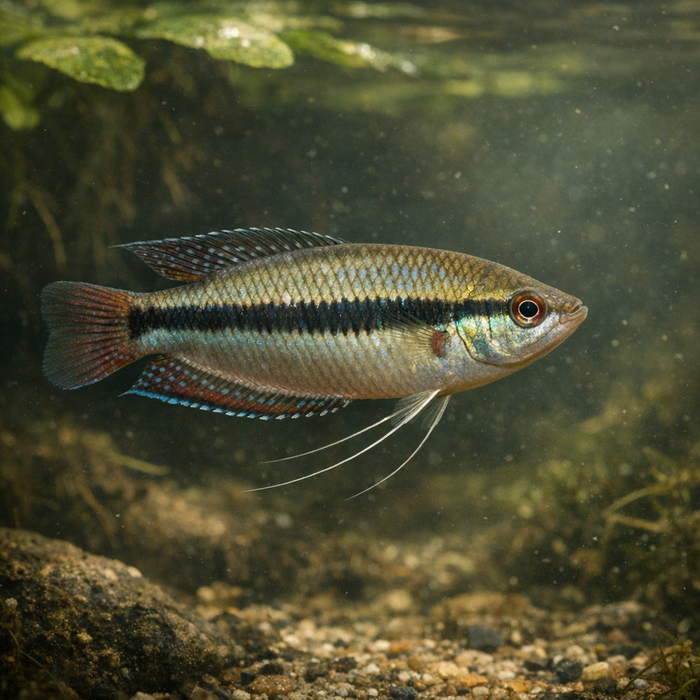
Start with the breathing equipment. A specialized labyrinth organ allows this species to take oxygen from air at the surface. That adaptation helps it occupy tropical waters where dissolved oxygen can be limited. A surface visit therefore does not automatically mean a fish is feeding. For anglers, telling the difference between breathing and actually taking food is a useful first lesson.
Then there is its reproductive engineering. Instead of the bubble nest often associated with smaller gouramis, this species constructs a nest from plant fibers. The male does much of the building and guards the offspring. Its floating eggs contain a large oil globule: buoyancy is built into the package. Those are Giant Gourami facts worth remembering because they explain why vegetation is more than background scenery.
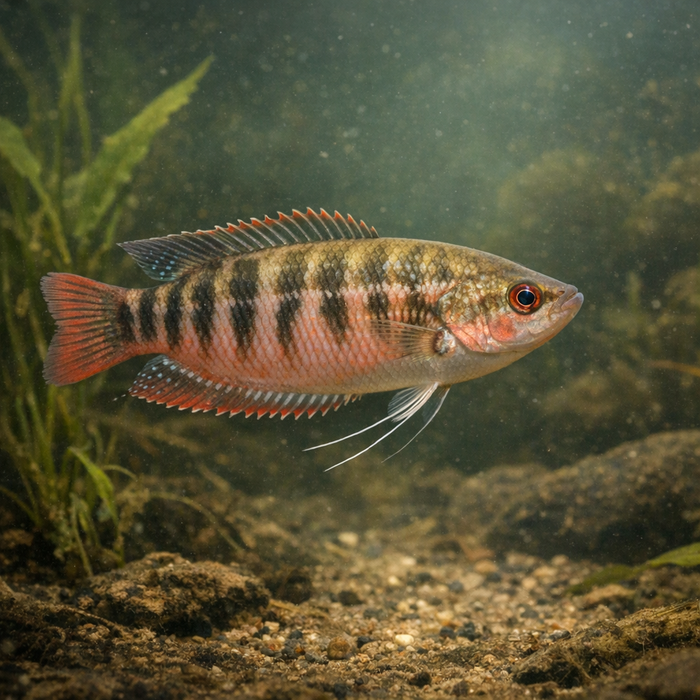
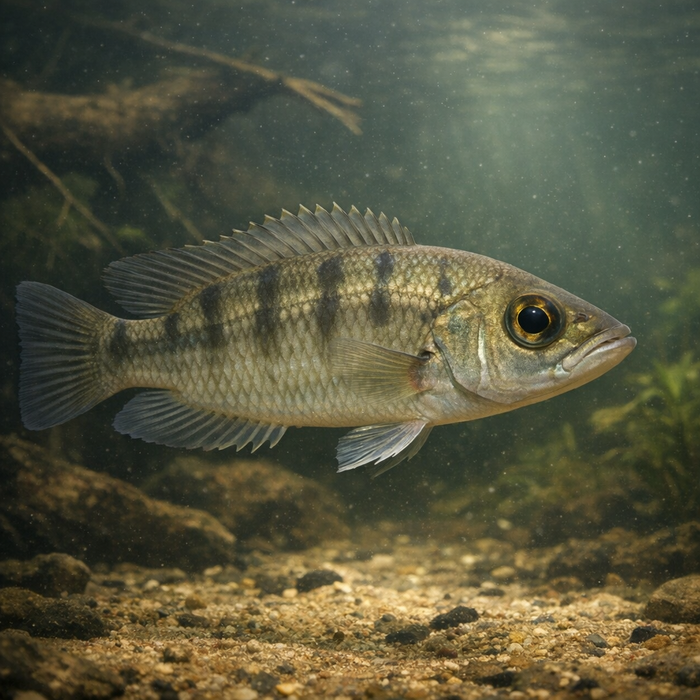
Finally, juveniles and adults do not keep the same wardrobe. Young fish carry conspicuous vertical bars that disappear with maturity. The striped youngster becomes a much plainer adult, with size doing the advertising instead.
Habitat & Global Range
Southeast Asia is the species' geographic center, with a long history of cultivation and movement complicating the boundary between native and introduced populations. Indonesia's major islands and the Malay Peninsula feature prominently in distribution accounts. Some mainland records require caution because introductions and confusion with related species have muddied the picture. Calling every occurrence native would be tidier than the evidence permits.
Typical Giant Gourami habitat includes vegetated ponds, lakes, sluggish canals, and slower river environments. Flooded forest also provides habitat. These are not exclusively tiny, shallow waters, and anglers should avoid assuming that every fish stays beneath the nearest floating leaf. Nevertheless, vegetation margins offer a practical starting point for presenting bait.
Thailand's managed fisheries provide accessible opportunities to target stocked fish. Palm Tree Lagoon and Gillhams both document this species and publish species-specific bait advice. Confirm current stock and access before building a trip around any venue.
Behavior & Temperament
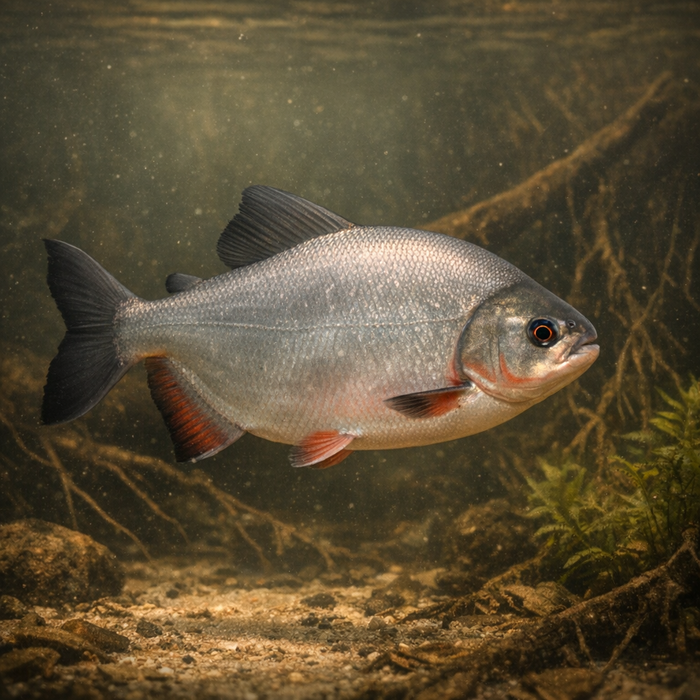
The Giant Gourami is an omnivore, not a strict vegetarian wearing a heavyweight body. Its documented food includes aquatic plants and animal material, including fish, frogs, and earthworms. Fruit and bread presentations work at established fisheries, but that does not mean every population follows the same menu. Local experience deserves more weight than a universal bait ranking.
Breeding adds another dimension. Males defend nests, and crowding breeding males can lead to fighting. That is different from claiming every adult spends its life bullying everything nearby. Context matters. On the bank, approach quietly, watch before casting, and avoid disturbing visible nesting activity. The better strategy is usually understanding what the fish is doing, not declaring it permanently aggressive.
Ecological Importance
By consuming both vegetation and animals, the Giant Gourami participates in several pathways through freshwater food webs. Its feeding connects plant production with animal consumption rather than fitting neatly into a single specialist role. However, an omnivorous diet alone does not prove that it controls weeds or transforms every lake it inhabits. Those claims need local evidence.
Its importance to people is clearer. This is a commercially cultured food fish, especially in Indonesia, where breeding and juvenile production support aquaculture. To visiting anglers it may be an exotic trophy; to producers and consumers it is also a familiar economic resource. Both perspectives belong in the same story.
Conservation & Environmental Pressures
The Giant Gourami is classified as Least Concern. That global assessment should not be mistaken for a guarantee that every local population or waterway is healthy. Protecting habitat and maintaining suitable water quality still matter, particularly around breeding areas. Air-breathing ability is an adaptation, not permission to treat a pond as a dumping ground.
Moving live fish also demands caution. Its history of introductions illustrates why stocked populations and natural distribution must be distinguished. Never transfer a catch between waters. Follow local rules and the fishery's handling instructions, keeping photographs brief and supporting the fish properly. Trophy value should never become an excuse for careless treatment.
The FishyAF Take
This fish makes tackle snobbery look a little silly. You can arrive with a beautifully organized lure box and still need the banana. That is part of the appeal: the challenge is reading cover, placing an unobtrusive bait, and managing the fish responsibly once it is hooked.
Do not confuse an inexpensive bait with an insignificant catch. Equally, do not turn a patient, observation-led fishery into a contest of excessive tackle or endless photographs. Match the venue, respect the fish, and enjoy the absurdity of targeting a tropical heavyweight with something normally found beside your breakfast cereal. That is excellent fishing, without the costume.