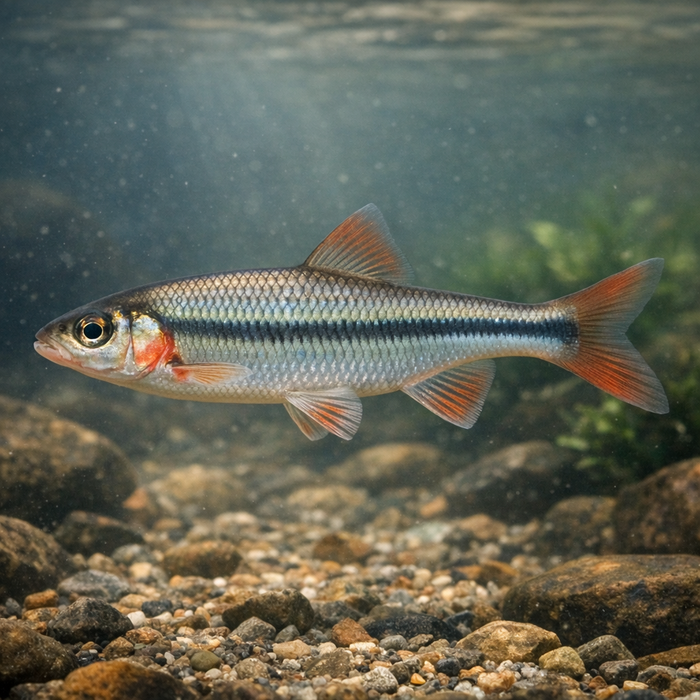
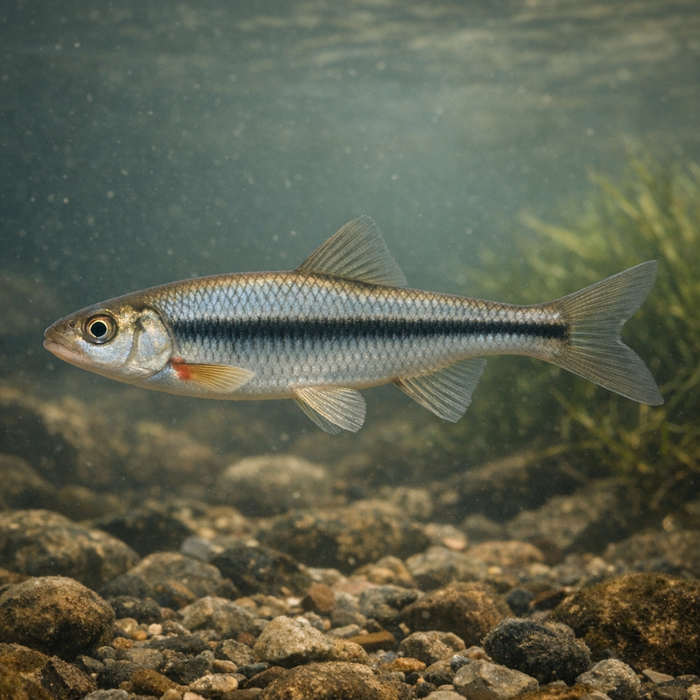
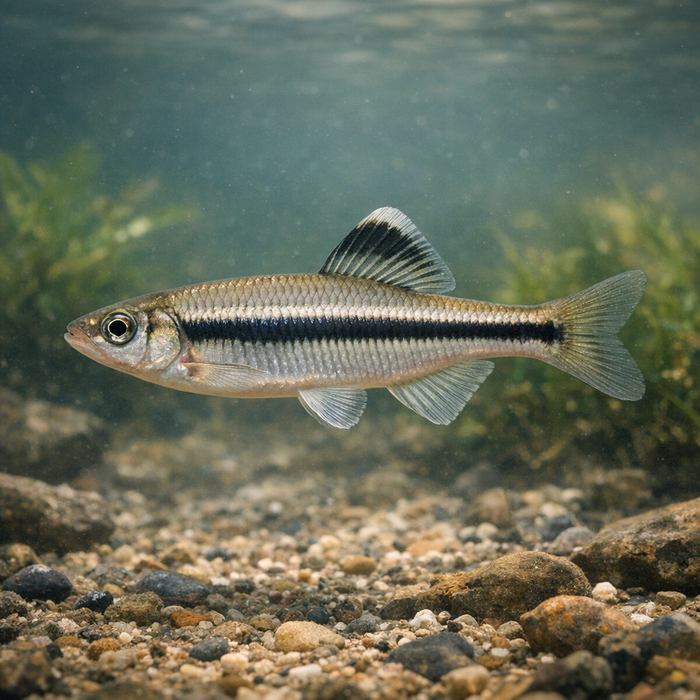
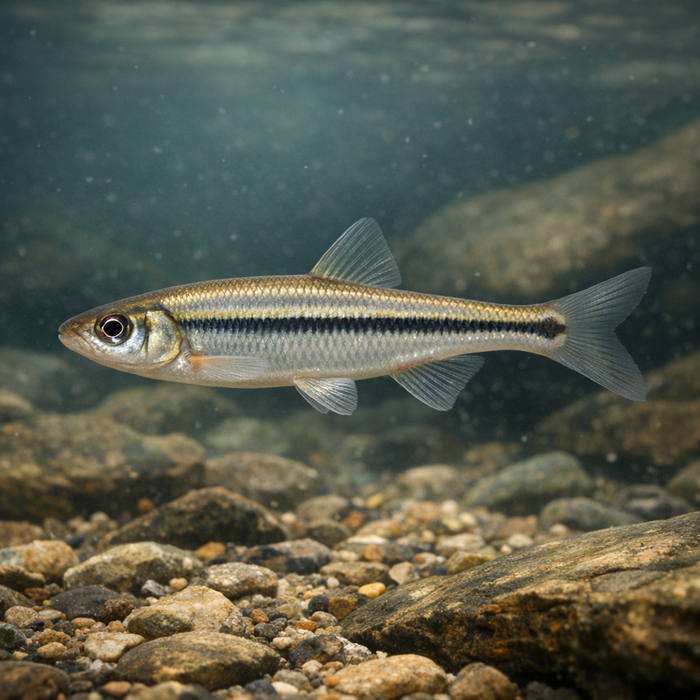
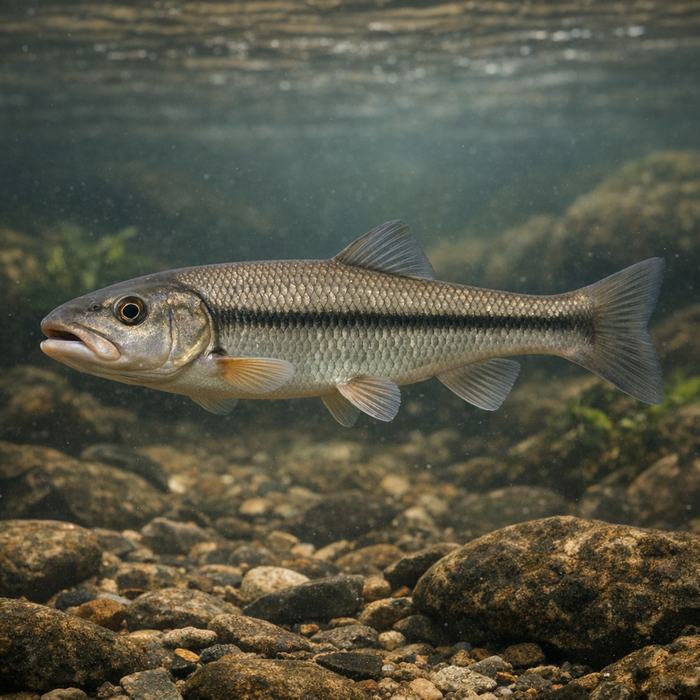
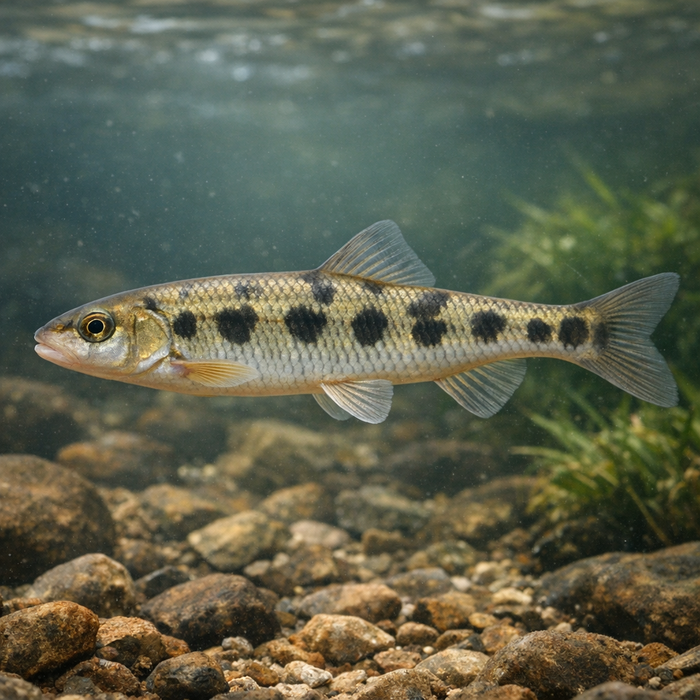
Gulf chub (Macrhybopsis tomellerii): A sand-sifting specialist that turns river grit into groceriesIntroductionThe Gulf chub is the little river ninja most anglers never notice. It rides the current like a drift racer, noses into shifting sand, and vacuums up tiny invertebrates with a subterminal mouth built for bottom work. Blink and it's gone. Look closely and you'll see the details that matter: chin barbels, sleek lines, and the calm confidence of a fish that knows how to live in fast water. If you came here for Gulf chub facts, stick around. This minnow will surprise you.What Makes the Gulf chub Unique?Two traits define this species: specialized sand-sifting gear and a lifestyle synced to moving water. The Gulf chub sports tiny chin barbels packed with taste buds, letting it find food in turbid flow where eyesight alone would fail. It also throws down a high-efficiency design: streamlined body, subterminal mouth, and station-holding posture that wastes minimal energy in current. Recently recognized as distinct within the shoal chub complex, the Gulf chub carries its own identity rather than being a footnote in a generic minnow lineup.Habitat & Global RangeLet's dial into Gulf chub habitat. Picture warm, medium to large rivers on the Gulf slope with sandy or fine gravel bottoms, steady to brisk current, and just enough depth to keep the flow rolling. The fish often holds where sandbars pinch current, along channel edges, and across broad, shallow runs. Turbidity isn't a bug, it's a feature. The Gulf chub thrives in stained water that keeps predators guessing and its own sensory toolkit shining.Behavior & TemperamentThis fish is a bottom operator. It cruises near substrate, noses down, and sifts. Schools are common, but not always obvious, because the group tends to spread across a run rather than ball up midwater. Spawning typically coincides with seasonal flows; eggs go pelagic, drifting downstream to hatch without parental care. The bite is fast and subtle. On ultra-light tackle, strikes feel like a tick rather than a thump. Hook one and the fight is quick, honest, and over fast.Ecological ImportanceThe Gulf chub is a gritty link in the food web. It converts benthic invertebrates and organic bits into fuel for larger predators, stabilizing energy transfer through the river. Sand-sifters like this also churn microhabitats, keeping fine sediments moving and preventing suffocation of tiny critters between grains. If you enjoy healthy river systems and the gamefish they support, you should quietly appreciate what the Gulf chub does every day.Conservation & Environmental PressuresWhile formally Not Evaluated by big-list standards, the Gulf chub still faces the usual river problems: altered flow regimes, sediment pulses from land use, low dissolved oxygen during hot spells, and channel modifications that wipe out the gentle seams it loves. Being small and under the radar can mask trouble. If Gulf chub numbers slide, it's often a symptom of bigger watershed issues. Clean, connected, seasonally dynamic rivers are the ticket.The FishyAF TakeThe Gulf chub isn't a trophy, it's a test. Can you read current, pick the right seam, and spot life where most anglers see dull water? Do it right and you'll discover a species that rewards precision and patience. For searchers of quirky quarry and truth-in-rivercraft, the Gulf chub delivers. Bookmark this page for quick Gulf chub facts, come back after you've seen one up close, and then tell us you don't respect the grind this little fish puts in to own its slice of moving water.