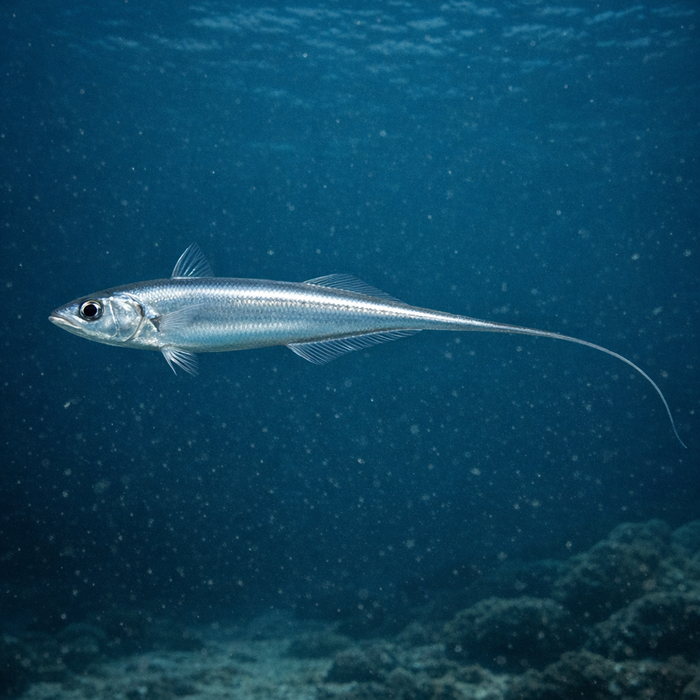
King of Herrings (Regalecus glesne): The legendary sea-serpent that's actually a shy, silver ribbon with a red mohawk.IntroductionIf there's a fish that turns dock talk into campfire mythology, it's the king of herrings. Sleek as a sword blade and longer than your skiff, this is the animal behind a thousand sea-serpent tales. You almost never see one. When you do, it looks like a silver banner being hauled up an invisible flagpole. We're talking wonder fish, not weekend target. But the king of herrings still deserves a proper breakdown, complete with real-world King of herrings facts and a clear-eyed take on what this species is, and isn't, for anglers.What Makes the King of herrings Unique?Start with size: Regalecus glesne is the longest bony fish on the planet. Not heaviest, just shockingly long, with credible measurements beyond 30 feet. It swims using a single, continuous dorsal fin that ripples from nose to tail, so the body barely flexes. Add a crimson crest over the head and trailing pelvic streamers that look like ribbons, and you've got an animal that checks every mythical box. The king of herrings is also paper-fragile by gamefish standards. The skin abrades easily, the flesh is soft, and fights, when they happen at all, are more surrender than slugfest.Habitat & Global RangeHere's the curveball: the king of herrings is a deep pelagic drifter. Its comfort zone is the midwater, not the bottom, and not the reef. Think blue desert, anywhere from a few hundred to a thousand feet down. It's globally distributed across temperate and tropical oceans, which sounds like "easy to find" until you remember the neighborhood is hundreds of miles wide and a half-mile deep. Sightings near islands, continental slopes, or after big weather events happen, but they're exceptions. If you're looking for King of herrings habitat, it means wide-open blue and a lot of luck.Behavior & TemperamentThis isn't an ambush bruiser. The species eats small fish, krill, and midwater creatures, likely picking and filtering more than chasing. It can hover vertically, head-up, scanning like a silver periscope. When a king of herrings reaches the surface, it's often tired, injured, or disoriented by currents and storms. As a hooked fish, it's more novelty than combatant. Expect a slow roll, maybe a short run if you even get a bite. Most captures are accidental, on squid strips or flutter jigs set for something else.Ecological ImportanceStretch your imagination: a yard-wide ribbon fish patrolling the midwater is part of a vast, under-sampled food web. The king of herrings occupies a mid-level predator niche, turning zooplankton and small nekton into protein for larger pelagics and marine mammals. It's also a deep-ocean ambassador. Every verified sighting gives scientists a little more insight into life zones we barely understand. For all the hype, Regalecus glesne is less monster and more messenger from the blue frontier.Conservation & Environmental PressuresOfficially, the king of herrings sits in the least-concern camp, thanks to a massive global range and negligible commercial value. But least concern is not zero concern. Deep pelagic ecosystems are hammered indirectly by warming waters, shifting currents, and plastic pollution. Bycatch in deep nets happens. Strandings spike during unusual ocean conditions. The species doesn't need a special regulation so much as it needs us to keep the big blue stable.The FishyAF TakeLet's keep it real: the king of herrings is a bucket-list sighting, not a dependable target. If you see one alive, you just won a lottery you didn't buy a ticket for. The move is gentle handling, minimal hero shots, and a quick release if it's healthy enough. If it's not, document it for science with clean measurements and photos. As a fish to chase, it's a ghost. As a fish to respect, it's royalty. You don't conquer a king of herrings. You get audience with one, maybe once, and you remember it forever.