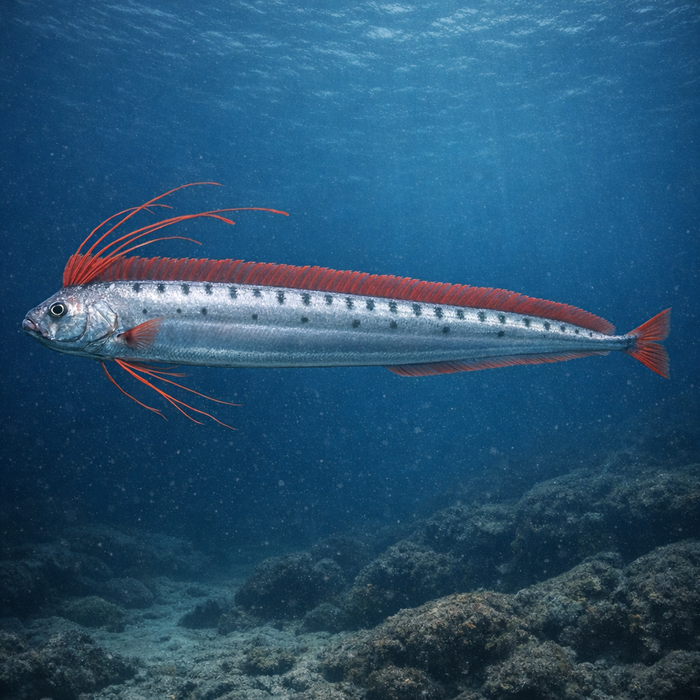
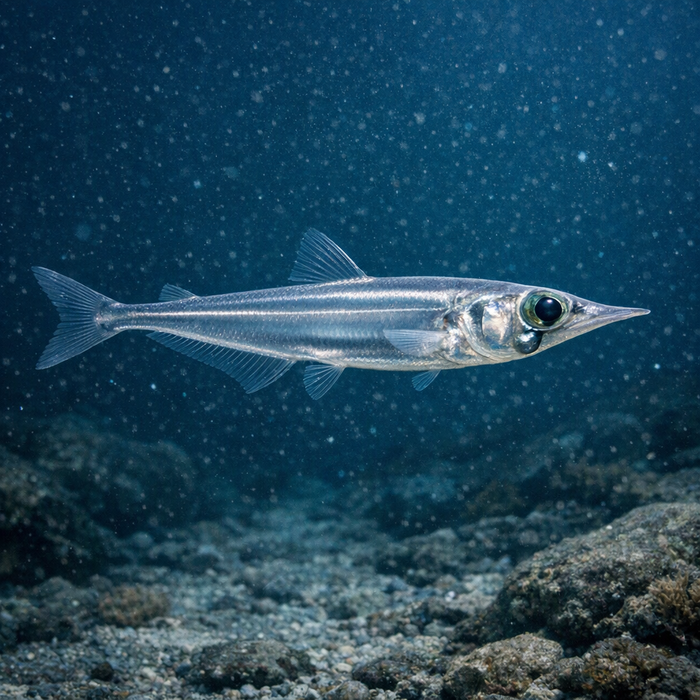
Tapertail (Radiicephalus elongatus): Ghost Of The Midnight Water ColumnIntroductionThe tapertail is the fish you never plan for and never forget. Long, thin, and almost too shiny to be real, it shows up from the deep like a chrome bookmark slipping out of the ocean's most secret chapter. Anglers bump into this species by accident on deep drops, tuna drifts, or night-light sessions offshore, and then spend weeks wondering what exactly they hauled up. Welcome to tapertail territory, where weird is the norm and every sighting counts as a story.What Makes the Tapertail Unique?Start with the build. The tapertail is ribbon-thin with a dorsal fin that runs nearly the entire body, pushing it along in silky undulations instead of tail beats. That tapered, whip-like tail can be longer than the head and trunk combined, which is how it earned the name. Giant eyes hint at life in the dim midwater zone, and scaleless, delicate skin screams: handle with care. Among deep pelagic oddities, the tapertail sits comfortably in the top tier of unforgettable shapes.Habitat & Global RangeWhen someone asks about Tapertail habitat, your answer is simple: the mesopelagic. That means open water, far off the beach, often over canyons, seamounts, and continental slopes. They cruise the twilight zone by day and may ride vertical migrations at night, occasionally drifting higher where boat lights can reveal them. Records exist across multiple ocean basins, so the tapertail gets a broadly global stamp. For an angler, that translates to range without guarantees; you can be in the right postcode and still never see one. Think deep water edges, 800 to 1,500 feet and beyond, with enough current and life to concentrate prey.Behavior & TemperamentThe tapertail doesn't smash baits like a tuna or bulldog the rod like a grouper. It's a midwater hunter, more glide than burst, picking off small fishes and cephalopods. Hooked fish often turn sideways and plane, using their long body as a living paddle. They're not particularly wary, but they are fragile. Too much drag, rough leader, or deck-thrashing and you're left with a science project instead of a trophy photo. That said, a clean hookup on lightish gear is a trip: quick head-shakes, wide arcs, and that surreal silver profile appearing in the lights.Ecological ImportanceWeird shape, serious job. Tapertails run the relay between smaller mesopelagic forage and apex open-ocean predators. They're both hunter and hors d'oeuvre, feeding on midwater life while supplying bigger fish like tunas and billfish with calories. Because deep pelagic food webs run on migrations and faint light, midwater specialists like the tapertail help shuttle energy upward, keeping offshore ecosystems stitched together. Even rare encounters help scientists pin down Tapertail facts about distribution, size, and seasonality.Conservation & Environmental PressuresFormal assessments are thin. Deep pelagic fishes are notoriously hard to sample, so the tapertail gets parked in the Data Deficient lane. It's not targeted by recreational fleets, and commercial impact is mostly incidental bycatch. The bigger concerns are system-level: deepening hypoxic zones, shifting currents, and temperature changes that alter where and when the midwater buffet shows up. Light pollution and increasing nighttime effort offshore may change encounter rates too. If you do catch one, smart handling and tidy documentation help more than you think.The FishyAF TakeThe tapertail is offshore fishing's plot twist. You rig for swordfish or tilefish and haul up a ribbon that looks like it escaped a parade float. It's not about meat or points; it's about adding a truly odd open-ocean predator to your life list. Fish it like a gentleman: smaller hooks, gentle pressure, and no rodeo on the deck. Snap the photos fast, log the depth, moon phase, and current, and let the ocean keep most of its secrets. With the tapertail, just being in the scene is the win. File it under "one and done," but don't be shocked when you start quietly planning the encore.