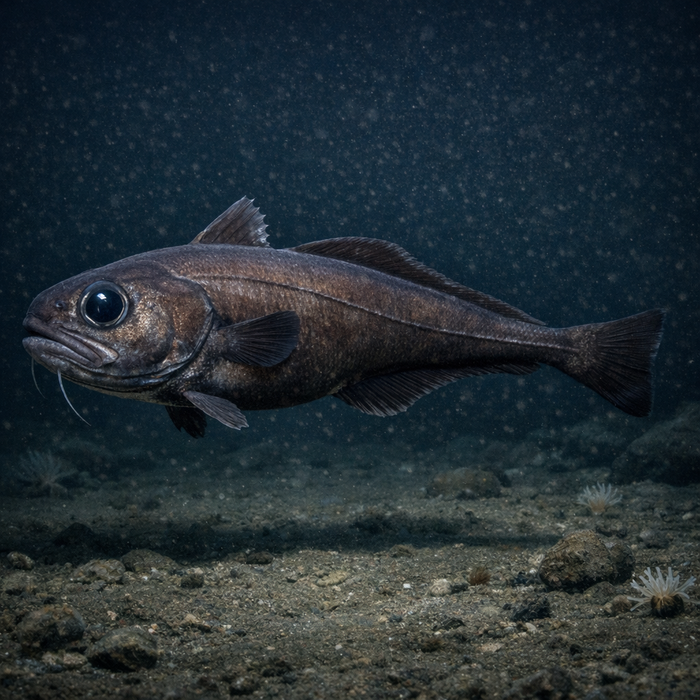
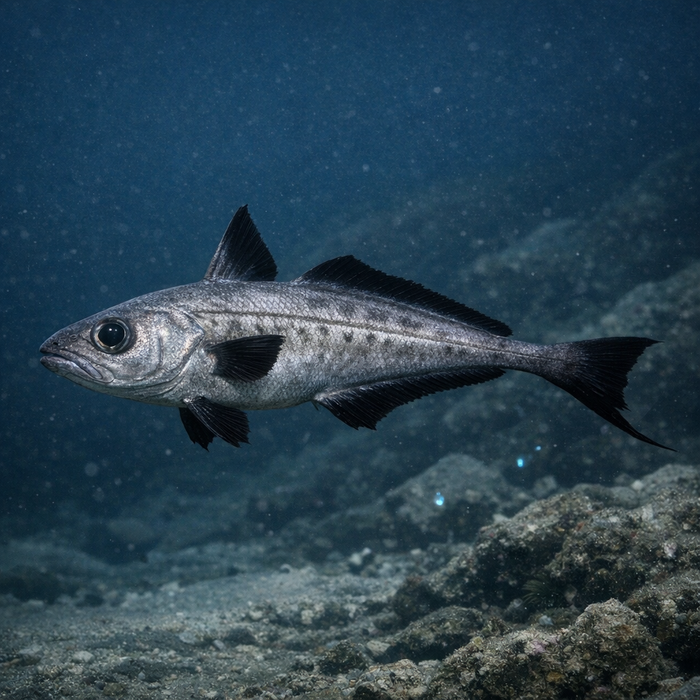
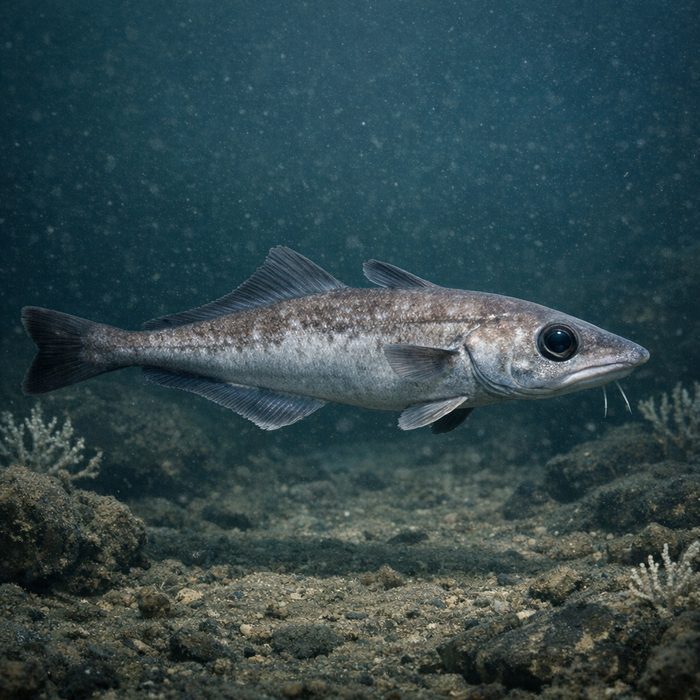
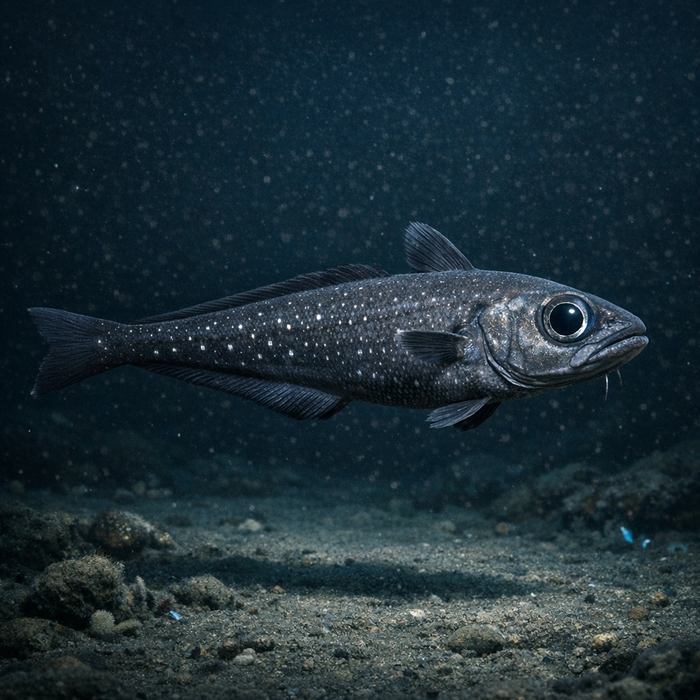
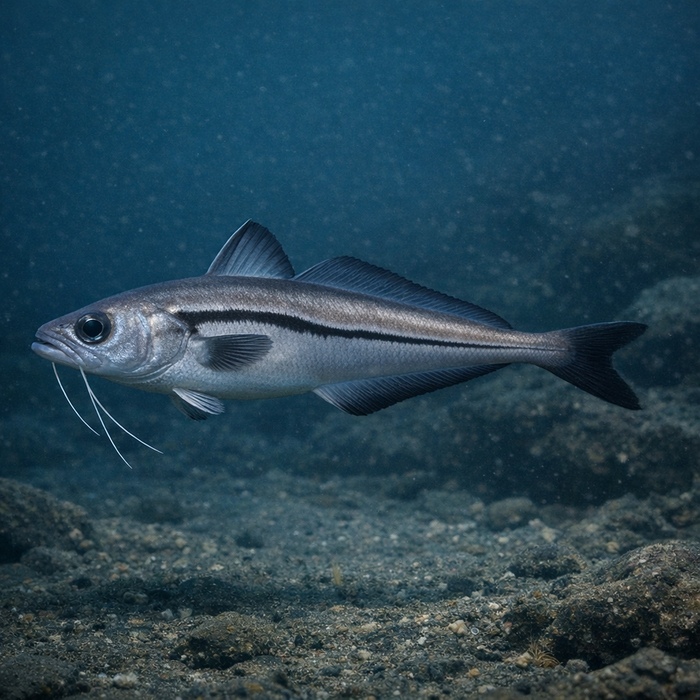
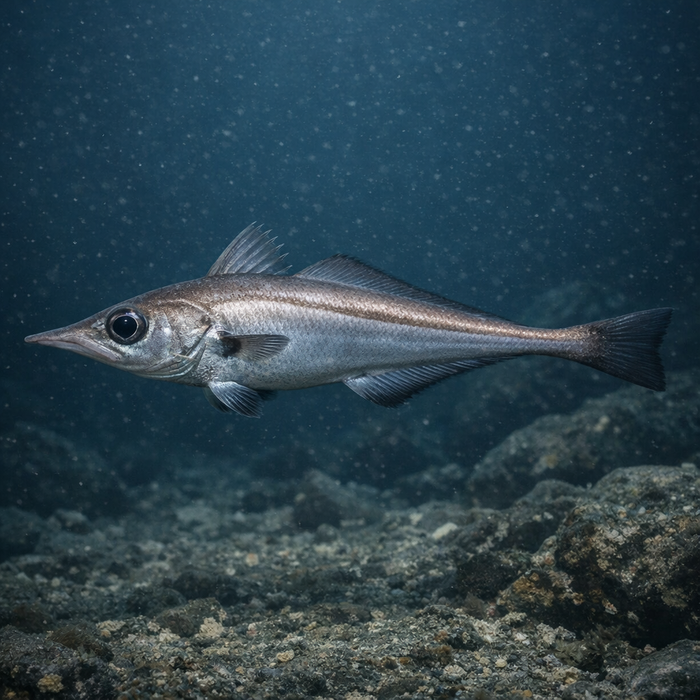
Longbeard Grenadier (Ventrifossa macropogon): A Bold, Memorable Hook LineIntroductionImagine a fish with more tail than torso, eyes tuned for twilight, and a chin whisker that could pass inspection at a beard contest. That's the longbeard grenadier, a deep-sea rattail that haunts the continental slope. It isn't flashy, it doesn't jump, and it won't melt drags, but for anglers who love the weird, this species is pure catnip. Longbeard grenadier habitat is far from friendly, yet that's part of the appeal: it's a fish you earn.What Makes the Longbeard Grenadier Unique?Start with the namesake. The long chin barbel is a sensory boom mic, sweeping mud and silt for the tiniest cues of edible life. Coupled with oversized, light-gathering eyes, it turns darkness into a lightly lit buffet. Then there's the body plan: a blocky head and tapering body that dissolves into a whip tail, classic grenadier architecture built for efficiency, not speed. Longbeard grenadier facts often focus on extremes-pressure, darkness, cold-and this fish wears them like a custom suit.Habitat & Global RangeThis species cruises the deep continental slope across parts of the Western Pacific and Indo-Pacific, especially around Japan, Taiwan, the Philippines, and northern Australia. Picture rolling soft mud, scattered rubble, and subtle contour lines rather than jagged reefs. Depths frequently run a few hundred meters and well beyond, where currents decide whether your rig kisses bottom or helicopters uselessly. The longbeard grenadier is a bottom-oriented prowler that favors broad, open soft-bottom expanses with just enough texture to concentrate life.Behavior & TemperamentThink energy miser. The longbeard grenadier isn't built to sprint; it's built to endure. It cruises slowly, tasting the seafloor with that barbel, and pounces on opportunities. Aggression reads low by shallow-water standards, but a tidy piece of squid wafting on the bottom is hard to refuse. Fish may show loose aggregations where food bottlenecks-edges of mud waves, channel lips, or slope breaks-but don't expect tight schooling. Fights are vertical grinds more than brawls, with the fish planing and twisting on the ascent.Ecological ImportanceDeep slopes are quiet powerhouses, and grenadiers are key middlemen. The longbeard grenadier converts drifting detritus and small invertebrates into calories for larger predators, while cleaning the seafloor of easy pickings. That chin barbel is a quality-control device, helping the fish pinpoint energy-positive meals in a lean neighborhood. Its presence signals a functioning mud community where crustaceans, worms, and micronekton recycle what the sunlit zone drops down.Conservation & Environmental PressuresDirect sport pressure is minimal, but that doesn't mean the longbeard grenadier gets a free pass. Slope trawling, seafloor mining prospects, and warming-driven shifts in oxygen and productivity could change the script. Deep-sea species often grow slowly and live longer than their shallow cousins, which can make recovery glacial if a population is hammered. Data gaps are real; "unknown" isn't comfort, it's a warning label. Responsible sourcing and smart management of deep-slope fisheries help keep this oddball in the picture.The FishyAF TakeThe longbeard grenadier is weird in all the right ways. It's a postcard from a world where daylight is gossip and pressure never blinks. You don't chase it for hero shots; you chase it because catching something evolved for the edge of night feels like cracking a code. Pack patience, heavy sinkers, and respect for the deep. When that unmistakable rattle-tug telegraphs up the braid and a long-bearded silhouette breaks the surface, you'll understand why this species sticks in your brain long after the cooler closes.