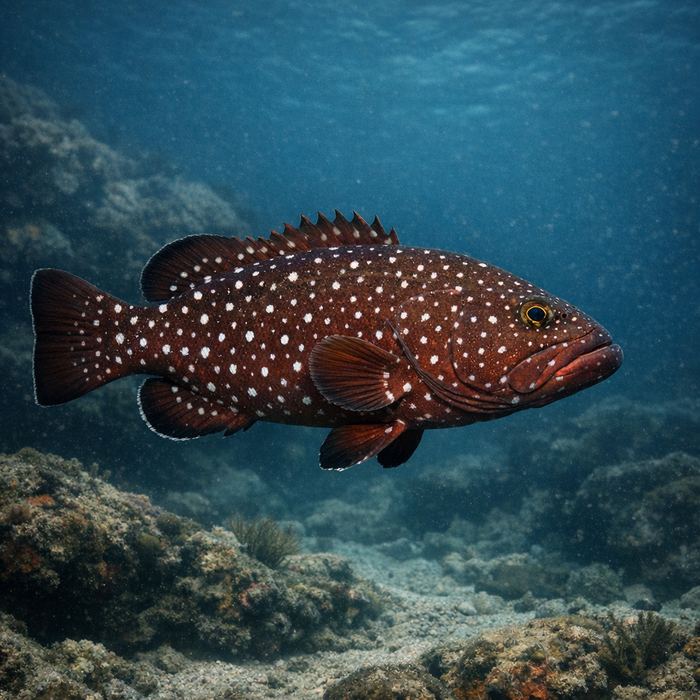
Orange Roughy (Hoplostethus atlanticus): The Deep-Sea Original That Can Outlive Your Family Tree
Most fish stories stretch the weight. Orange Roughy stretches the timeline. This deep-bodied saltwater predator can survive well beyond a century, with published estimates reaching about 250 years. A fish small enough to fit across a dinner plate may have been alive before your great-grandparents. That is not just impressive biology; it changes everything about how we should understand its capture, commercial value, and vulnerability. Forget the usual trophy-fish script. This species is remarkable less for what happens at the end of a fishing line than for the extraordinary amount of life packed into an unassuming body.
What Makes the Orange Roughy Unique?
Start with the slow lane. Growth is exceptionally slow, and reproductive maturity often takes decades. Australian accounts commonly place first maturity around 27–32 years, although timing varies among populations. Removing adults therefore means removing animals that took a substantial chunk of a human lifetime to join the breeding population.
Then there is the buoyancy system. Instead of a conventional gas-filled swim bladder, this fish has a bladder containing wax-rich material. Wax esters are also unusually prominent elsewhere in its body. It is a genuinely strange piece of deep-water engineering, not merely another red fish with an interesting birthday.
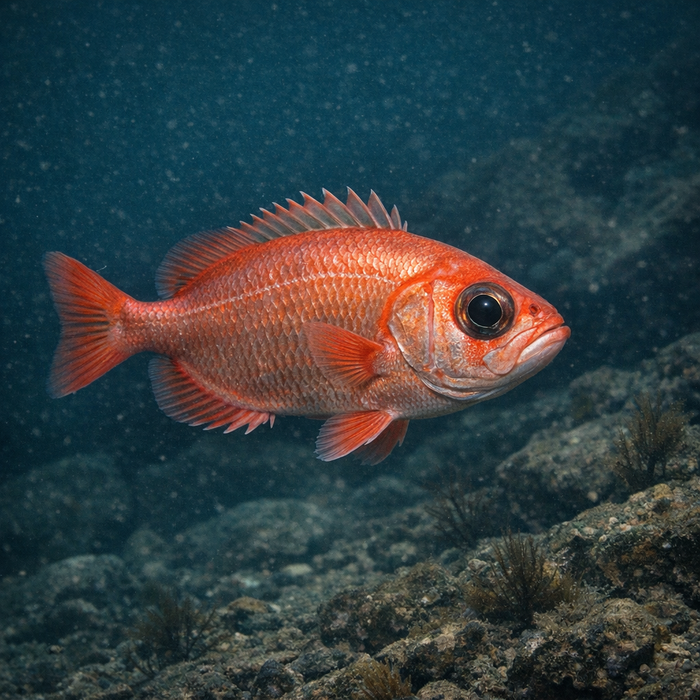
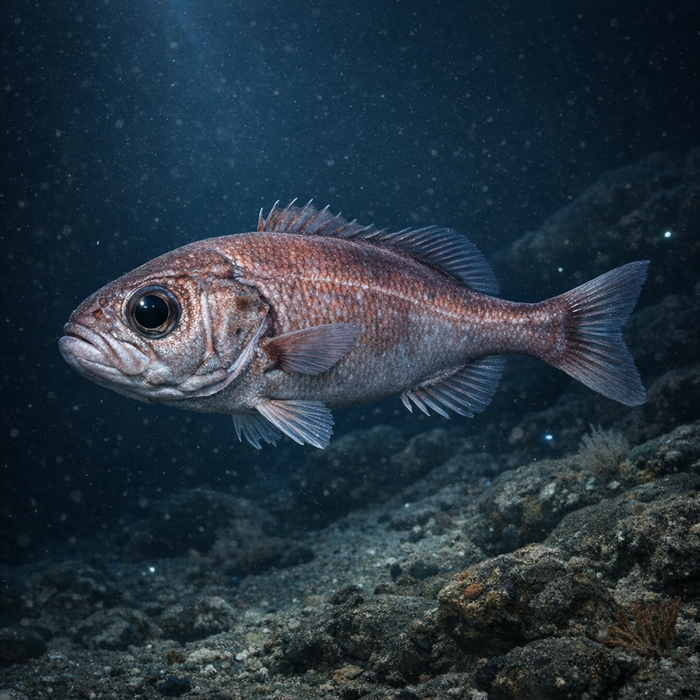
Its appearance adds the finishing touch: a compressed, reddish-orange body, bony head ridges, deep mucus cavities, and a dark mouth interior. Among Orange Roughy facts, the age gets the headline, but the anatomy deserves a proper look.
Habitat & Global Range
Orange Roughy habitat centers on deep continental slopes, ocean ridges, and seamounts. Fisheries commonly encounter the species roughly 700–1,400 meters down, although recorded depths and local concentrations vary. This is cold, offshore saltwater, not a coastal reef you can reach with a longer cast. Fish may disperse across the slope or gather around prominent underwater features.
Its distribution includes waters around Australia and New Zealand, the southern Indian Ocean, parts of the Atlantic, and the southeastern Pacific. These widely separated populations should not be treated as one interchangeable fishing resource. Geography, population structure, and local management matter considerably.
Behavior & Temperament
Orange Roughy can be relatively sedentary outside spawning movements, but that does not mean permanently parked. Some populations travel substantial distances between feeding areas and spawning grounds. At particular times, dispersed fish gather into dense aggregations associated with seamounts, hills, or other seabed features.
Those gatherings are spectacular and dangerous from a management perspective. Australian spawning aggregations can extend more than 50 meters above the bottom. A tightly packed concentration is easy to mistake for limitless abundance, especially when fishing efficiency stays high as the wider population declines. A crowded patch of ocean is not necessarily a healthy stock.
Ecological Importance
This predator links animals living near the seabed with prey moving through the water above it. Its food includes fishes, squid, and crustaceans, with diet changing according to location, depth, and fish size. The species belongs to a deep-water food web that operates well beyond the familiar coastal fishing scene.
Its ecological significance is also tied to time. Long-lived adults represent accumulated survival across many decades, while replacement is slow. Removing a concentration of mature fish can alter that local population far faster than new breeders can replace it. The deep sea may look remote and stable from a boat, but remoteness is not resilience.
Conservation & Environmental Pressures
Orange Roughy became a valuable commercial species, primarily taken by deep-water trawling. Its combination of slow growth, delayed maturity, and aggregating behavior makes it especially susceptible to excessive fishing pressure. Heavy catches from a newly discovered aggregation can reflect the removal of accumulated generations rather than a harvest that the population can readily replace.
Bottom-contact fishing also raises concerns beyond the target species because deep-sea fishing grounds can support vulnerable seabed communities. Management must consider both the fish and the habitat affected by the gear. Stock assessments, protected areas, catch controls, and rebuilding measures belong in that conversation.
Status is jurisdiction-specific. Australia lists the species as Conservation Dependent and manages it through rebuilding arrangements. A broad database label should never be mistaken for a verdict that every population is secure or every fishing area is open.
The FishyAF Take
Orange Roughy does not need a manufactured sport-fishing reputation. There is no established recreational target fishery to justify a confident rod recommendation, secret bait, or invented account of its fighting style. Documented fisheries are overwhelmingly a commercial deep-water story. Pretending otherwise would turn an extraordinary animal into ordinary fishing-page filler.
The impressive thing here is not brute force. It is persistence: a modest-sized predator surviving on a timescale that makes most fishing seasons look like a coffee break. Respect that. Learn the difference between a biological maximum and an angling record, question easy sustainability claims, and do not confuse access to deeper water with a good reason to fish it. Some species earn your attention without needing a place on your bucket list.