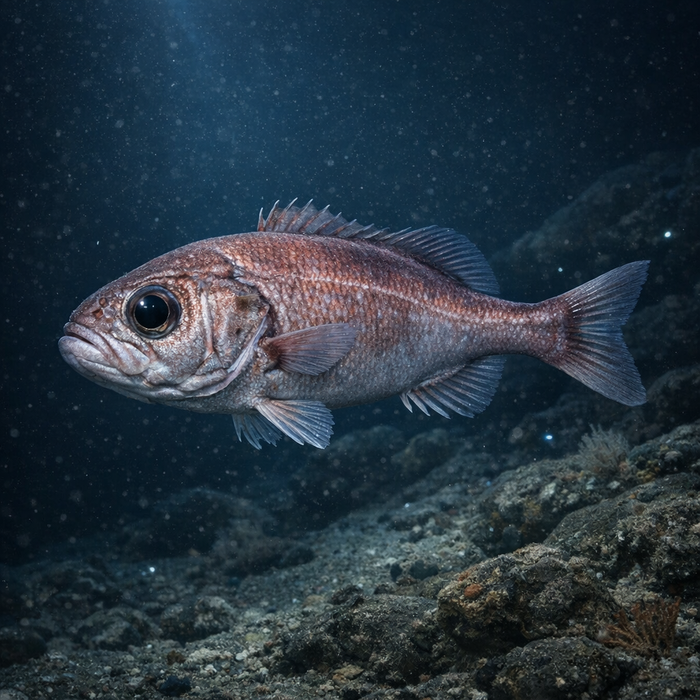
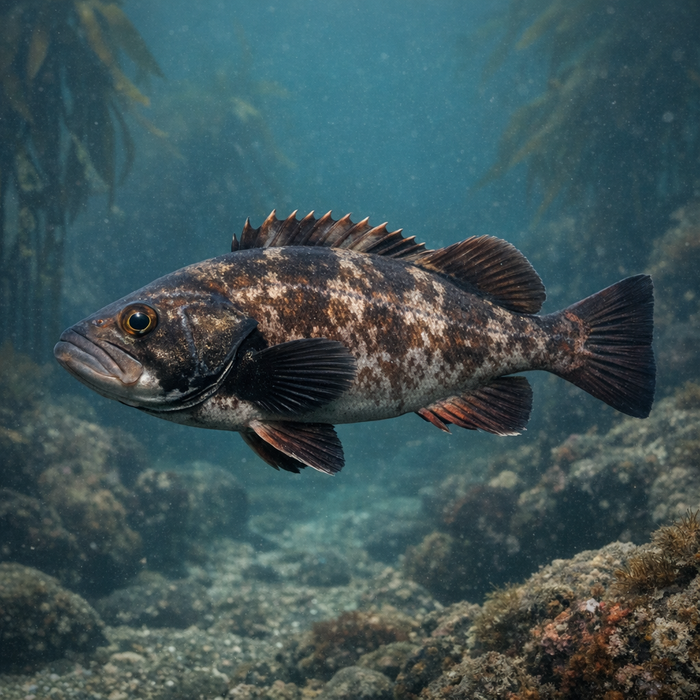
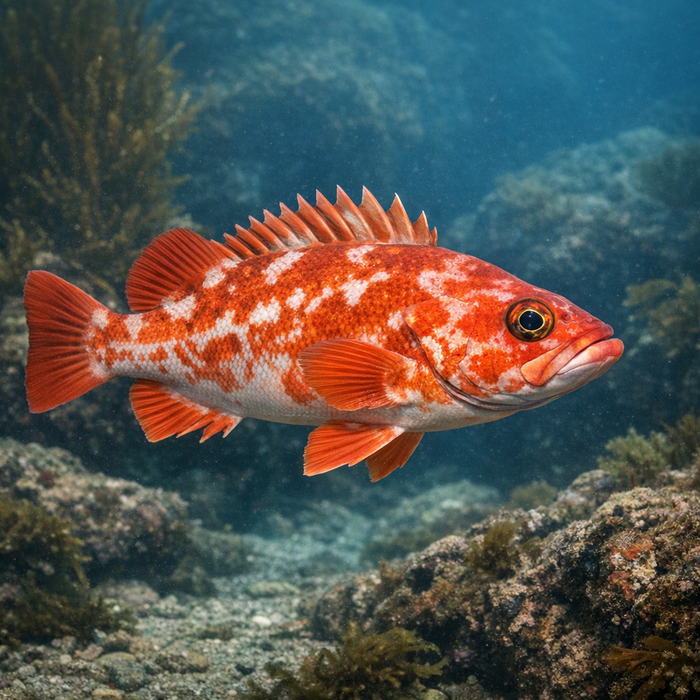
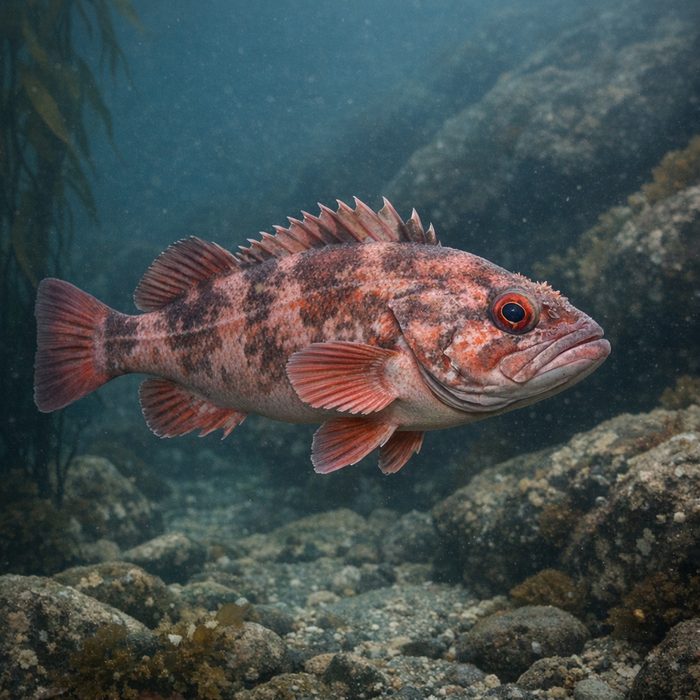
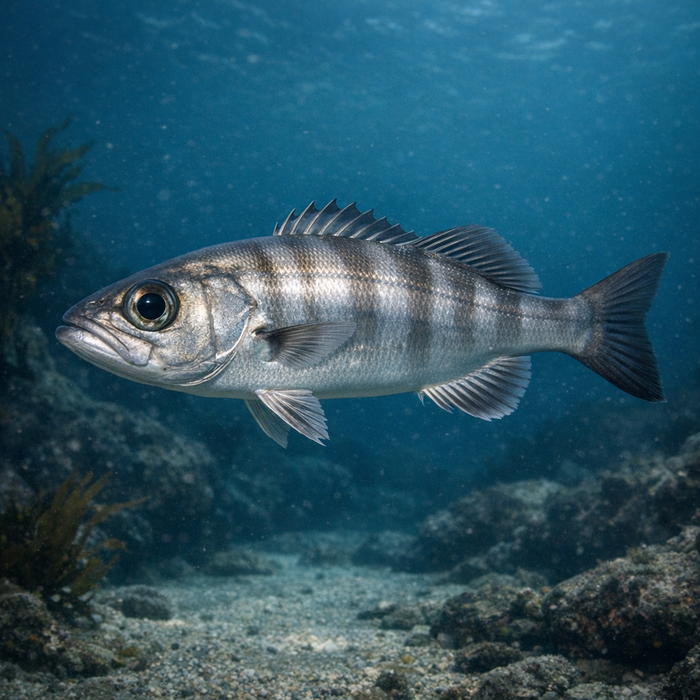
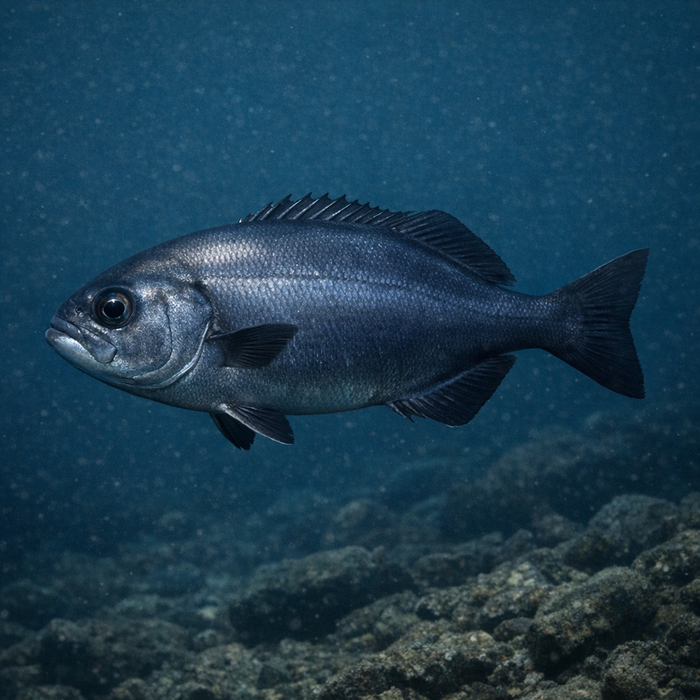
Darwin's slimehead (Gephyroberyx darwinii): Deep-Sea Red With Ancient AttitudeIntroductionIf deep water had a mascot, it would wear spikes, a brick-red paint job, and a don't-care stare. That's Darwin's slimehead, the rough-and-ready slope dweller that shows up on your sounder as a stubborn smear over gnarly ground. It isn't famous, it isn't huge, and it absolutely doesn't care. But for anglers who drop baits into the twilight zone, this rugged little tank is a legit prize and a crash course in real-deal deep-dropping.What Makes the Darwin's slimehead Unique?First, the build. Darwin's slimehead is deep-bodied and armored like a medieval shield, with thick, abrasive scales and stout spines. Second, the head is veined with mucus-filled sensory canals that read vibrations like a seismograph, the reason slimeheads have their very on-the-nose name. Third, the color: screaming red at the surface, effectively black in deep water where red light dies. Pair all that with oversized eyes for low-light work and you've got a stealthy ambush predator tuned for the seamount twilight.Habitat & Global RangeIf you're hunting for Darwin's slimehead habitat, think steep. This species hugs continental slopes, seamounts, pinnacles, and rugged breaks in the deep sea, typically beyond the weekend fleet. It's broadly distributed across the Atlantic, Indian, and Pacific basins, but its world is the dim, cold band between midwater and bottom. You'll mark them tight to edges, over lava knuckles, along scarp faces, and near any hard relief that kicks current into something edible. Depth and exact positioning vary by region, but the playbook is consistent: rough ground, moving water, dinner served.Behavior & TemperamentDarwin's slimehead isn't out sprinting bait. It's a patient, economical predator that uses cover, current seams, and suction feeding to make the most of a slow metabolism. Expect looser groups to congeal when current eases, then stretch apart as flow returns. Bites can be surprisingly confident for a deepwater fish: a few knocks, a steady load-up, then that unmistakable deep-drop throb. Fights are a vertical grind. They won't torch drags, but they hang heavy and twist, and spines guarantee plenty of boat-side "careful, careful" chatter.Ecological ImportanceAs a mid-level predator on deep slopes, the Darwin's slimehead links the small stuff to the bigger, toothier stuff. It recycles energy from crustaceans and small fishes into packages suitable for deep sharks, large teleosts, and the occasional lucky angler. Slow growth and likely late maturity make it a classic deep-sea conservative: it lives long, replaces itself slowly, and depends on intact seamount communities to keep the buffet stocked. Understanding Darwin's slimehead facts gives you a window into a whole neighborhood of deepwater life that most anglers never see.Conservation & Environmental PressuresDarwin's slimehead has a wide range and isn't the poster fish for collapse, but the deepwater rulebook still applies. Bottom-contact gear can scuff the very structure these fish rely on. Slow life histories mean recovery is measured in decades, not seasons. Climate shifts can tweak currents that fuel production along slopes and mounts. Recreational catches are minor globally, yet local pressure and mixed-species deep-drop harvests can add up. Smart self-regulation, selective gear, and a "keep a few, let most go" mindset help keep the slope alive.The FishyAF TakeDarwin's slimehead is the anti-hero of the deep. It's not going to headline your social feed, but it will teach you more about current, structure, and precise boat control than a dozen shallow reef trips. It rewards clean rigs, fresh baits, and patience with an honest, head-down fight and surprisingly good fillets. If you want easy, fish the pier. If you want to graduate, wire the sounder, watch the flow, and drop into the red zone. That's Darwin's slimehead habitat, and that's where anglers become technicians. Respect the spikes, mind the barotrauma, and tip your hat to a fish that's been doing its job for decades without asking for attention.