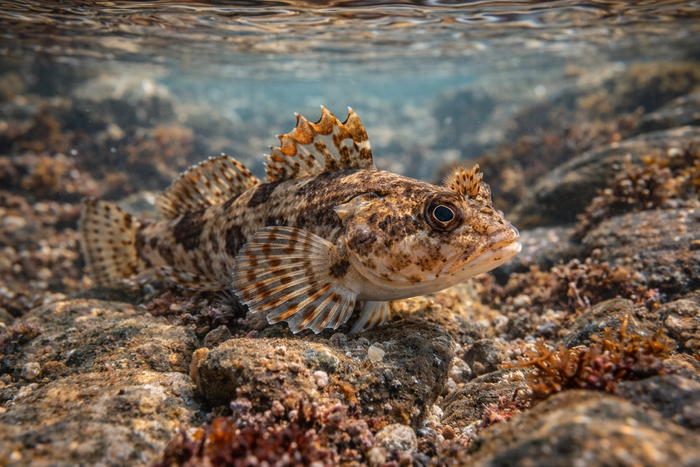
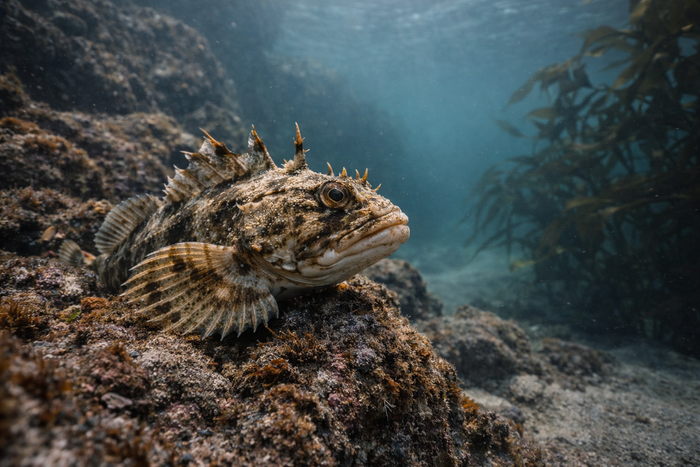
Pacific Staghorn Sculpin (Leptocottus armatus): Antlers on Its Cheeks, Your Bait in Its Mouth
The Pacific Staghorn Sculpin has a talent for arriving before the fish you actually meant to catch. Drop a small bait onto a sandy bay bottom, and this broad-headed opportunist may promptly claim it. Most familiar angler catches measure around six to eight inches: modest fish with unmistakable cheek spines and very little interest in your target-species ambitions. It belongs to Cottidae, the sculpin family, and makes an accessible introduction to saltwater bottom fishing. Small does not mean biologically boring. This fish has considerably more going on than its bait-thief reputation suggests.
What Makes the Pacific Staghorn Sculpin Unique?
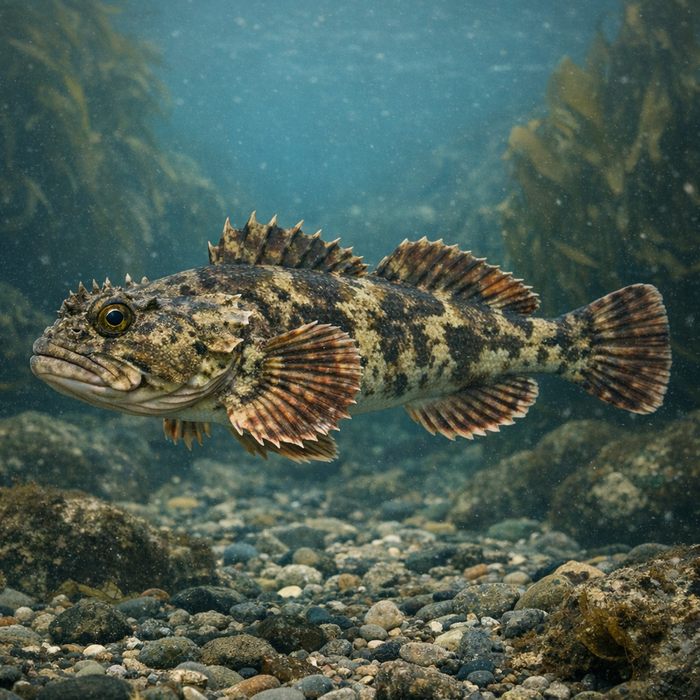
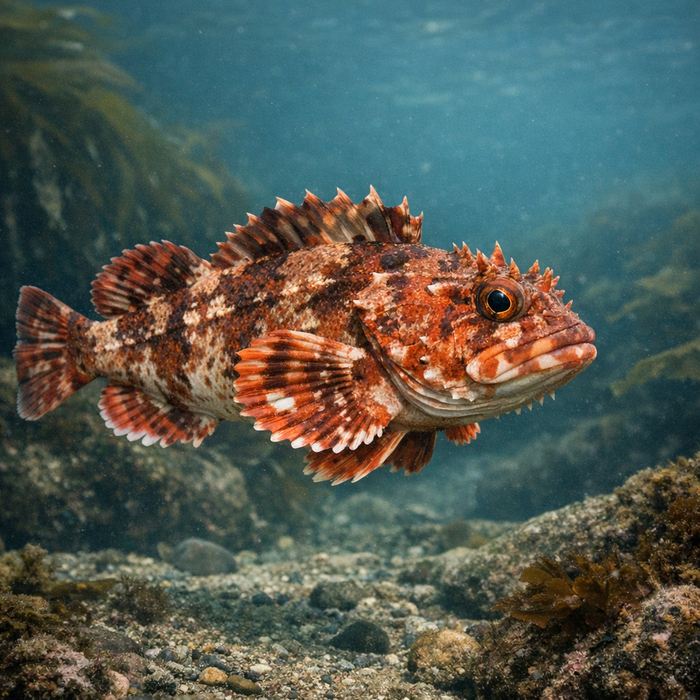
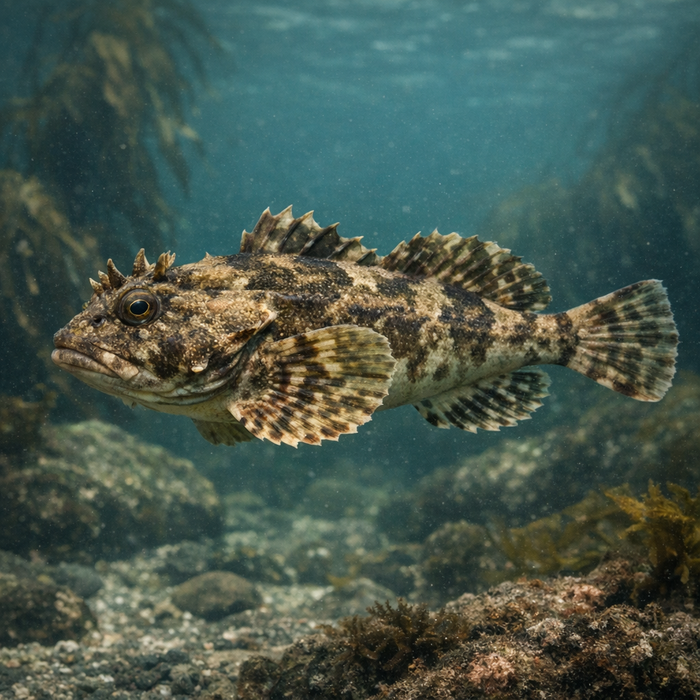
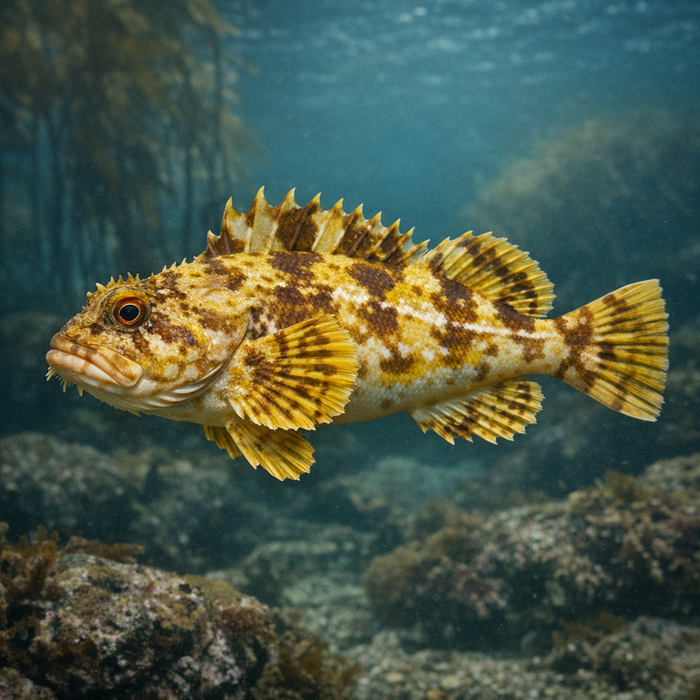
Start with the namesake hardware. Prominent, branched spines beside the gill covers resemble miniature antlers, giving the Pacific Staghorn Sculpin a defensive feature that doubles as an identification clue. Its broad, flattened head and tapering body complete a distinctly bottom-oriented silhouette. Admire those branches without wrapping your fingers around them; the spines can cut.
Then there is the low-tide survival kit. Stranded individuals can breathe air, an adaptation suited to places where the water periodically disappears. Threatened fish can also produce a low-pitched humming sound, sometimes felt as vibration. Among Pacific Staghorn Sculpin facts, that combination deserves top billing: cheek antlers, air breathing, and an audible objection to being bothered. None of it is permission to keep a caught fish out of water for a demonstration.
Habitat & Global Range
Pacific Staghorn Sculpin habitat centers on shallow coastal water, especially sandy or muddy bays and estuaries. Its northeastern Pacific distribution stretches from Alaska south along the Canadian and United States West Coast to northern Baja California. Think sheltered shoreline and soft sediment rather than an obligatory rocky reef. The bottom-fish label fits; the reef association is much less useful when choosing where to cast.
Saltwater is the main setting, but not an absolute boundary. Young fish may enter freshwater before returning to saltier environments. Adults occur in lower estuaries and coastal waters, and published accounts document the species down to roughly 300 feet. That deeper occurrence does not make offshore fishing necessary. For an angler seeking an ordinary encounter, accessible shallow habitat is a sensible starting point.
Behavior & Temperament
The Pacific Staghorn Sculpin spends much of its time resting on or moving close to the bottom. It can accelerate quickly over short distances and bury itself in sediment, leaving little more than its eyes exposed. This is not a fish built around sustained open-water cruising. Its routine is closer to waiting, watching, and making a short move when circumstances warrant.
That bottom-oriented lifestyle translates neatly to fishing. Small pile-worm pieces and narrow anchovy strips presented on the bottom are established offerings. Light tackle makes more sense than overpowering a fish this size, while a sensitive tip helps keep the encounter interesting. Its willingness to take bait earns it beginner-friendly status, although removing a hook around those cheek spines still calls for attention. Easy to catch should never mean careless to handle.
Ecological Importance
The Pacific Staghorn Sculpin occupies both sides of the feeding equation. It consumes bottom-associated invertebrates and small fish, while birds, larger fishes, and marine mammals consume it. Its ecological importance is not measured by fillet size or whether someone considers it a desirable catch. The same animal dismissed as an interruption on a pier is useful prey to predators working that shoreline.
Its early life also differs sharply from the adult routine. Newly hatched larvae enter the plankton before transforming into juveniles and adopting a bottom-associated existence. That change connects life in the water column with life on the sediment. Looking only at the fish dangling from a small hook misses an entire earlier chapter spent drifting rather than hugging the seabed.
Conservation & Environmental Pressures
The Pacific Staghorn Sculpin is classified as Least Concern. That is reassuring, but it is not a declaration that every bay population is equally secure or every estuary is healthy. Conservation status describes extinction risk at a broad scale; an individual fishing spot can still experience substantial environmental damage.
Coastal development, wetland loss, contaminated runoff, and changes to tidal circulation can degrade the habitats this species uses. Excess nutrients can also drive oxygen depletion. These are established estuary pressures, not evidence that this particular sculpin is currently approaching extinction. The practical response is straightforward: protect functioning shorelines, keep discarded tackle out of the water, and do not confuse a tough little fish with an indestructible ecosystem.
The FishyAF Take
Calling this fish trash says more about the angler than the fish. You do not have to make it your lifelong obsession. You can even wish it had left your bait alone. But a small bottom dweller with defensive antlers and an emergency air-breathing option has earned something better than contempt.
Fish light. Look closely. Keep pliers handy. Give the little nuisance a proper identification and a careful release when you are not keeping it legally. Not every worthwhile catch needs to threaten your drag washers.