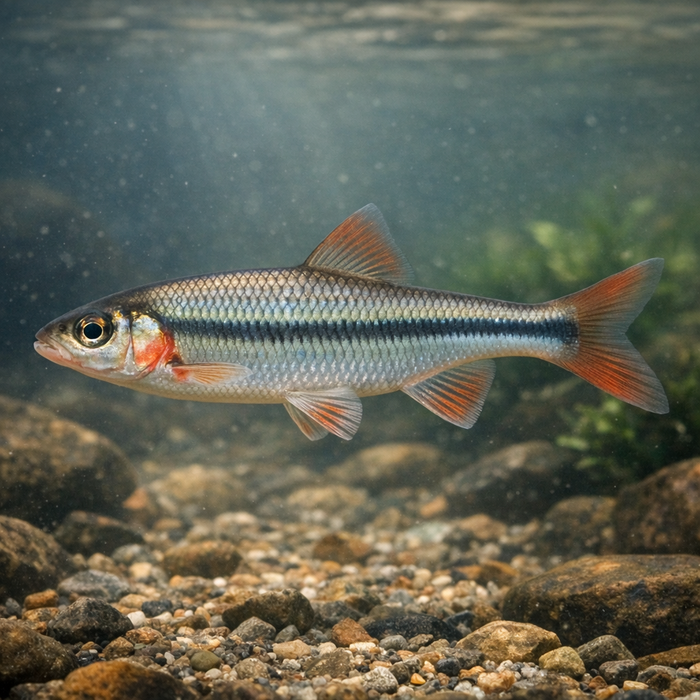
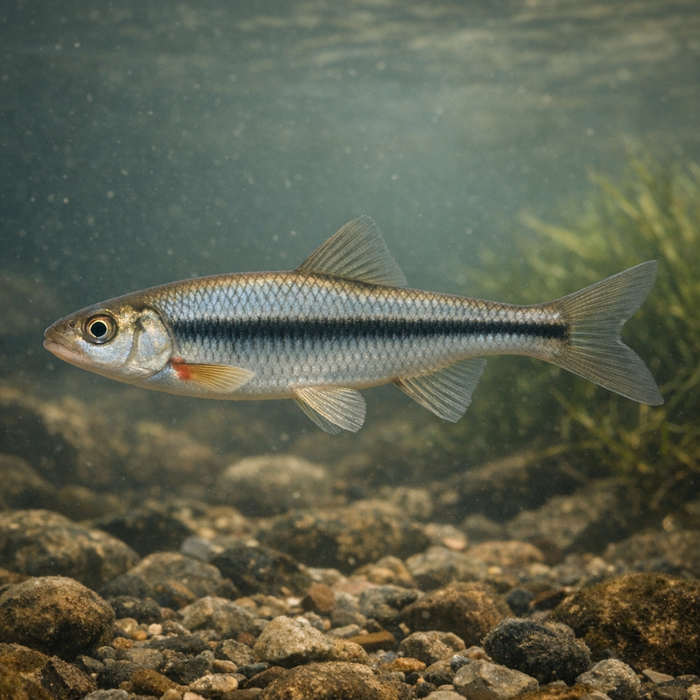
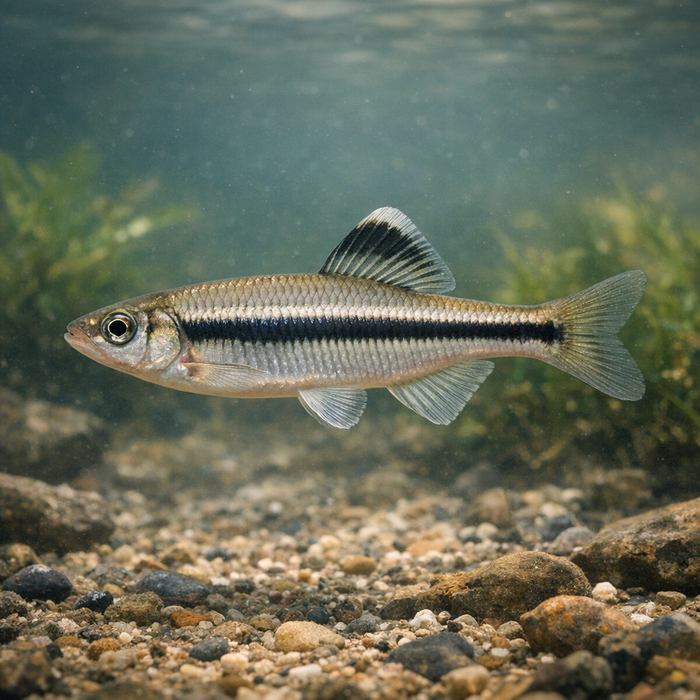
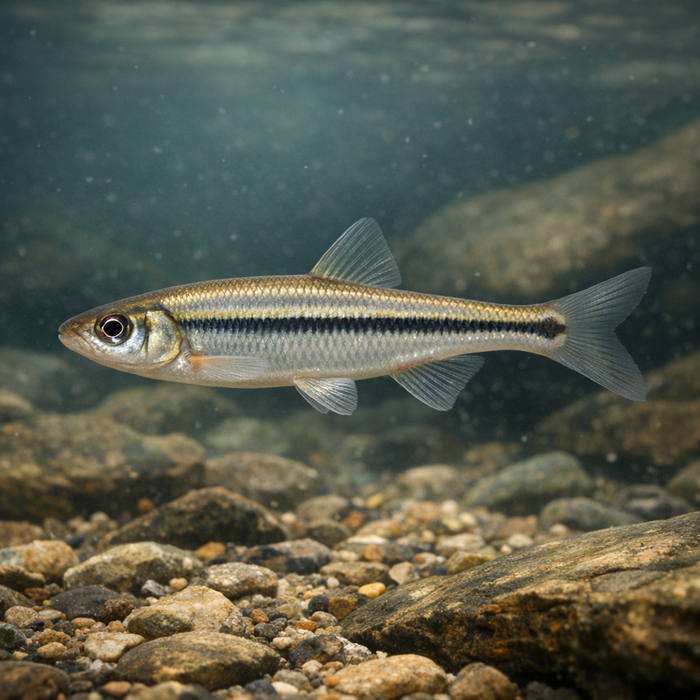
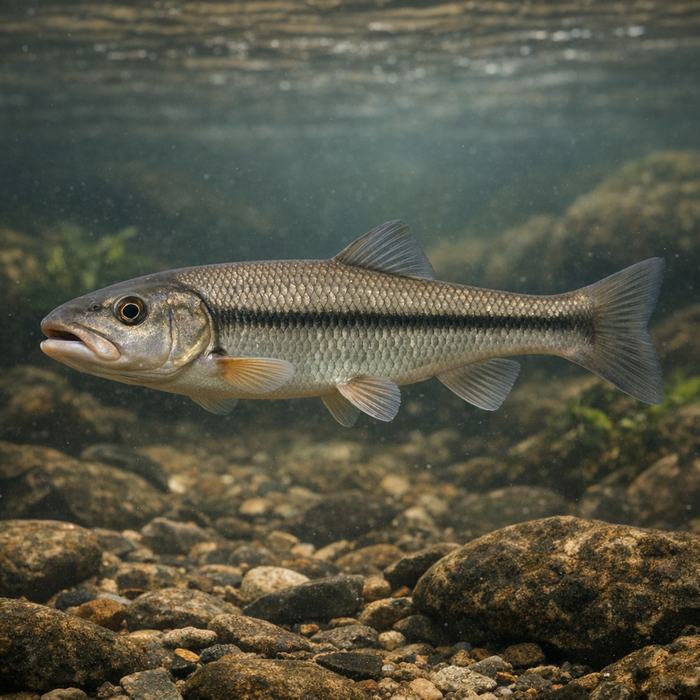
Pallid chub (Macrhybopsis pallida): A Bold, Memorable Hook LineIntroductionThe pallid chub is the quiet specialist of sandy, pushy rivers. No hype, no stripes, just a streamlined minnow tuned to life where visibility is lousy and the current is always asking questions. For anglers who appreciate native fish and the subtle craft of microfishing, this little customer delivers a whole different kind of win. If you're chasing authentic Pallid chub habitat or hunting up Pallid chub facts, pull up a sandbar.What Makes the Pallid chub Unique?First, efficiency. The pallid chub is built to work a moving conveyor belt of food. A subterminal mouth, tiny chin barbels, and a slippery torpedo profile let it sift insect larvae out of shifting sand without wasting energy. Second, stealth. That pale, mostly unmarked body vanishes in the ripple light over a clean bottom, turning the fish into a low-contrast ghost. Finally, strategy. Instead of sticky eggs on rocks, pallid chub spawn into the current so eggs and larvae drift downstream, colonizing fresh habitat as the river breathes.Habitat & Global RangeThe pallid chub is a Great Plains native tied to sandy-bottom, turbid rivers with steady flow and open runs. Think mid-sized prairie rivers, side channels, and outside-bend shoals where the current sculpts dunes and seams instead of cobble riffles. They favor low to moderate depths, enough push to keep the sand moving, and just enough cover in the form of turbulence and bottom texture. Reservoir conversions, dewatering, and channel hardening don't do them any favors; they like rivers that still act like rivers.Behavior & TemperamentThe pallid chub cruises tight to bottom, letting hydrodynamics do the heavy lifting. It feeds more by feel than by sight, tuning into micro-currents and bottom vibration to pick insect larvae, small crustaceans, and other invertebrates drifting along the sand. Schooling is common, especially where a particular seam lines up food delivery. Don't expect splashy antics at the surface; action is subtle and usually below your boots. When hooked, they're not bulldogs, but they're masters at shaking a tiny hook by simply letting current and leverage work for them.Ecological ImportanceAs a native forage and invertebrate grazer, the pallid chub helps translate a river's insect production into fish biomass, fueling larger predators and keeping the energy moving. Because it relies on living, breathing, turbid channels, the species is also a tidy barometer for river health. If clean sandbars, natural flow pulses, and connected side channels vanish, pallid chub numbers tend to follow. When they're present and thriving, it usually means your river still has some kick left.Conservation & Environmental PressuresFlow regulation, sediment starvation, and channelization chip away at what pallid chub do best. Add in isolated populations and the species can start living on the margins. Even if your local listing doesn't give it a formal conservation status, the pressures are familiar: locked-in banks, reservoir slackwater, and seasonal dewatering that turns riffly conveyors into stagnant bathtubs. The fish isn't fragile by nature, but it's specialized; lose the right sand and flow recipe and you lose the fish's competitive edge.The FishyAF TakeThe pallid chub won't headline your brag board, and that's the point. It's the river's inside joke, the fish that tells you whether you're fishing a living system or a canal with PR. If you like micro rigs, tight drifts, and reading seams no one else even notices, this minnow is your kind of challenge. Catch one clean, document it right, and you'll learn more about your river in an afternoon than a month of pitching hardware at the nearest dam. The pallid chub keeps you honest, and that's why we like it.