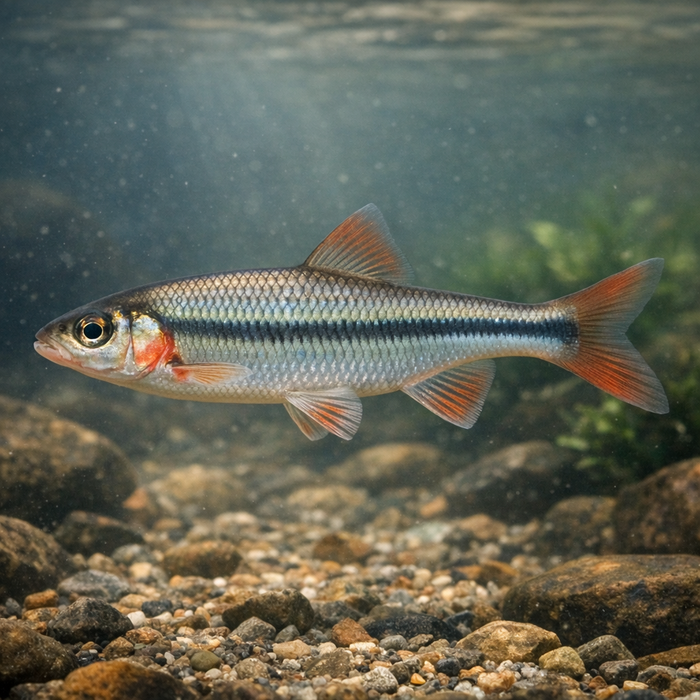
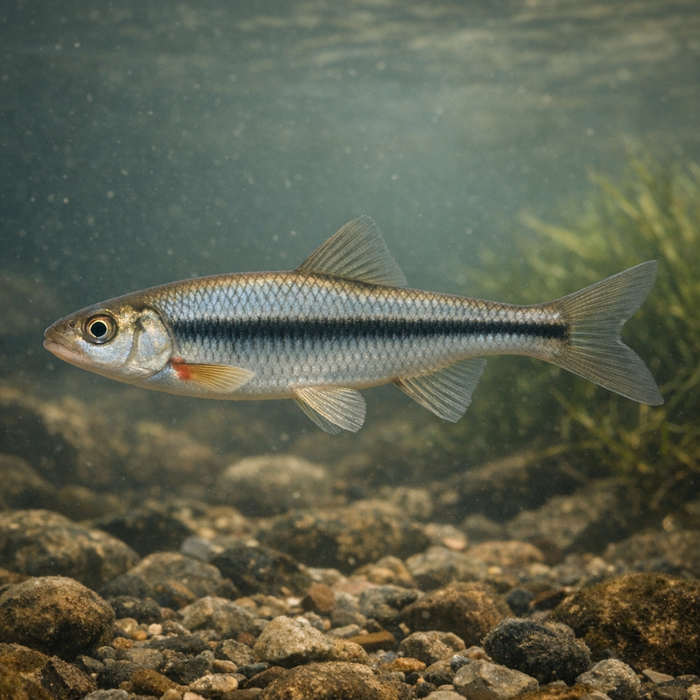
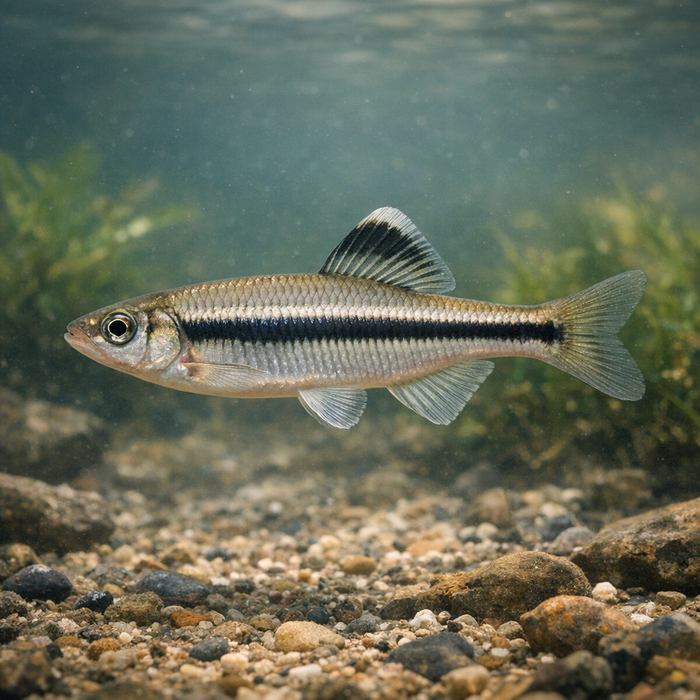
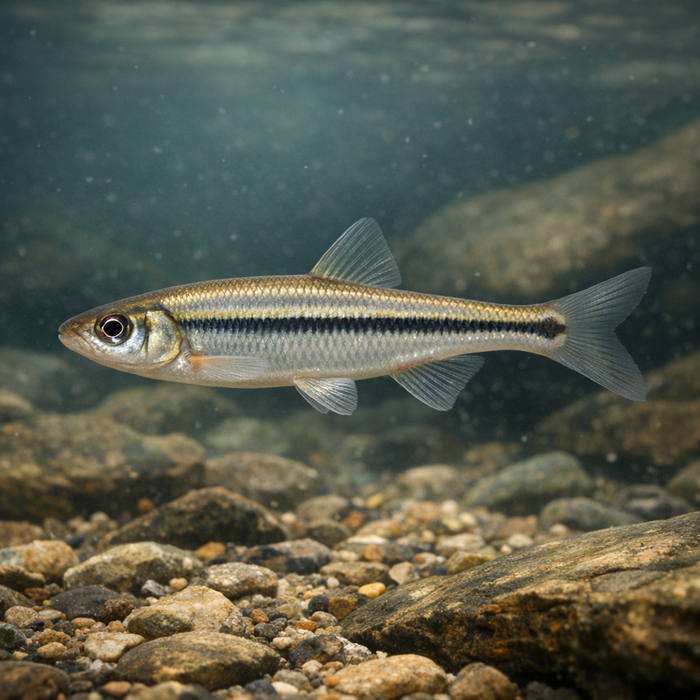
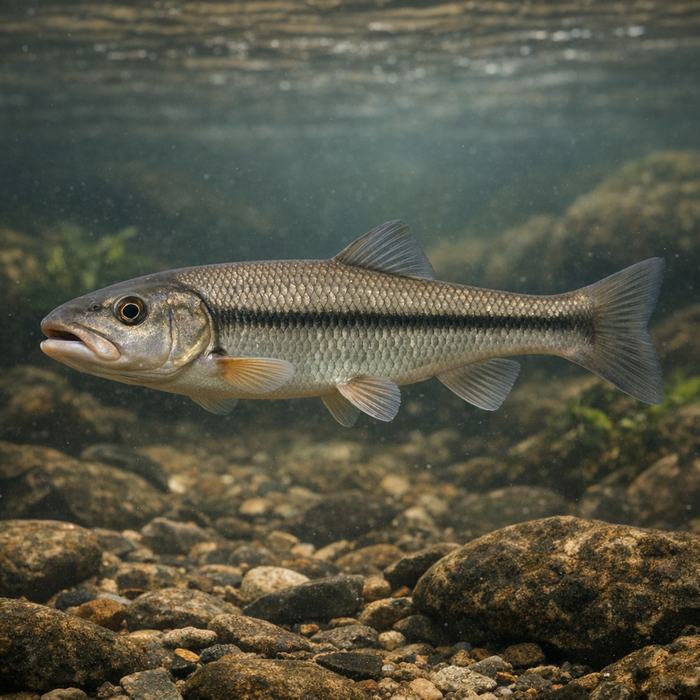
Silverband shiner (Paranotropis shumardi): A sleek river sprinter with a chrome racing stripe and zero patience for slack waterIntroductionMeet the silverband shiner, a tiny missile tuned for big-river life. It won't spool your drag or pose next to a tailgate, but if you're into precision, current seams, and fish that gleam like polished metal, this is your micro fix. The silverband shiner is quick, schooly, and brutally honest about presentations: get small, get subtle, and get in the flow.What Makes the Silverband shiner Unique?Two things define this minnow at a glance: that crisp silver lateral band ending in a tight, tailward wedge, and a body built to live in pushy current. The band acts like a flashing baton when schools pivot, creating a synchronized shimmer that's hard to ignore. Paranotropis shumardi also carries a tiny, upturned mouth designed to pluck drifting invertebrates mid-column. It's a specialist among specialists, a chrome sliver dialed to river rhythm. If you want quick Silverband shiner facts, start with this: it's small, streamlined, and unapologetically a current junkie.Habitat & Global RangeSilverband shiner habitat centers on large rivers with sand or fine gravel bottoms, moderate to strong flow, and defined channels. Think sweeping bends, sandbars, tailouts below riffly sections, and the outer lips of main-channel seams. They're a fixture across much of the Mississippi basin and connected drainages, thriving where water moves and sand shifts. While they venture into calmer backwaters, the species truly shines around those lively lanes where food drifts to them and predators struggle to isolate one fish from a million glints.Behavior & TemperamentThe silverband shiner is a schooling loyalist. Hundreds to thousands move as one, feeding in midwater over sand runs and hopping edge to edge with minor flow changes. They're not jumpy in the bass sense, but they're sensitive to shadow and splash. Spawning kicks off in warm months, with adults broadcasting eggs into moving water that settles grains of sand just right. Expect peak activity when light softens and the river hums. Hooking one isn't about the fight; it's about surgical presentations in moving water.Ecological ImportanceTiny doesn't mean trivial. The silverband shiner forms a crucial thread in river food webs, converting drifting insect life into small, fast protein that fuels predators from sauger to herons. By packing into schools over shifting sand, they occupy a niche that many fussier minnows avoid, keeping energy flowing through busy channels. They're also quick-turnover fish, with short lifespans and high reproduction, which helps stabilize populations when rivers breathe and burp with flood cycles.Conservation & Environmental PressuresThis species rides the boom-and-bust rhythm of big rivers. Channelization, sediment pulses from upstream work, and low-flow events can all pinch silverband shiner habitat. On the flip side, they're surprisingly tolerant of moderate turbidity compared to pickier relatives. The main threat is the one-two punch of habitat simplification and prolonged poor water quality. Keep the sand moving, keep the seams alive, and the silverband shiner generally keeps pace.The FishyAF TakeThe silverband shiner is proof that great fishing isn't always measured in pounds. It's a masterclass in reading current, downsizing gear, and appreciating a fish that trades brawn for pure design. Want practical Silverband shiner habitat lessons? Stand where the sand slides and the foam line tracks clean. Present tiny, drift natural, and watch for that micro-tap. It's minimalist angling with a high signal-to-noise ratio. For those who like their challenges subtle and their fish gleaming, the silverband shiner delivers, one chrome flicker at a time.