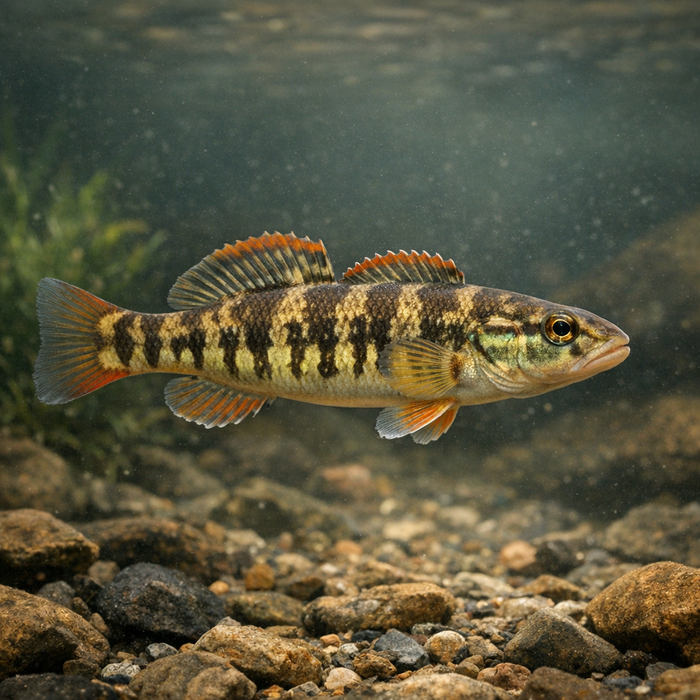
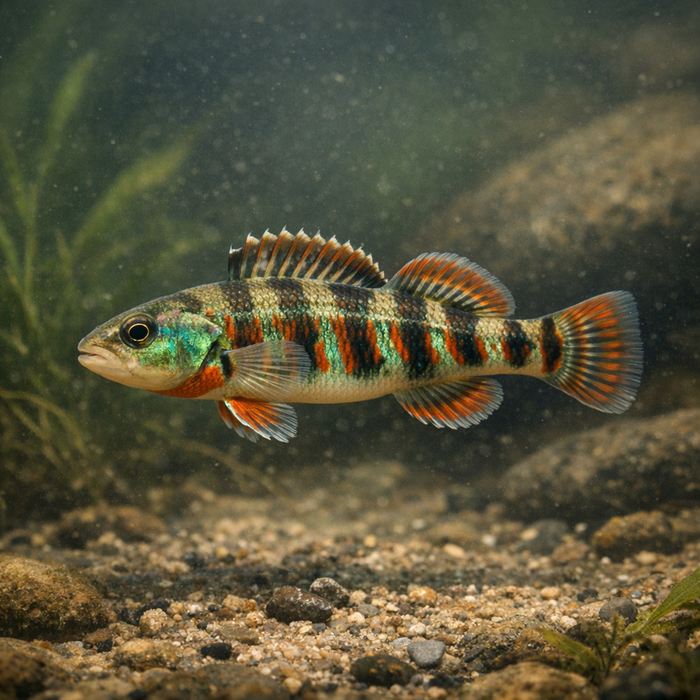
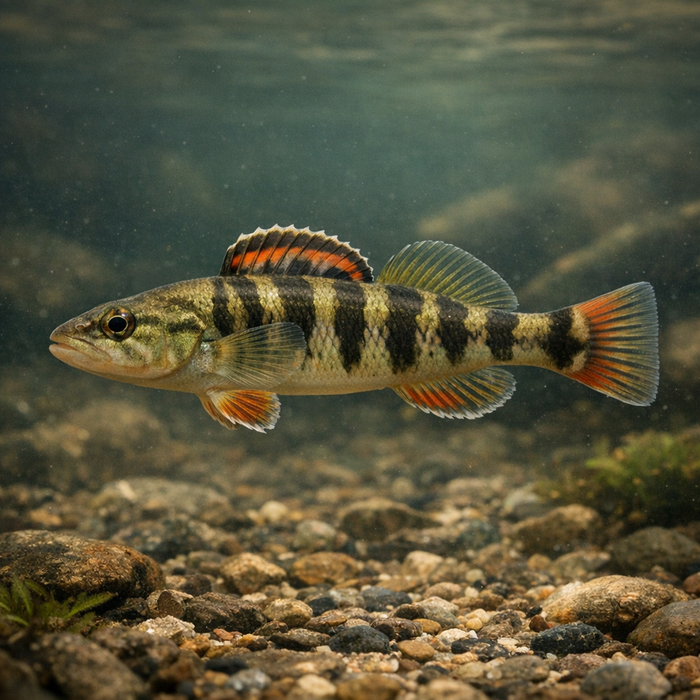
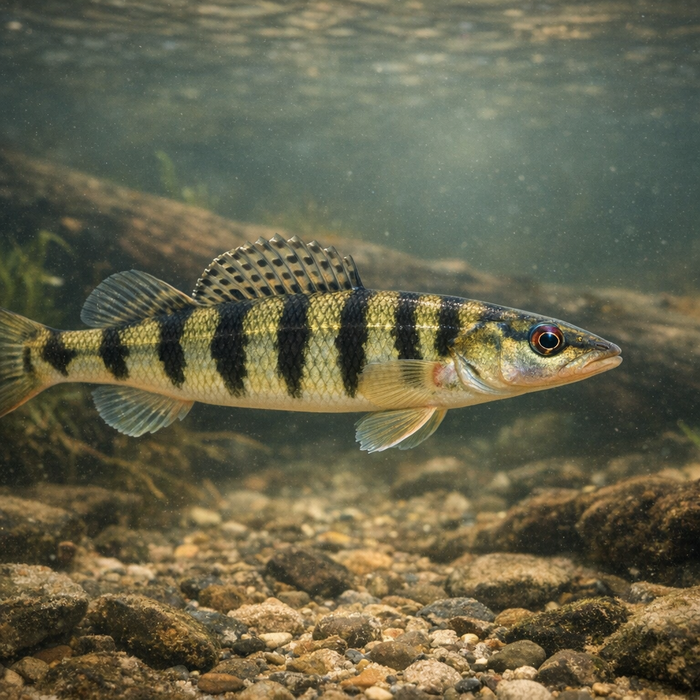
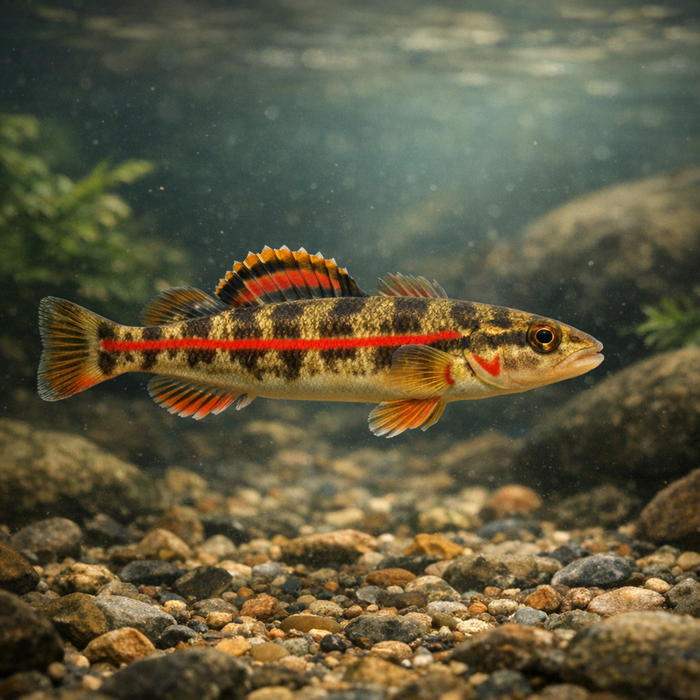
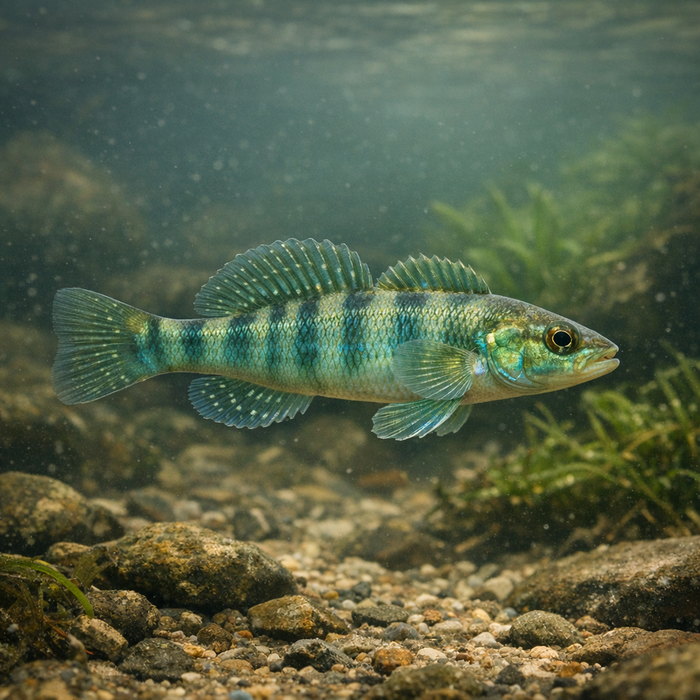
Slabrock darter (Etheostoma smithi): A Bold, Memorable Hook LineIntroductionThe slabrock darter is the riffle's tiny gatekeeper, a pocket-sized predator that rules flat stones like VIP tables. Blink and it's gone, zipped under a slab, blending into bedrock while current rips overhead. For anglers curious about microfishing or just infatuated with stream life, the slabrock darter is proof that freshwater drama comes in small packages. Consider this your quick hit of Slabrock darter facts with a dose of real-world angling context.What Makes the Slabrock darter Unique?Two things: architecture and attitude. The slabrock darter is obsessed with thin bedrock sheets and flat rocks, using the undersides like upside-down nurseries. Males shepherd eggs stuck to the rock ceiling, fanning and defending them like grizzled bouncers. And while the fish is tiny, its build screams current: broad pectoral fins prop it on the bottom, a reduced swim bladder keeps it glued to substrate, and short, sudden darts replace cruising. It's a design born for fast water and small spaces.Habitat & Global RangeIf you're hunting Slabrock darter habitat, think shallow, swift streams with clean flow, bedrock shelves, and scattered cobble. These fish hold tight in ankle- to knee-deep riffles and runs, often where water skims over flat stone. Small tributaries with springy flow and low silt loads are prime. They're a regional specialty in parts of the southeastern and mid-south U.S., typically within river systems with good limestone or sandstone geology that naturally create the slabby structure they prefer. They don't roam much; if a riffle checks all their boxes, they put down roots.Behavior & TemperamentThe slabrock darter lives on the bottom and lives in the moment. It watches the conveyor belt of current for drifting invertebrates, then rockets a few inches to snatch dinner. In the breeding season, males show sharper contrasts and claim nest slabs, enticing multiple females to deposit eggs. Afterward, they guard the clutch relentlessly and fan away silt. Outside spawning, the fish stays hyper-local, shifting micro-positions along seams and tiny breaks where flow is strong but survivable. They're not schoolers in the classic sense; you'll encounter small groups dispersed across a good riffle, each holding micro-territory.Ecological ImportanceThis little predator is a stream-health litmus test. Slabrock darters need honest current, oxygenated water, and low sediment. When the riffles stay clean, they thrive, bridging macroinvertebrates up the food chain and feeding larger fishes and stream wildlife. They also help cycle nutrients by rooting energy in the fast-water zone many species avoid. Their nesting behavior under stones makes them ecosystem engineers in miniature, physically moving silt and maintaining microhabitats.Conservation & Environmental PressuresSilt is the villain. Heavy rain events punching through eroded banks can smother slabs and choke eggs. Channelization and poorly designed culverts flatten out riffles or starve them of flow. Low summer water can fragment habitat, stranding fish in marginal runs. While the slabrock darter isn't the poster child of endangered status, its lifestyle is fragile by design. Protect the riffles and the fish does the rest. Riparian buffers, sane stormwater management, and sediment control are the big-ticket items.The FishyAF TakeThe slabrock darter won't spool you, but it will school you. Catching one on micro gear is a stealth puzzle: tiny hooks, tiny baits, exact drifts, and a gentle touch. It's a master class in reading current and structure at the inch scale. If you want better trout and smallmouth instincts, stalk a slabrock riffle and watch these bottom rockets operate. The slabrock darter is proof that the river's best stories don't always come with drag screamers, and that's exactly why it's worth your time.