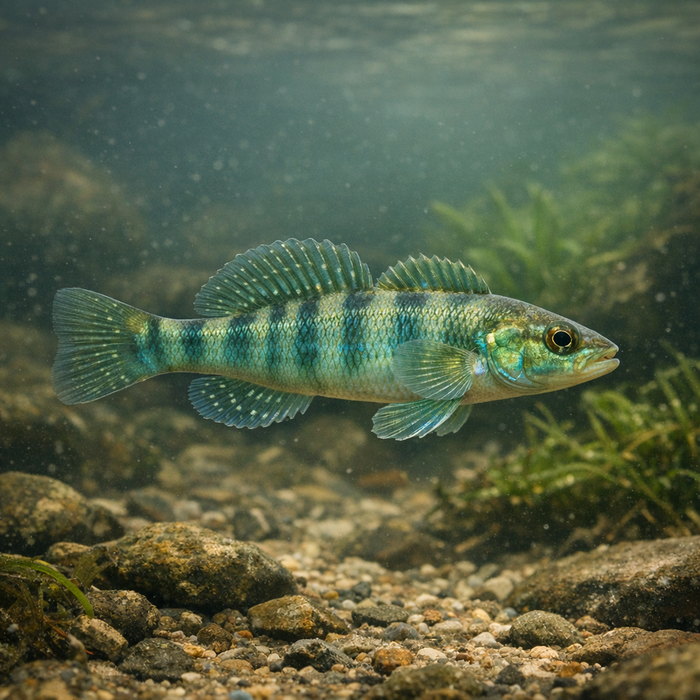
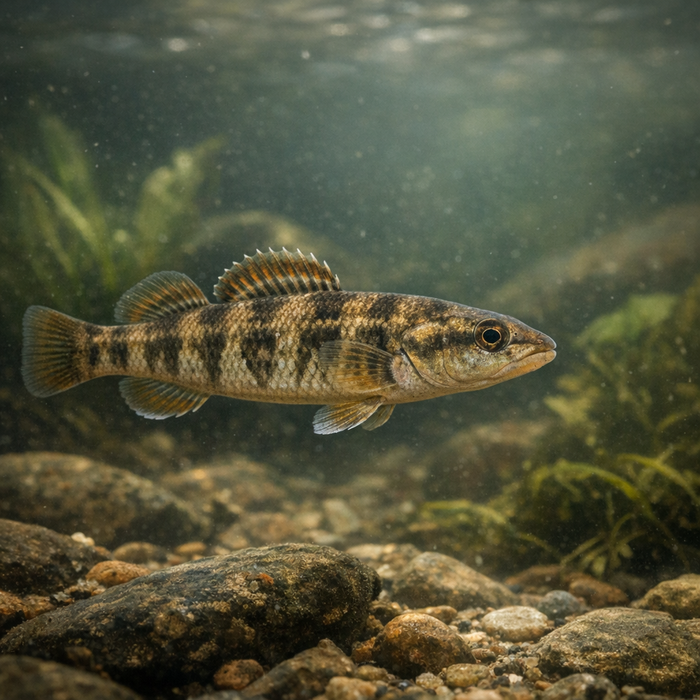
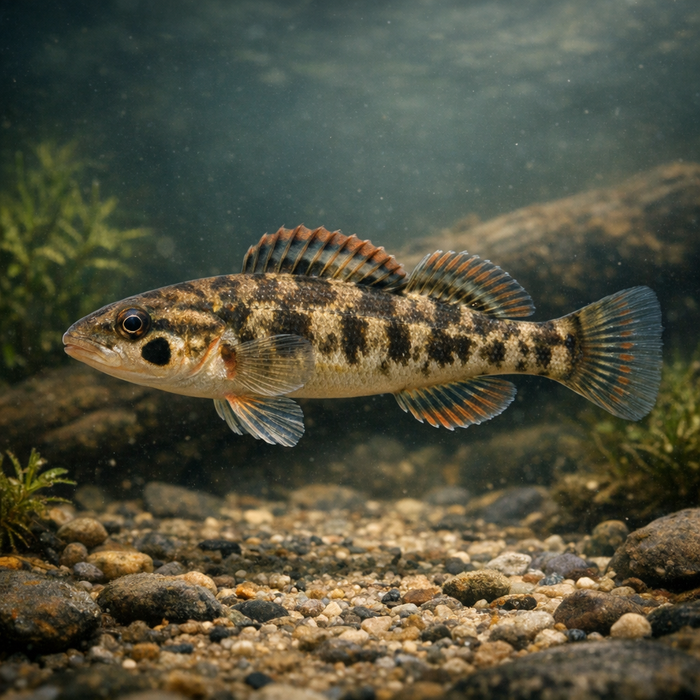
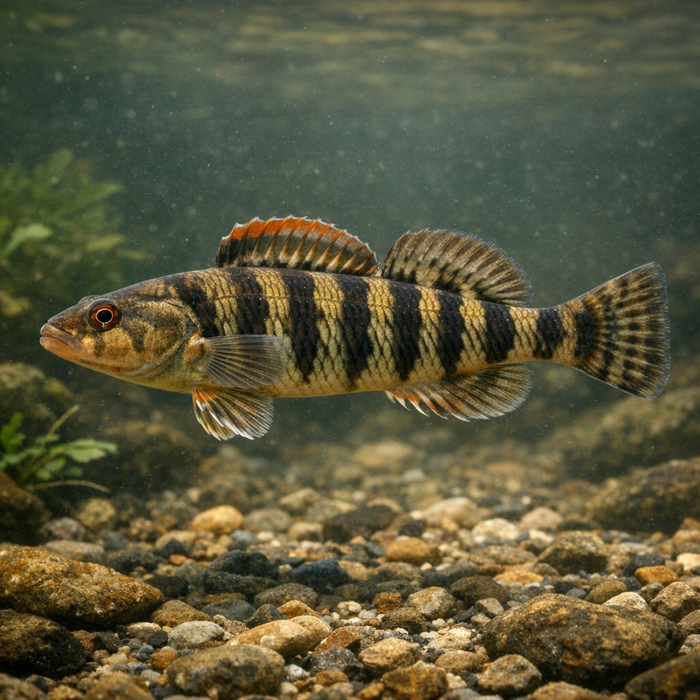
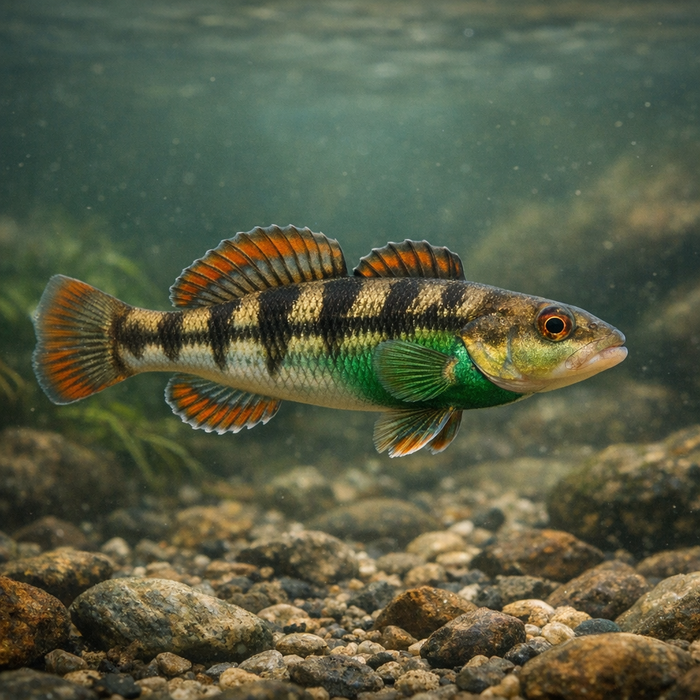
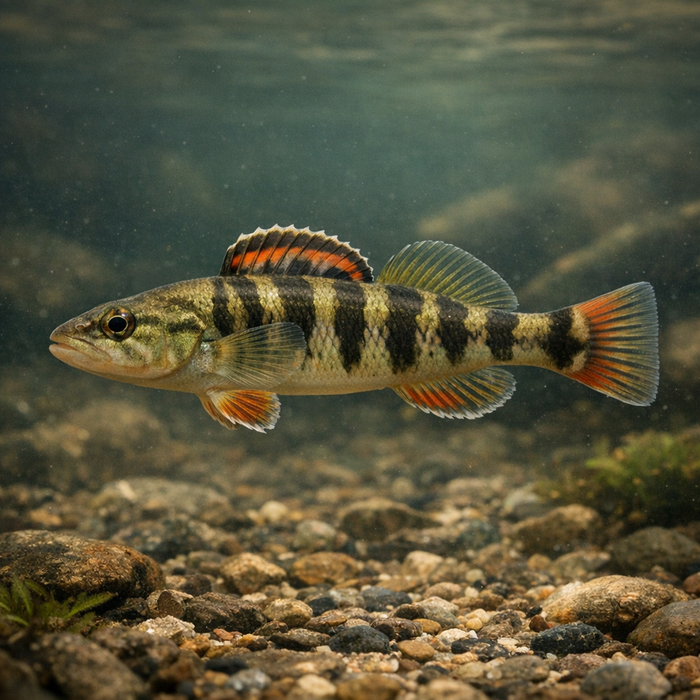
Brook Darter (Etheostoma burri): A riffle rocket with neon breeding colors and zero patience for sloppy driftsIntroductionThe Brook Darter is the fish you don't notice until you learn how to look. Then it's everywhere the water chatters over clean gravel. Small, stubborn, and absurdly stylish in spring, Etheostoma burri is a microfishing darling and a field-naturalist favorite. Blink and it's gone. Get your drift right, though, and this little predator proves that precision beats horsepower. If you're hunting Brook Darter facts or curious about true Brook Darter habitat, buckle up and lace your wading boots.What Makes the Brook Darter Unique?First, the look. Breeding males crank the saturation slider to 11, flashing electric blue bars and orange-edged fins that glow against pale stones. Second, the lifestyle. A reduced swim bladder means it lives like a tiny bottom-gripping torpedo, blasting short distances and snapping up prey before settling back down. Third, the attitude. For something that tops out at a few inches, the Brook Darter stakes turf in riffles with surprising swagger, sparring, shivering, and posturing for the best gravel patch.Habitat & Global RangeCall it a riffle specialist. The Brook Darter prefers shallow, swift runs with clean, pea-to-cobble gravel and steady, oxygen-rich flow. It thrives where silt is low, current is honest, and insects are plentiful. Regionally, it's a Southeastern and lower-Midwest story, with strongholds in clear tributaries that stitch through rolling farm country and forest edges. Think knee-deep, sunlit lanes with trailing weeds, scattered slabs, and seams that look tailor-made for a precise micro drift. These fish don't roam far; their entire world can be a short reach of water with the right texture.Behavior & TemperamentBrook Darters are ambush sprinters. They hold to the bottom, watch upstream, and strike in bursts when a larva or tiny crustacean gets swept within reach. During spring, males color up and defend tiny core areas, fanning and shivering to court females over favored stones. You can often spot them by crouching low and watching the gravel for movement rather than scanning the surface. They're not shy in the bass sense, but they punish clumsy presentations and excessive shadow-casting. Hooking is delicate; mouths are small and hits can feel like the current hiccupped.Ecological ImportanceDon't let the size fool you. The Brook Darter stitches the riffle food web together, converting drifting invertebrates into energy for larger predators and flagging habitat quality with its presence. When darters flourish, the streambed is usually clean, the flow resilient, and the insect engine humming. They're a quiet vote for intact watersheds: stable banks, filtered runoff, and more gravel than gunk. Lose the riffles and you lose the tiny sparks that keep stream life crackling.Conservation & Environmental PressuresThe big enemies are small but relentless: siltation, nutrient runoff, and altered flow. Smother the gravel and the Brook Darter's nesting and feeding lanes vanish. Straighten channels, over-withdraw water, or erase riparian shade and the whole micro-world tilts against them. Some states treat darters as nongame with protective rules for collection; others rely on general harvest regulations. Either way, responsible anglers should minimize handling, use barbless micro hooks, and keep the show quick-photo, admire, release.The FishyAF TakeThe Brook Darter is proof that finesse isn't a style, it's a mindset. Want a fight? Look elsewhere. Want a challenge that sharpens your water-reading and drift control to scalpel levels? This fish is your coach. Step softly, aim for seams barely wider than your thumb, and think in inches, not yards. Nail that, and the riffle comes alive with turbocharged color, tiny charges, and the curated chaos of current. The Brook Darter isn't a trophy on the wall. It's a trophy between the ears-earned one perfect micro drift at a time.