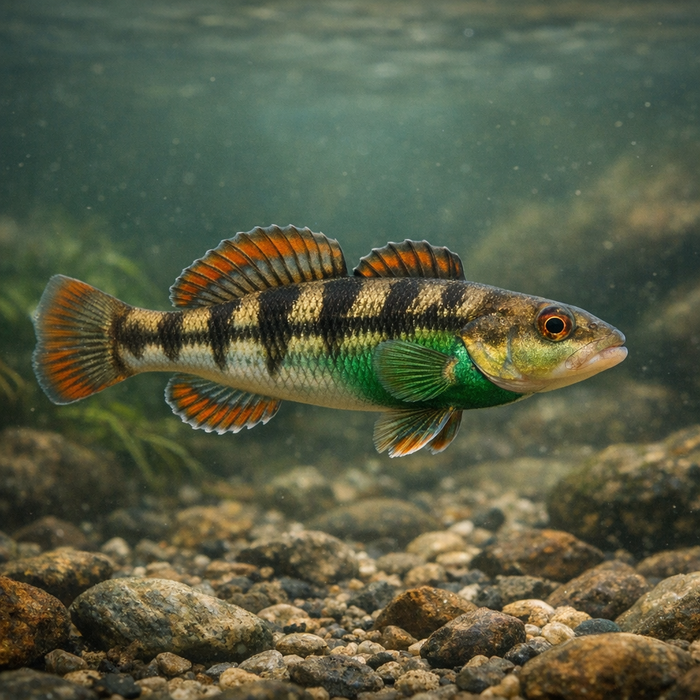
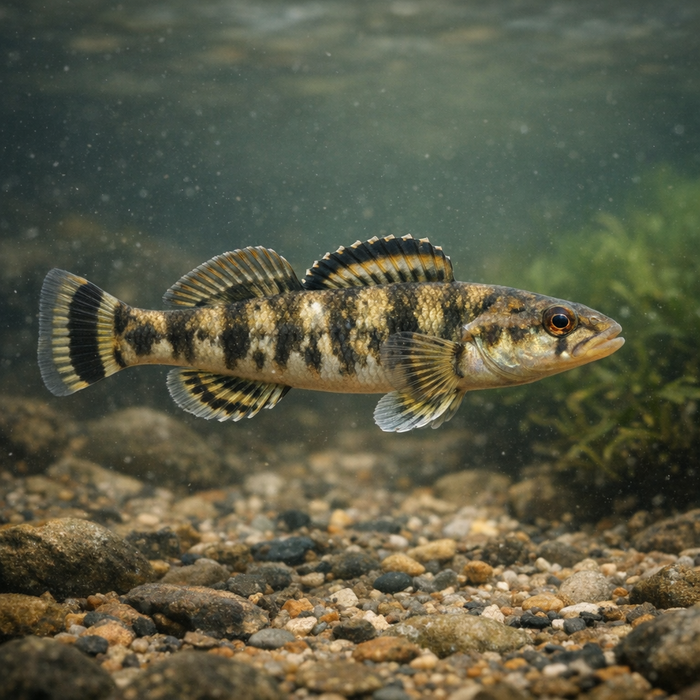
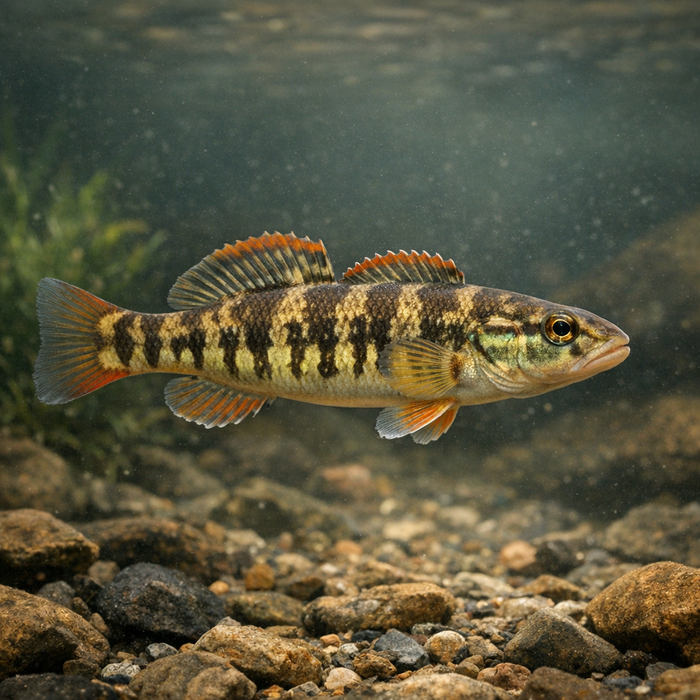
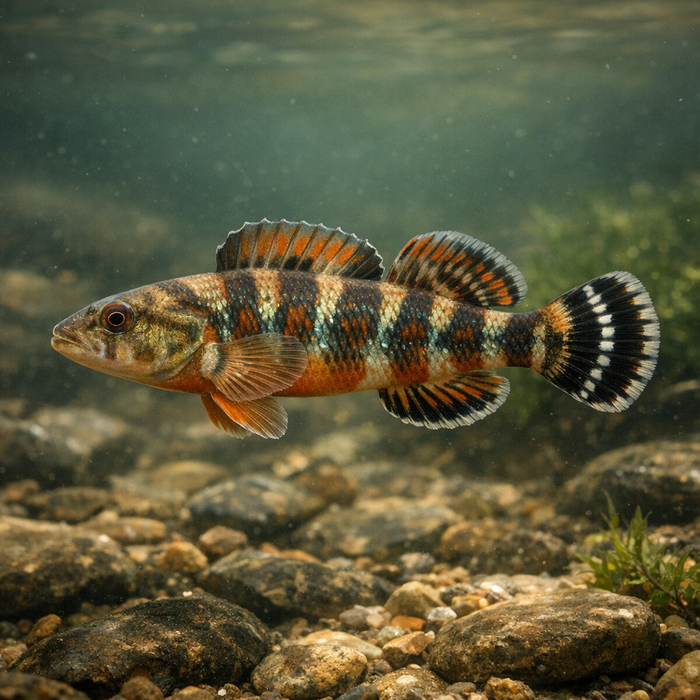
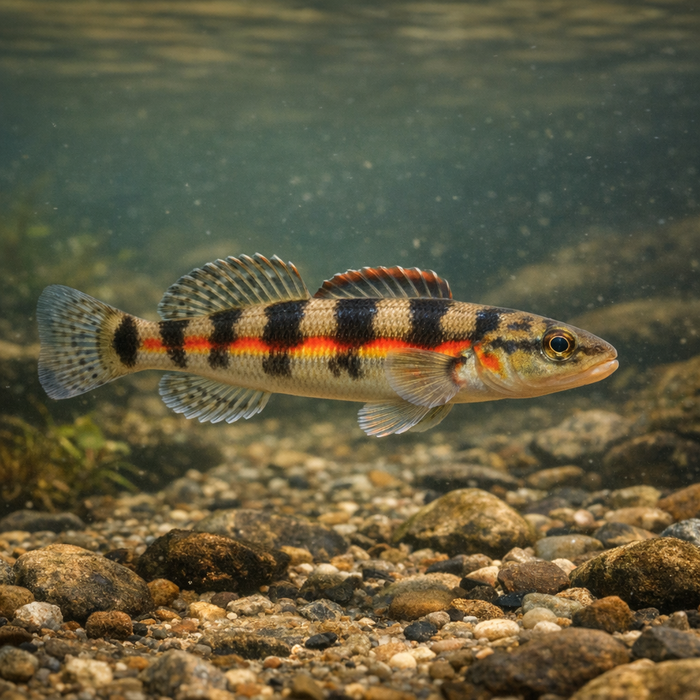
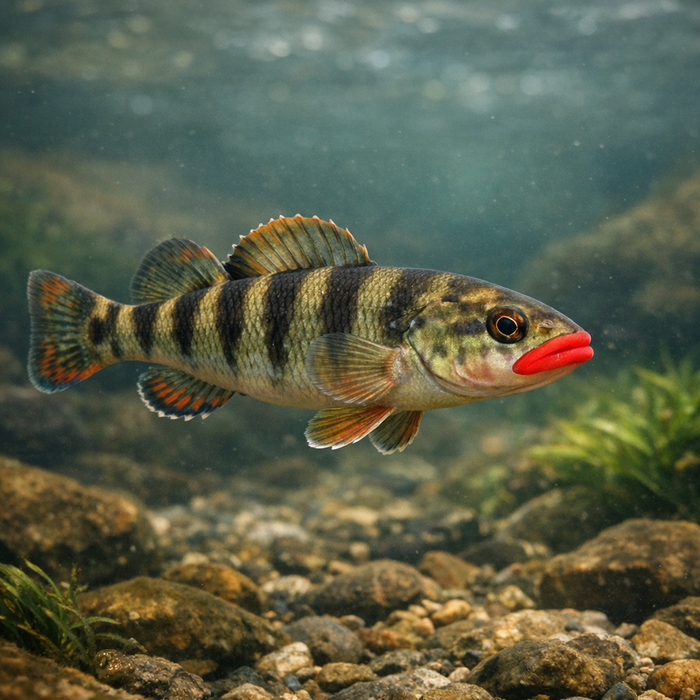
Corrugated darter (Etheostoma basilare): A pint-sized riffle ninja with serious attitude and zero interest in the spotlight.IntroductionThe corrugated darter is the fish you only notice once you start looking down. Tucked tight to cobble in quick water, this micro predator snaps at drifting bugs like a tiny river velociraptor, then vanishes in a heartbeat. Anglers don't chase it for drag-scorching runs. They chase it for the challenge of seeing, presenting, and sticking something this small in moving water. If you're into obscure wins, read on for Corrugated darter facts that actually help.What Makes the Corrugated darter Unique?First, the cheek texture. Males develop distinctly ridged scales on the head during breeding, the "corrugated" detail that gave this fish its name. Second, it's built like a current-surfing machine. Big pectorals, low profile, and a reduced swim bladder keep it locked to the bottom while heavier water tumbles overhead. Third, for a fish under three inches, it's unapologetically territorial. The corrugated darter will square up over a saucer of clean gravel like it owns the county.Habitat & Global RangeWhen we talk Corrugated darter habitat, think clear, cool streams with lively riffles, knee-deep or shallower. It's a specialist: clean gravel and cobble, interspersed with flat rocks, light to moderate aquatic vegetation, and consistent flow. These fish use micro-structure the way bass use docks-edges of rocks, tiny depressions, and low pockets behind stones. Their distribution is regional and tied to upland tributaries, so don't expect them in muddy lowland sloughs. If your stream looks like a freshwater treadmill with polished rock, you're in the neighborhood.Behavior & TemperamentThe corrugated darter is a bottom-hovering ambush artist with short, explosive bursts. It slides forward in inches, not feet, then detonates on a drifting midge or caddis larva, and slams back down. Spawning season cranks up the attitude: males darken, display, and guard nests under the underside of flat stones, fanning eggs to keep silt off. They spook fast in clear water but settle quickly if you freeze. Most movement is lateral within a riffle, not long-distance cruising. In low water, they push into the thinnest, oxygen-rich seams. In cold snaps, they slide into gentler runs and pockets where energy budgets make sense.Ecological ImportanceThe corrugated darter is a top-tier invertebrate wrangler. It trims midge clouds, crunches small crustaceans, and turns that protein into fast food for larger predators. Because it demands clean, well-oxygenated riffles, its presence is a living water-quality meter. Knock out gravel cleanliness with silt or wreck the hydrograph with stormwater surges and the corrugated darter is one of the first to blink. Healthy darter populations usually mean you're looking at a cold, clear, stable stream system stacked with aquatic insects and other riffle specialists.Conservation & Environmental PressuresThis fish is allergic to dirty water and sloppy land use. Sedimentation packs the spaces between gravel, smothering eggs and evicting invertebrates. Channelization erases the very riffles it needs. Even subtle flow alterations from withdrawals or flashy stormwater can flatten its micro-habitat. The corrugated darter also faces the quiet threat of small-scale fragmentation: a culvert here, a low-head dam there, and suddenly genetics and recolonization take a hit. Some waters protect nongame species by limiting collection, and specific drainages may list sensitive darters. Translation: treat them like the canary they are.The FishyAF TakeFishing for corrugated darter means sharpening your eyes and shrinking your ego. A 6-foot ultralight rod, a sliver of worm on a sub-#18 hook, and a perfect drift through a six-inch-deep lane can be more satisfying than sticking a dozen stocker trout. It's sight work, stealth, and patience. You don't measure success in pounds but in confirmation: a clean ID, a quick photo, and a gentle release. Call it microfishing or just next-level observation, but once you tune into these riffle ninjas, the whole stream lights up. That's the real win of learning the corrugated darter.