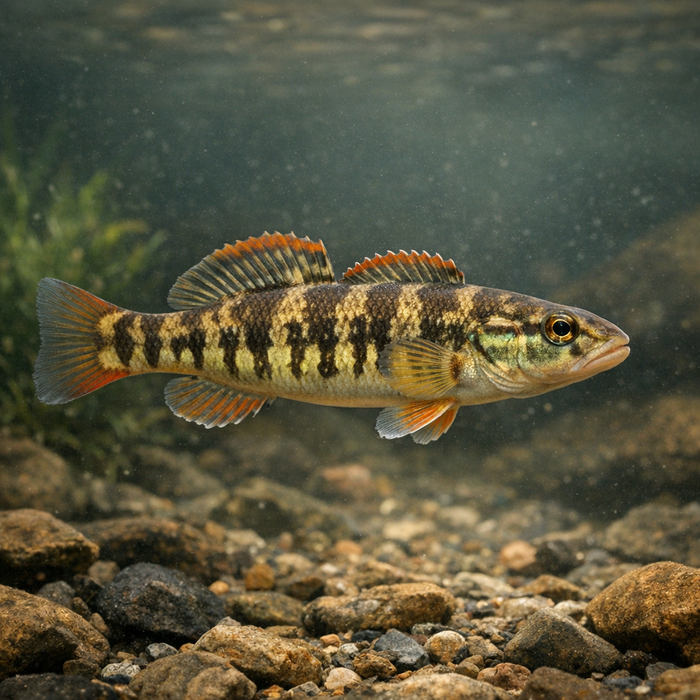
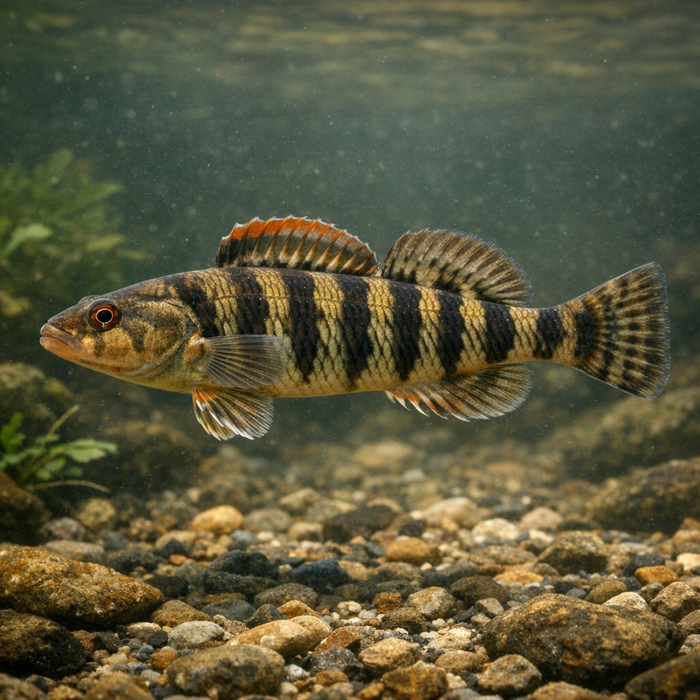
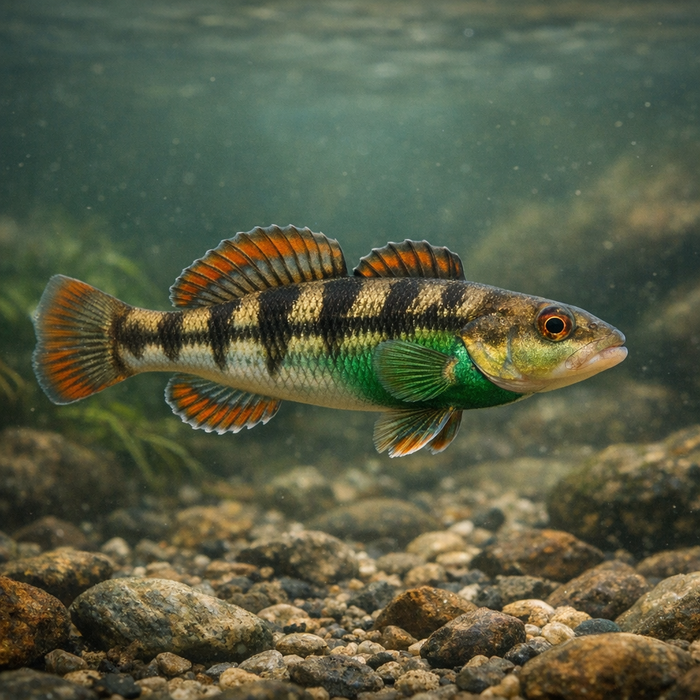
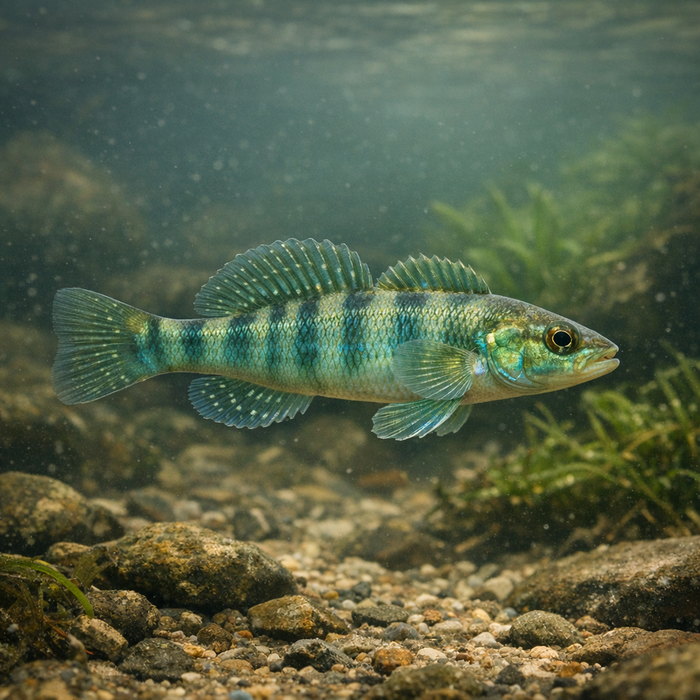
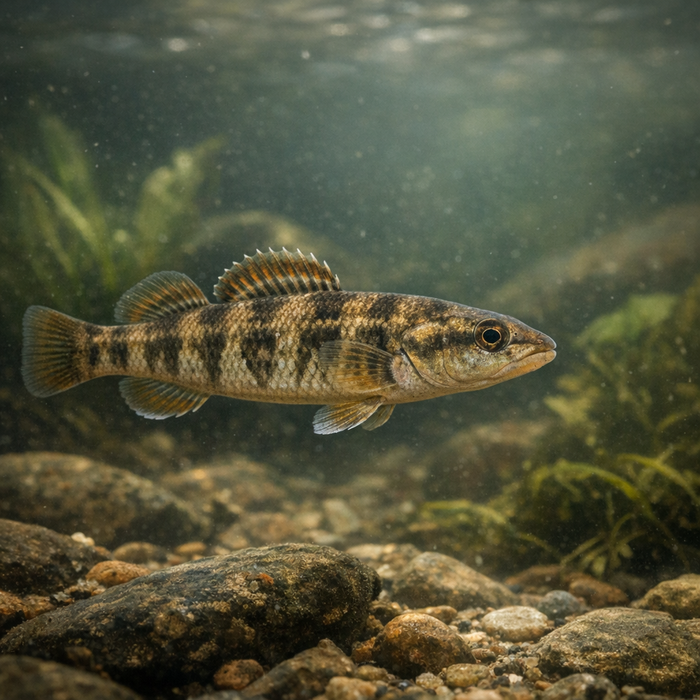
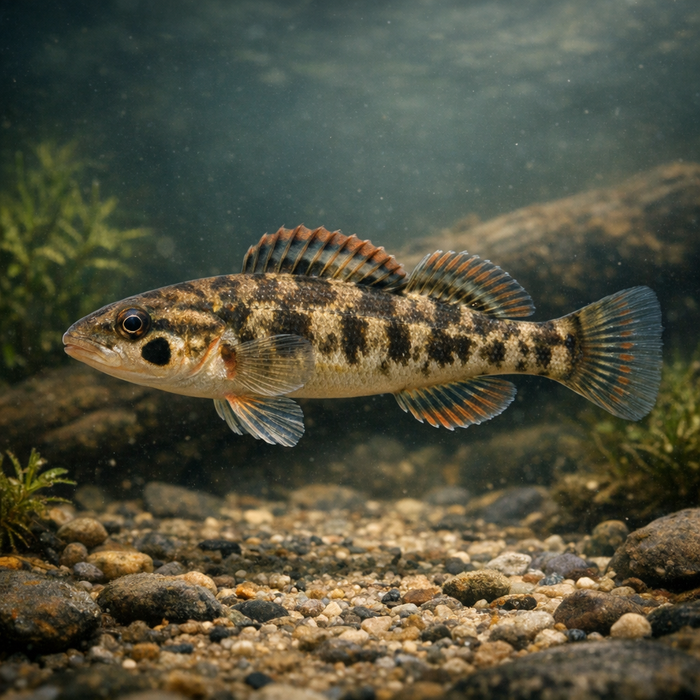
Meramec Saddled Darter (Etheostoma erythrozonum): A Bold, Memorable Hook LineIntroductionSmall fish, big personality. The Meramec Saddled Darter is a pocket-sized bruiser built for Ozark current. It perches like a tiny hawk on cobble, then rockets a few inches to smash drifting invertebrates. Anglers who chase it are part biologist, part watchmaker. Everything is small here: hooks, baits, drifts, windows. But the payoff is sharp-few freshwater fish wear spring colors like this one. If you're hunting Meramec Saddled Darter facts or curious about Meramec Saddled Darter habitat, you're in the right riffle.What Makes the Meramec Saddled Darter Unique?First, the body plan is custom-built for current. With a reduced swim bladder, it doesn't float up when it stops, so it can sit dead-still in fast water. Second, the pattern. Those dark "saddles" across the back act like cobble camouflage, and breeding males rim fins in electric blues and fire off brick-red bars along the side. Third, it is a true local-this fish is a Meramec River original, the kind of regional specialty that makes microfishing feel like treasure hunting.Habitat & Global RangeYou won't chase this fish across continents. The Meramec Saddled Darter is a Missouri local, tied to the Meramec River system on the Ozark Plateau. Think clear, cool to moderate streams with firm gravel, chunk rock, and riffle-run sequences. It favors knee-deep current with patches of slack just big enough to perch in. In winter or during high cold flows, it may shift to slightly gentler runs and pool edges, but the heart of the game is fast, clean water. Habitat quality matters. Silted riffles and algae-choked runs don't cut it.Behavior & TemperamentThis darter hunts like a sniper. It hunkers down, tracks the drift, then darts a few inches to inhale a midge, mayfly nymph, or small crustacean. Aggression is measured but purposeful; misses are rare when your presentation is right. It's not a roamer. Individuals stake out micro-territories around cobble shelves and tucked seams. You won't see it sipping at the top. Surface feeding is basically a no. Sight-fishing rules here, because you're working with tiny windows and precision drifts.Ecological ImportanceThe Meramec Saddled Darter is a current-loving indicator species. When riffles stay clean, oxygen-rich, and structurally diverse, this fish thrives. It helps keep benthic insect populations in check and then feeds bigger fish, birds, and herps. In other words, it's a crucial mid-link in the food web. Its presence often tracks with high water quality and intact gravel beds, so seeing them light up in spring is a quiet vote of confidence for an Ozark stream.Conservation & Environmental PressuresWhile not globally famous, the Meramec Saddled Darter depends on a tight set of conditions: clear water, stable flows, and clean gravel. Siltation from poorly managed construction or roads smothers egg sites and buries insect prey. Excess nutrients can fuel algae that glaze rock surfaces, making perching and foraging harder. Localized contaminants-from legacy mining in some tributaries to stormwater pulses-can also stack stress. Protect the riffles, and you protect the fish. Monitoring and smart watershed management keep this hometown specialist humming.The FishyAF TakeMost anglers never notice the best part of a riffle because they're busy bombing casts downstream. The Meramec Saddled Darter is the antidote to that. It's a master class in reading microcurrent, sneaking close, and delivering something tiny with ridiculous accuracy. If you want brute force, look elsewhere. If you want a challenge that sharpens every bit of your river sense, this little Ozark original delivers. Learn the seams, kneel in the shallows, and let the red bars do the flexing. This is small-scale fishing with big satisfaction, and once you dial it in, you'll never look at a riffle the same way again.