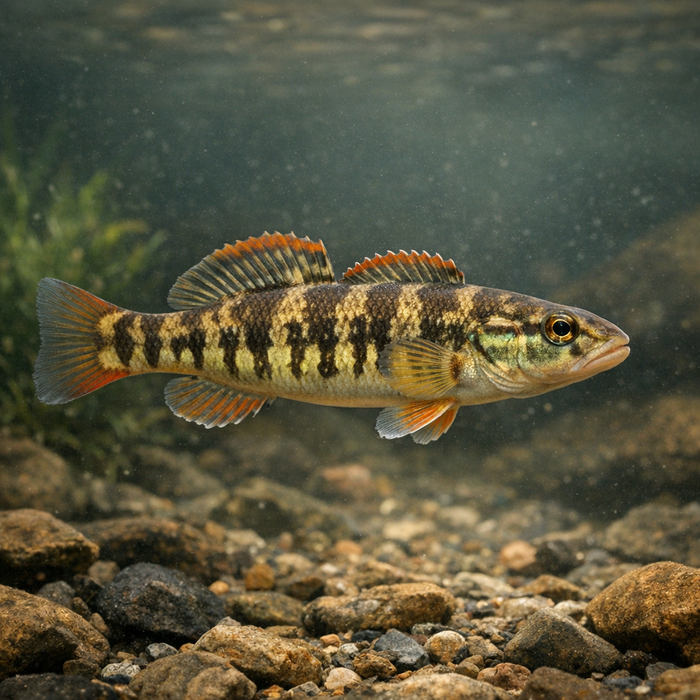
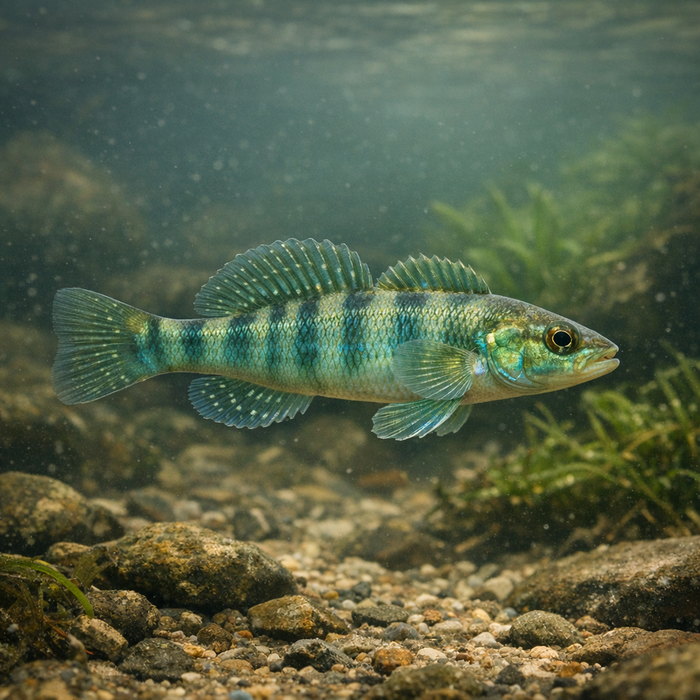
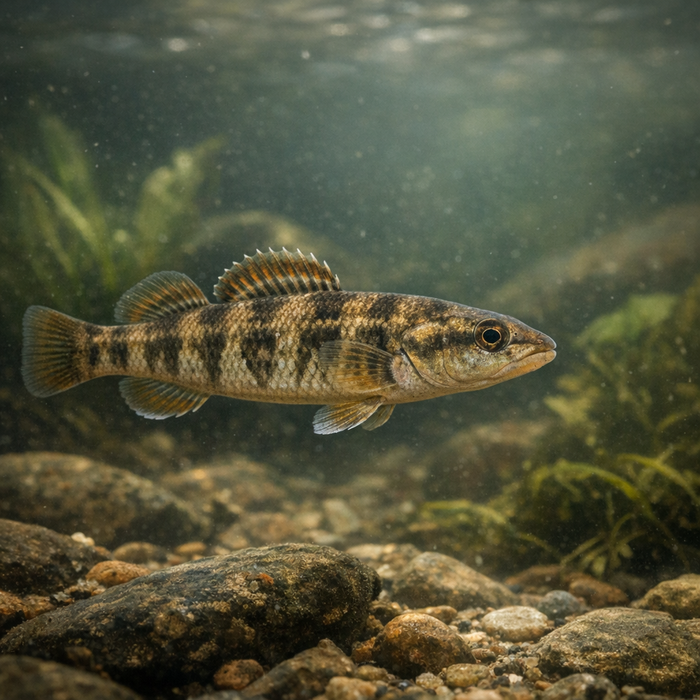
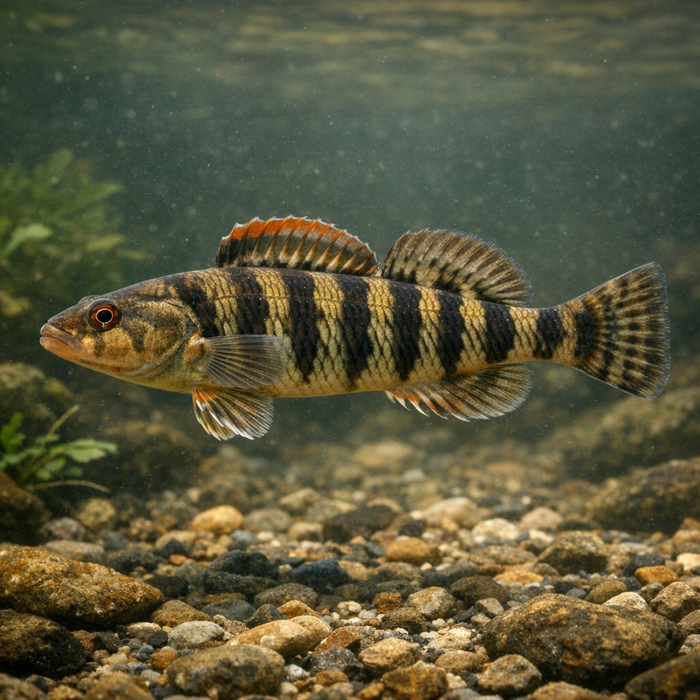
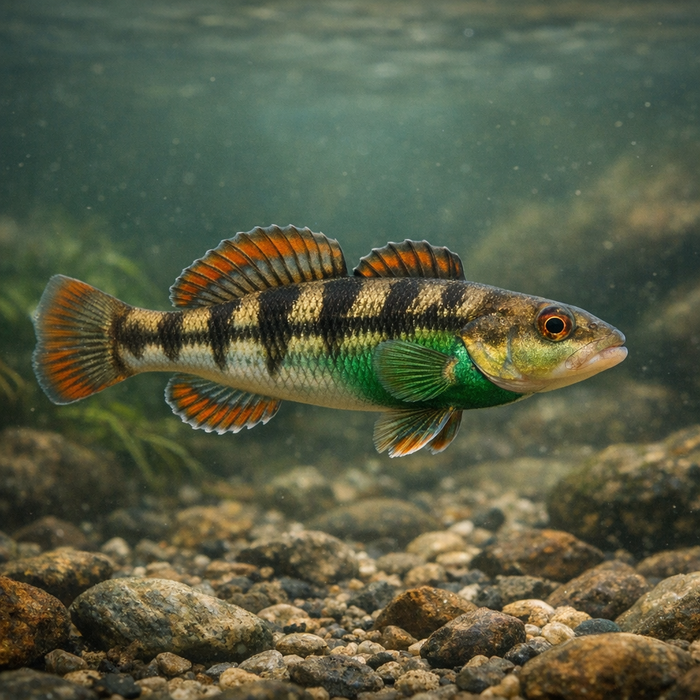
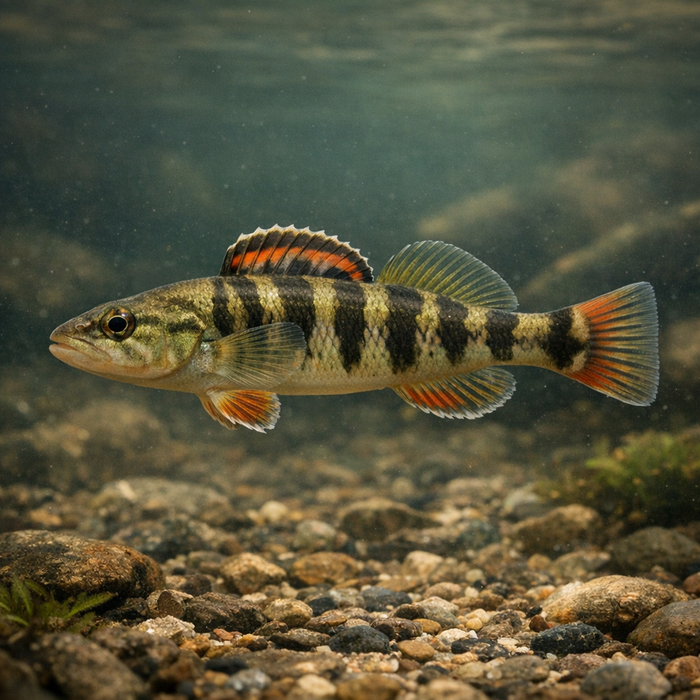
Teardrop darter (Etheostoma barbouri): A Bold, Memorable Hook LineIntroductionThe teardrop darter is the stream riffle's tiny tough guy, built like a pocket rocket and painted to match broken cobble. If you think small means simple, this fish will humble you fast. Everything about it is specialized for current: low profile, wide fins, and a stealthy vibe that has micro anglers crouching like herons. Looking for real Teardrop darter facts? You've come to the right seam.What Makes the Teardrop darter Unique?First, the face paint. That sharp black mark below the eye is the namesake "teardrop," and it darkens when males posture or court. Second, breeding colors pop. Males throw an orange band in the first dorsal fin and show greenish bars that light up in clean water. Third, it's a bottom-hugger by design. With a reduced swim bladder and splayed pelvic fins, the teardrop darter pins to gravel like Velcro instead of bobbing around in the flow.Habitat & Global RangeTeardrop darter habitat is all about clarity and current. Think shallow, fast riffles and runs with pea gravel, cobble, or bedrock in cool to moderate temperatures. You'll meet this species in the Ohio River system's Kentucky River drainage, especially in Bluegrass-country creeks with limestone influence and steady spring flows. It prefers water you can wade, often less than a foot deep, where seams and little cushion zones behind stones let it rest between short, precise dashes.Behavior & TemperamentSubtle and deliberate, the teardrop darter doesn't cruise far. It holds position tight to the substrate and feeds in micro-bursts, ambushing drifting invertebrates that tumble off rocks. It's wary, too; heavy footfalls or sloppy shadows send it sliding under a stone like a magician's trick. During spring, males stake out undersides of flat rocks, attract females with quivers, then guard the eggs, fanning them for oxygen and swatting silt away. Fights, if you can call them that, are quick flicks on ultra-micro tackle, but the stalk and sight game is addictive.Ecological ImportanceThis little predator is a riffle quality-control inspector. Teardrop darters hoover up insect larvae, transferring energy from streambed to fish community, and in turn feed bigger predators. Because they demand clean, well-oxygenated water, consistent populations act like a living scorecard for watershed health. Lose the gravel, choke the water with silt, or drop dissolved oxygen, and these fish disappear before the bigger, more tolerant species even notice.Conservation & Environmental PressuresDespite being listed as Least Concern, the teardrop darter isn't bulletproof. Siltation from poor land practices, channelization, low-head dams, and nutrient pulses can flatten its best riffles. Groundwater withdrawals and reduced spring flows shrink the prime lanes where it spawns and feeds. The species recovers fast when habitat rebounds, thanks to short lifespans and multiple spawning bouts, but that resilience has limits. Protect the substrate and the flow, and the fish protects itself.The FishyAF TakeThe teardrop darter is microfishing distilled: exact presentations, knee-down stealth, and a payoff measured in inches, not pounds. It's a perfect teacher for reading current at fine scale. If you can spot and fool one, your big-fish game gets sharper. Want more Teardrop darter habitat mastery? Watch the bubbles, map the tiny eddies, and flip your bait so it ticks bottom naturally. It's simple, not easy, and that's exactly why this little stream ninja earns a spot in our hall of respect. Catch one, grin, and let it slip back under the rock like nothing happened.