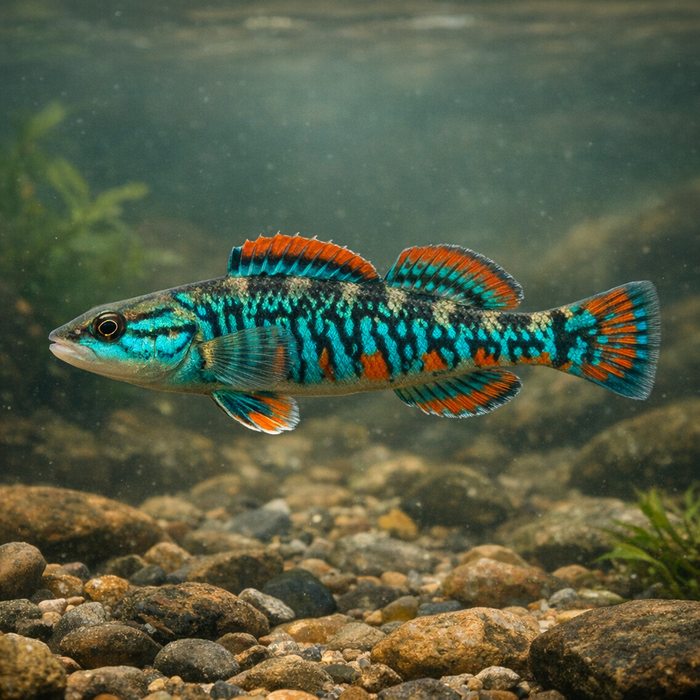
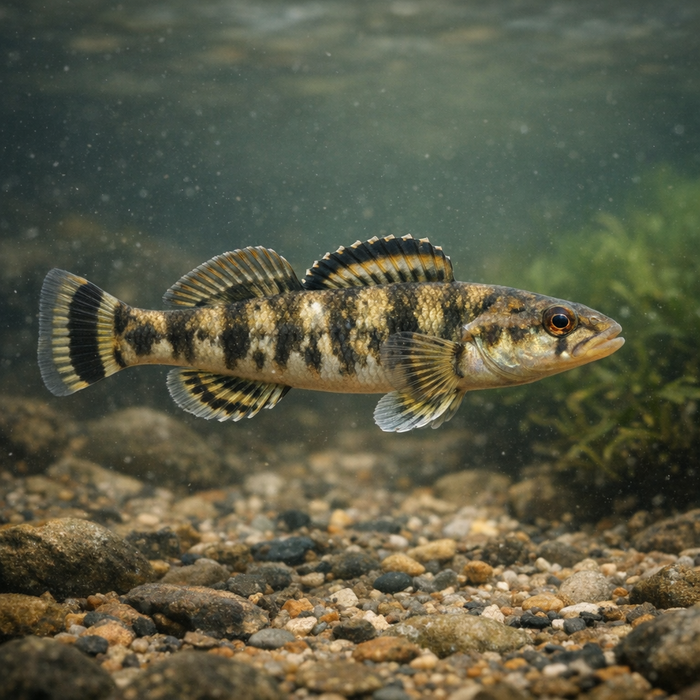
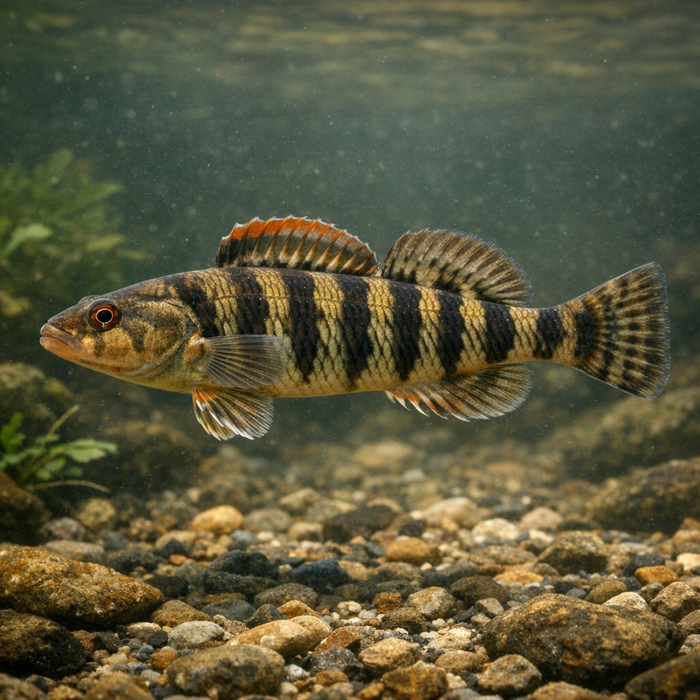
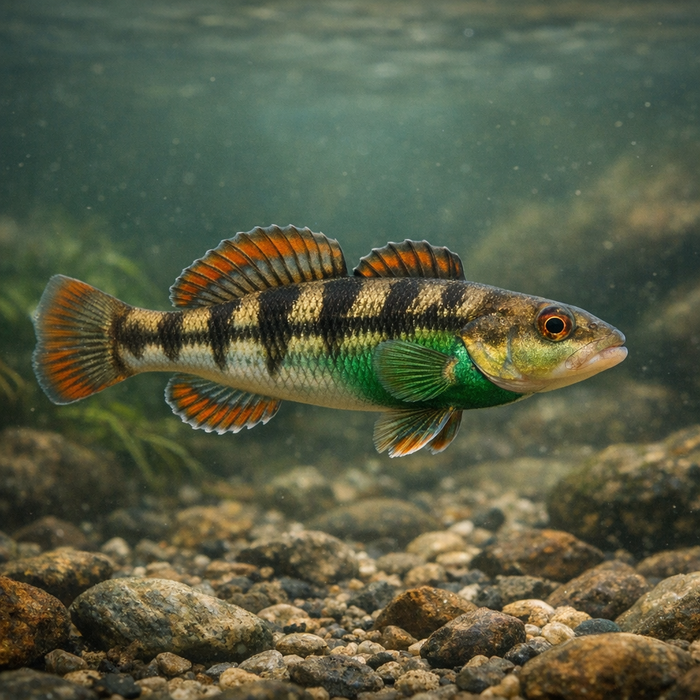
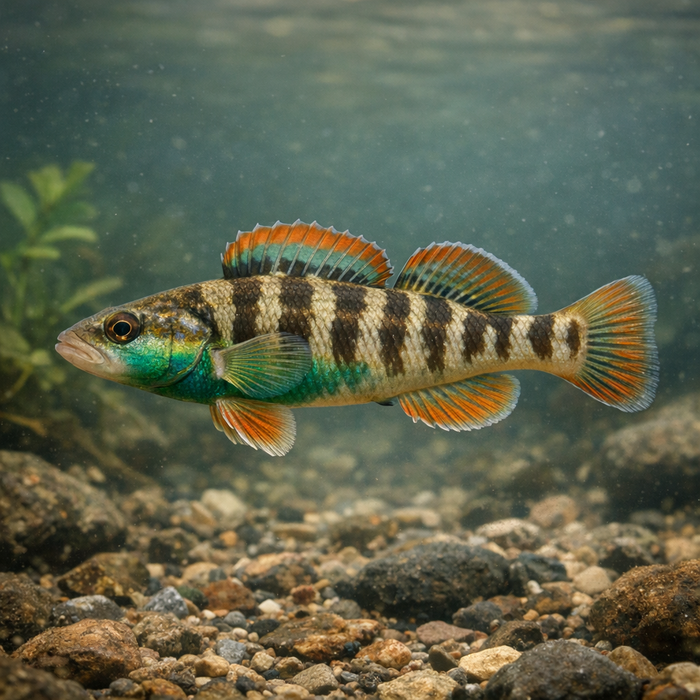
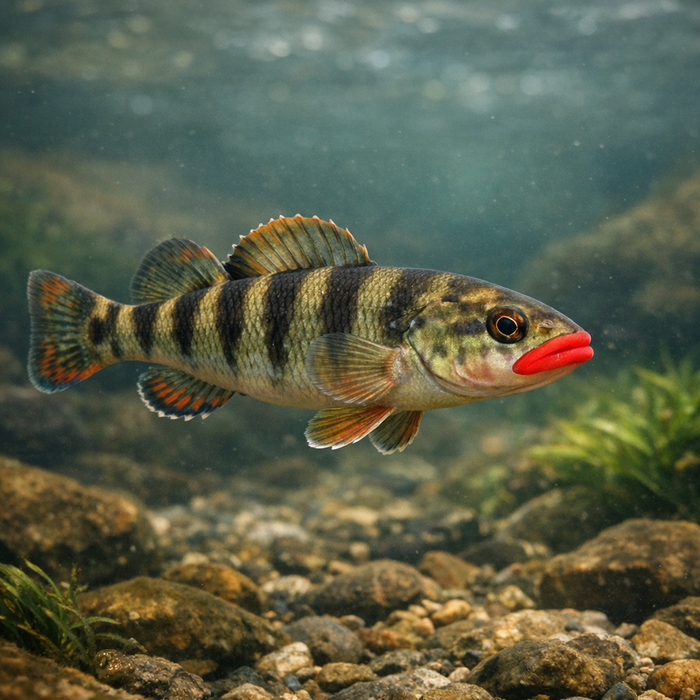
Carolina fantail darter (Etheostoma brevispinum): The riffle goblin with a fan-tail flair and a stubborn grip on the rocks.IntroductionThe Carolina fantail darter is the tiny river gremlin you don't notice until you slow down and stare into a riffle. Blink and it's gone, melted back into gravel bars and cobble like it has a cloaking device. For anglers who like micro missions and precise presentations, the Carolina fantail darter is a pint-sized challenge with a big personality. These fish won't spool you, but they will make you rethink what "reading water" really means. If you came here for Carolina fantail darter facts or a deep dive on Carolina fantail darter habitat, you're in the right current seam.What Makes the Carolina fantail darter Unique?First, that namesake fantail isn't just fashion. Males sport bold, checkered tail bands and darkened bodies during the spawn, turning into little river LEDs. Second, the species name brevispinum means short-spined, a nod to its stubby first-dorsal spines that help separate it from lookalikes. Third, this fish clings like a magnet. Broad pectoral fins splay wide, anchoring the darter to rock faces so it can hold right where the food conveyor belt runs fastest. Those details make the Carolina fantail darter a laser-focused riffle specialist.Habitat & Global RangeThe Carolina fantail darter is a Southeastern U.S. native tied to clear, cool-to-moderate Piedmont and foothill streams. Think shallow riffles, knee-busting cobble, and flat rocks with strong, steady current. It's a bottom hugger, happiest inches above gravel where oxygen and drifting invertebrates are constant. You'll see its best water where pools pinch into runs, and runs flare into riffles with clean rock and minimal silt. The phrase "Carolina" isn't PR fluff; this fish is most at home across North and South Carolina drainages, with strongholds in rocky tributaries that still breathe well all summer.Behavior & TemperamentDarters don't cruise much, and this one is no exception. The Carolina fantail darter sits tight, darts a body-length or two, then locks back down. During the spawn, males stage under flat rocks, tail-fanning to court females and defend eggs. They're visual, opportunistic pickers, tracking small invertebrates tossed along by the flow. Wariness is high in shallow water, but short, precise drifts can prompt quick snaps. They're not brawlers; the fight is a tap and a wiggle, which makes finesse rigs and light line the play.Ecological ImportanceIf trout are stream divas, the Carolina fantail darter is the stage crew keeping everything smooth. By pressuring aquatic insect populations and serving as forage for larger fish, darters anchor riffle food webs. Their obsession with clean gravel makes them living water-quality sensors. A reach that holds healthy Carolina fantail darter numbers usually boasts good oxygen, stable flows, and intact banks. Lose the gravel to silt or the current to withdrawals, and these little bottom rockets fade fast.Conservation & Environmental PressuresThe species is generally stable but vulnerable to classic stream abuse: sedimentation, nutrient loading, low flows, and ripped-out riparian buffers. Because the Carolina fantail darter depends on clean, interlocking rock with real current, it takes habitat damage personally. Channelization, road crossings that sheet silt, and unchecked development stack the deck against it. Keeping riparian trees, managing stormwater, and protecting base flows are the boring, essential moves that keep these fish on station. Anglers can help by treading lightly, avoiding nest disturbance during the spawn, and releasing fish immediately.The FishyAF TakeThe Carolina fantail darter proves you don't need a 40-inch fish to have a real challenge. You need patience, stealth, and a riffle that still breathes. This fish rewards anglers who watch before they cast and who nail a two-foot drift instead of a 70-foot bomb. If you're after a new species or just want to sharpen your presentation game, the Carolina fantail darter is a high-fidelity test piece. It's small, tough, honest, and downright stylish when the fantail lights up. Pick your rock, pick your seam, and bring your smallest hooks. The riffle goblin awaits.