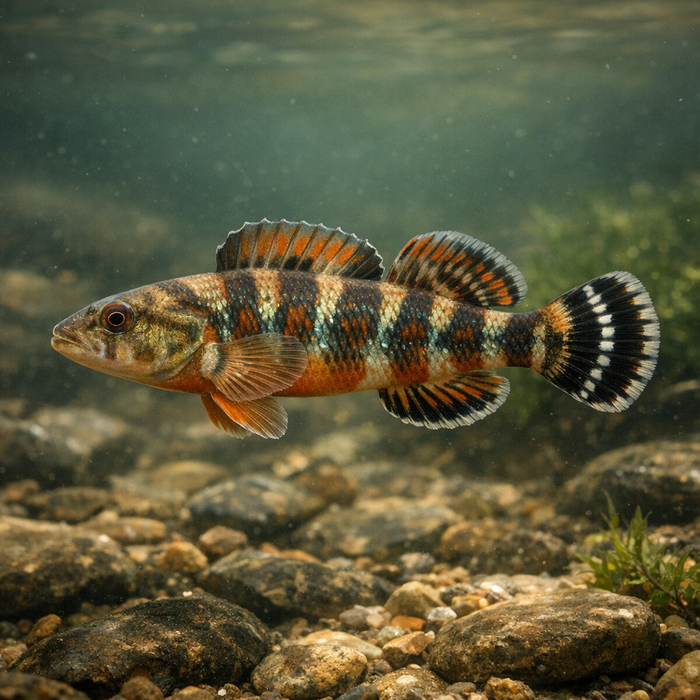
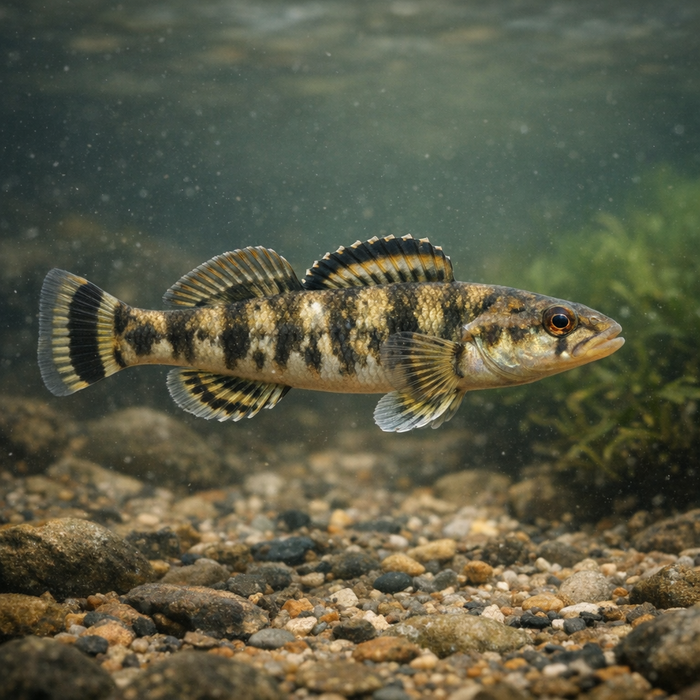
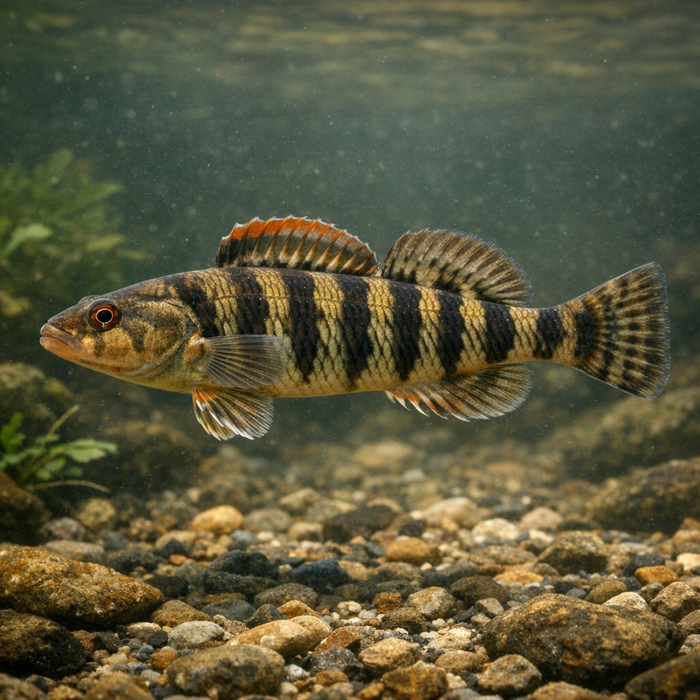
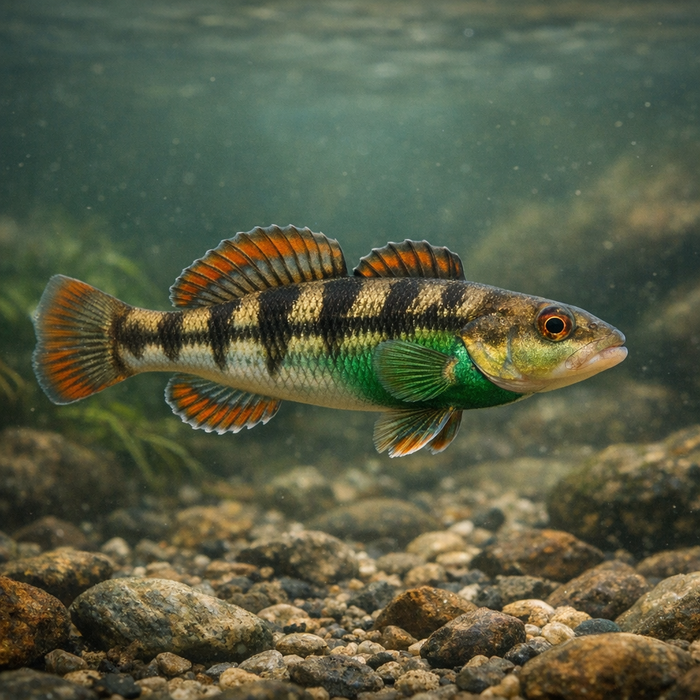
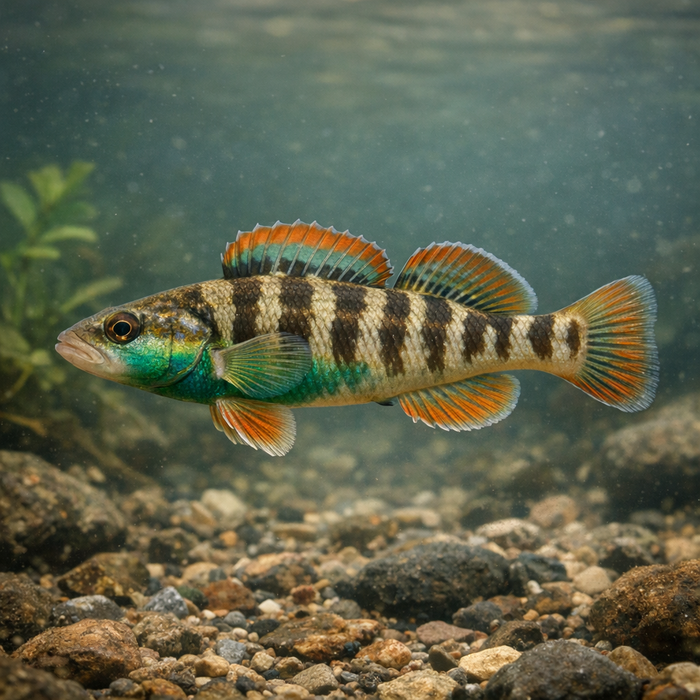
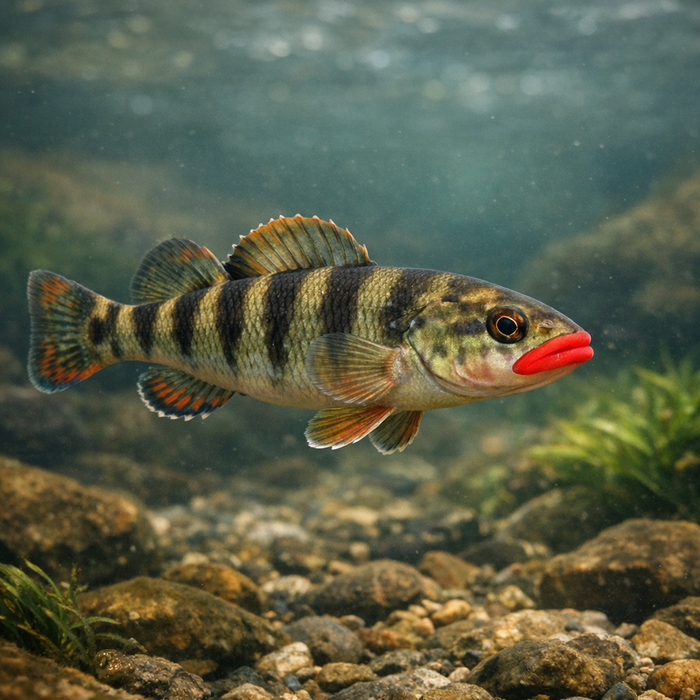
Turquoise darter (Etheostoma inscriptum): A riffle rocket with neon swaggerIntroductionTiny fish, big attitude. The turquoise darter is a pint-sized bottom sprinter built for fast, shallow water. It trades open-water cruising for darting bursts between cobbles, flashing electric blues when the season turns spicy. If you like microfishing or just geeking out over native stream jewels, this one's catnip. Keep reading for real-deal Turquoise darter facts an angler can use.What Makes the Turquoise darter Unique?Two things pop. First, breeding males glow with turquoise trim along fins and flanks, like someone wired them to a battery. Second, their body script-dark, handwritten-looking squiggles-is not just pretty; it's the inspiration behind inscriptum. Add a reduced swim bladder and oversized pectorals, and you've got a fish that grips current lanes instead of floating through them. The turquoise darter is purpose-built for life where the river shows its teeth.Habitat & Global RangeWhen people ask about Turquoise darter habitat, think southeastern piedmont creeks and rivers with clean, moving water. They stake out shallow riffles and runs over gravel, pebble, and cobble, often in knee-deep or shallower lanes where bubbles string across the surface. Shade from bankside trees, rock seams, and tiny ledges matters more than depth. While its distribution sits in the Southeast on Atlantic-slope drainages, its world is local: micro-eddies, ankle-to-shin depth, and the slick downstream lip of a boulder. Clean substrate is key; silted rock turns their racetrack into a slog.Behavior & TemperamentThe turquoise darter doesn't meander. It stages behind pebbles, blasts forward a foot or two to nail a drifting insect, then slams on the brakes. That stop-start style means ultra-precise positioning. In the breeding season, males square up on small territories, flexing turquoise like a warning flag to rivals and a beacon to females. They're wary in clear water but not spooky if you keep a low profile. Most feeding is glued to the bottom, never the surface. Their fights are comic relief: two seconds of wiggle, then calm resignation-these fish win with stealth, not horsepower.Ecological ImportanceFor a small fish, the turquoise darter pulls weight. It converts riffle invertebrates into calories for larger predators and flags water quality with its presence. Lose the riffles or clog them with sediment and you don't just lose a cool fish-you lose a canary that sang before the mine filled with dust. Healthy darter populations whisper good news about flow, cover, and chemistry.Conservation & Environmental PressuresMost populations sit at Least Concern, but that label depends on clean water and stable flow. Siltation from sloppy construction, nutrient surges, dammed flows, and dewatered riffles shove them out fast. Chronic low water amplifies summer heat, shrinking the oxygen-rich lanes they need. A few miles of poor land use can break connectivity between micro-habitats. The fix is boring but effective: intact riparian buffers, smart stormwater control, and enough instream structure left alone to keep riffles riffly.The FishyAF TakeThe turquoise darter is proof that sport isn't about size; it's about specificity. Nail the current seam, go microscopic with your presentation, and you're playing a different game than bass and bobbers. If you're curating native species on light tackle, this fish is a highlight reel waiting to happen. Respect the rocks, keep your boots off spawning stones in spring, and bring your smallest hooks. The payoff is a living gemstone glowing turquoise in your hand-then kicking right back into its runway. That's a win no tape measure can oversell.