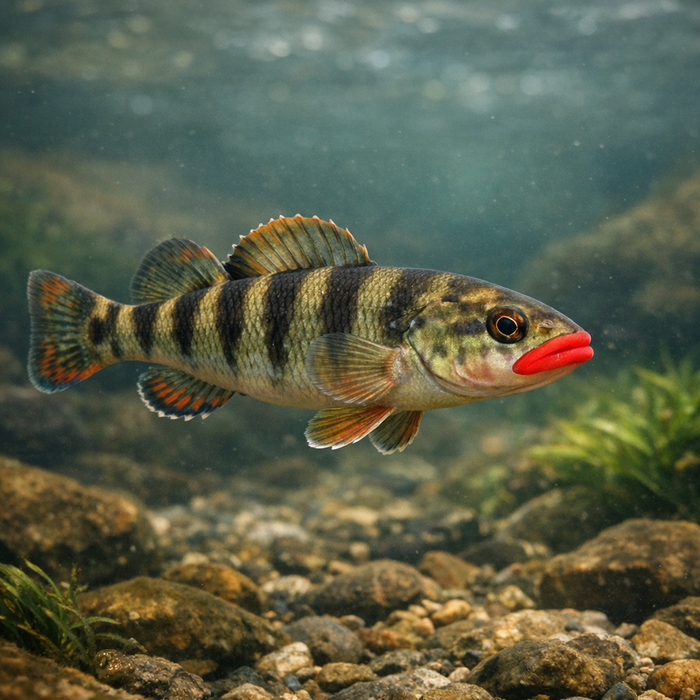
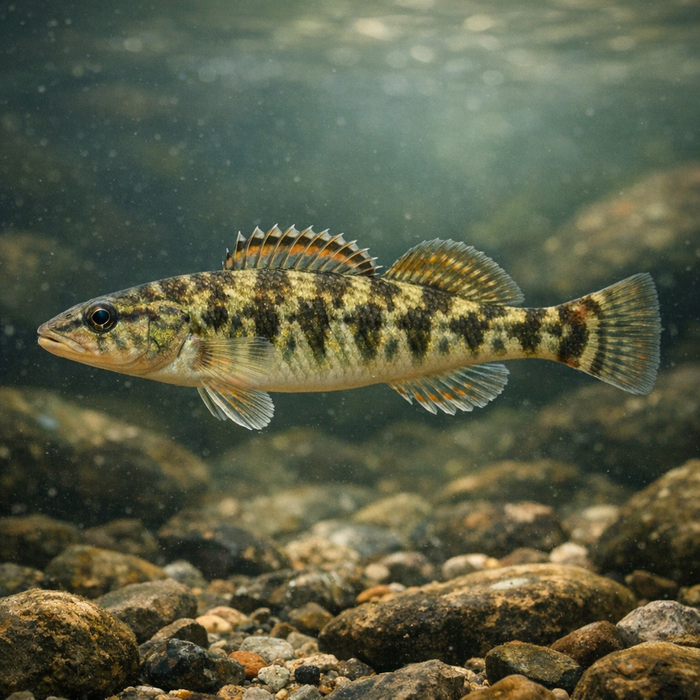
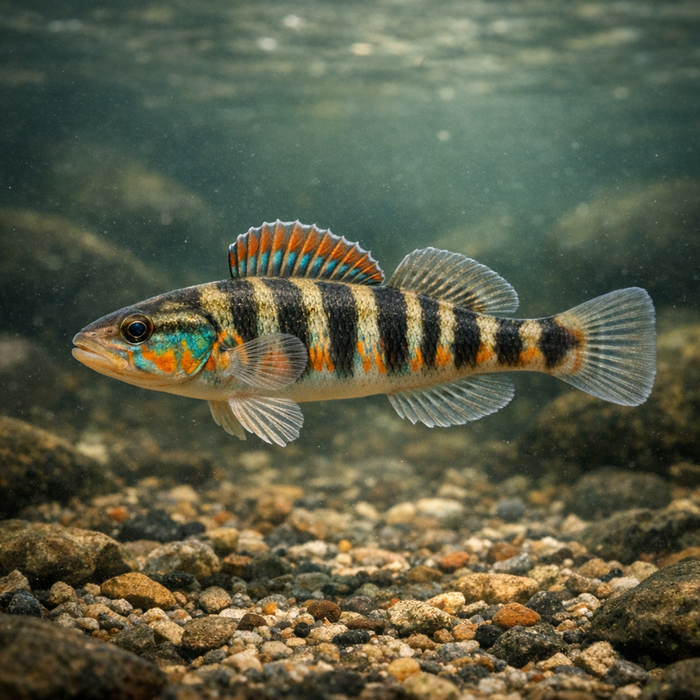
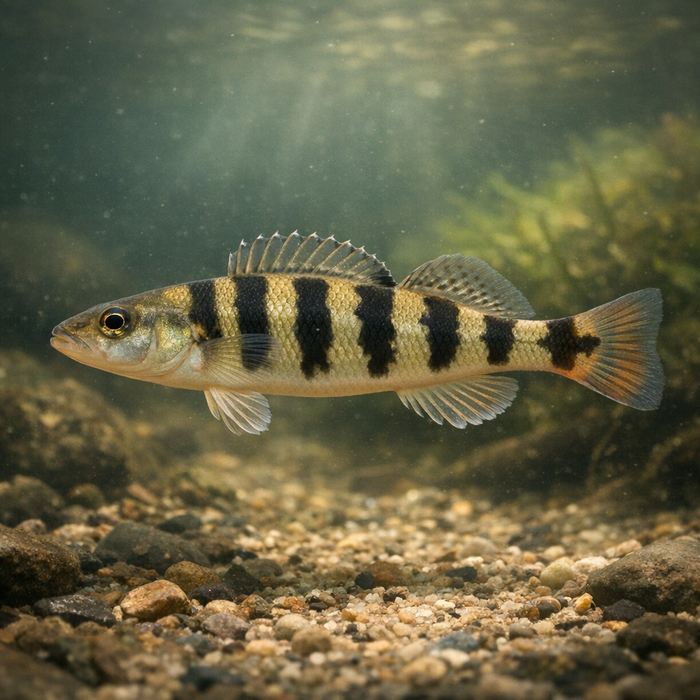
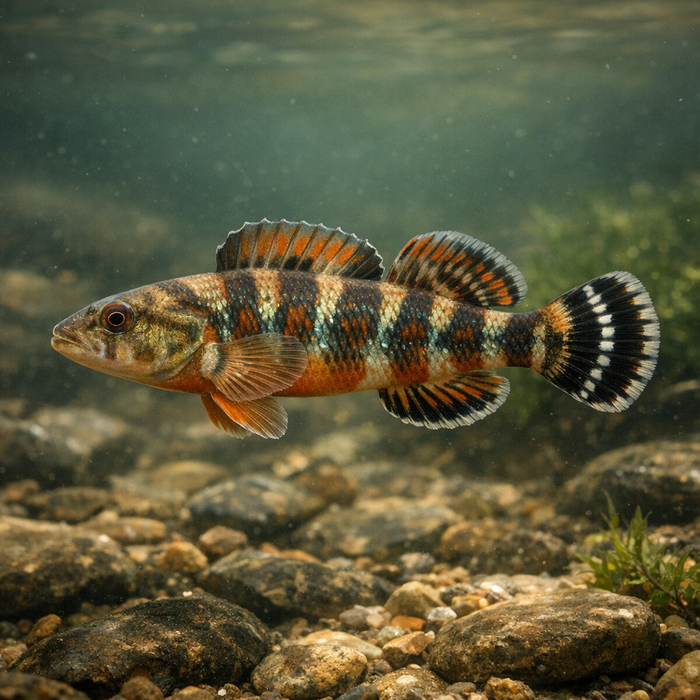
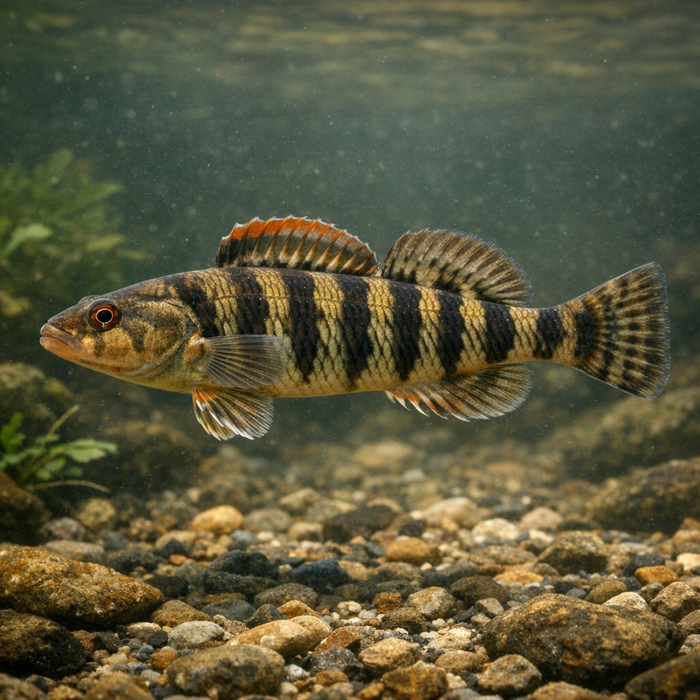
Bandfin darter (Etheostoma zonistium): The riffle-dwelling sprinter with fins that wear their own racing stripesIntroductionIf you want a masterclass in speed, subtlety, and stream craft wrapped into two inches of attitude, the bandfin darter delivers. This tiny bruiser of the riffles isnt a traditional gamefish, but anglers who chase micros know the thrill of sighting those bold fin bands and threading a speck of worm into fast water. Call it niche. Call it obsessive. Either way, the bandfin darter turns shallow current into a playground.What Makes the Bandfin darter Unique?Start with the name. The bandfin darter sports distinct dark bars on the first dorsal fin, a barcode-like banner males flash hardest during the spring show. That marking is the calling card separating it from a crowd of lookalike darters. Add the streamlined, bottom-hugging build: a reduced or absent swim bladder keeps it planted while water rips overhead. And then theres the attitude. A bandfin darter stakes out dinner-plate territories in cobble riffles and defends them like a heavyweight, even though the entire fish could hide under your thumbnail. For anglers compiling Bandfin darter facts, that visual ID and behavior duo makes this species especially memorable.Habitat & Global RangeThink oxygen-rich water sliding over clean gravel and small cobble. The bandfin darter lives where current matters, posting up in riffles and fast runs of small to medium streams. Youll spot them in the southeastern United States within the Tennessee River system, where clarity and flow create the perfect conveyor belt of drifting nymphs. When people search for Bandfin darter habitat, theyre really looking for one thing: living, breathing current with rocky texture. Mud, heavy silt, or stagnant pools are the opposite of this fishs home base. Depths are shallow, often ankle to knee deep, with fish using micro-breaks behind stones and tiny seams like seasoned river guides.Behavior & TemperamentThis fish is named darter for a reason. The bandfin darter doesnt wander. It waits, twitches, then sprints. Feeding is visual and opportunistic, keyed to insect drift and micro-crustaceans. Males glow up in spring, flashing those dorsal bands in shove-and-shuffle faceoffs that settle who owns which riffle patch. They arent schooling fish, though you might find several using adjacent lanes, each patrolling its own bite-sized patch. Even in glass-clear water they can be maddeningly hard to spot until they move, then theyre gone in a single burst. For anglers, that means precise presentations and stealth, not horsepower.Ecological ImportanceThe bandfin darter is a clean-water litmus test packaged as a fish. It thrives in clear, well-oxygenated streams with stable gravel. Add sediment, nutrient gunk, or low dissolved oxygen, and the wheels come off fast. Because its tuned to the riffle machine, its presence often signals a healthy macroinvertebrate community and functional stream hydraulics. Lose the bandfin darter and youre likely losing mayflies, stoneflies, and caddis too, along with the entire food web that ladders up to bigger fish. Tiny fish, big message.Conservation & Environmental PressuresOfficially, the bandfin darter sits at low concern across much of its limited range, but thats not a free pass. Its world is small and specific. Siltation from poor land use fills the gaps between gravels. Dams and channelization mute riffles. Warm, low-flow summers turn sprint tracks into lazy puddles. None of that plays to this fishs strengths. The maintenance plan is simple and hard: keep water clear, cold, and moving; protect forested buffers; and let streams keep their riffles and runs. Do that, and the bandfin darter usually takes care of the rest.The FishyAF TakeThe bandfin darter is proof that big fish thinking misses half the fun. This is scalpel fishing. Sight the fish. Read micro-current. Land a sliver of bait within inches. Youre not here for drag-scorching runs; youre here to beat a river on expert mode, one tiny lane at a time. For the micro-curious, its a perfect gateway: visible, distinctive, and living in water most anglers walk past. For the already converted, its a trophy of precision. Strip away the hype, and a bandfin darter is just a clean-water specialist doing laps in your ankles. But give it a look through a macro lens, and youll see a stream athlete with style, speed, and those iconic bands flying like flags.