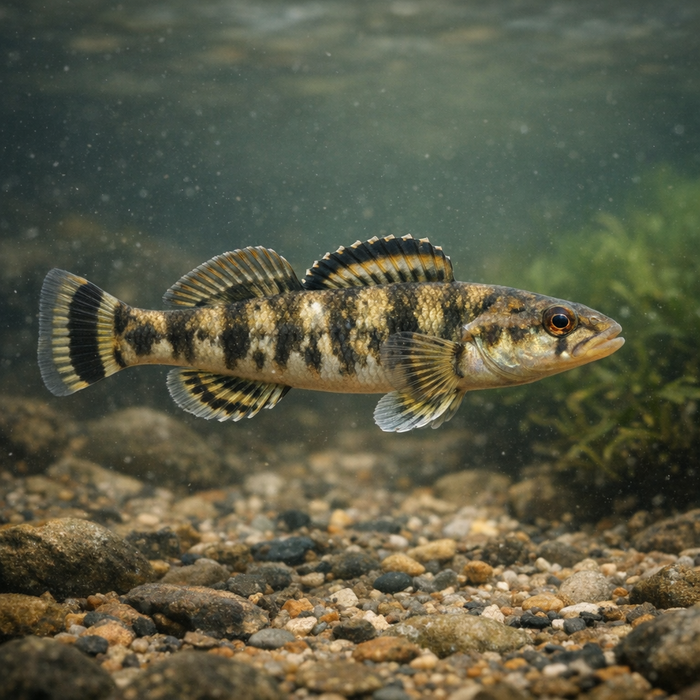
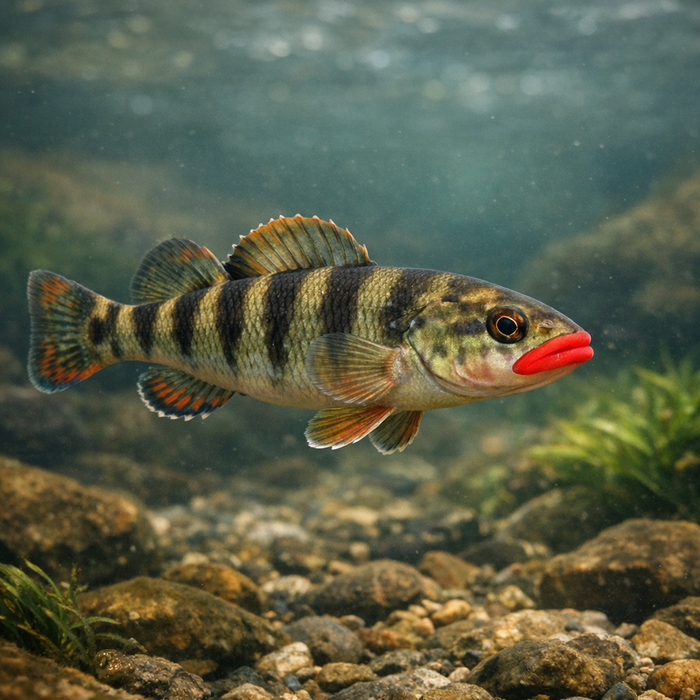
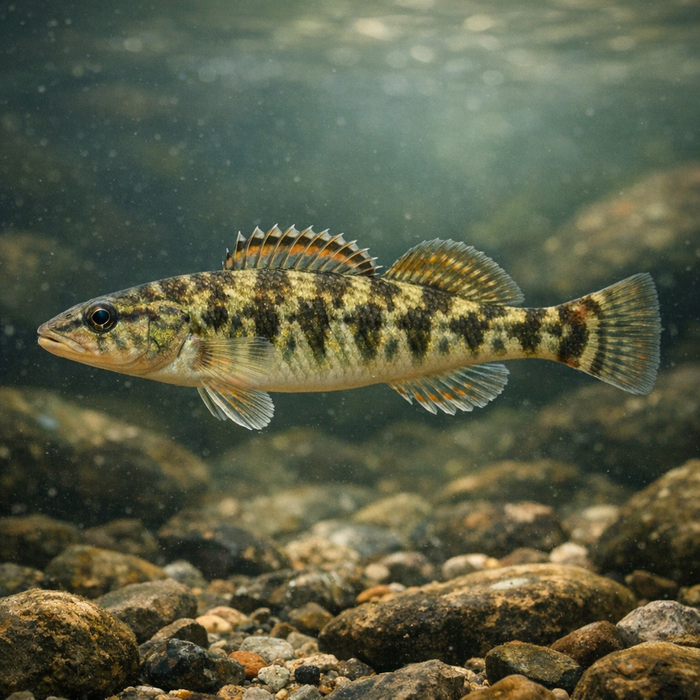
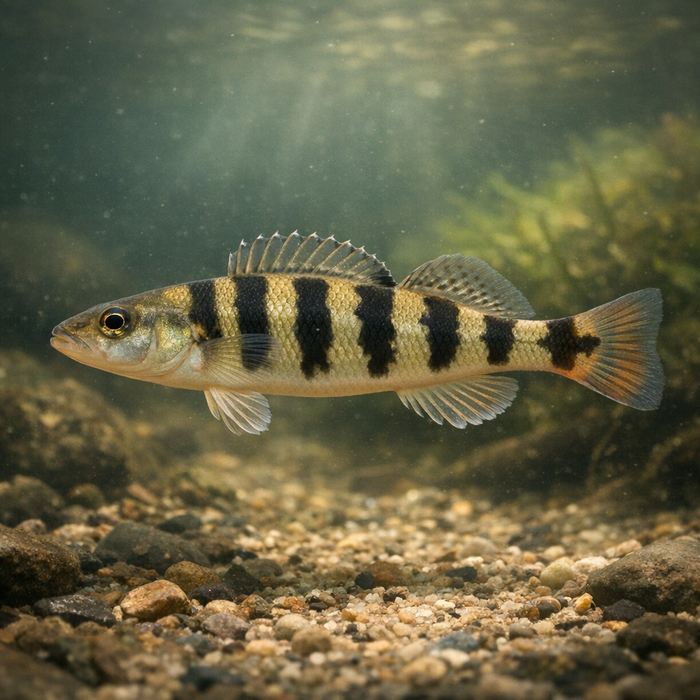
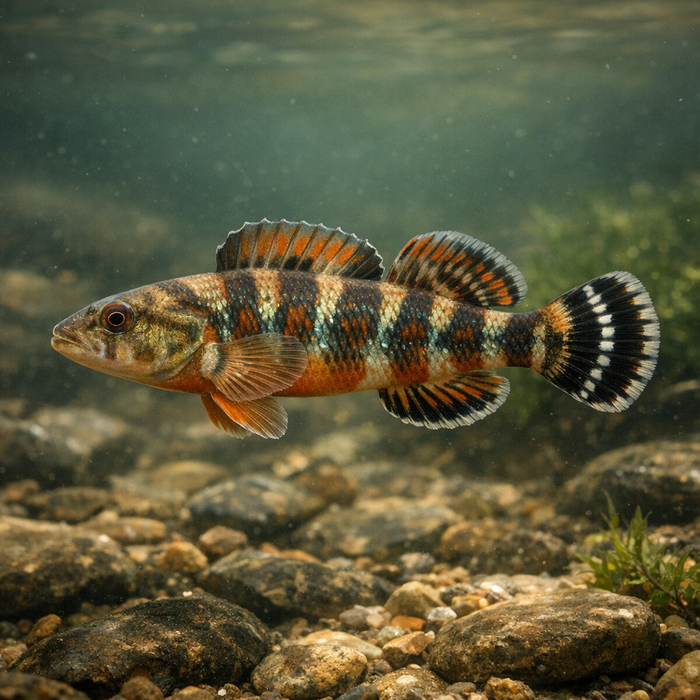
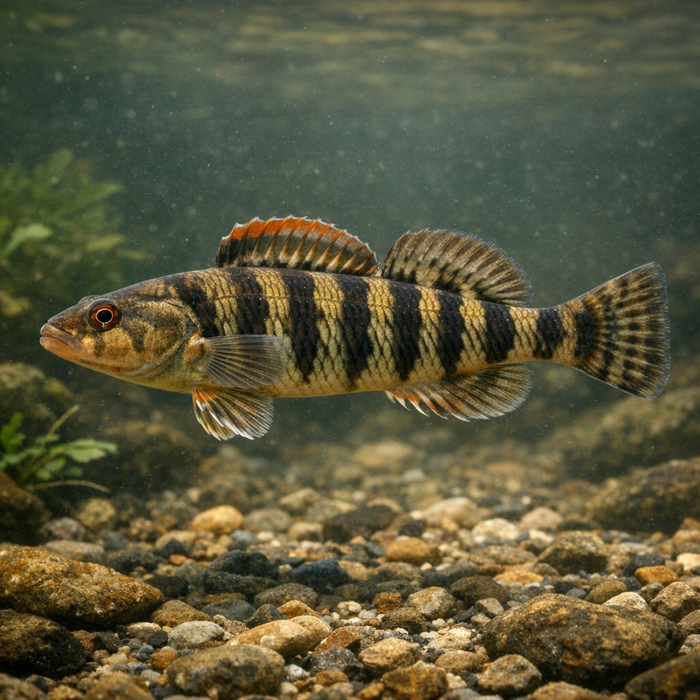
Tallapoosa darter (Etheostoma tallapoosae): Pocket-rocket color and attitude packed into a fish the size of your pinky.IntroductionThe Tallapoosa darter is the fish equivalent of a sports car hiding in a gravel driveway. Small, flashy in the right season, and built for speed across inches of fast water, it's a top-shelf target for micro anglers who like solving puzzles. You won't troll for this fish. You'll crouch, creep, and snipe a precisely placed morsel into a finger-width current seam. These are the Tallapoosa darter facts that matter: it's tiny, it's tactical, and when it flares spawning colors, it looks like it swam through a box of highlighters.What Makes the Tallapoosa darter Unique?Two things: current control and seasonal swagger. First, the Tallapoosa darter is a bottom-sitting specialist with broad pectoral fins that act like parachutes and anchors, letting it "park" on slabs while whitewater tickles its dorsal spines. Second, in spring the males light up with teal and orange, transforming from pebbled camouflage to neon signage. Add a mouth sized for midges and tiny worms, and you've got a fish that demands ultra-precise presentations. The Tallapoosa darter is not just any darter; it's a micro athlete tied to a very specific river system.Habitat & Global RangeAs the name hints, the Tallapoosa darter is tied to the Tallapoosa River drainage in Alabama and Georgia. Think shallow rocky riffles, cobble runs, and tiny plunge pools where oxygen is cranked and the flow never really quits. If you're researching Tallapoosa darter habitat, picture knee-deep or less, with boulders that break current into snack-sized lanes. Reservoirs and slow backwaters aren't its thing. It's a wade-and-whisper fish. Creeks that feed the mainstem often hold higher densities, especially in stretches with clean gravel and steady, clear flow.Behavior & TemperamentThe Tallapoosa darter prefers to perch, then pounce. It doesn't cruise much. Instead, it uses structure and micro-eddies to conserve energy, blasting forward only when a drifting invertebrate hits the right lane. They spook fast, then resettle within arm's reach if the current offers cover. During the spawn, males claim small territories under or beside flat stones, intensify their colors, and guard adhesive egg clusters. They're visual feeders with quick strikes and short feeding windows, often best when the sun is off the water or light is broken by riffle texture.Ecological ImportanceThese pint-sized predators link macroinvertebrates to larger fish and stream health. Because the Tallapoosa darter is sensitive to silt, low oxygen, and habitat fragmentation, its presence in good numbers usually signals a clean, functioning riffle. Remove the cobble, clog the gaps with sediment, or slow the current too much, and this species fades out. In short, the Tallapoosa darter is a living audit of how well a stream handles flow, sediment, and water quality.Conservation & Environmental PressuresThe biggest threats are cumulative: sedimentation from poor land use, channelization, impoundments that flatten flow, and water withdrawals that leave riffles exposed. Even where populations are stable, small, isolated distributions make any local hit feel bigger. The Tallapoosa darter doesn't need much water, but it needs the right water: cool enough, clean enough, and moving over the right-sized stones. Angling pressure is minimal, yet careless handling can harm these fragile fish. Think wet hands, fast photos, and immediate release.The FishyAF TakeIf you like loud drags and hero shots, keep walking. If you like precision, stealth, and reading currents narrower than your boot, the Tallapoosa darter is your fish. It's a master class in micro control and observation. Crack one codey riffle, and you'll start seeing lanes and eddies most folks stomp through without noticing. For the patient angler, this species is a reminder that "big" isn't the same as "worthy." The Tallapoosa darter delivers tiny triumphs that feel huge, and that's the kind of win we'll chase any day.