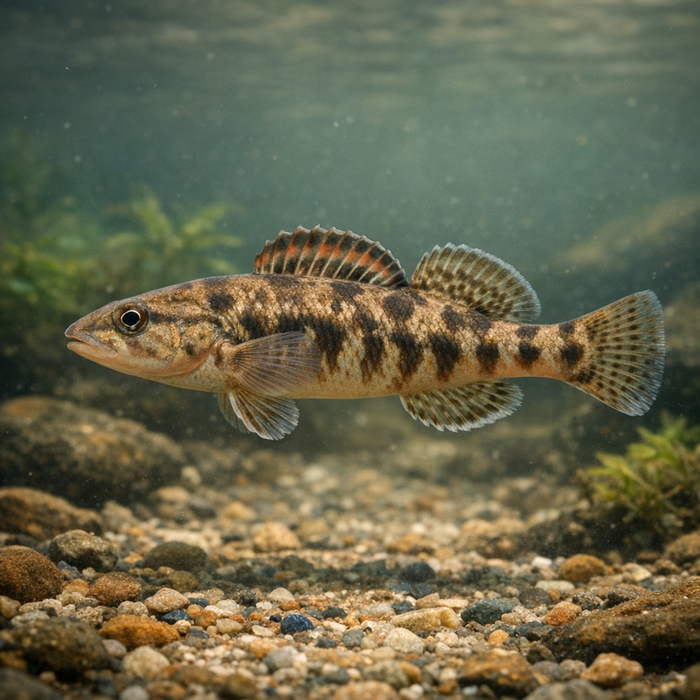
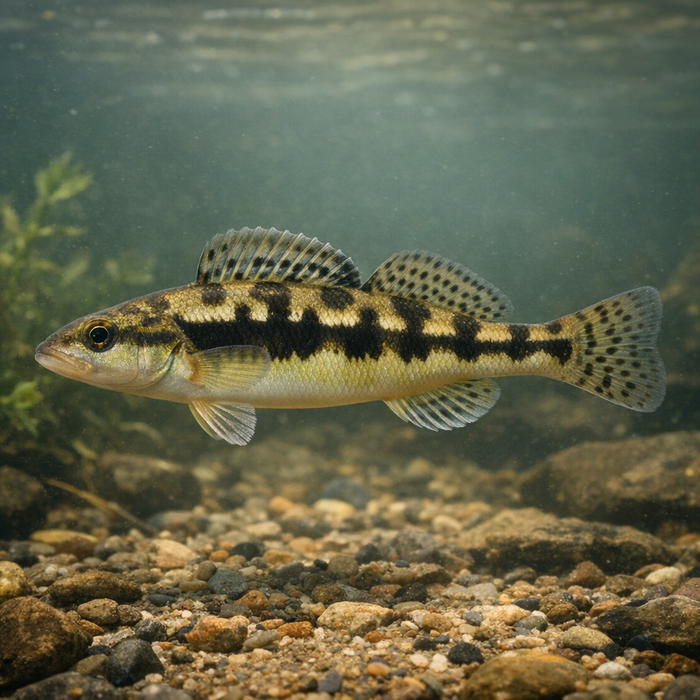
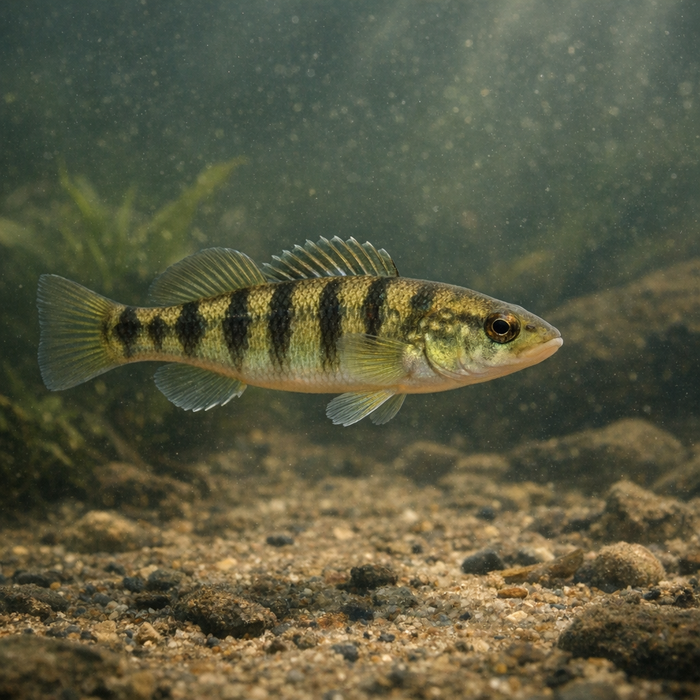
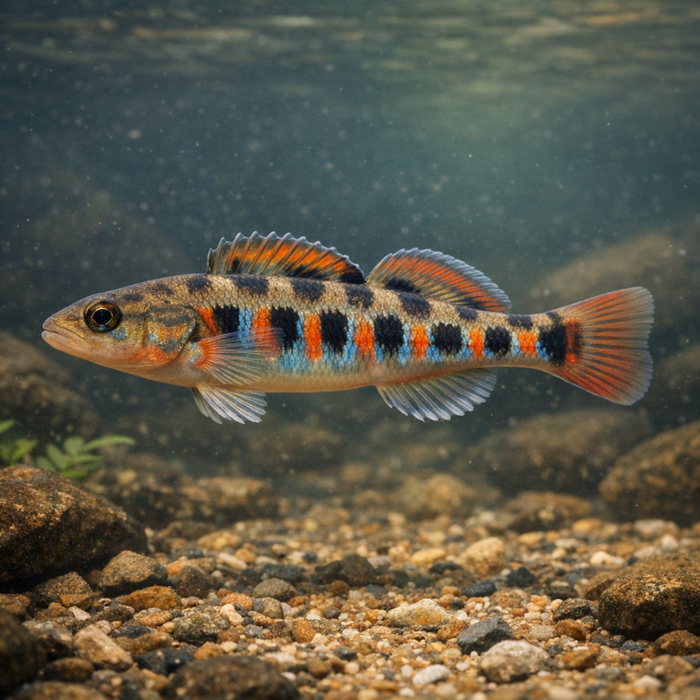
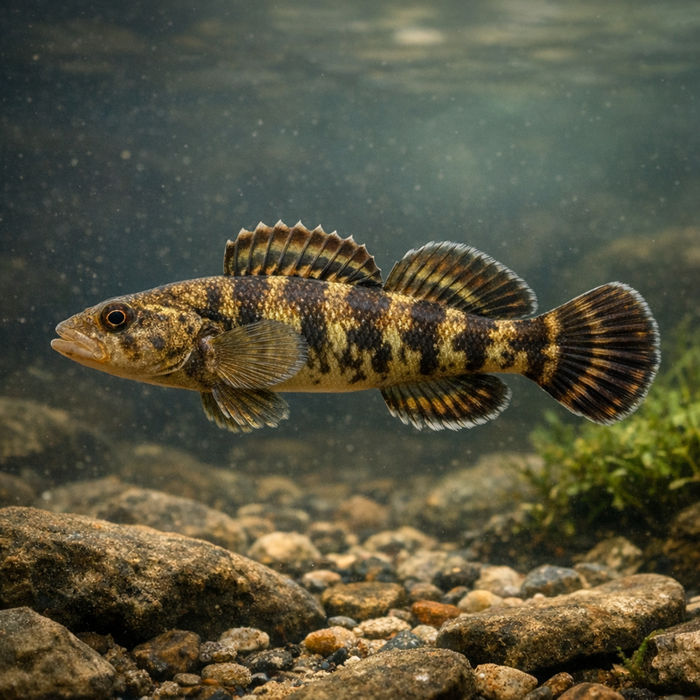
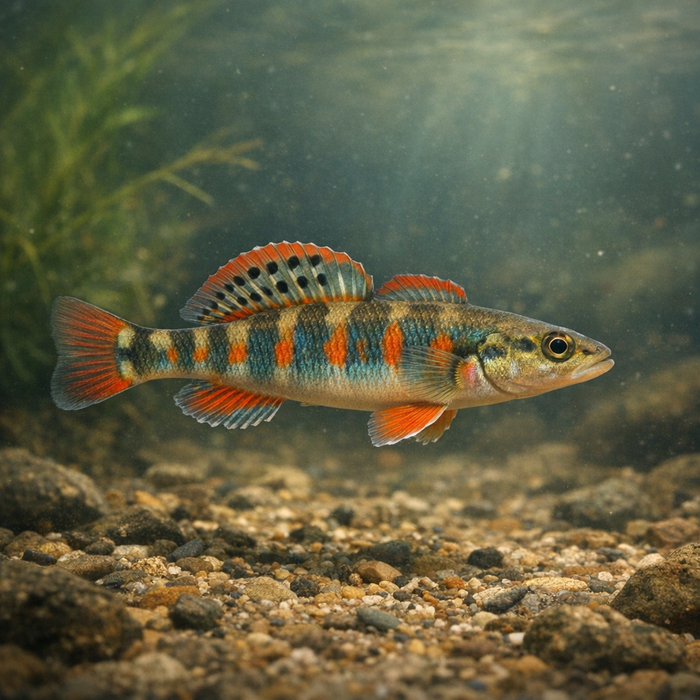
Backwater Darter (Etheostoma zonifer): A Bold, Memorable Hook LineIntroductionThe backwater darter is the pocket-rocket you only notice once you slow down and crouch by the bank. It won't spool you, but it will make you rethink how precise you can fish. For anglers curious about Backwater darter facts and the tiny worlds tucked behind logjams and leaf beds, this species delivers a master class in micro stealth and finesse.What Makes the Backwater darter Unique?First, size with attitude. The backwater darter maxes out around a couple of inches, yet it posts up like a bouncer on a bottlecap, owning small patches of bottom with surprising confidence. Second, those bold vertical bars. The species name zonifer nods to a "belted" look, and breeding males crank the contrast to showtime levels. Third, its micromotor lifestyle. Instead of cruising, it perches, watches, and darts in clipped bursts, grabbing a drifting midge larva before you can blink. If your idea of fishing is power, this fish flips the script to precision.Habitat & Global RangeThis is a Gulf Coastal Plain specialist that favors slow, silty backwaters: oxbow pools, sloughs, and eddies along lowland rivers. Think slack seams, leaf litter, submerged wood, and knee-deep shadow pockets. In these nooks, the backwater darter blends into dusky bottoms where visibility and current are modest. It's a regional player, not a world traveler, so dial your search to southern rivers and their floodplain side channels. If you're researching Backwater darter habitat, you're basically mapping quiet water with structure and soft substrate.Behavior & TemperamentThe backwater darter is a watcher. It props on pelvic fins, holds tight to cover, and times short dashes to intercept tiny drifting prey. Schooling is loose and local; you'll see a few fish spaced like chess pieces rather than a ball of bait. They're cautious, light-sensitive, and easily spooked by clumsy wading or heavy line splash. Expect the best action when turbidity drops after small rains and light filters in just enough to make spotting possible.Ecological ImportanceDarters keep the benthic buffet in check. This species vacuums up insect larvae and other micro-invertebrates, converting the bottom's tiny biomass into fuel for larger predators down the line. Their presence flags intact backwater structure and reasonable water quality, because the microhabitats they need vanish when channels are scoured, silted, or sterilized by flow regulation. In short, a healthy backwater darter scene usually means a healthy floodplain fringe.Conservation & Environmental PressuresEven without an endangered label, backwater darters live and die by small-scale habitat. Channelization, silt pulses from poor land use, and snag removal flatten the features these fish require. Prolonged low flows and extreme heat push oxygen and temperature into sketchy territory. Because they're tiny and overlooked, declines can hide in plain sight. Monitoring tends to be patchy, so local conditions matter more than broad designations.The FishyAF TakeNo, you won't mount one. But the backwater darter is pure finesse joy. It rewards stealth, clean presentations, and actually reading water smaller than a dinner plate. If you want to sharpen your angling instincts, spend an hour sight-hunting these little bars in a quiet slough. The backwater darter turns a forgotten corner of the river into a thriving arena, and that's about as FishyAF as it gets.